Anyone wiring a shop bench or chasing a stubborn circuit knows how fast cheap gear turns a ten-minute job into an afternoon of frustration. The right electrical tools equipment keeps voltage checks quick, crimps solid, and machine switches safe. This shortlist covers five items that handle real workshop demands, from a heavy-duty safety switch to a hydraulic crimper built for battery cable. Each one earns its place through specific attributes rather than marketing gloss.
A Snapshot Of The Selections
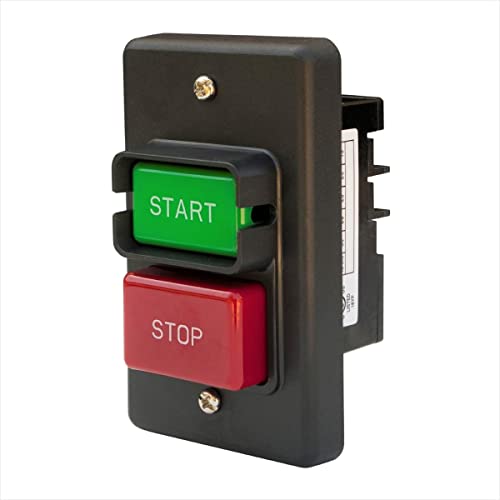
POWERTEC 71008 Single Phase Safety Power Switch

POWER PROBE IV Master Combo Kit (Red)

NSi Industries TES-111 Twin Probe Voltage Tester
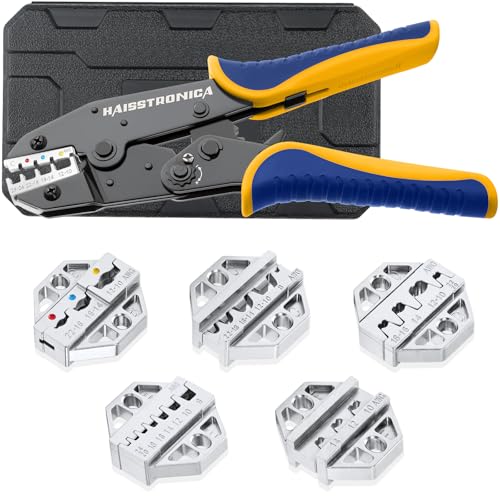
haisstronica 6PCS Crimping Tool Set

YUZES 10-Ton Hydraulic Crimping Tool
Why These Options Stand Out
Reaching under a table saw to fumble for a plug is how accidents happen. This POWERTEC switch puts a large paddle-style on/off control at hip height, rated for 120/230V dual voltage and up to 28 amps on a single-phase circuit. The design wires into standard gang boxes, with deep boxes or an extension ring giving extra room for connections.
For anyone running a router table, drill press, bandsaw, or grinder, that placement matters more than any spec sheet line. A broad paddle lets you kill power with a knee or forearm while both hands stay on the workpiece.
What Earns Its Place
- Dual-voltage rating covers both 120V household circuits and 230V shop setups without buying separate hardware.
- The 28-amp capacity handles demanding motors like cabinet saws and larger grinders.
- Fits standard gang boxes, so installation stays familiar territory for most DIYers.
Things To Consider
- You supply the wiring labor, so comfort with basic electrical connections is assumed.
- Owners commonly report needing a deep gang box or extension ring to seat everything cleanly.
Who It Suits Best
Home shop woodworkers who want a big, obvious shutoff mounted within easy reach of stationary machines.
Where Another Pick Suits Better
Shoppers diagnosing vehicle circuits instead of powering machines will get more from the POWER PROBE IV Master Combo Kit.
Where the POWERTEC switch controls power, this kit hunts down problems in it. The Power Probe IV is a powered circuit tester: it feeds voltage or ground to a component so you can actuate motors, solenoids, and lights directly instead of guessing. The Master Combo bundles the probe with the PPECT3000 and its accessory set, which means fewer separate purchases later.
In a busy bay, that speed shows up daily. Fuel injector testing, driver testing, and an open-circuit finder are all built into one handheld body, with tip voltage reaching 450 volts for higher-demand checks.
The Good Stuff
- Powers components directly, cutting diagnosis time on starters, window motors, and relays.
- DVOM functions replace a standalone multimeter for many bench tasks.
- Fuel injector testing mode serves diesel and gas techs alike.
- The combo packaging includes the PPECT3000 plus accessories, so the kit works out of the case.
- Max tip voltage of 450 volts extends usefulness beyond low-voltage automotive work.
Points To Note
- The feature depth carries a learning curve; casual users may find most modes sit unused.
- It draws from the vehicle battery during powered tests, so connection discipline matters.
Feature Rundown
Made For
Working auto electricians and serious home mechanics who diagnose electrical faults weekly and want one tool that does nearly everything.
Consider Something Else When
Occasional outlet checks around the house call for the far simpler NSi Industries TES-111 Twin Probe Voltage Tester instead.
Some jobs need exactly one answer: is this wire live? The TES-111 answers it with a neon lamp that glows between 80 and 250 volts AC, nothing more. There are no batteries to die mid-check and no menus to navigate, which is why twin-probe testers have hung off electricians’ pockets for decades.
This listing ships a pack of two, so one lives in the toolbox and one in the kitchen junk drawer where outlet questions actually happen. Double-insulated housing and test leads add a layer of protection when you’re probing receptacles or junction boxes.
Benefits That Matter
- Neon indication needs no batteries, so the tool is ready whenever you grab it.
- The 80-250 VAC range spans standard North American household and light commercial voltages.
- A pocket clip keeps it on your person rather than buried at the bottom of a bag.
- Two testers per pack make it practical to stage them in different locations.
Small Caveats
- It confirms presence of AC voltage only; polarity, continuity, and DC circuits are outside its job description.
Quick Facts
Right Fit For
Homeowners and renters who want a dead-simple go/no-go check before touching an outlet or fixture.
Not Your Match When
Anyone troubleshooting automotive systems will find far more capability in the POWER PROBE IV Master Combo Kit.
A bad crimp looks fine until salt water or engine heat finds it. This six-piece haisstronica set attacks that problem with interchangeable dies, letting one ratcheting handle serve multiple terminal types instead of cluttering your drawer with single-purpose tools. The jaws use forged 40CR steel, a chromium-molybdenum alloy chosen for hardness and wear resistance.
Boat owners and off-road builders report the tight jaw fit matters most in damp environments, where a loose terminal invites corrosion. One clean squeeze should produce a firm crimp the first time, which saves rework on long wiring runs.
Real-World Strengths
- Interchangeable dies cover several terminal styles with a single handle.
- Forged 40CR jaws hold their shape through repeated compression cycles.
- Tight jaw seating reduces wobble, helping terminals stay aligned during the crimp.
Trade Offs To Consider
- Swapping dies takes a moment, so high-volume jobs with mixed terminals slow down slightly.
- Hand leverage has limits; very large battery lugs fall outside what a manual tool compresses well.
- Die storage deserves a dedicated spot, since loose pieces are easy to misplace in a busy box.
Best Suited To
Marine, automotive, and hobbyist builders who run assorted small-to-medium terminals and value one adaptable tool over a drawer full of singles.
A Better Fit Elsewhere
Heavy battery-cable terminations belong with the YUZES 10-Ton Hydraulic Crimping Tool, whose hydraulic force handles gauges a hand tool can’t.
Try crimping a 2/0 AWG battery lug by hand and you’ll understand why hydraulic tools exist. Ten tons of pressure does what arm strength can’t, producing uniform, high-conductivity terminations on cable from 12 gauge up to 2/0 AWG. The head uses overall quenching treatment for toughness, while the dies carry hardened steel construction with a chrome finish that resists rust and slides smoothly against stainless fittings.
Compared with the haisstronica set above, this is a specialist: fewer applications, dramatically more force. Solar arrays, winch installs, and dual-battery truck setups are its natural habitat.
A Strong Showing
- Hydraulic action delivers consistent pressure across the full 12 AWG to 2/0 AWG range.
- Quenched pliers head resists cracking under repeated heavy loads.
- Chrome-finished hardened dies hold up against stainless terminal material.
- Makes clean crimps achievable for solo DIYers without a press or bench vise setup.
Worth Bearing In Mind
- Hydraulic tools weigh noticeably more than hand crimpers, so portability suffers on ladder or crawl-space work.
- Overkill for small-gauge electronics wiring; the haisstronica set handles those jobs with less bulk.
Core Details
Who Will Love This
Off-grid solar installers, 4×4 builders, and marine electricians terminating thick battery cable regularly.
Reach For A Different Pick When
Lighter terminal work on standard wire sizes suits the haisstronica 6PCS Crimping Tool Set better.
What Matters Most Before Choosing Electrical Tools Equipment
Match The Tool To The Circuit
Voltage and amperage ratings come first, always. A safety switch rated for 28 amps belongs on a saw circuit, not a lighting run, and a tester covering 80-250 VAC won’t help with low-voltage DC. Check the numbers before anything else.
Decide Between Simple And Capable
A neon twin-probe tester answers one question instantly; a powered circuit probe answers dozens but demands practice. Honest self-assessment here saves money and frustration. Most homeowners genuinely need less than they think.
Weight And Workspace Reality
Hydraulic crimpers earn their heft on battery cable but punish you overhead or in tight panels. Think about where the work actually happens, then pick the lightest tool that still meets the force requirement.
Long-Term Maintenance
Dies dull, contacts pit, and housings crack when tools live loose in a truck bed. Chrome finishes and forged alloys extend service life, but storage habits matter just as much as build quality over years of ownership.
Key Considerations Across These Picks
Traps First Timers Fall Into
The classic error is buying on feature count alone. A loaded diagnostic kit sits unused in a garage drawer while a simple voltage tester does every job the owner actually faces. Another frequent slip: ignoring amp ratings and pairing a switch with a motor that exceeds it, which creates heat and shortened life.
When Paying More Pays Off
Higher-tier tools justify their cost through force, precision, and breadth. Ten tons of hydraulic pressure, forged 40CR jaws, and 450-volt tip capability aren’t luxuries for people who do this work often. Occasional users rarely recoup that premium, so let frequency of use drive the decision, not aspiration.
Frequently Asked Questions
Can a single-phase safety switch work on both 120V and 230V machines?
Yes, the POWERTEC 71008 carries a dual-voltage rating for both. Confirm your circuit’s amperage stays within its 28-amp limit before installing.
Do I need a multimeter if I own a Power Probe IV?
Often no, because the probe includes DVOM functions for common measurements. Specialists doing precision bench work may still keep a dedicated meter nearby.
Why choose a neon tester over a digital one?
Neon units never need batteries and fail rarely. They trade away measurement detail, showing only whether AC voltage is present.
Are interchangeable-die crimpers as strong as fixed-jaw models?
For small and medium terminals, yes, provided the dies seat tightly. Very large conductors call for hydraulic force regardless of jaw design.
What wire sizes does a 10-ton crimper realistically handle?
This YUZES unit spans 12 AWG through 2/0 AWG. Anything smaller wastes its capacity, and anything larger needs industrial equipment.
Closing Remarks
Five tools, five distinct jobs: switching power safely, diagnosing circuits deeply, verifying voltage simply, crimping terminals flexibly, and crushing heavy lugs hydraulically. Match each one to the work you actually do rather than the work you imagine doing. Start with the task that frustrates you most today, and the right choice usually makes itself obvious.