


Tiny screws rule modern life. Eyeglasses, laptops, game controllers, drones, watches: all of them hide fasteners too small for the screwdriver in your kitchen drawer. A proper electronics screwdriver set solves that problem once and keeps solving it every time something needs opening or tightening. This roundup covers five options across the spectrum, from a hand-tool classic built by a German brand to compact electric drivers with dozens of bits. Some suit daily repair work, others occasional fixes around the house. Match the tool to your workload and you’ll stop stripping screws for good.
The Shortlist At A Glance
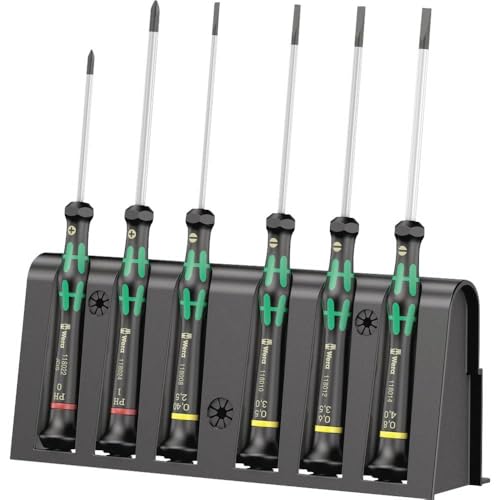
Wera 2035/6 Kraftform Micro Screwdriver Set and Rack
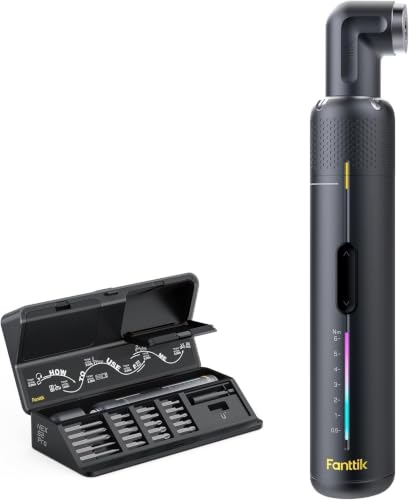
Fanttik S2 Pro Electric Screwdriver (Space Grey)

SEDY 11-Piece Precision Magnetic Screwdriver Set

JOREST 155 in 1 Mini Electric Screwdriver Set

TanSon Mini Electric Screwdriver, 72 In 1 Set
The Picks, Examined More Closely
Hand tools still earn their place next to every electric driver, and this six-piece Wera set is the kind that stays on a workbench for years. The Kraftform Micro handles use a shaped profile meant to transfer torque efficiently while keeping enough feel for fine adjustments, which matters when a slotted screw sits flush in delicate plastic.
Each driver carries Wera’s Black Point tip treatment, a hardening process aimed at longer service life and a better grip inside the screw head. Compared with the powered picks later in this list, this one asks nothing of a battery and never runs out mid-repair.
What Makes Sense
- Ergonomic handles reduce hand fatigue during long bench sessions
- Convex and concave cap design lets you spin the shaft quickly with one finger while resting comfortably in your palm
- Hardened Black Point tips resist wear and seat securely in screw heads
- Included rack keeps all six drivers visible and organized on a desk or toolbox
- No charging, no batteries, no electronics to fail over time
Worth Noting
- Six drivers cover only slotted and Phillips heads, so Torx-equipped devices need another kit
- The rack takes up more drawer space than a folding case would
Who It Suits Best
Anyone doing regular manual precision work, from IT technicians to hobbyists who value tactile control over motorized speed.
Where A Sibling Pick Shines
Torx-heavy phone and laptop repairs are better served by the JOREST 155 in 1 set, whose bit range covers those star-pattern fasteners directly.
Where the Wera relies on your wrist, the Fanttik S2 Pro brings actual muscle. Its MagnaStorm motor spins at up to 250 RPM and delivers as much as 6 newton-meters of torque, which is enough to drive furniture screws, not just open gadgets. That output puts it a clear step above the smaller TanSon unit reviewed below.
The interesting part is the torque control. A mechanical-electronic hybrid system offers seven adjustable settings, so you can dial power down for a laptop hinge and back up for a cabinet assembly without swapping tools. For most households juggling both electronics and flat-pack furniture, that flexibility is the whole appeal.
The Good Stuff
- Up to 6 N·m of torque handles computer assembly, appliance repairs, and furniture installs
- Seven torque levels prevent overtightening fragile components
- Cordless format moves freely around a workshop or living room
- Hybrid mechanical-electronic control gives repeatable, consistent results
Small Caveats
- Battery-powered tools need periodic recharging, an extra step pure hand tools never demand
- Higher torque means a slipped bit can do more damage on very small fasteners, so start at a low setting
Feature Snapshot
Whose Shelf It Belongs On
DIYers who split their time between gadget repairs and light furniture or appliance work will get the most out of its torque range.
Swap It Out When
Watch and eyeglass repairs call for gentler output, which is exactly where the TanSon Mini Electric Screwdriver fits better.
Not everyone needs a motor or a hundred bits. This eleven-piece SEDY kit covers the three most common precision head types, Phillips, slotted, and Torx, in a package simple enough to toss in a laptop bag. It’s the sort of set that lives in a desk drawer and quietly earns its keep.
The standout detail is magnetization. Tips hold tiny screws in place so they don’t vanish into carpet during a glasses or controller repair, and a demagnetizer is included for moments when magnetism itself becomes the problem, such as working near sensitive watch movements. Owners commonly report the non-slip grips hold up well to repeated use, though the tips deserve gentle treatment to stay precise.
Useful Touches
- Magnetic tips keep miniature screws attached instead of dropping them into unreachable places
- Phillips, slotted, and Torx coverage handles most phones, watches, and laptops
- Non-slip handles give steadier control than bare metal shafts
- Portable storage bag keeps everything together in a drawer or travel kit
- Demagnetizer adds flexibility for magnet-sensitive repairs
Things To Consider
- Eleven bits won’t cover specialty fasteners found on some gaming consoles and drones
- Loose pieces in a soft bag are easier to misplace than rack-mounted drivers
Quick Facts
Right Fit For
First-time repairers and anyone who wants dependable manual coverage without spending much.
Another Choice May Suit
Shoppers wanting motorized convenience should look at the Fanttik S2 Pro, which automates the driving work this kit does by hand.
Bit count is this JOREST’s whole personality. With 155 pieces on board, the kit reaches deep into specialty territory: Pentalobe-style bits for iPhones, Y-type heads for certain Samsung and Huawei models, and a long run of Torx sizes for MacBooks, iPads, tablets, and game hardware. Repair shops and tinkerers who open whatever crosses the counter will appreciate not having to buy a second kit.
The mini electric body keeps the work light on the fingers, and the sheer variety means a rare fastener rarely stops a teardown. The honest trade-off is organization: 155 small parts demand disciplined storage habits, and losing one obscure bit can matter more than losing a common one.
What Pays Off
- 155 bits cover iPhone, MacBook, iPad, Android phones, tablets, and console fasteners in one case
- Electric driving reduces wrist strain during multi-screw disassembly
- Rare head types like Pentalobe and Y-profile come standard rather than as add-ons
- Compact pen-style form factor suits detailed close-up work
Points To Keep In Mind
- Keeping 155 tiny bits sorted takes real discipline, and replacements for lost specialty bits aren’t always easy to source
- A kit this broad costs more than a basic manual set, so casual users may pay for capacity they’ll never touch
Best Suited To
Serious hobbyists, repair-shop staff, and tech enthusiasts who regularly open phones, tablets, and laptops of mixed brands.
Reach For A Different Pick When
Households facing ordinary glasses and toy repairs will find the SEDY 11-Piece set simpler and far easier to keep track of.
Gentle power is the TanSon’s selling point. Output tops out at 0.5 N·m in high mode and drops to 0.1 N·m in low, with manual torque available up to roughly 5 N·m when you want to finish a screw by hand. Those figures sit well below the Fanttik S2 Pro, and that’s deliberate: watches, camera bodies, and drone frames punish overtightening.
The 72 included bits span the usual suspects for PCs, keyboards, consoles, eyeglasses, and fitness bands. You may find the low ceiling limiting on anything structural, but for miniature electronics it’s arguably the safer choice in this lineup.
Where It Excels
- Dual torque modes protect fragile threads and plastic housings
- Manual override up to about 5 N·m lets you snug down screws by hand after powered starts
- 72-bit assortment covers computers, cameras, RC models, and wearables
- Small body gives fine control in tight spaces
Honest Caveats
- Insufficient torque for furniture or appliance work, so it complements rather than replaces a general driver
- Like any cordless micro tool, battery care between uses affects long-term runtime
Core Details
The Right Fit
Watch collectors, drone pilots, and console modders who prioritize finesse over force.
Skip It When
Heavier household tasks belong with the Fanttik S2 Pro, whose 6 N·m output is built for them.
What Matters Most Before Choosing Electronics Screwdriver Sets
Manual Versus Powered
Manual sets like the Wera offer unmatched feel and zero maintenance, but they ask your wrist to do the work across dozens of screws. Powered drivers trade that tactility for speed and consistency. Daily repair volume usually justifies going electric; occasional fixes rarely do.
Bit Coverage And Head Types
Count the devices you actually own before buying. Modern phones often use proprietary heads such as Pentalobe or Y-type, while laptops lean on Torx. A set missing your device’s head type is dead weight, however well made. Coverage beats brand prestige here.
Torque Control
Torque, measured in newton-meters, is rotational force. Too much cracks plastic housings and strips threads; too little leaves screws loose. Adjustable settings, like the seven levels on the Fanttik, let one tool serve both fragile gadgets and sturdier household jobs safely.
Storage And Organization
A 155-bit kit is useless if bits scatter. Racks, cases, and labeled compartments determine whether a set stays complete after a year. Honest self-assessment helps: tidy people can handle big kits, everyone else should favor smaller, contained formats.
Key Considerations Across These Picks
Traps First Timers Fall Into
The most common mistake is buying raw bit count instead of matching heads to real devices. Another is ignoring torque limits: a powerful driver can destroy a $10 pair of glasses in seconds. Start low, finish by hand, and check compatibility first.
The Case For Spending Up
Higher-tier kits pay for hardened tips, calibrated torque control, and ergonomic handles that survive years of use. Cheap steel rounds off after a few dozen screws. Frequent repairers recoup the difference quickly; once-a-year users genuinely don’t need to.
Frequently Asked Questions
Can one set handle both phones and laptops?
Often yes, since both rely heavily on Phillips, Torx, and Pentalobe heads. Verify the specific bit list against your devices before committing.
Do magnetic tips damage electronics?
No, the weak magnetism used in precision tips poses no risk to circuits. It simply holds screws in place during installation.
How much torque do I actually need?
Miniature electronics rarely need more than 0.5 N·m. Furniture and appliances benefit from several newton-meters, which is why adjustable models exist.
Are electric screwdrivers harder to maintain?
Slightly. They need periodic charging and careful bit storage, while manual tools need essentially nothing beyond keeping tips clean.
Is a rack or a case better for storage?
Racks suit permanent workbenches where visibility matters. Cases win for drawers, travel, and anyone prone to losing loose parts.
Closing Thoughts
Every pick here solves the same problem differently. The Wera rewards patient hands, the Fanttik splits duties between gadgets and furniture, the SEDY covers basics affordably, and the JOREST and TanSon cater to opposite ends of the powered spectrum. Match the tool to what you actually repair, and any of these will outlast the cheap drawer screwdrivers they replace.




