


Starting out on guitar means juggling enough already: sore fingertips, chord charts, tuning apps. The last thing you need is a second research project just to pick the instrument itself. This shortlist covers five entry level acoustic electric guitars that keep the decision simple, whether you want a plug-in-ready starter kit or a pure acoustic from a name brand. Each option below suits a different kind of first-time player, from dorm-room strummers to future open-mic regulars.
A Quick View Of The Lineup
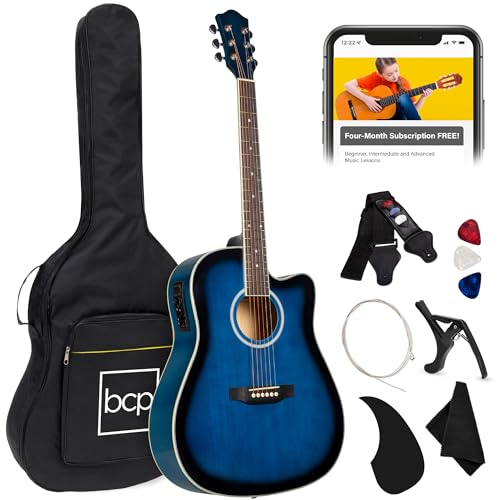
Best Choice Products Beginner Acoustic Electric Guitar Starter Set 41in (Blue)

Best Choice Products Beginner Acoustic Electric Guitar Starter Set 41in (Black)

Fender CN-60S Concert Nylon String Acoustic Guitar

Fender CC-60S Concert Acoustic Guitar, 3-Color Sunburst

Fender CD-60S Dreadnought Acoustic Guitar, Black
A Breakdown Of The Leading Choices
Most starter kits make you buy three more things before you can play a note. This one doesn’t. The 41-inch cutaway body ships with a carrying case, strap, picks, and a cable, so day one looks like unbox, tune, play.
The cutaway design matters more than it sounds: that scooped shoulder near the neck lets your fretting hand reach the upper frets without wrestling the body. Onboard controls for treble, bass, middle, tone, and volume sit right in the side of the body, so you can shape your sound acoustically or plug into an amp and experiment as your ear develops.
Advantages To Know
- All-wood construction gives the body a warmer resonance than laminate-only starter guitars tend to offer.
- Five-band onboard EQ means you can dial back harsh treble or add low-end punch without touching an amp’s settings.
- The included case, strap, picks, and cable save a separate shopping trip entirely.
- Works unplugged in an apartment or plugged in at a casual jam night.
- Cutaway access makes barre chords and lead lines less intimidating early on.
Things To Consider
- Factory setup varies unit to unit, so many owners plan on a basic string action adjustment at a local shop.
- The bundled accessories are functional rather than premium; expect to upgrade picks and strap eventually.
Key Specs
Who It Suits Best
Absolute beginners who want one purchase to cover guitar, gig bag, and accessories without piecing together a setup.
Where Another Pick Suits Better
Players who already own accessories and care about long-term build quality will get more mileage from the Fender CD-60S Dreadnought.
This is the same starter kit you just read about, dressed in black instead of blue. Same 41-inch all-wood cutaway body, same onboard treble, bass, middle, tone, and volume controls, same bundle of case, strap, picks, and cable. Nothing about the hardware changes between the two finishes.
So which do you choose? Honestly, it comes down to taste and context. The black finish hides fingerprints and scuffs better, which parents handing a guitar to a teenager may appreciate. The blue version reads friendlier and more classic. Either way, you’re getting a plug-in-capable instrument that covers acoustic practice and amplified playing from the first week.
Useful Touches
- Complete accessory bundle means no follow-up purchases before your first lesson.
- Onboard EQ lets you tame bright strings or boost warmth depending on the room.
- Matte-leaning black finish tends to show less wear than lighter gloss bodies over time.
Worth Noting
- Like its blue sibling, this kit benefits from a professional setup to lower string height for comfortable fretting.
- Nylon straps and thin picks included here are starter-grade; budget for replacements down the road.
- At full size, smaller players may find the 41-inch body a stretch to wrap an arm around.
Made For
Cost-conscious beginners and gift-givers who want a complete, playable rig in a finish that ages gracefully.
Consider Something Else When
Sore-fingered newcomers should look at the Fender CN-60S instead, since its nylon strings are far kinder during those first painful months.
Steel strings are the number-one reason new players quit: they bite into soft fingertips until calluses form. The CN-60S sidesteps that entirely with nylon strings, the softer classical-style alternative, paired with Fender’s easy-playing neck profile and rolled fingerboard edges that round off every fret end.
Underneath sits a solid spruce top with mahogany back and sides, a tonewood pairing that projects clearly whether you’re working through jazz voicings or folk ballads. Unlike the two Best Choice kits above, there’s no onboard electronics or bundled gear here; it’s a focused, purely acoustic instrument built around comfort and tone.
A Favorable Mix
- Nylon strings dramatically reduce fingertip pain during the crucial first months of practice.
- Rolled fingerboard edges create a smooth fret-hand feel that encourages longer sessions.
- Solid spruce top resonates and improves in character as the guitar opens up with age.
- Concert body size keeps the instrument manageable for younger or smaller-framed students.
Small Caveats
- No pickup or preamp, so amplifying this guitar later requires an external microphone or aftermarket solution.
At A Glance
Right Fit For
Classical-curious students, fingerstyle learners, and anyone whose top priority is staying comfortable enough to keep practicing daily.
A Better Fit Elsewhere
Players set on plugging into an amp at open mics will find the Best Choice Products starter set’s built-in electronics a better match.
Not every beginner wants a full-sized dreadnought hanging off their frame. The CC-60S uses a concert body, a smaller waist-down shape that sits closer to the player and keeps the strumming arm relaxed. Its articulate voice leans toward fingerpicking, where individual notes stay distinct instead of blurring together.
You still get the good stuff: a solid spruce top with scalloped X-bracing, mahogany back and sides, and that same comfortable neck treatment Fender applies across this line. The 3-color sunburst finish gives it a stage-worthy look most entry-level guitars can’t claim. Compared with the CD-60S reviewed next, this one trades raw volume for definition and portability.
Notable Gains
- Smaller concert body suits teens, smaller adults, and couch practice sessions alike.
- Scalloped bracing under the spruce top helps the compact body project beyond its size.
- Sunburst finish looks sharp in photos, videos, and on any coffeehouse stool.
Points To Note
- Lower overall volume than a dreadnought, which some strum-heavy players notice in group settings.
- Ships without a case or accessories, so factor a gig bag into your planning.
Who Will Love This
Fingerstyle-focused beginners and smaller-framed players who value comfort and note clarity over sheer loudness.
Skip It When
Loud campfire strumming is the goal; the Fender CD-60S Dreadnought’s bigger body carries further outdoors.
Dreadnought is the classic big-bodied acoustic shape, named after a class of warship because of its sheer presence. The CD-60S delivers that full-throated voice with a solid spruce top and mahogany back and sides, a combination owners commonly describe as balanced, with strong midrange and volume to spare.
Where it quietly outclasses cheaper rivals is the neck: rolled fingerboard edges and a comfortable profile make long chord-practice sessions noticeably easier on the fretting hand. There are no electronics here, unlike the Best Choice kits earlier in this list, so it’s a purist’s choice. In our view, that simplicity is the point; you’re spending on wood and build quality, not gadgets.
What Makes Sense
- Solid spruce top offers dynamic range, responding to both gentle fingerpicking and hard strumming.
- Mahogany body yields warm, even tone that flatters vocals when you sing along.
- Rolled-edge neck reduces hand fatigue during extended practice.
- Dreadnought volume fills a room without any amplification.
- Timeless black finish suits every setting from bedroom to bonfire.
Trade Offs
- The large body can challenge smaller players’ reach around the instrument.
- No pickup means separate gear is needed for amplified performance.
- Solid-wood tops need humidity care; a case humidifier is cheap insurance against cracking in dry climates.
Quick Facts
The Right Fit
Committed beginners planning years of strumming, singing, and eventual gigs, who’d rather invest in tone than bundled extras.
Reach For A Different Pick When
Tender fingertips are the immediate concern; the Fender CN-60S’s nylon strings offer a gentler starting point.
What Matters Most Before Choosing Entry Level Acoustic Electric Guitars
Body Size Shapes Everything
A dreadnought like the CD-60S projects loudly but demands a longer reach around the body. Concert shapes such as the CC-60S and CN-60S sit closer and suit smaller frames. Hold the general rule loosely: comfort drives practice time, and practice time drives progress.
Strings Decide Your First Six Months
Steel strings sound brighter but punish uncalloused fingers. Nylon strings, as on the CN-60S, trade some brightness for dramatically easier fretting. Beginners who dread the pain phase often stick with nylon longer and learn faster as a result.
Electronics: Now Or Later
Built-in preamps, like the five-band EQ on the Best Choice kits, let you plug straight into an amp or PA. Purely acoustic models cost less up front but need a microphone or retrofit for amplified playing. Choose based on where you realistically see yourself performing.
Setup Quality Beats Brand Names
Even respected brands ship guitars with factory setups that vary. A modest professional adjustment of string height and intonation transforms playability, so treat it as part of the real cost of any first guitar.
Key Considerations Across These Picks
Traps First Timers Fall Into
The biggest mistake is buying on looks alone; a gorgeous sunburst with a poor setup will gather dust. Another common slip is skipping the accessory budget entirely, then stalling because there’s no tuner, strap, or case. Plan the whole package before checkout.
The Case For Spending Up
Higher-tier instruments use solid wood tops instead of laminates, and solid spruce genuinely improves with age. Rolled fretboard edges and better nut work reduce hand fatigue too. Paying more pays off the moment practice stops feeling like a chore and starts sounding like music.
Frequently Asked Questions
Do I really need a cutaway body?
Only if you expect to play lead lines above the twelfth fret. Rhythm and chord players rarely miss it, though it costs nothing to have.
Are nylon strings easier for beginners?
Yes, considerably. They exert less tension on fingertips, which means fewer painful weeks building calluses.
Can an acoustic electric guitar be played without an amp?
Absolutely. The electronics are optional; unplugged, it behaves like any standard acoustic guitar.
How often should a beginner guitar be serviced?
A checkup every year or two covers it for light home use. Heavy players benefit from seasonal adjustments as humidity shifts.
Is a starter kit or a standalone guitar smarter?
Starter kits win on convenience and completeness. Standalone guitars usually deliver better long-term tone and resale value.
Closing Remarks
Every guitar on this list can carry you from your first clumsy chord to a confident first performance. Match the body and strings to your hands, budget a little for a proper setup, and start playing sooner rather than later. The best guitar is simply the one you’ll pick up tomorrow.




