


OLED used to mean a second mortgage. Not anymore. The entry tier now delivers self-lit pixels, deep blacks, and serious gaming features at prices that make sense for a living room upgrade, and this year’s lineup is stronger than ever. Whether you’re replacing an aging LCD in a bright family room or building your first proper home theater setup, one of these five panels will fit your space and your budget without forcing you to compromise on picture quality.
Your Options, Compared

Panasonic Z8 Series (2025) 77-inch OLED 4K Smart Fire TV
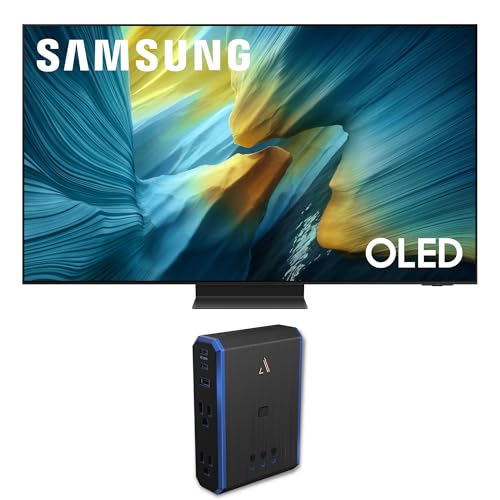
Samsung 65-Inch Class OLED S95F 4K Glare Free Smart TV (2025)

Samsung 65-Inch Class OLED S90F 4K Smart TV (2025 Model)
Sony BRAVIA 8 OLED 4K Smart Google TV (K-55XR80)

LG 65-Inch Class OLED B4 Series Smart TV (OLED65B4PUA)
A Deeper Look At The Lineup
Seventy-seven inches of OLED is a statement, and the Z8 makes it without apology. The Master OLED PRO panel pushes higher brightness than typical entry models, so dynamic contrast holds up in a room with windows rather than collapsing into murk. Movie night in a dedicated media space is where this screen earns its keep.
Gaming credentials run deep here too. A 144Hz refresh rate paired with HDMI 2.1 features like VRR (variable refresh rate, which stops screen tearing mid-frame) keeps fast action clean on current consoles.
What Works In Its Favor
- Huge 77-inch canvas that turns a den into a genuine theater
- Supports every major HDR format, including Dolby Vision IQ and HDR10+ Adaptive, which adjust to ambient light automatically
- Technics-tuned 360 Soundscape Pro speaker array fires forward, upward, and sideways for Dolby Atmos without a soundbar
- Game Control Board surfaces settings at a glance instead of burying them in menus
- Hands-free voice control built in for casual channel changes
Things To Consider
- The sheer size demands real wall or console real estate; measure twice before ordering
- A panel this large benefits from a sturdy mount, and installation is realistically a two-person job
Built With In Mind
Film-focused viewers with a large wall to fill who want flagship-grade contrast without stepping up to a boutique brand.
Where A Sibling Pick Shines
Apartment dwellers will find the Sony BRAVIA 8’s 55-inch footprint far more practical for a modest media wall.
Bright rooms are where most OLEDs struggle, and that’s exactly the problem Samsung engineered away here. The glare-free coating diffuses reflections from windows and lamps, so afternoon sports and daytime streaming stay watchable without closing every blind in the house. Compared to the Panasonic Z8’s cinema-first approach, this one is tuned for real-world, lights-on living.
The NQ4 AI Gen3 processor leans on 128 neural networks to sharpen picture and sound scene by scene, while Motion Xcelerator 164Hz keeps panning shots smooth during live games.
A Few Highlights
- Glare-free finish that genuinely helps in sunlit spaces
- OLED HDR Pro brightness suits mixed day-and-night viewing
- AI-driven processing improves both streaming quality and dialogue clarity
- Ships as a bundle with a surge-capable power strip, handy for a full entertainment stack
Points To Note
- This listing bundles third-party accessories, so confirm exactly what arrives before unboxing
- Samsung sets skip Dolby Vision support, which some streaming libraries favor; HDR10+ content looks excellent but check your usual apps
Feature Snapshot
Right Fit For
Households with big south-facing windows who refuse to watch TV in the dark just to get a good picture.
Swap It Out When
Nighttime movie purists may prefer the LG B4’s Dolby Vision pipeline over this set’s HDR10+ orientation.
Think of the S90F as the S95F’s sensible sibling: same generation of Samsung AI processing, same 144-class motion handling, minus the glare-free coating and a few brightness refinements. For most living rooms with controlled lighting, you’d be hard pressed to justify the step up unless reflections are a daily annoyance.
Upscaling is the quiet star here. Cable broadcasts and older streaming content get pulled toward convincing 4K by the same neural-network engine found in its pricier stablemate, which matters more than raw specs if your library isn’t all native 4K.
Well-Handled Touches
- Upscaling Pro breathes life into non-4K sources like broadcast TV
- Motion Xcelerator 144Hz handles console gaming and sports cleanly
- Voice control built directly into the remote experience
Small Caveats
- No glare-free layer, so direct sunlight across the panel will still show reflections
- Like other Samsung sets, it favors HDR10+ rather than Dolby Vision
- Owners commonly report wanting a soundbar eventually; slim OLED bodies limit onboard bass
Who Should Grab It
Streamers and sports fans upgrading from a five-year-old LCD who want modern AI processing at the friendliest price in Samsung’s OLED range.
Reach For A Different Pick When
Anyone chasing maximum gaming specs should look back at the Panasonic Z8 and its 144Hz HDMI 2.1 feature set.
Sony’s reputation for out-of-the-box color accuracy shows up immediately on the BRAVIA 8. Over eight million self-lit pixels deliver the pure-black contrast OLED is known for, and XR Triluminos Pro widens the palette so skin tones and sunsets land naturally rather than oversaturated. In our view, this is the pick for people who care how a film was graded.
Google TV integration also deserves mention: app discovery, casting, and profiles feel more organized than most rival platforms, especially in households already living inside Google accounts.
The Case For It
- Reference-style color accuracy straight from the box, minimal calibration needed
- Pure black levels that make dimly lit scenes finally readable
- Google TV platform with strong search and personalized recommendations
- Compact 55-inch size fits apartments, bedrooms, and smaller dens
Worth Bearing In Mind
- At 55 inches, it’s the smallest screen here; large rooms may leave you wanting more
- Extended protection plans are sold separately, so factor that into total cost if coverage matters to you
Quick Facts
Whose Shelf It Belongs On
Film lovers in apartments or secondary rooms who prioritize accuracy and platform polish over sheer screen size.
Another Choice May Suit
Viewers wanting a bigger canvas at a lower entry point should compare the LG B4’s 65-inch panel below.
The B4 has become the default answer to “what’s the easiest way into OLED,” and the reasons hold up. You get the same self-lit pixel foundation as pricier sets, full Dolby Vision and Atmos support, plus FILMMAKER MODE for watching movies as directors intended. Where the Sony BRAVIA 8 wins on tuning finesse, the B4 counters with a larger 65-inch panel and a friendlier sticker.
webOS Re:New promises five years of software updates, which stretches the useful life of a budget purchase considerably.
Useful Highlights
- 100% Color Volume and Fidelity keep hues accurate from brightest highlight to deepest shadow
- Dolby Vision, Dolby Atmos, and FILMMAKER MODE all included at entry pricing
- α8 AI processor auto-selects picture settings based on what you’re watching
- Multi View splits the screen for two feeds at once, handy for sports alongside a game
- Five years of webOS updates via the Re:New program extend longevity
Trade Offs To Consider
- As a 2024 model, it trails the 2025 entries in peak brightness; dimmer rooms suit it best
- The Magic Remote’s pointer takes a day or two to feel natural for newcomers
Core Details
Who Will Love This
First-time OLED shoppers who want proven picture quality, broad format support, and the lowest barrier to entry on this list.
Look Elsewhere When
Buyers with very bright rooms should step up to the Samsung S95F and its glare-free panel instead.
What Matters Most Before Choosing Entry Level Oled Tvs
Screen Size And Room Lighting
Measure your viewing distance first: a 55-inch panel suits seating roughly six to eight feet away, while 65 inches and up reward ten-foot setups. Bright rooms change the math entirely. Glare-free coatings and higher peak brightness matter more than incremental contrast gains when sunlight hits the screen daily.
Gaming Features Worth Paying For
Console players should treat refresh rate and VRR as non-negotiable. A 120Hz-plus panel with variable refresh rate eliminates tearing and stutter during fast motion, and HDMI 2.1 bandwidth unlocks those modes at 4K. Casual streamers can safely deprioritize these and redirect budget toward size instead.
HDR Format Support
Dolby Vision and HDR10+ are competing dynamic-metadata formats that adjust brightness scene by scene. Most streaming services lean Dolby Vision, while Samsung champions HDR10+. Matching your TV’s strengths to the services you actually use prevents disappointment later.
Key Considerations Across These Picks
Traps First Timers Fall Into
Chasing peak brightness numbers while ignoring your actual room is the classic error. A dim basement doesn’t need the brightest panel; a glass-walled loft does. Another common slip is forgetting audio: slim OLED speakers rarely satisfy, so reserve budget for a soundbar.
The Upgrade Payoff
Higher tiers buy brightness headroom, better processors, and premium coatings. Those gains show up in sunny rooms and HDR-heavy content. In controlled lighting with mostly SDR streaming, the difference shrinks fast, which is why entry models remain such strong value.
Frequently Asked Questions
Are entry level OLED TVs good for gaming?
Yes, most modern ones include 120Hz or faster panels with VRR support. Check for HDMI 2.1 ports to unlock full 4K high-frame-rate modes on current consoles.
Do OLED TVs suffer from burn-in?
Burn-in risk is much lower than it once was thanks to pixel-shifting and screen-saver features. Households that vary their content and avoid static logos for hours daily are unlikely to encounter it.
Is Dolby Vision really necessary?
It depends on your streaming habits. Netflix, Disney+, and Apple TV+ lean heavily on Dolby Vision, so fans of those services benefit; heavy YouTube viewers won’t notice much difference.
How long do OLED TVs last?
Typical lifespan runs seven to ten years of normal household use. Panel degradation happens gradually, and software update programs like LG’s Re:New help the TV stay current throughout.
Should I buy a 2024 model in 2026?
Often yes. Last year’s panels lose little picture quality and drop significantly in cost. The LG B4 proves a prior-generation set can still compete comfortably.
Closing Remarks
Every panel here earns its place for a different viewer. The Panasonic Z8 rewards theater ambitions, Samsung’s S95F tames bright rooms, the S90F balances price and processing, Sony’s BRAVIA 8 flatters film buffs, and the LG B4 remains the gentlest welcome to OLED. Match the screen to your room and habits, and any of these will feel like a genuine upgrade for years.




