Terminating your own Ethernet runs saves real money and lets you cut patch cables to exact length, but only with the right gear in hand. A sloppy crimp means intermittent drops that are miserable to diagnose later. This roundup covers five tools suited to home network upgrades, small office installs, and anyone tired of buying pre-made cables in awkward lengths.
The Lineup, Simplified

Klein Tools 80024 Ratcheting RJ45 Crimp Tool Kit
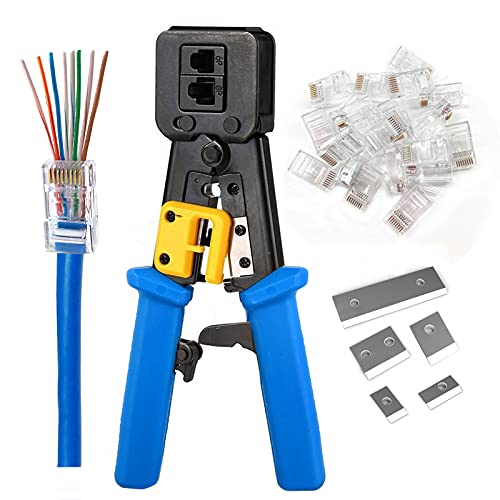
RJ45 Crimping Tool Ethernet Crimper for Cat6 Cat5 Cat5e

RJ45 Crimp Tool Kit Ethernet Crimping Tool for Cat5e Cat6 Cat6a

Proster RJ45 Crimp Tool Cat7 with Network Cable Tester

Klein Tools VDV110-261 Twisted Pair Radial Stripper
Meet The Standout Selections
Klein has built hand tools for tradespeople since the 1800s, and that pedigree shows in this two-piece pass-through kit. The ratcheting mechanism is the headline here: it locks the die closed until the crimp cycle finishes, so you get uniform pressure on every termination instead of relying on grip strength.
The included fifty-pack of CAT6 plugs pairs with a pass-through design, meaning conductors extend through the connector body before trimming. That layout makes wire-order mistakes far easier to spot before you commit the crimp, which matters enormously when you’re terminating behind a desk at arm’s reach.
The Case For It
- Ratchet cycle enforces full-pressure crimps every time, reducing weak terminations
- Pass-through plugs let you visually confirm conductor order before committing
- Fifty CAT6 connectors included, enough for a whole home rewiring project
- Handles CAT3 through CAT6/6A cable across RJ11/RJ12 and RJ45 ends
- Klein’s long service reputation suggests parts and support stay available
Things To Consider
- Pass-through tips need occasional cleaning; clipped conductor stubs can lodge in the die over time
- No separate stripper or cutter listed, so some users add a dedicated prep tool
Who It Suits Best
Anyone running multiple cable drops who wants trade-grade consistency without hiring an installer.
A Better Fit Elsewhere
Shoppers wanting a single tool that also strips and cuts should look at the PETECHTOOL RJ45 Crimp Tool Kit instead.
Where the Klein kit focuses on one connector family done well, this PETECHTOOL crimper spreads its coverage wider. It terminates both 8P8C modular plugs (the standard eight-pin RJ45 end) and 6P6C telephone-style ends, so one tool covers data and phone work in older homes.
The die set is engineered to press each pin through the plug’s insulation and seat every twisted conductor in place, which is what actually creates the electrical connection. Twenty RJ45 CAT6 connectors ship in the box, and replacement blades are available, extending usable life well past the first dull edge.
A Few Highlights
- Covers Cat5, Cat5e, Cat6, and Cat6a RJ45 ends plus RJ12 phone connectors
- Precision dies pierce insulation cleanly so copper meets contact reliably
- Twenty starter connectors mean you can terminate the day it arrives
- Replaceable blades keep long-term ownership costs down
Worth Noting
- AMP-brand connectors aren’t supported, worth checking your existing plug stock first
- Owners commonly report the handle spring needs a drop of oil after heavy sessions
Key Specs
Made For
Homeowners juggling mixed legacy phone lines and modern Ethernet in the same project.
Consider Something Else When
First-timers who want stripping and cutting built into one body will find the PETECHTOOL RJ45 Crimp Tool Kit more forgiving.
This sibling from PETECHTOOL takes a different angle than the value pick above: consolidation. Cutting, stripping, and crimping all happen in one three-in-one body, so there’s no juggling separate tools mid-termination. For a first cable run, fewer steps means fewer chances to nick a conductor.
It’s tuned for pass-through 8P RJ45 plugs on 26 AWG and 24 AWG solid cable, the two gauges most structured wiring uses. Ten Cat6 connectors and a mini wire stripper round out the package, giving novices everything needed for a practice session before touching the wall plate.
Where It Helps
- Three functions in one tool simplify the learning curve considerably
- Tuned for both 26 AWG and 24 AWG cable, matching common household runs
- Mini stripper included for clean jacket removal without conductor damage
- Lightweight enough to carry in a laptop bag for on-site fixes
Small Caveats
- Only ten connectors included, so frequent users will reorder plugs quickly
- Combined-function designs generally wear faster than single-purpose crimpers under daily trade use
Right Fit For
Students, renters, and first-time DIYers building a handful of custom patch cables.
Swap It Out When
Installers verifying shielded Cat7 links should step up to the Proster RJ45 Crimp Tool with its bundled tester.
The Proster earns its slot by solving the problem every other pick leaves open: verification. Its rechargeable cable tester confirms continuity after each crimp, catching a mis-seated pin before the cable goes into the wall. That single feature turns guesswork into certainty on longer runs.
The crimper itself trims excess conductor automatically during the pass-through crimp, skipping the manual snip entirely. A hand-tightened screw adjusts crimping mode between Cat6 UTP and Cat7 STP connectors, and printed line-sequence diagrams on the body help you organize and label cables correctly.
Positive Takeaways
- Rechargeable tester verifies every termination immediately after crimping
- Automatic trimming of excess wire removes a whole manual step
- Supports Cat5 through Cat7, including shielded STP connectors
- On-body 8P and 6P wiring diagrams speed up correct conductor ordering
- Stripping, cutting, and crimping covered in one unit
Points To Note
- The tester battery adds charging to your maintenance routine
- More moving parts than simpler crimpers, so field repairs are less trivial
Feature Snapshot
Who Will Love This
DIYers upgrading to Cat7 or shielded cabling who want proof their terminations actually conduct.
Reach For A Different Pick When
Users prioritizing rugged simplicity over features will prefer the Klein Tools 80024 kit’s straightforward ratchet design.
This one does a single job, and does it better than any combo tool on this list. The radial stripper removes a cable’s outer jacket in one spin, and its high-carbon steel blades self-adjust to the cable diameter so they score the sheath without touching the conductors inside.
Nicked conductors are the classic hidden cause of flaky links, and this tool is designed specifically to avoid them. Klein’s external blade also strips the jacket mid-span or opens it lengthwise, handy for splicing or inspecting an existing run. Compared to the combo crimpers above, it’s slower to justify alone but invaluable alongside them.
Features That Help
- Self-adjusting blades match cable diameter automatically, no dial settings
- Consistent scoring protects inner conductor insulation from nicks
- External blade strips mid-span or slits lengthwise for repairs
- High-carbon steel construction holds an edge through repeated jobsite use
Honest Caveats
- Stripping only, so it complements rather than replaces a crimper
- Blades eventually dull; owners commonly report replacement keeps performance sharp
Quick Facts
Whose Shelf It Belongs On
Volume installers prepping dozens of cable ends weekly who refuse to gamble on conductor damage.
Another Choice May Suit
Occasional users needing one affordable multi-tool should start with the PETECHTOOL RJ45 Crimping Tool instead of adding a dedicated stripper.
What Matters Most Before Choosing Ethernet Cable Tools
Match The Tool To Your Connector Type
Pass-through connectors leave conductor tips exposed so you can verify wire order, while standard plugs hide them inside the body. Your crimper must match whichever style you buy, because the die geometry differs. Check the supported gauge too; most home runs use 24 AWG solid cable, and a mismatched die produces loose pins.
Ratchet Versus Non-Ratchet Action
A ratchet holds the die shut until the full crimp cycle completes, delivering even pressure regardless of hand strength. Non-ratchet tools cost less and weigh less but depend more on technique. First-time terminators almost always get cleaner results from a ratchet, while experienced hands can work fine either way.
Built-In Testing Pays For Itself
A continuity tester catches reversed pairs and unseated pins in seconds, saving hours of troubleshooting a dead wall port later. Bundled testers like the Proster’s rechargeable unit make sense for anyone running cable through walls where re-crimping means pulling the line back out.
Combo Tools Versus Dedicated Units
Three-in-one crimpers cover cutting, stripping, and crimping in a pocketable body, ideal for occasional use. Dedicated strippers such as Klein’s radial model protect conductors better and last longer under daily volume. Honest self-assessment of how often you’ll terminate cables settles this question quickly.
Key Considerations Across These Picks
Traps First Timers Fall Into
The most common mistake is buying a crimper that doesn’t accept pass-through plugs, then discovering your connector stock won’t fit. Another frequent slip is skipping the test step entirely; an unverified cable behind drywall is a costly redo. Always confirm connector compatibility before ordering either component.
What Separates Premium From Basic
Higher-tier tools spend money on hardened die steel, precise machining tolerances, and ratchet mechanisms rated for thousands of cycles. That translates to consistent crimp depth over years, not months. Occasional users rarely notice the difference, but anyone terminating weekly will feel it within the first hundred crimps.
Frequently Asked Questions
Do I need a special crimper for pass-through RJ45 connectors?
Yes, pass-through plugs require a die with an open tip channel that standard crimpers lack. Using the wrong tool crushes the connector or fails to trim the excess conductors.
Can one tool handle both Cat5e and Cat6 cable?
Most quality crimpers on this list support Cat5e through Cat6a since the plugs share the same 8P8C footprint. Shielded Cat7 connectors need explicit support, so check the listing before buying.
Why do my crimped cables fail intermittently?
Intermittent drops usually trace back to conductors not fully seated in the contacts or nicked wires from aggressive stripping. A continuity tester identifies the fault location in seconds.
Is a separate wire stripper necessary?
Combo tools strip adequately for occasional use, though dedicated radial strippers remove jackets with less risk of conductor damage. High-volume installers almost always carry a dedicated stripper.
How long do crimping tool blades last?
Blade life depends on usage frequency and cable abrasiveness, with hobbyist use lasting years and daily trade use requiring replacement sooner. Many models, including both PETECHTOOL options here, accept replacement blades.
Closing Thoughts
Building your own Ethernet cables starts with one honest decision: how often you’ll actually terminate. The Klein 80024 rewards regular use with trade-grade consistency, the Proster adds verification most DIYers will appreciate, and the PETECHTOOL kits keep entry costs friendly. Whichever direction fits your project, match the tool to your connectors and always test before the cable disappears into a wall.