


Two-story homes punish short ladders. Gutters, second-floor windows, and roofline trim all sit well above what a stepladder can safely reach, and renting equipment every season gets old fast. The five options below cover different budgets and storage situations, from a multi-position workhorse to a telescoping model that fits in a closet. Match the reach and weight rating to your actual jobs, and one purchase should carry you through years of maintenance weekends.
A Quick View Of The Lineup
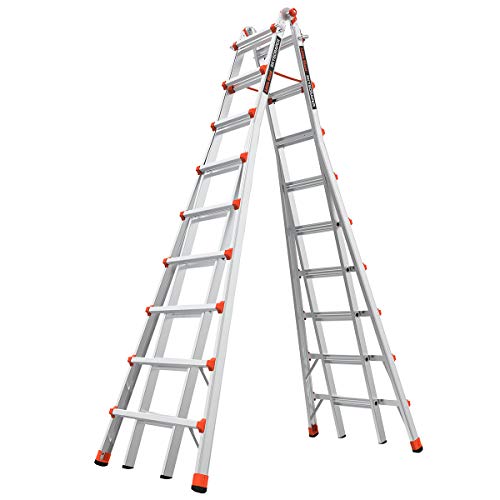
Little Giant Skyscraper 17 ft Adjustable Stepladder

LUISLADDERS Multi-Purpose Aluminium Folding Ladder (12.5 Feet)
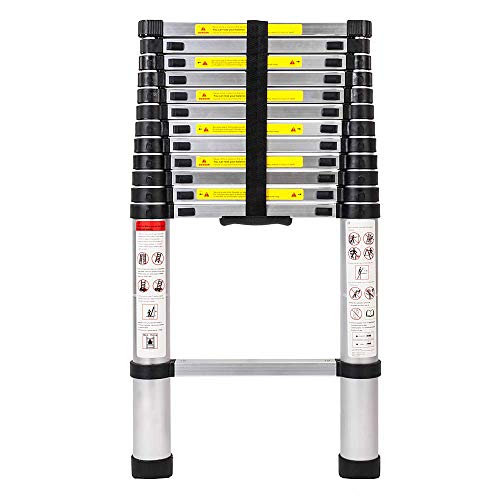
Telescoping Ladders EN131 Standards Aluminum Extension Ladder 12.5Ft

HBTower A Frame 3 Step Extension Ladder, 11 Ft Multi Position (Orange)

Bryner Step Folding Ladder 19.6ft Multi-Purpose Aluminium
Meet The Standout Selections
Most extension ladders need open ground and a wall to lean against. The Little Giant Skyscraper takes a different route: it adjusts its height while staying self-supporting, which makes it the rare tall ladder that works over stairwells, chandeliers, and vaulted ceilings where nothing solid sits nearby.
U-shaped locks and palm buttons handle the height changes, so repositioning mid-job doesn’t turn into a wrestling match. Homeowners with two-story foyers or skylights get the most out of this design, since scaffolding and lifts are bulky overkill for those spots.
Positive Points
- Reaches up to 17 feet without needing a wall for support, handy for interior second-story work
- Palm-button height adjustment lets you resize quickly between tasks instead of climbing down
- Type IAA duty rating supports heavy loads, a step above typical household ladders
- Non-slip feet and included safety straps add stability on smooth floors
Things To Consider
- The multi-position hinge hardware needs occasional cleaning and inspection to keep adjustments smooth
- It’s heavier than a basic stepladder, so carrying it upstairs solo takes some effort
Who It Suits Best
Homeowners with high ceilings, staircases, or skylights who want one self-supporting ladder instead of renting lifts.
A Better Fit Elsewhere
For outdoor gutter work on open ground, the Bryner Step Folding Ladder’s longer 19.6-foot extension mode serves roofline tasks better.
Where the Little Giant specializes in self-supported indoor reach, the LUISLADDERS goes broad. Six security locks let you reshape the same aluminum frame into a scaffold base, leaning extension, A-frame, or several other configurations depending on the job at hand.
Square rungs and supporting tubes give it a steadier feel than round-rung budget ladders, and aircraft-grade aluminum keeps the weight manageable. Folded down, it measures roughly 40.5 by 23.5 inches, small enough to slide along a garage wall between uses.
Practical Pluses
- Seven working shapes replace several single-purpose ladders around a busy home
- Folded footprint tucks into closets or truck beds without hogging space
- EN 131 compliance and a 330-pound load rating suit serious DIY use
- Click-and-lock hinges change configuration without tools
Worth Noting
- The manufacturer advises folding or reshaping only with the ladder flat on the floor, which slows mid-job changes
- A 75-degree lean angle is recommended, so positioning against walls takes some care until it becomes habit
- Reading the manual before first use matters more here than with simpler designs
Key Specs
Made For
Hands-on homeowners tackling varied projects, painting, repairs, and light scaffold work, who want flexibility over specialization.
Swap It Out When
Shoppers who mostly need simple straight-ladder reach may find the HQJUN telescoping model easier to deploy and store.
Storage is the deciding factor for plenty of households, and that’s where this HQJUN telescoping design earns its place. Each section collapses into the one below it, shrinking a 12.5-foot ladder down to something closer to a large suitcase than a garage fixture.
Rubber sleeves on the rung bottoms grip hard surfaces, and locking keys between neighboring sections hold each extended step in place. Apartment dwellers and anyone hauling a ladder in a sedan will appreciate how little room it demands, though frequent extend-and-collapse cycles mean the locks deserve a quick check before each climb.
Notable Gains
- Collapses dramatically smaller than fixed-length extension ladders
- Anti-slip rubber feet improve footing on patios and driveways
- Stabilizer bar at the base helps balance on uneven outdoor ground
- Light enough for one person to carry and position alone
Small Caveats
- Telescoping pins collect dust and grit, so an occasional wipe-down keeps them locking cleanly
- You’ll want to confirm each section clicks fully before putting weight on it, a habit worth building
Right Fit For
City homeowners, renters, and drivers with limited cargo space who still need genuine second-story reach a few times a year.
Another Choice May Suit
Anyone wanting multiple working positions rather than pure portability will get more done with the LUISLADDERS folding combination ladder.
Nervous climbers tend to avoid tall ladders entirely, and HBTower clearly designed with them in mind. Two stabilizer bars widen the ground contact beyond a standard A-frame, which the manufacturer credits with a meaningful stability improvement, and the bright orange finish makes the ladder easy to spot around a yard.
The removable tool tray cuts trips up and down, since screwdrivers and tape measures ride along at waist height. At 11 feet it won’t touch a steep roofline, but for gutters on lower sections, high windows, and tree trimming, it covers a lot of household ground with less wobble anxiety.
Strong Points
- Dual stabilizer bars increase ground contact and steady the whole frame
- Removable tool platform means fewer climbs for forgotten supplies
- 330-pound capacity accommodates most adults with gear
- A-frame setup works on patios and lawns without a wall to lean on
Points To Note
- An 11-foot maximum leaves true roofline access out of range
- The tray adds bulk when carrying the ladder through doorways
Feature Snapshot
Who Will Love This
First-time ladder owners and cautious DIYers handling routine two-story upkeep without professional-grade reach requirements.
Where A Sibling Pick Shines
Higher rooflines call for the Bryner Step Folding Ladder, whose 19.6-foot extension handles what this pick cannot.
Full second-story gutters and low-slope roof edges demand more than 13 feet of reach, and the Bryner delivers nearly 20. Twenty rungs across five sections fold down to under five feet tall, so despite the working height, storage stays realistic for a garage corner or truck bed.
Double-reinforced tube corners and aviation-grade aluminum back the 330-pound rating, and like the LUISLADDERS earlier in this list, it converts among seven positions including a scaffolding base. The trade-off shows up in the package size, roughly five feet long even folded, so apartment dwellers should look at the telescoping option instead.
A Strong Showing
- 19.6-foot extension reaches full second-story gutters and eaves
- Folds to 4.9 feet for compact storage relative to its reach
- Seven configurations cover A-frame, wall, 90-degree, and scaffold setups
- Reinforced corners support confident loading at the 330-pound limit
- SGS EN131 compliance signals third-party safety verification
Honest Caveats
- At 60-plus inches packaged, it needs real storage depth in a closet or vehicle
- More hinges and joints mean more points to inspect and maintain over the years
Core Details
Whose Shelf It Belongs On
Serious DIYers and homeowners planning recurring gutter, siding, and roofline maintenance on a full two-story house.
Consider Something Else When
Indoor-only users with vaulted ceilings will find the self-supporting Little Giant Skyscraper far more practical than a leaning extension.
What Matters Most Before Choosing Extension Ladders For 2 Story House
Reach And Duty Rating
A typical two-story gutter line sits 18 to 22 feet off the ground, and ladder safety rules say your standing point stays four rungs below the top. That math pushes most homes toward a 16-to-20-foot working height. Duty ratings matter just as much: Type IAA supports 375 pounds, while the 330-pound ratings common on aluminum models still leave comfortable headroom for body weight plus tools.
Configuration Versus Simplicity
Multi-position ladders convert between A-frame, extension, and scaffold modes, which sounds ideal until you’re flipping six locks mid-project. Straight telescoping ladders deploy faster but do one job. Honest self-assessment helps here: occasional users usually prefer fewer moving parts, while project-heavy homeowners benefit from the flexibility.
Storage Reality
Measure before buying. A folded multi-position ladder still runs four to five feet long, and telescoping models trade that length for stacked-section weight concentrated in one column. Closet depth, garage wall space, and vehicle cargo area all shape which design actually fits your life.
Surface And Setup Conditions
Soft lawns demand wider feet or stabilizer bars, while smooth concrete favors non-slip rubber pads. Stairwell work rules out most leaning ladders entirely, which is why self-supporting designs command their premium.
Key Considerations Across These Picks
Traps First Timers Fall Into
The classic error is buying for peak reach while ignoring storage, then leaving a 20-foot ladder rusting outside because it doesn’t fit anywhere. Another common slip: skipping the load-rating check and discovering mid-climb that paint cans plus body weight exceed the limit. Read the angle guidance too, since multi-position models often specify a 75-degree lean that feels steeper than instinct suggests.
What Separates Premium From Basic
Higher-tier ladders spend money on hinge hardware, reinforced corners, and third-party standards compliance. Those details show up as smoother adjustments, less flex under load, and longer service life. Paying up makes sense for weekly-use homeowners; once-a-year gutter cleaners can stay in the value tier comfortably.
Frequently Asked Questions
How tall does a ladder need to be for a 2 story house?
Second-story gutters typically sit 18 to 22 feet up, so a ladder offering 16 to 20 feet of working height covers most homes. Always stand at least four rungs below the top for safe balance.
Are multi-position ladders as sturdy as fixed extension ladders?
Quality multi-position models meet the same EN 131 or ANSI-type standards as fixed designs. Their hinges introduce moving parts, so regular inspection matters more than with a simple straight ladder.
Can I use an extension ladder on stairs?
Standard leaning ladders can’t be used safely on stairs because both feet need level ground. Self-supporting adjustable designs like the Little Giant Skyscraper exist specifically for stairwell and uneven-height work.
What does a 330 lb capacity rating actually include?
That figure covers your full body weight plus everything you carry, including tools, paint, and clothing. Add your heaviest realistic load and stay well under the rating rather than right at it.
How should I store an aluminum ladder?
Keep it dry, shaded, and flat or vertically supported to prevent warping. Wipe hinge mechanisms occasionally and check locking hardware before each season’s first use.
Closing Thoughts
Every home on this list solves the two-story problem differently, and the right answer depends on your reach targets, storage space, and how often you climb. Measure your gutter line, check your load needs, then match the ladder to reality rather than ambition. Whichever you choose, treat the first setup as a learning session, and the following seasons get easier.




