


A dripping faucet usually isn’t a broken faucet. It’s a worn seat, the small machined surface inside the valve body where the washer presses shut. Instead of tearing out the whole fixture, a seat grinder or reseater tool cuts that surface flat again so a fresh washer seals cleanly. This guide covers five tools built for exactly that job, from multi-cutter kits to single-purpose wrenches, so you can match one to your plumbing drawer and your patience level.
The Leading Options At A Glance
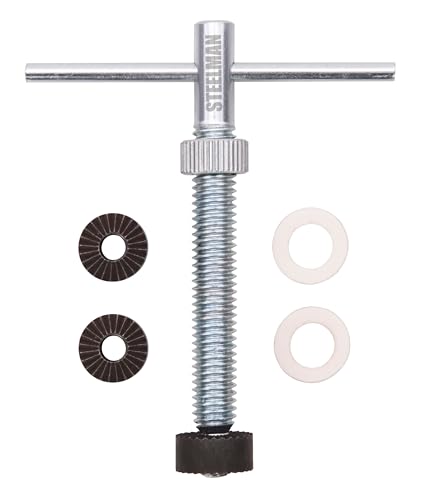
Steelman Faucet Reseating Tool Kit (61205)

LASCO 13-1065 Metal Faucet Seat Grinder
Superior Tool Universal Stepped & Tapered Seat Wrench Set

Enhon Faucet Seat Wrench (Danco 80439 Compatible)

Monument 455e Tap Reseating Tool
What Each Pick Brings To The Table
Most outdoor spigots and hose bibs share a handful of standard seat sizes, and that’s the problem this kit solves. You get three steel flat cutters at 1/2 inch, 9/16 inch, and 5/8 inch, plus two faucet washers, so a single purchase covers most compression-style valves you’ll meet around a typical house.
The all-steel construction matters here because reseating is a cutting job, not a scraping one. A soft tool chatters and leaves an uneven surface; hardened steel tends to bite cleanly. For anyone facing a leaky garden tap after winter, this kit handles the whole repair without a second trip to the hardware store.
What Earns Its Place
- Three cutter sizes cover the seat diameters found on most household faucets and spigots
- Two included faucet washers let you finish the repair in one session instead of sourcing parts separately
- Steel bodies hold their cutting edge through repeated jobs, which owners commonly report as the difference between a smooth reseat and a scratched one
- Sized for DIY hose bib and spigot work, so no disassembly of supply lines is needed
Things To Consider
- Flat cutters only, so recessed or oddly profiled seats may need a different approach
- Keep the cutters dry and lightly oiled between jobs, since bare steel can surface-rust in a damp toolbox
Key Specs
Who It Suits Best
A hands-on homeowner who wants one kit that covers nearly every outdoor tap and laundry sink valve they own.
Where Another Pick Suits Better
Tradespeople working British-standard stopcocks will get more from the Monument 455e, whose feedscrew allows finer depth control.
Where the Steelman kit spreads its coverage across three cutters, the LASCO 13-1065 keeps things deliberately simple: one metal grinder built to resurface worn seats. That simplicity is its appeal. There’s nothing to sort, size, or lose, and the learning curve is about as short as plumbing tools get.
It suits the occasional repairer best. If your faucet drips once every few years and you’d rather spend minutes than money, this is the low-commitment option. The metal body is described as durable and easy to handle, and its small footprint means it lives happily in a crowded kitchen junk drawer until needed.
What Stands Out
- Single-tool design removes any guesswork about which attachment fits your valve
- Metal construction stands up to the twisting pressure reseating demands
- Compact enough to store anywhere, unlike bulkier multi-piece kits
Small Caveats
- One grinding profile means non-standard seat sizes are out of scope
- No spare washers included, so budget for a washer pack before starting the repair
- Occasional users report checking fit against the old seat first, since a mismatch wastes a trip mid-job
Right Fit For
The budget-conscious homeowner tackling an infrequent drip who values simplicity over coverage.
Swap It Out When
Anyone servicing several faucets of unknown vintage should step up to the Superior Tool universal wrench set instead, since its stepped and tapered profiles handle far more seat types.
Not every faucet seat is a simple flat disc. Older fixtures often use stepped seats, which change diameter in tiers, or tapered seats that narrow like a cone. A standard flat cutter can’t grip either. This set from Superior Tool is built around both profiles in a one-size universal format, which is why it earns a permanent spot in mixed-age homes.
The practical payoff shows up the moment you open an unfamiliar faucet body. Rather than measuring and ordering a specific wrench, you fit the stepped or tapered end that matches and get on with removal or resurfacing. Compared with the LASCO’s single-profile approach, this is the flexible option for households where faucets came from different decades and brands.
What Helps Most
- Handles both stepped and tapered seat geometries that defeat flat cutters
- Universal sizing eliminates buying a separate wrench for each fixture brand
- Doubles as a seat removal tool, covering two stages of the same repair
- Streamlines the toolkit, one set replacing a drawer of single-purpose wrenches
Points To Note
- Universal fit trades some precision, so deeply corroded seats can still need penetrating oil and patience
- It’s a wrench first, not a cutter, so pair it with a reseating tool for badly scored surfaces
Feature Snapshot
Built With In Mind
Owners of older or mixed-brand homes who keep hitting seat styles no single-purpose tool matches.
Another Choice May Suit
For straightforward modern compression seats, the Enhon wrench offers a cheaper, more targeted alternative.
Sometimes the seat is too far gone to grind, and replacement is the honest answer. That’s where this Enhon wrench comes in. It works as a stand-in for the Danco 80439 pattern, engaging compression seats so you can back them out of the valve body and thread in new ones.
The clever bit is the two-sided head. One face presents a square profile, the other hexagonal, letting the tool key into the recess of seats across many faucet models and brands. Steel construction throughout means it won’t deform under the torque a stuck, mineral-crusted seat demands, which is exactly when cheaper tools round off and ruin the part you’re trying to save.
Well-Handled Touches
- Dual square/hex heads fit a broad range of compression seat recesses
- Steel build resists bending or breaking under high breakaway torque
- Directly replaces the widely stocked Danco 80439 pattern, simplifying parts matching
- Small enough to keep in a glovebox or tool roll for emergency shutoff valve repairs
Less Ideal Details
- Removal only, so heavily scored seats still need a grinder such as the Steelman kit afterward
- Fit depends on seat condition; badly rounded recesses may slip despite the dual profiles
Who Should Grab It
DIYers replacing compression seats on older faucets who want one dependable wrench rather than a full kit.
Reach For A Different Pick When
Resurfacing rather than replacing is your goal, in which case the LASCO 13-1065 grinder does the actual cutting work.
This is the trade-grade option on the list, and it behaves like one. The Monument 455e recuts worn tap and stopcock seats while the fitting stays connected to the pipework, which saves serious time on jobs where isolation isn’t practical. Its tapered cone screws into the top of a threaded tap body, and case-hardened cutters do the actual machining.
The detail that separates it from the DIY picks is the feedscrew. Fine adjustment lets you advance the cutter in controlled increments, producing an even, concentric finish rather than a guess-and-check scrape. Parts are interchangeable across the series too, and it covers 1/2-inch and 3/4-inch BS1010 fittings. Recessed-thread bodies need the parallel bush variant instead, worth confirming before ordering.
What It Does Well
- Recuts seats without disconnecting the tap from supply pipework
- Feedscrew enables precise, incremental depth control for a true machined finish
- Case-hardened cutters hold their edge through repeated professional use
- Interchangeable parts extend service life across the tool series
- Covers both 1/2-inch and 3/4-inch BS1010 applications
Worth Bearing In Mind
- Requires a threaded tap body top; recessed threads call for the separate parallel bush series
- BS1010 sizing targets UK-pattern fittings, so verify compatibility with North American fixtures
- Overkill for a once-a-decade kitchen drip, both in cost and capability
Technical Reference
Whose Shelf It Belongs On
Working plumbers and serious renovators servicing traditional threaded taps and stopcocks regularly.
Look Elsewhere When
Weekend DIYers fixing a single American-style hose bib will find the Steelman kit simpler and better matched.
Choosing Between These Tools: What Actually Matters
Match The Tool To The Seat
Start by identifying what kind of seat you’re dealing with. Flat compression seats respond to grinders like the Steelman or LASCO, while stepped and tapered designs demand the Superior Tool’s profiles. Guessing wrong means a wasted order and a faucet still dripping, so pull the stem and inspect the seat before spending anything.
Coverage Versus Simplicity
A multi-cutter kit costs more upfront but pays off across a whole house of different fixtures. A single-purpose grinder suits one known repair. Count how many faucets you realistically maintain before deciding which side of that trade suits you.
Material And Adjustment Quality
Hardened steel holds a cutting edge; softer metals don’t. On pricier tools, features like the Monument’s feedscrew translate directly into a smoother finished surface, which is what stops the next washer from wearing out early.
Key Considerations Across These Picks
Traps First Timers Fall Into
The most common mistake is buying a grinder when the seat actually needs removing, or vice versa. Grinders resurface; wrenches extract. Many shoppers also skip the inspection step and order blind, then discover their seat is a nonstandard size. Thirty seconds with a flashlight inside the valve body prevents both problems.
When Paying More Pays Off
Higher-tier tools earn their cost through harder cutters and finer adjustment. For a one-off repair, basic is fine. For anyone maintaining rental properties or older homes, the upgrade pays for itself in repeat jobs and cleaner finishes that extend washer life.
Frequently Asked Questions
What does a faucet seat grinder actually do?
It machines the worn sealing surface inside a faucet valve flat again. A smooth seat lets a new washer compress evenly and stop the drip.
Can I reseat a faucet without shutting off the water?
You should always shut off supply to the fixture first. Cutting a live valve risks spray and debris in the water line.
How do I know my faucet seat size?
Remove the valve stem and measure the seat’s inner diameter. Common sizes include 1/2, 9/16, and 5/8 inch.
Is reseating better than replacing the whole faucet?
For a sound fixture with a worn seat, reseating costs a fraction of replacement. Severely corroded bodies are better swapped entirely.
How often should a faucet seat be resurfaced?
Only when a new washer fails to stop dripping. With a clean reseat, most seats go years between services.
Closing Thoughts
Every faucet on this list fixes the same problem, just at different scales. Match the tool to your seat type, buy hardened steel over soft metal, and don’t skip the inspection step before ordering. Do that, and a ten-dollar drip becomes a twenty-minute afternoon fix instead of a plumber’s invoice.




