


Finishing nail guns live in that awkward middle ground between hand-driving tiny brads and wrestling a compressor. A good one disappears into the work, sinking fasteners flush enough that a dab of putty erases the evidence. Cordless options have closed the gap with pneumatic models for most trim jobs, so you can walk onto a jobsite, a renovation, or a weekend project without dragging hose and a pancake tank behind you.
Gauges confuse a lot of people. An 18-gauge brad is thinner and leaves a smaller hole, great for thin trim and craft projects. A 15-gauge or 16-gauge angled finish nail holds harder material like baseboards and door casing. A 23-gauge pin nail is so thin you barely need to fill the hole, which makes it useful for delicate assemblies. Knowing which gauge you need most cuts the list in half fast.
The picks below cover cordless brad nailers, a cordless 15-gauge angled finish nailer, a 23-gauge pin nailer, and a pneumatic 15-gauge model. Battery kits, bare tools, and budget-friendly options are all represented, so you can match the tool to your platform, your projects, and your wallet.
The Picks In Brief

WEN 20V Cordless 18-Gauge Brad Nailer Kit (20512)

Atomic 20V MAX 23-Gauge Pin Nailer

Metabo HPT NT1850DG 18V Cordless Brad Nailer Kit

CRAFTSMAN V20 18-Gauge Cordless Brad Nailer (CMCN618B)
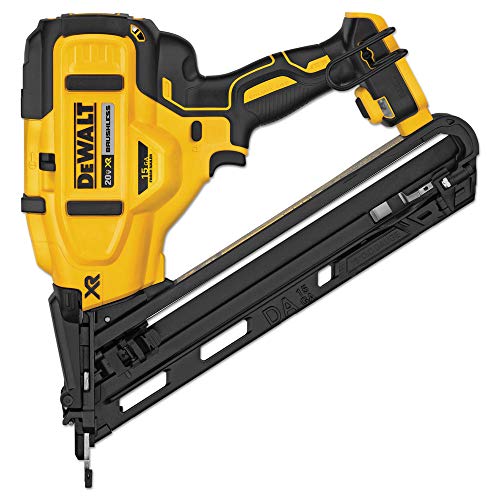
DEWALT DCN650B 20V MAX 15-Gauge Angled Finish Nailer

Ryobi 18V ONE+ 18-Gauge Airstrike Brad Nailer P321

Milwaukee M18 FUEL 18-Gauge Brad Nailer (2746-20)

WORX 20V Power Share 18-Gauge Brad Nailer (WX842L)

3PLUS HDA1564SP 15-Gauge Pneumatic Angled Finish Nailer
Meet The Standout Selections
WEN’s 20V cordless brad nailer is the rare starter kit that ships with everything you need to drive a nail on day one. The 2.0Ah battery and charger are in the box, so you skip the usual bare-tool dance and start on that baseboard project the same afternoon. An 18-gauge brad sits in a sweet spot for thin trim, leaving holes small enough to skip putty in a hurry.
The smart LED indicator on the side takes the guesswork out of battery status, and you’ll get a heads-up on magazine fill and tool temperature. Compared to the Atomic pin nailer below, this one drives thicker brads that hold better in softwood and MDF. It feels like a friendly entry point, not a stripped-down version of a pro tool.
What Works In Its Favor
- Battery and charger included, so there’s no extra shopping to make the tool run
- Smart LED indicator shows battery life, magazine status, and temperature at a glance
- 18-gauge brad handles most indoor trim, paneling, and small craft projects
- No compressor, hose, or gas cartridge to wrestle with, which matters in tight rooms
Things To Consider
- Battery life depends on what you’re nailing, so heavy trim days may need a second pack
- The 18-gauge brad is too thin for the heftier baseboards that benefit from a 15 or 16-gauge
- Cleaning around the magazine and nose takes a few extra minutes after dense use
Who It Suits Best
First-time cordless nailer owners and weekend remodelers who want a complete, ready-to-go kit without tracking down a battery.
Look Elsewhere When
Anyone already invested in a Milwaukee M18 system should reach for the Milwaukee M18 FUEL 18-Gauge Brad Nailer instead, since shared batteries save real money over time.
The Atomic 23-gauge pin nailer is what you reach for when the hole matters more than the hold. A 23-gauge pin is barely thicker than a needle, which means you can fasten decorative molding, picture frame backs, or thin plywood panels without leaving a mark that needs filling. The Compact Series frame is genuinely small, so it fits where a full-size brad nailer would feel clumsy.
Under the hood is a brushless motor (a motor without carbon brushes that lasts longer and runs cooler than brushed designs), which is a meaningful upgrade at this size. It sinks 5/8″ to 1-1/2″ pin nails without a compressor, hose, or gas cartridge, which is the kind of setup that makes trim and craftwork feel quick. Compared to the WEN 18-gauge brad nailer above, this one trades raw holding power for near-invisible fastening.
Reasons It Performs
- Pin nails leave holes so small most projects skip the putty step entirely
- Brushless motor delivers consistent drive depth over the battery’s run time
- Compact body fits into tight spots, inside cabinets, and around detailed moldings
- No compressor, hose, or gas cell needed, so it works on a kitchen table or staircase
Honest Caveats
- Pin nails don’t hold heavy trim on their own, so glue or a brad companion is often required
- Pin nail stock is easy to misplace on a busy bench, given the small fastener size
Made For
Crafters, picture framers, and trim carpenters assembling delicate pieces where the finish needs to stay clean.
Consider Something Else When
Anyone driving baseboards, door casing, or crown molding needs a 15 or 16-gauge finish nailer, and the DEWALT DCN650B 20V MAX 15-Gauge Angled Finish Nailer is the stronger match.
Metabo HPT (formerly Hitachi Power Tools) built a reputation in pneumatic nailers, and the NT1850DG carries that pedigree into the cordless world. The 18V MultiVolt platform means the battery talks to a wider tool family, which is the kind of detail that pays off over years of accumulation. The kit arrives with a 2.0Ah battery, so you can use the tool the day it lands.
This brad nailer pushes 18-gauge fasteners up to 2″, which covers most door casings and baseboard profiles. No compressor, no hose, no gas cartridge, and the fuel gauge on the battery keeps you out of the surprise dead-battery zone. Compared to the CRAFTSMAN V20 below, the Metabo HPT feels more pro-targeted, though the price tag reflects that lean.
Useful Touches
- MultiVolt platform compatibility gives you battery flexibility across many tools
- Drives 18-gauge brads up to 2″, which spans most interior trim and casings
- Onboard fuel gauge on the battery cuts down on mid-project power loss
- Compressor-free operation keeps the jobsite quiet and your hands free of hose
Points To Note
- Heavier body than the WEN kit, so it can wear on overhead work over a long day
- Bare-tool pricing climbs once you factor in extra batteries for bigger projects
The Right Fit
Remodelers and serious DIYers who want a dependable brad nailer backed by a long-standing tool platform.
Where Another Pick Suits Better
Hobbyists on a tighter budget will find the WORX 20V Power Share 18-Gauge Brad Nailer (WX842L) covers the same basic tasks at a friendlier entry price.
The CRAFTSMAN V20 brad nailer makes the most sense if you already own a V20 battery or two, because that’s where the real savings live. As a bare tool, the body alone is a reasonable buy for anyone planning to grow a V20 collection around it. It drives up to 420 nails per charge, which in real trim work is a meaningful chunk of a room’s worth of baseboards.
Tool-free depth adjustment means you can dial in flush or countersunk counters without hunting for a hex key. The over-molded handle (a rubberized grip molded directly over the plastic for better comfort and control) keeps your hand from sliding when the work gets sweaty. Compared to the Metabo HPT NT1850DG above, this one gives up a bit of pro polish for a more approachable price.
Everyday Wins
- Up to 420 nails per charge covers most single-room trim projects
- Tool-free depth adjustment makes it fast to tune the sink depth on the fly
- Over-molded handle gives a secure grip, which helps in awkward overhead positions
- Shared V20 battery platform stretches your existing tool investment further
Trade Offs
- Bare-tool package means you supply the battery and charger, so plan accordingly
- Not ideal for thicker hardwoods, where 15 or 16-gauge nails bite better
Best Suited To
Homeowners already running CRAFTSMAN V20 tools who want a brad nailer that shares the same batteries and charger.
Reach For A Different Pick When
Trim carpenters who shoot all day, every day will want the Milwaukee M18 FUEL 18-Gauge Brad Nailer, which is built for heavier daily use.
The DCN650B steps up to 15-gauge angled finish nails, which is the workhorse territory of baseboards, door casings, and crown molding. The angled magazine is the part that quietly saves you on the job: it slips into inside corners and tight spots where a straight magazine would block your view. Nails from 1-1/4″ to 2-1/2″ cover most interior trim, including the beefier profiles.
A brushless motor backed by the DEWALT 20V MAX battery platform keeps the tool running with zero ramp-up delay between trigger pulls. No gas cartridge to replace, no compressor to drag, which matters on a second-story landing or in a finished house. Compared to the WEN 18-gauge above, this one is a meaningful step up in holding power and a different beast entirely.
Good Reasons To Consider
- 15-gauge angled nails hold dense baseboards, casing, and crown better than thinner gauges
- Angled magazine reaches into inside corners that block straight-magazine tools
- Brushless motor design supports long battery life and a longer service life
- 20V MAX compatibility ties into one of the widest cordless tool platforms around
Softer Spots
- Bare tool, so the battery and charger are an additional purchase if you’re new to the platform
- Heavier than 18-gauge brad nailers, so extended overhead runs can tire your arm
Feature Card
Who Should Grab It
Finish carpenters and serious DIYers who want cordless convenience without giving up the holding power of a 15-gauge finish nail.
Skip It When
Anyone on a strict budget or with no DEWALT batteries yet should look at the 3PLUS HDA1564SP 15-Gauge Angled Finish Nailer, which costs less and runs on shop air.
The Ryobi 18V ONE+ P321 lives in the world’s widest cordless tool ecosystem, which is the whole pitch if you already own a few ONE+ tools. The Airstrike name is a reminder that the tool runs without a hose or compressor, firing 18-gauge brads off battery power alone. It keeps the same form factor as earlier Ryobi nailers, so magazine compatibility across the line holds steady.
This is a bare tool, so budget for a battery if you don’t have ONE+ packs lying around. For most interior trim, paneling, and craft use, the 18-gauge brad is the right size, and the body weight is friendly during long runs. Compared to the CRAFTSMAN V20 above, the choice usually comes down to which battery platform you already trust.
Benefits That Matter
- ONE+ battery compatibility keeps the tool in step with hundreds of other Ryobi products
- Airstrike drive means no hose, no compressor, and no gas cartridge to manage
- Light enough to use overhead without slowing you down on a long day
- 18-gauge brad handles most interior trim, molding, and craft projects
Small Caveats
- Bare-tool sale means you supply the battery, which adds to the real cost
- Not the right tool for thicker hardwood trim, where a 15-gauge would bite better
Perfect Match For
DIYers and homeowners already invested in the Ryobi ONE+ system who want a brad nailer that shares batteries with the rest of the bench.
Another Choice May Suit
Anyone running a DEWALT 20V MAX collection should look at the DEWALT DCN650B 20V MAX 15-Gauge Angled Finish Nailer, which steps up to 15-gauge holding power on the same battery platform.
Milwaukee’s M18 FUEL brad nailer is the tool the brand built for full workdays, and the difference shows up in the firing cycle. The POWERSTATE brushless motor paired with REDLINK PLUS intelligence (an electronic system that protects the tool and battery from overload and overheating) gives you a near-zero ramp-up time between trigger pulls, so the second nail fires as fast as your finger can pull. A nitrogen air spring mechanism (a sealed air chamber that replaces the typical mechanical drive spring) sinks brads consistently in hard and soft materials.
For trim carpenters running hundreds of feet of baseboard in a day, that consistency matters more than small differences in magazine size. As a bare tool, you supply the M18 battery and charger, which most pros already have. Compared to the CRAFTSMAN V20 above, this is a clear step up in daily-use build quality and trigger response.
What Earns Its Place
- POWERSTATE brushless motor and REDLINK PLUS intelligence protect the tool under heavy loads
- Nitrogen air spring delivers consistent sink depth in both soft pine and dense hardwood
- M18 battery platform is one of the most supported in the professional trades
- Trigger response is fast enough for production-level trim work
Worth Bearing In Mind
- Premium price tag puts it out of reach for casual DIYers
- Bare-tool only, so the M18 battery adds to the real cost of ownership
Whose Shelf It Belongs On
Professional finish carpenters and remodelers who depend on a brad nailer for daily production work.
Swap It Out When
Anyone trimming a single room or weekend project will find the WEN 20V Cordless 18-Gauge Brad Nailer (20512) a more sensible spend.
The WORX WX842L is the price-of-entry point on this list, and that matters if you only need a brad nailer for the occasional trim job. Power Share batteries work across 140-plus WORX tools, so the same pack that runs this drives a drill, a sander, and a string trimmer. For light paneling, small baseboards, and craft projects, the 18-gauge brad is the right size.
NailForce Air Impact Technology is the brand’s take on the air-spring drive, and it sinks brads up to 2″ into hardwood. That’s a real spec for a budget-tier tool, and it covers most interior trim scenarios. Compared to the WEN kit above, the trade-off is usually price versus a slightly less polished build, depending on what’s on sale.
Useful Strengths
- Entry-level price keeps the tool within reach for first-time cordless buyers
- Power Share battery works across the wider WORX ecosystem of 140-plus tools
- Drives 18-gauge brads up to 2″, enough for most indoor trim work
- Lightweight body reduces fatigue on overhead or ladder-based projects
Practical Considerations
- Battery life varies with material density, so a second pack helps on bigger jobs
- Not the right tool for daily, heavy professional use
Built With In Mind
Occasional DIYers and homeowners who want a real cordless brad nailer without paying for pro-tier hardware.
Not Your Match When
Anyone planning to install a house’s worth of baseboard should consider the Metabo HPT NT1850DG, which is built for longer daily use.
The 3PLUS HDA1564SP is the only pneumatic tool on this list, and that comes with honest trade-offs. The upside is that air-powered tools have no battery to charge, no fuel gauge to watch, and no ramp-up time between trigger pulls. As long as your compressor is running, the tool fires nail after nail without slowing down, which matters in a workshop where speed is the point.
It shoots 1-1/4″ to 2-1/2″ 15-gauge DA-style angled finish nails (the DA designation means “durable angle,” a 34-degree collation that fits most major-brand angled nailers), which covers the bulk of baseboard, casing, and crown work. Tool-free depth adjustment, a no-mar tip, and a work contact element that prevents accidental firing are the kinds of details that make the tool pleasant to use day after day. Compared to the DEWALT DCN650B above, this one trades cordless freedom for unlimited runtime on shop air.
Points In Its Favor
- No battery means unlimited runtime as long as the compressor is running
- 15-gauge angled finish nails hold dense baseboard and casing securely
- Tool-free depth adjustment lets you tune sink depth in seconds
- No-mar tip protects finished surfaces from unintended damage
Where It Is Less Suited
- Requires a compressor and hose, so it’s a workshop tool, not a jobsite walk-around
- No-mar tip and contact element need occasional cleaning to keep firing smoothly
Who Will Love This
Home shop owners and hobbyists who already run a compressor and want a reliable angled finish nailer at a friendly price.
A Better Fit Elsewhere
Anyone working on finished floors and second-story landings should reach for the DEWALT DCN650B 20V MAX 15-Gauge Angled Finish Nailer, which skips the compressor and hose entirely.
What To Weigh Before Choosing A Finishing Nail Gun
Gauge is the first decision, and it tends to pick the tool for you. An 18-gauge brad nailer covers most indoor trim and craft use, and the hole is small enough to fill with a fingertip swipe. A 15-gauge angled finish nailer is the right call for baseboards, door casing, and crown molding, where the thicker nail gives a firmer hold in hardwood and MDF. A 23-gauge pin nailer is a specialty tool for picture frames, decorative trim, and any job where the hole needs to vanish.
Cordless versus pneumatic is the second fork. Cordless brad nailers run on 18V or 20V battery platforms, and they earn their keep on jobs without easy compressor access. Pneumatic tools still fire faster and run indefinitely on shop air, so they remain the budget choice for a fixed workshop. A few tools, like the 3PLUS HDA1564SP, only make sense if you already own a compressor.
Battery platform matters more than people expect. Buying a bare tool on a platform you already own saves the cost of a battery and charger, which can be a third of the total. The CRAFTSMAN V20, Ryobi ONE+, DEWALT 20V MAX, and Milwaukee M18 systems all have wide selections, so matching the nailer to the rest of your kit is the smart move.
Comfort and weight come into play on long trim days. A lighter tool like the Ryobi P321 or the WORX WX842L stays friendly overhead, while a heavier pro model like the Milwaukee M18 FUEL trades a few ounces for a more solid feel in hand. Magazine angle matters in tight corners, and that’s where a 15 or 16-gauge angled finish nailer pulls ahead of a straight magazine.
Things To Think Through Before You Buy
Pitfalls Shoppers Hit
Buying a bare tool on a platform you don’t yet own is the most common slip, because the battery and charger quietly double the real cost. Picking a gauge that’s too thin for the trim is the next mistake, since 18-gauge brads don’t always hold dense baseboard or hardwood casing. Skipping the no-mar tip and depth adjustment is also a regret, because both features save the finish and your patience on visible surfaces.
Where The Extra Money Goes
Premium models like the Milwaukee M18 FUEL and the DEWALT DCN650B add brushless motors, nitrogen air springs, and platform-wide battery compatibility. The motor upgrade means longer service life and faster trigger response, and the platform ties the tool into a wider ecosystem of batteries. For full-time finish carpenters, those features earn their keep quickly. For a weekend remodeler, a mid-tier tool like the WEN 20V or CRAFTSMAN V20 covers the same trim without the pro-tier spend.
Frequently Asked Questions
What is the difference between a brad nailer and a finish nailer?
A brad nailer drives thinner 18-gauge brads, while a finish nailer drives thicker 15 or 16-gauge nails for a stronger hold. Brad nailers leave a smaller hole, and finish nailers anchor heavier trim.
Can a cordless brad nailer replace a pneumatic one?
For most interior trim and small projects, yes. Cordless models like the Milwaukee M18 FUEL and the DEWALT DCN650B fire fast enough for daily work, though pneumatic tools still run indefinitely on shop air.
What gauge nailer is best for baseboards?
A 15-gauge angled finish nailer is the standard for baseboards, casing, and crown molding. The angled magazine reaches into inside corners that block a straight nailer.
Do I need a compressor for these tools?
Only the 3PLUS HDA1564SP requires a compressor. Every other pick in this roundup is cordless and runs on a battery platform.
How long does a battery last on a cordless brad nailer?
Battery life depends on the material and how hard the motor works. A 2.0Ah pack covers a small to medium trim project, and a second battery helps on longer runs.
The Takeaway
A finishing nail gun is one of those tools that pays you back every time you hang a door, run a baseboard, or build a built-in. Match the gauge to the trim, match the battery platform to the rest of your kit, and the rest of the decision tends to fall into place. Whether you go cordless for jobsite freedom or pneumatic for workshop speed, the right tool removes a small but real frustration from every project that needs trim.




