


Aluminum punishes the wrong abrasive. Load up a cheap disc and within minutes it glazes over, clogs, and starts rubbing instead of cutting, leaving smeared streaks across your weld seams or castings. The right flap disc keeps cutting clean through soft metal, whether you’re dressing a TIG weld on a trailer frame or blending a machined edge on a bracket.
This roundup covers five 4-1/2-inch options that fit most standard angle grinders, from single-grit pro packs to big assorted sets. Each one suits a different shop and budget, so match the disc to the work in front of you.
The Choices Worth Comparing

Benchmark Abrasives Zirconia Type 29 Flap Discs, 60 Grit
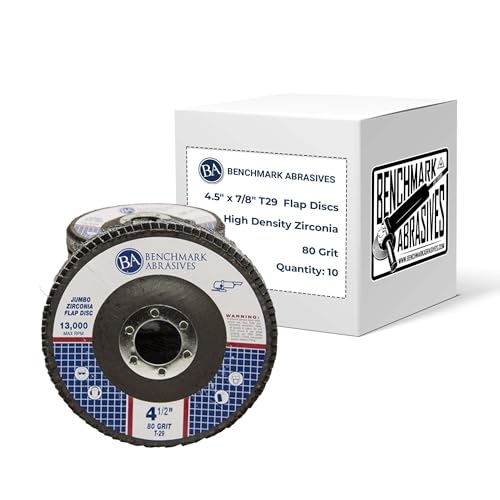
Benchmark Abrasives Zirconia Type 29 Flap Discs, 80 Grit

EZARC Ceramic Flap Discs 120 Grit, Type 27, 5-Pack

Pukamam Zirconia Flap Discs 24 Pack, 40-120 Grit
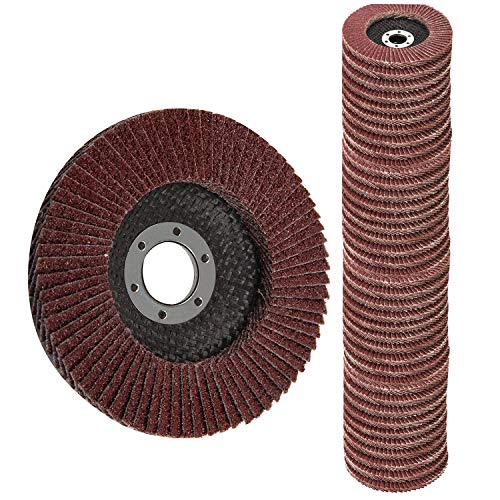
MinCHI257 Aluminum Oxide Flap Discs 40 PCS, 80 Grit
The Strengths Of Each Pick
Type 29 is the curved-profile shape, angled roughly 15 to 25 degrees so the face of the disc contacts the work at a shallow tilt. That geometry makes this Benchmark pack the one to reach for when you’re knocking down a weld bead on aluminum plate or chamfering an edge before assembly. The zirconia cloth holds its edge on soft, gummy metals better than basic aluminum oxide, which matters more than any marketing claim.
The 60 grit sits in the sweet spot between removal speed and a surface you can blend further. Fabricators running a grinder all day tend to keep a pack like this at the bench; weekend users will burn through ten discs slowly enough that one box lasts years.
Advantages To Know
- Curved Type 29 face lets you grind at an angle without digging into the base metal.
- Zirconia abrasive resists clogging on aluminum far longer than standard oxide discs.
- Ten-disc count covers a full project run without reordering mid-job.
- 7/8-inch arbor fits nearly every consumer angle grinder made today.
Things To Consider
- Single grit only, so you’ll need a finer disc afterward for final finishing.
- Zirconia still loads up eventually on very soft alloys; periodic wire-brushing of the flaps extends life.
At A Glance
Who It Suits Best
Fabricators and serious DIY welders who spend real bench time dressing welds on aluminum will get the most out of this pack.
A Better Fit Elsewhere
Shoppers who want multiple grit stages in one purchase should look at the Pukamam Zirconia Flap Discs 24 Pack instead, which spans 40 through 120 grit.
This is the sibling to the 60 grit Benchmark above, built on the same European zirconia cloth and high-density jumbo flap layout but stepped down one grit grade. In practice, 80 grit is where most fabricators land for final blending: it still removes material at a useful pace yet leaves fewer deep scratches to chase with a sanding pad later. On aluminum railings, boat fittings, or visible weld seams, that difference shows up immediately.
You may find 80 slightly slow for heavy bead removal, and that’s fine, because the smarter workflow is roughing with the 60 then switching here. Pros who care about surface consistency before anodizing or polishing usually keep both boxes on the shelf.
What Helps Most
- 80 grit leaves a noticeably cleaner scratch pattern than 60, cutting prep time before finishing.
- Same dense flap construction as its sibling, so flap edges wear evenly instead of fraying early.
- Pairs naturally with the 60 grit version for a two-stage workflow.
Worth Noting
- Not aggressive enough to be your only disc if you routinely remove thick weld buildup.
- Like any flap disc, store it flat and dry; damp storage softens the resin bond over time.
Made For
Experienced metalworkers chasing a consistent pre-finish surface on aluminum parts headed for polishing or coating.
Where A Sibling Pick Shines
Anyone needing raw removal power first should start with the Benchmark 60 grit pack above, then step to this one for blending.
Ceramic grain changes the math on heat. Unlike the zirconia used by both Benchmark packs, ceramic abrasive sheds heat faster and self-sharpens as it wears, which matters enormously on aluminum since overheating smears the surface and can distort thin sections. This EZARC set uses shaped ceramic grain and a flat Type 27 profile, the right shape for working flush across broad surfaces rather than edges.
The clever detail is the plastic backplate: once the outer flaps wear down, you snap off the rim and expose fresh cloth underneath, effectively getting a second working life per disc. Five discs sounds modest next to the bulk packs below, but the extended lifespan narrows that gap considerably. At 120 grit this is a finishing tool, not a hogging tool, and it’s priced accordingly.
Strengths Worth Knowing
- Ceramic grain dissipates heat better, reducing smear and discoloration on soft alloys.
- Trimmable plastic backing exposes unused abrasive, stretching each disc’s service life.
- 120 grit produces a fine scratch pattern suited to visible surfaces.
- Flat Type 27 face works well for broad, level blending passes.
Small Caveats
- Only five discs per pack, so heavy users will reorder more often than with bulk sets.
- Too fine for initial weld removal; pair it with a coarser disc earlier in the sequence.
Right Fit For
Detail-oriented builders finishing aluminum that stays visible, such as motorcycle parts, furniture, or architectural trim.
Consider Something Else When
Cost-conscious hobbyists doing occasional coarse cleanup are better served by the MinCHI257 aluminum oxide 40-pack listed last.
Most people buying their first real grinder don’t know which grit they need yet, and that’s exactly who this Pukamam assortment serves. Six discs each of 40, 60, 80, and 120 grit means you can run a complete progression on one aluminum project: strip rust or heavy weld with the 40, blend with the 60 and 80, then finish with the 120 without ever changing brands or backing sizes.
All 24 discs share the standard 4-1/2-inch diameter and 7/8-inch arbor, and the manufacturer rates them to 13,300 RPM, comfortably above typical grinder no-load speeds around 10,000 to 11,000 RPM. Zirconium oxide abrasive gives them respectable durability for the price tier. The honest trade-off is consistency: budget assortments vary more disc-to-disc than premium lines, so expect some flaps to wear faster than others.
Features That Help
- Four grit grades let you learn what each stage does before committing to single-grit packs.
- Rated up to 13,300 RPM, covering virtually all common consumer grinders.
- Zirconium oxide construction holds up better than basic oxide at this price point.
- 24 discs keep a home shop stocked through many weekends of work.
Points To Note
- Quality control on budget assortments can be uneven; inspect discs before mounting.
- No dedicated Type 29 conical option, so edge-angle grinding is less natural.
- Coarse 40 grit flaps wear quickly on hard weld beads.
Quick Facts
Who Will Love This
New grinder owners and general-purpose garage shops that tackle mixed metals and want one box covering every stage.
Skip It When
Production welders burning through dozens of identical discs weekly will prefer the consistency of the Benchmark 60 grit pack reviewed first.
Forty discs for the price of a nice dinner out changes how you work: you stop rationing abrasives and just swap when performance drops. That’s the core appeal of this MinCHI257 pack. The catch is the abrasive itself. Aluminum oxide is the entry-level grain in this category, and on aluminum specifically it glazes faster than the zirconia in the Pukamam pack or the ceramic in the EZARC set, so individual disc life runs shorter.
The resin bonding does resist clogging reasonably well for the class, and the manufacturer lists compatibility with grinders up to 17,000 RPM, the highest rating in this lineup. For light-duty use, cleaning paint off steel, touching up rust spots, occasional aluminum work, the sheer volume offsets the shorter per-disc lifespan easily. Heavy daily aluminum grinding is where this pick loses its shine.
The Practical Payoff
- 40-disc volume means always having a fresh disc ready mid-project.
- Rated for grinders up to 17,000 RPM, the highest ceiling among these picks.
- Resin-bonded flaps resist static buildup and clogging during lighter tasks.
- Assorted pack layout keeps grit organization simple at the bench.
Less Ideal Details
- Aluminum oxide glazes quicker on soft metals than zirconia or ceramic alternatives.
- Per-disc lifespan is shorter, so frequent users burn through the box fast.
Core Details
Whose Shelf It Belongs On
Occasional DIYers and homeowners handling mixed small repairs benefit most from the low commitment and big supply.
Swap It Out When
Anyone doing regular aluminum fabrication should step up to the EZARC Ceramic 120 Grit pack for cooler cutting and longer disc life.
What Matters Most Before Choosing Flap Discs For Aluminum
Match The Grain To The Metal
Zirconia and ceramic grains cut aluminum cleanly because they resist loading, the process where soft metal packs into the abrasive and stops it cutting. Aluminum oxide works, but expect shorter disc life and more frequent swaps. Ceramic costs more upfront and repays it on heat-sensitive work.
Understand Grit Progression
Grit numbers run inverse to coarseness: 40 strips material fast, 120 leaves a near-sanded finish. Most aluminum jobs want two stages, a coarse pass for shaping and a fine pass for blending. Buying a multi-grit assortment first teaches you which grades you actually reach for.
Get The Shape Right
Type 27 discs sit flat against broad surfaces, ideal for leveling panels and wide blending. Type 29 discs carry a conical curve that lets you grind edges and weld seams at an angle without gouging. Fabricators typically own both shapes.
Respect The Ratings
Every disc carries a maximum RPM rating, and your grinder’s no-load speed must stay under it. Check the rating printed on the disc before mounting anything new, and wear eye protection regardless of task size.
Key Considerations Across These Picks
Wrong Turns To Avoid
The most common mistake is buying one grit and forcing it through every job. A 40 grit disc left on for finishing chews aluminum into a moonscape. The second trap is ignoring RPM ratings when upgrading grinders, which turns a cheap disc into a safety issue.
Where The Extra Money Goes
Ceramic and premium zirconia discs cost several times more per unit because the grain itself is engineered to self-sharpen and shed heat. For daily production work, that engineering pays for itself in disc changes avoided. Weekend users rarely recover the difference.
Frequently Asked Questions
Can flap discs actually be used on aluminum?
Yes, provided you choose a grain that resists loading. Zirconia and ceramic flap discs handle aluminum well, while basic aluminum oxide tends to clog faster on soft alloys.
What grit works best for smoothing welds on aluminum?
Start around 60 grit to knock down the bead, then move to 80 or 120 for blending. Jumping straight to fine grit wastes time and glazes the disc.
What’s the difference between Type 27 and Type 29 discs?
Type 27 has a flat face for surface work held level against the material. Type 29 has a conical curve designed for angled grinding along edges and weld seams.
Why do my flap discs keep clogging when grinding aluminum?
Soft aluminum packs into the abrasive gaps and coats the flaps. Switching to zirconia or ceramic grain, reducing pressure, and periodically brushing the disc all help.
Are these discs safe at full grinder speed?
Each disc carries a maximum RPM rating printed on it, and your grinder’s rated speed must not exceed that number. Always confirm the match before mounting and wear proper eye protection.
Closing Remarks
Choosing between these five comes down to honesty about your workload. Daily fabricators should lean toward the Benchmark zirconia packs, detail finishers toward the EZARC ceramic set, and everyone else toward the value assortments that cover multiple grits. Buy for the work actually on your bench, not the work you imagine doing someday, and any of these five will serve you well.




