


Cutting rust off a trailer frame or smoothing a weld at 9 pm without waking the neighbors takes the right tool, not just any tool. This roundup covers five flat head angle grinders spanning cordless kits, corded workhorses, and compact air die grinders, so garage DIYers, metalworkers, and engine builders can match a grinder to their actual workload instead of guessing from spec sheets.
The Essentials At A Glance

AOBEN Cordless Angle Grinder 4-1/2 inch, 21V Battery Kit

AOBEN 900W Angle Grinder 4-1/2 inch

WORKPRO Air Angle Die Grinder, 20000 RPM

DCK 9.0Amp Angle Grinder 1100W (KSM17-115B)
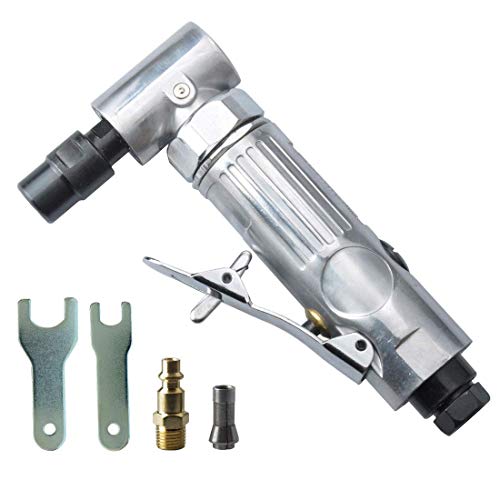
1/4-Inch 90° Mini Pneumatic Angle Die Grinder
A Closer Look At Each Pick
Anyone who has dragged an extension cord across a muddy yard to cut fence posts will understand the appeal here. The AOBEN runs on two included 21V 4.0Ah batteries, so one charges while the other spins the 4-1/2 inch wheel through metal cutting and grinding tasks.
The brushless motor is the headline: unlike traditional brushed motors, it skips physical carbon brushes, which means less internal friction, faster heat dissipation, and typically a longer service life. Three speed settings top out around 9500 RPM, letting you dial down for polishing and open up for cutoff work.
What Stands Out
- Brushless motor design generally runs cooler and outlasts brushed equivalents
- Two 4.0Ah batteries mean near-continuous work with rotation charging
- Three adjustable speeds suit grinding, cutting, and lighter polishing alike
- No cord means easier maneuvering on ladders, fences, and vehicle panels
- Kit arrives complete with charger, so nothing extra to source
Things To Consider
- The 9500 RPM ceiling sits below some corded rivals, which shows up on long, heavy cuts
- Battery care matters: store packs indoors and avoid leaving them in a freezing shed
Key Specs
Who It Suits Best
Farm, yard, and jobsite users who need real cutting power where outlets don’t reach.
A Better Fit Elsewhere
Shoppers doing all-day bench work should look at the DCK 9.0Amp Angle Grinder, whose higher RPM and corded power suit sustained fabrication better.
Where the cordless AOBEN chases flexibility, this sibling goes the other way: plug it in, flip the slide switch, and grind. There’s no speed control to fiddle with, which sounds like a downgrade until you realize how many weekend jobs never needed one.
The 7.5 Amp motor pushes an 11,000 RPM no-load speed, comfortably ahead of the battery model above, and the compact ergonomic body keeps your grip comfortable during longer DIY sessions. For a first grinder, that simplicity is genuinely hard to argue with.
Practical Pluses
- 11,000 RPM delivers quicker stock removal than the cordless kit’s 9500 RPM ceiling
- Slide switch keeps operation dead simple for newcomers
- Safety guard ships included, ready for first use
- Lightweight build reduces arm fatigue on overhead or awkward-angle cuts
Small Caveats
- No variable speed, so delicate polishing work asks for a feather-light touch
- Corded format limits reach unless you own a decent extension lead
Right Fit For
Beginners and occasional DIYers tackling brackets, bolts, and rust removal around a home garage.
Where A Sibling Pick Shines
For detail work like deburring and porting, the WORKPRO Air Angle Die Grinder reaches spots a 4-1/2 inch wheel simply can’t.
A die grinder trades raw cutting muscle for precision. This pneumatic (air-powered) WORKPRO spins small mounted points and carbide burs at up to 20,000 RPM, and its 90-degree head angles into tight corners that a full-size grinder can only dream about.
Both 1/4-inch and 1/8-inch collets come in the box, covering most common bur shanks without extra purchases. An integral safety-lock throttle lever stops accidental start-ups, a small detail you’ll appreciate once the compressor kicks on unexpectedly.
Features That Help
- Dual collets accept both 1/4-inch and 1/8-inch accessory shanks
- 90-degree head reaches angled and cramped surfaces easily
- Safety-lock throttle prevents surprise spin-ups
- Handles deburring, edge-breaking, porting, and polishing in one tool
Points To Note
- Requires an air compressor, so total cost includes equipment many garages lack
- Regular oiling of the air inlet is part of ownership; skip it and performance fades
Quick Facts
Made For
Hobby machinists and welders with a compressor who spend more time finishing than fabricating.
Consider Something Else When
Without compressed air available, the corded AOBEN 900W Angle Grinder covers general cutting duties far more practically.
This is the brute of the lineup. DCK’s copper-wound motor draws 9 amps and turns an 11,800 RPM wheel, numbers aimed squarely at people who cut steel every working day rather than twice a year. Plumbers, fabricators, and maintenance crews are the obvious audience.
Compared with the smaller AOBEN corded unit, you gain roughly 800 RPM plus a lock-on slide switch for long passes, a spindle lock for fast disc swaps, and six included discs so the tool earns its keep on day one. Two safety guards also ship in the box, handy when switching between cutting and grinding setups.
Well-Handled Touches
- 11,800 RPM and 1100W output make quick work of thick stock
- Spindle lock speeds up wheel changes mid-project
- Lock-on switch reduces finger strain during extended cuts
- Six starter discs and two guards included in the package
Worth Bearing In Mind
- Assuming a standard household circuit, sustained high-load use may trip shared breakers
- Lock-on switches demand respect; always confirm disengagement before setting the tool down
Who Will Love This
Working metalworkers and serious home fabricators who run a grinder daily and want headroom to spare.
Reach For A Different Pick When
Occasional users will find the lighter AOBEN 900W Angle Grinder easier to handle and entirely sufficient for weekend tasks.
Engine builders and intake-porting enthusiasts tend to be picky about throttle control, and this polished aluminum die grinder answers with a built-in air regulator. That dial lets you ramp speed gradually rather than jumping straight to full blast, which matters when blending a valve seat by hand.
Next to the WORKPRO die grinder earlier, this one leans further into refinement: rear exhaust directs spent air away from your workpiece, and sealed ball bearings keep grit out of the motor for smoother long-term operation. The lightweight body helps too, since precision work punishes heavy tools.
Standout Benefits
- Built-in regulator gives precise speed control at your fingertips
- Rear exhaust keeps debris and air away from the finish surface
- Sealed ball-bearing construction resists contaminant buildup
- Aluminum housing keeps the tool light for detailed hand-guided work
The Fine Print
- Air tools need clean, lubricated supply air; moisture in the line shortens tool life
- Only a 1/4-inch collet is standard here, limiting some smaller bur options
Feature Snapshot
Whose Shelf It Belongs On
Automotive enthusiasts and metal finishers already running a compressor who value finesse over force.
Not Your Match When
Heavy plate cutting calls for the DCK 9.0Amp Angle Grinder, whose power dwarfs anything a die grinder can offer.
What Matters Most Before Choosing Flat Head Angle Grinders
Match the Power Source to Your Workspace
Cordless grinders shine where outlets are scarce: fences, vehicles, remote property lines. You trade peak RPM and unlimited runtime for that freedom, though modern brushless kits narrow the gap considerably. Corded models deliver steady full-power output indefinitely, which is why fabrication shops still rely on them. Air-powered die grinders occupy a third niche entirely, built for precision rather than bulk removal, and they presuppose a compressor.
Speed Range Decides What You Can Safely Do
RPM (revolutions per minute) measures how fast the disc or bur spins. High speed removes metal quickly but scorches thin sheet and glazes sanding discs. Adjustable speed, whether electronic presets or an air regulator, lets one tool serve roughing and finishing duty. Fixed-speed grinders cost less and suit straightforward cutting, but they ask more skill from your hands on delicate material.
Comfort Features Pay Off Over Time
Auxiliary handles, lock-on switches, spindle locks, and balanced bodies seem minor until hour two of a project. A spindle lock alone saves meaningful frustration during frequent disc changes, and a second grip position steadies the tool against torque reaction. Weigh these details seriously for any job lasting beyond ten minutes.
Check What Ships In the Box
Batteries, chargers, guards, wrenches, and starter discs add up fast when bought separately. A kit that includes two batteries or six discs often represents better real-world value than a bare tool at a nominally lower figure.
Key Considerations Across These Picks
Traps First Timers Fall Into
The most common mistake is buying a die grinder expecting cutoff-wheel performance, or vice versa; they solve different problems despite sharing a name. Another slip is ignoring power requirements, since a 9-amp corded grinder deserves its own circuit on older wiring. Finally, check accessory availability before committing, because obscure collet sizes or proprietary batteries create ongoing costs.
When Paying More Pays Off
Higher-tier grinders earn their price through motors, bearings, and control. Brushless electronics, copper windings, and sealed bearings extend service life under daily abuse, while variable speed and regulators expand what one tool can do. Weekend users rarely recoup that premium; professionals running a grinder for hours daily usually do within a season.
Frequently Asked Questions
Can a flat head angle grinder cut thick steel?
Yes, within reason. A 4-1/2 inch grinder handles plate steel using cutoff wheels, though very thick sections require multiple passes and patience.
Do air die grinders need special compressors?
Most run happily on a standard shop compressor delivering typical garage-level pressure and airflow. Check the tool’s CFM requirement against your compressor rating before pairing them.
Is a brushless motor worth the upgrade?
For cordless grinders used frequently, generally yes. Brushless designs waste less energy as heat, extend runtime per charge, and avoid brush wear over the tool’s life.
What disc size should a beginner start with?
The 4-1/2 inch size is the sensible default. Consumables are widely stocked, replacement wheels cost little, and the size balances cutting depth against manageable weight.
How do I maintain a pneumatic die grinder?
Add a few drops of air-tool oil to the inlet before each use and drain your compressor tank regularly. Dry, lubricated air is what keeps the internal bearings healthy.
Closing Remarks
Five grinders, three power sources, and honestly no bad option among them, just different briefs. Pick the AOBEN cordless kit for untethered versatility, the AOBEN corded for budget simplicity, either die grinder for precision finishing, or the DCK when raw output drives your day. Match the tool to the work in front of you and each one will hold up well.




