


Nothing ruins a laminated countertop faster than a bit that chatters, burns, or wanders off the template. A good flush trim bit rides a bearing along your pattern and shears the excess material away in one pass, which is why cabinetmakers and weekend DIYers alike treat this little tool as shop currency. The five bits below cover the full range of needs, from basic template work to spiral-flute finishing on delicate veneer. Each one earns its place on specs, build quality, and how it behaves in real cutting scenarios.
The Essentials At A Glance

Freud 50-102 Top Bearing Flush Trim Bit
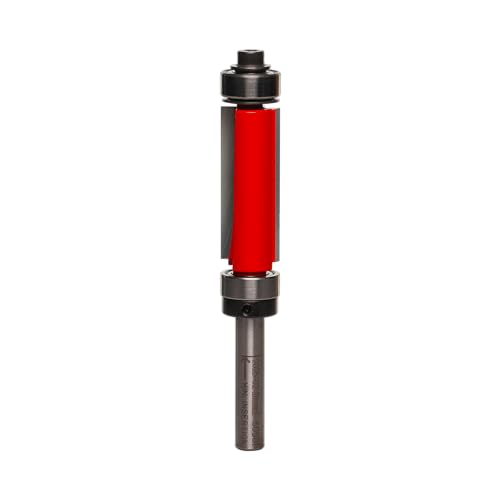
Freud 50-501 Top & Bottom Bearing Flush Trim Router Bit

Whiteside RFT2100 Spiral Upcut Flush Trim Bit
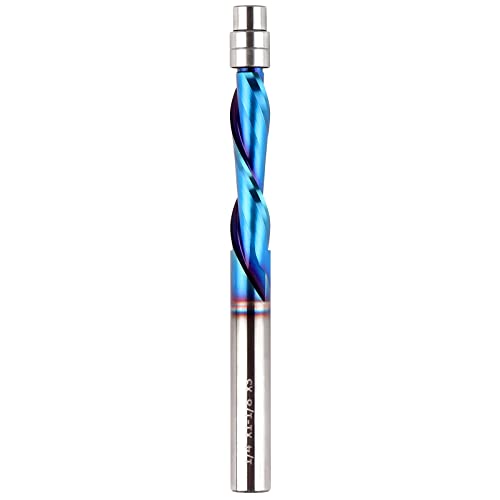
EANOSIC Downcut Spiral Flush Trim Bit

Freud 42-116 Bearing Flush Trim Bit 2″ Height
More On The Choices That Made The List
This is the classic single-bearing design that most woodworkers learn template routing on. A bearing mounted above the cutters rides against your pattern while the blades below trim the workpiece flush, so the layout sits on top where you can see it. The 1/2-inch diameter gives you a wider bearing surface to track, which helps on curved sign lettering and shaped panels.
For anyone building jigs or duplicating shapes, that visibility matters more than raw cutting height. Freud’s TiCo carbide formulation is widely reported to hold an edge through repeated laminate passes without the burning cheaper bits leave behind.
Reasons It Performs
- Top-mounted bearing keeps your template visible throughout the entire cut.
- The 1/4-inch shank fits compact trim routers and most standard collets.
- TiCo hi-density carbide tends to stay sharp longer on abrasive laminate surfaces.
- Two cutters shear cleanly, leaving edges ready for light sanding only.
Things To Consider
- A single top bearing limits you to one cutting direction, so plan your pass order.
- Owners commonly report that bearings need occasional oiling to avoid scoring the template.
At A Glance
Who It Suits Best
Hobbyists and sign makers who route patterns laid over the workpiece and want dependable tracking at a modest price.
Where Another Pick Suits Better
Anyone trimming both sides of a panel will get more flexibility from the Freud 50-501 with its dual bearings.
Where the 50-102 locks you into one orientation, this bit carries bearings at both ends of its two cutters. Flip it or reposition the router and you can ride either the top or bottom guide against your template, which turns out to be a genuine time-saver when you’re trimming laminated tops or bringing veneered plywood flush with shelving.
In practice, cabinet shops keep one of these in the router permanently because it handles pattern work and edge trimming without swapping tools. The same 1/2-inch diameter and 1/4-inch shank as the first pick means it drops straight into a trim router too.
Positive Points
- Dual bearings let you choose the cutting direction that suits each job.
- Handles laminate tops, veneered plywood, and general flush trimming with equal confidence.
- Same familiar 1/4-inch shank as the 50-102, so no collet changes.
- TiCo carbide construction holds up well against glue lines and abrasive faces.
Worth Noting
- Two bearings mean two surfaces to keep clean; pitch buildup here shows up as burn marks.
- You may find the 1/4-inch shank flexes slightly in deep passes on dense hardwood.
Made For
Cabinetmakers and serious DIYers who split their time between template routing and laminate edge work and want one bit for both.
Consider Something Else When
Shops cutting thick stock regularly should step up to the Freud 42-116, whose taller profile and heavier shank handle deeper material.
Spiral geometry changes everything about how a flush trim bit cuts. Instead of straight blades chopping at the wood, the RFT2100’s upcut flutes act like a drill bit turned sideways, shearing fibers and pulling chips upward and out of the kerf. That evacuation is why the surface left behind tends to be noticeably smoother than what straight bits produce, especially in figured hardwood.
The double ball bearing pilot adds stability that single-bearing designs lack, keeping the bit from wandering on long template runs. Solid carbide construction throughout, rather than a carbide-tipped steel body, contributes to the crisp feel owners describe on dense material.
The Upside
- Upcut spiral flutes pull debris out of the cut, protecting the bottom surface.
- Double bearing guides resist wander on extended template passes.
- Solid carbide body holds a keen edge in hardwood far longer than tipped bits.
- One-inch cutting length covers typical plywood and panel thicknesses comfortably.
Trade Offs
- Upcut action lifts fibers at the very top edge on some veneers, so test on scrap first.
- Solid carbide is harder but more brittle; a drop on concrete can chip the flutes.
Quick Facts
Right Fit For
Woodworkers chasing tear-out-free finishes in hardwood and premium ply, using routers with a 1/4-inch collet.
Look Elsewhere When
For heat-prone laminate work, the coated EANOSIC downcut bit below manages temperature better.
An upcut pulls chips up; a downcut presses them down and pushes fibers toward the table, which is exactly the behavior you want on fragile veneer faces. This EANOSIC pairs that downcut spiral with a blue nano nACo coating, a thin ceramic layer that raises surface hardness and helps shed the heat that normally scorches laminate edges.
The tip carries two independent ball bearings seated on pressed steel collars, a detail that keeps the guide running smoothly against your template. Compared with the Whiteside above, you trade some raw edge quality in solid wood for better behavior on thin, easily chipped surfaces, usually at a friendlier cost.
The Good Stuff
- Downcut flutes hold delicate veneer down instead of lifting it.
- Nano coating improves hardness and heat resistance during long trimming sessions.
- Dual bearings on steel collars track templates without snagging.
- Solid virgin carbide construction at a price that stings less to replace.
Small Caveats
- Downcut action packs chips downward, so dust collection becomes more important.
- Some users report the coating wears at the flutes after heavy laminate use.
Who Will Love This
DIYers working with veneered panels and melamine who want clean top surfaces without spending premium-bit money.
Another Choice May Suit
Hardwood furniture builders after maximum finish quality should reach for the Whiteside RFT2100 instead.
Everything about this bit says heavy work. The 1/2-inch shank resists the deflection that slimmer shafts suffer in deep cuts, and the tall 2-inch body reaches through stacked blanks and thick countertop buildups in a single pass. Its lower bearing rides the pattern beneath the cutters, a layout that suits duplicating shapes from a master template bolted under the work.
Laminate installers are the obvious audience here, since post-formed countertop edges demand both reach and stiffness. The honest caveat is weight: a bit this large asks more from a compact trim router than it can comfortably give, so pair it with a full-size machine.
The Value In It
- Two inches of cutting height clears thick stock and laminated buildups in one go.
- The 1/2-inch shank minimizes chatter and deflection under load.
- TiCo hi-density carbide stands up well to abrasive laminate and glue lines.
- Lower bearing position supports under-template duplication work naturally.
Points To Keep In Mind
- Requires a router with a 1/2-inch collet, ruling out most compact trim machines.
- The large profile demands slower feed rates until you learn its rhythm.
Core Details
The Right Fit
Countertop installers and production shops running full-size routers over thick laminated assemblies.
Reach For A Different Pick When
Lighter template jobs fit better in the Freud 50-102, which suits smaller routers and overhead patterns.
What Matters Most in a Flush Trim Bit
Bearing Placement Changes Everything
Top bearings suit patterns laid over the work, bottom bearings serve templates clamped underneath, and dual-bearing designs do both. Before buying, look at how your existing jigs sit relative to the workpiece. Matching the bit to your jig saves constant flipping and re-clamping mid-project.
Shank Size and Router Match
A 1/4-inch shank fits trim routers and smaller machines, which is fine for shallow laminate passes. Dense hardwood and deep cuts generate side loads that favor a 1/2-inch shank’s stiffness. Confirm your router’s collet size first, because the best bit in the world is useless if it won’t seat properly.
Spiral vs Straight Flutes
Straight two-cutter bits like the Freud models shear predictably and cost less. Spirals, whether upcut or downcut, manage chips actively and leave finer surfaces, but each direction has a bias. Upcuts protect bottom surfaces, downcuts protect top veneer. Choose based on which face of your material you cannot afford to mar.
Carbide Quality and Coatings
TiCo hi-density carbide and nano coatings exist for one reason: abrasive materials destroy cheap edges quickly. Laminate, MDF, and glue lines all dull plain steel-carbide hybrids fast. Spending more upfront usually buys fewer replacements over a year of regular shop use.
Key Considerations Across These Picks
Traps First Timers Fall Into
The most common mistake is buying a bit taller or larger than the job needs, then fighting chatter on a lightweight router. Another frequent slip is ignoring bearing maintenance; dry, pitch-caked bearings drag across templates and burn the wood. Clean and oil them after every few sessions.
What Separates Premium From Basic
Higher-tier bits spend more on carbide density, grinding precision, and bearing quality. That translates into edges that stay sharp through dozens of projects and cuts that need less sanding. Casual users trimming a shelf twice a year can skip the upgrade; anyone routing weekly will feel the difference immediately.
Frequently Asked Questions
What does a flush trim router bit actually do?
It trims one surface perfectly level with another using a bearing that follows an edge or template. The result is a seamless joint between two pieces of material.
Can I use a flush trim bit without a template?
Yes, by riding the bearing against an existing edge such as a shelf overhanging its cleat. Without any reference edge, though, the bit has nothing to follow.
Why does my flush trim bit burn the wood?
Burning usually comes from a worn bearing, excessive speed, or feeding too slowly. Dull carbide and pitch buildup on the bearing are the two most frequent culprits.
Are spiral flush trim bits worth the extra cost?
For hardwood and visible show surfaces, most woodworkers find they are. Straight bits remain perfectly adequate for utility work and softwoods.
How long should a quality flush trim bit last?
With proper cleaning and storage, a carbide bit from a reputable maker commonly serves years of hobbyist use. Heavy daily laminate work shortens that considerably regardless of brand.
Closing Thoughts
Every bit on this list solves the same problem differently, and the right answer depends on your router, your materials, and how often the tool leaves the drawer. Start with the Freud 50-102 if you’re building your first template kit, add the Whiteside when finish quality starts mattering, and let the 42-116 handle anything thick. Match the bit to the work in front of you and clean the bearings, and these will serve you for years.




