


A framing hammer lives a rough life: thousands of swings per day, dropped off ladders, left in the rain on a deck build. The right one saves your wrist by dinner; the wrong one turns every nail into a fight. Below are five tools that cover the full range, from a lightweight general-purpose claw to a dedicated flooring mallet, matched to different hands, budgets, and job types.
The Shortlist At A Glance

IRWIN Fiberglass General Purpose Claw Hammer, 16 oz
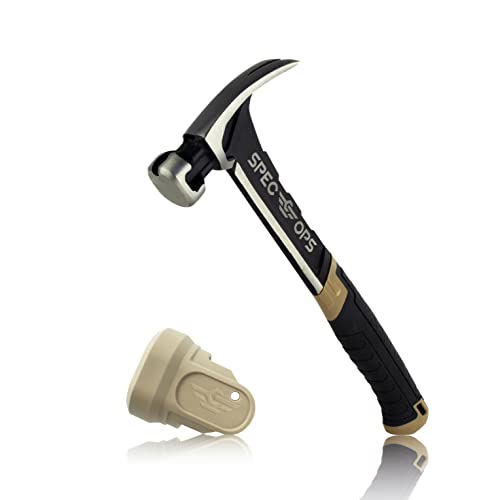
Spec Ops Tools Nailing Hammer for Framing & Demolition, 20 oz

Fiskars Pro IsoCore Milled-Face Framing Claw Hammer, 22oz

Irwin Tools 1954890 Wood California Framing Claw Hammer, 21 oz

Goldblatt Low Recoil Double Face Rubber Mallet Hammer, 16 oz
Why These Options Stand Out
Sixteen ounces is where most people should start with a hammer, and this IRWIN keeps that weight honest. A forged steel head pairs with a fiberglass handle wrapped in a cushioned grip, so weekend projects like hanging doors or building a shed bed won’t punish your palm. The smooth face leaves fewer marks on visible trim than a milled face would.
Compared with the heavier Spec Ops pick further down, this one trades raw driving force for comfort and price, which suits occasional use far better.
Standout Benefits
- The forged steel head resists chipping through years of routine nail pulling and prying.
- A rip claw gives you real leverage when backing nails out of old framing.
- Fiberglass shrugs off damp garage storage better than bare wood handles tend to.
- The contoured grip reduces hand strain during longer sessions of repetitive nailing.
Things To Consider
- Sixteen ounces drives large framing spikes noticeably slower than a 21 or 22 ounce head.
- The grip surface can feel slick with sweaty hands unless you wipe it down now and then.
Who It Suits Best
Homeowners and DIY beginners who want one dependable hammer for repairs, shelving, and light framing work.
Where Another Pick Suits Better
Daily framers will get more done with the Irwin Tools 1954890 Wood California Framing Claw Hammer, whose extra reach and heft suit production nailing.
This is the tool you reach for when the day’s work means hundreds of 16d nails into dense lumber. The high-carbon steel head is shaped for quick, balanced swings, and the rip claw doubles as a demolition lever when a wall has to come apart. Roofers and contractors who swing all season are the obvious audience here.
Where the IRWIN above favors comfort, this one favors output, and the difference shows up fast on a big sheathing job.
A Strong Showing
- The shock-absorbing grip softens each strike, which matters once you’re past nail number two hundred.
- An included mallet cap adds gentle-tap versatility for fitting pieces without marring them.
- Twenty ounces carries enough mass to seat framing nails in fewer blows than lighter heads.
- The smooth face keeps finished surfaces cleaner than a textured striking face would.
Worth Noting
- Heads this size can tire out smaller hands over a full shift, in our view.
- The rubber grip benefits from an occasional wipe to stay tacky in dusty conditions.
Feature Snapshot
Made For
Professional carpenters, roofers, and remodelers who need serious driving power plus demo capability in one tool.
Consider Something Else When
Occasional users doing weekend repairs will find the Fiskars IsoCore’s lighter shock load easier on untrained arms.
At 22 ounces this is the biggest hitter on the list, yet the headline feature isn’t power at all. Fiskars’ IsoCore system uses an insulated dual-layer sleeve inside the handle to soak up vibration, transferring far less shock into your arm than a traditional wood handle does. On a ten-hour framing day, that difference is what your elbows notice.
The milled face, a lightly textured striking surface, grips the nail head so glancing blows become rare. Against the Spec Ops hammer, you give up nothing in weight but gain meaningful fatigue relief.
Bright Spots
- The patented shock-control design transfers dramatically less impact to your body than wood handles.
- A milled face bites into nail heads, cutting down missed strikes on tough angles.
- Twenty-two ounces seats big framing nails quickly, even in dense engineered lumber.
- The insulated sleeve helps keep hands comfortable in cold-morning work too.
Small Caveats
- The textured face leaves visible marks on exposed finish surfaces, so keep a smoother hammer nearby for trim.
- Some owners report the handle coating picks up grime that needs periodic cleaning to maintain grip.
Quick Facts
Right Fit For
Framing crews and serious DIYers building decks or additions who value endurance over finesse.
Look Elsewhere When
Finish-oriented work calls for the smooth-faced IRWIN Fiberglass General Purpose Claw Hammer instead.
Plenty of framers simply prefer hickory, and this California-style pattern explains why. Its 15.5-inch curved wood handle stretches your reach and lets you build more speed into each swing than shorter handles allow. The forged steel head carries 21 ounces, enough to drive framing nails decisively without stepping up to the Fiskars’ full 22.
A milled face keeps the nail head from skating off, which pays off when you’re working overhead on rafters where a second swing costs real effort.
What Pays Off
- The extended handle length increases swing velocity, translating into faster nail seating.
- Forged steel construction stands up to years of prying and hard strikes.
- Hickory absorbs some natural vibration and many tradespeople find its feedback more intuitive.
- A magnetic nail holder lets you start nails one-handed on ladders or overhead runs.
Points To Note
- Wood handles can loosen or crack after long exposure to moisture, so dry storage matters.
- There’s no modern shock-dampening system here, unlike the Fiskars IsoCore.
Who Will Love This
Experienced framers and traditionalists who want maximum reach and a familiar wood-handle feel on structural work.
A Better Fit Elsewhere
Anyone bothered by vibration should step up to the Fiskars Pro IsoCore, which dampens shock far more aggressively.
To be clear up front: this isn’t a nail driver, and it doesn’t try to be. Goldblatt built it for flooring work, where hardwood planks and laminate need firm persuasion without a single dent. The solid double-faced rubber head delivers softened force, and its oil-resistant compound bounces back far less than ordinary rubber, so taps land where you aim them.
It earns a spot next to any of the steel-headed picks above rather than replacing one, since tapping boards tight and driving nails are different jobs entirely.
Useful Touches
- Reduced rebound means fewer skidded strikes on fragile tongue-and-groove edges.
- The non-marking white faces protect visible surfaces during installation.
- Post-strike vibration gets absorbed in the head itself, easing wrist strain during long floor runs.
- Solid rubber construction holds up well against oil and jobsite solvents.
Trade Offs
- Rubber faces wear down with abrasive use and can’t be re-textured like steel.
- You’ll still want a claw hammer alongside it for actual nail pulling and driving.
- Sixteen ounces offers limited force for stubborn subfloor adjustments.
At A Glance
The Right Fit
Flooring installers and hobbyist woodworkers who frequently tap boards, tiles, or furniture parts into place.
Swap It Out When
Structural nailing demands a steel head, so pair this with the Spec Ops Nailing Hammer rather than choosing between them.
What Matters Most Before Choosing Framing Hammers
Head Weight And Swing Style
Heavier heads, generally 20 ounces and up, drive framing nails in fewer strikes but demand more from your shoulder over a long day. Lighter 16 ounce models suit repair work and users building technique. Match the weight to your typical task, not the biggest number on the shelf.
Handle Material And Shock Control
Wood handles offer classic feel and good natural damping but need dry storage to avoid cracking. Fiberglass resists weather and flexes slightly under impact. Advanced designs like internal shock sleeves cut vibration further, which matters most if you swing a hammer professionally five days a week.
Face Type And Claw Design
A milled face, meaning a cross-hatched textured striking surface, grips nail heads securely but marks finished wood. Smooth faces protect visible surfaces. Rip claws pry straight and pull nails with leverage, making them the default choice for framing and demolition alike.
Matching Tool To Job
Deck builders and framer crews justify premium shock-reduction features. Weekend DIYers get excellent results from mid-weight general-purpose claws. Flooring and cabinet work often needs a rubber mallet alongside whatever hammer you own.
Key Considerations Across These Picks
Traps First Timers Fall Into
The commonest error is buying too much hammer. A 22 ounce head feels powerful until hour three of a small project, when your forearm disagrees. Grabbing a milled-face model for interior trim is another frequent misstep, since the texture leaves visible dents in finished surfaces.
What Separates Premium From Basic
Pricier hammers buy engineering, not just branding: shock-absorbing handle cores, balanced head geometry, and harder forged steels that resist mushrooming. For daily professional use those upgrades pay back in reduced fatigue. For a toolbox used twice a month, a solid mid-range pick delivers nearly all the practical performance.
Frequently Asked Questions
What size framing hammer do most professionals use?
Most framers settle between 19 and 22 ounces because heavier heads drive large nails efficiently. Newer users often start around 16 to 20 ounces while their technique develops.
Does a milled face damage wood?
Yes, the textured surface leaves noticeable impressions on finished lumber. Save milled-face hammers for structural framing where the wood will be covered.
Are fiberglass handles better than wood?
Neither wins outright. Fiberglass tolerates moisture and rough handling better, while hickory offers traditional feel and natural shock absorption many experienced users prefer.
Why does handle length matter?
A longer handle creates a wider swing arc, building more head speed with the same effort. That translates into deeper nail seating, especially useful for overhead work.
Do I really need a separate rubber mallet?
For flooring, tile, or assembly work, yes. A steel hammer will mar those surfaces, and a rubber mallet applies firm force without leaving dents.
Closing Thoughts
Five tools, five different jobs, and the honest answer is that most workshops eventually hold two of them. Start with the weight and face type that match your usual projects, then add specialty options as the work demands. Whichever direction fits your bench, each pick here holds up to real jobsite conditions, not just spec-sheet promises.




