Data protection work has a way of piling up quietly. One day you’re handling customer records with confidence, and the next you’re staring down a data subject access request, a DPIA deadline, or an auditor’s checklist with no clear starting point. The right reference material turns that scramble into a routine.
This roundup covers five GDPR-focused guides suited to different roles: in-house counsel, security engineers, newly appointed Data Protection Officers, compliance teams building documentation from scratch, and auditors. Each one takes a distinct angle on the same problem, so the best fit depends less on budget than on where your organization sits in its compliance journey. Here’s how they compare.
The Shortlist At A Glance

Data Privacy & Compliance Guidebook by Raj Rathour
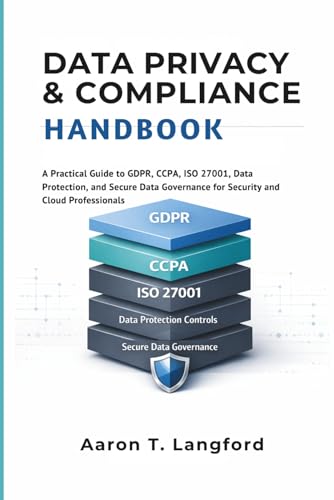
Data Privacy & Compliance Handbook (Langford)

GDPR and Your Role as the DPO (Clarke)

GDPR in Practice: 10-Phase Methodology

How to Perform a GDPR Compliance Audit
A Breakdown Of The Leading Choices
Raj Rathour wrote this guidebook squarely for in-house counsel and compliance departments, which shows in how it frames privacy law. Rather than treating GDPR as an isolated European rulebook, it pairs it with CCPA obligations so a legal team managing cross-border data can see both regimes side by side.
The Kindle format matters more than it sounds. Delivery can be scheduled or sent instantly, and recipients read on any device, so distributing copies across a legal department takes minutes instead of a procurement cycle.
Reasons It Performs
- Covers GDPR and CCPA together, useful for companies serving customers on both sides of the Atlantic
- Written at a level in-house counsel can act on without outside translation
- Kindle delivery means instant distribution across a compliance team
- Sits in the Computers & Technology catalog, easy to find alongside related software references
Points To Keep In Mind
- Legal framing may feel dense for non-lawyers; owners commonly report wanting a lighter companion read for operational staff
Who It Suits Best
General counsel and compliance leads who need one authoritative desk reference spanning two major privacy regimes.
Another Choice May Suit
Engineers implementing controls rather than interpreting law will get more out of the Langford handbook reviewed next.
Aaron T. Langford targets the people actually building systems: security and cloud professionals. Where the Rathour guidebook speaks legalese, this handbook translates GDPR and CCPA requirements into security practices you can hand to an engineering team, then layers in ISO 27001, the international standard for information security management.
The cloud angle is the differentiator. Designing privacy-aware architecture across distributed infrastructure is where most modern breaches happen, and few references connect regulation to network design this directly. In our view, that makes it the most technically ambitious title here.
Benefits That Matter
- Bridges three frameworks at once: GDPR, CCPA, and ISO 27001 governance concepts
- Turns abstract regulatory text into concrete security practices for real environments
- Cloud and distributed-systems coverage fits today’s infrastructure reality
- Grounded in core data-protection principles rather than surface-level checklists
Trade Offs
- The breadth assumes technical fluency; readers without networking background may find sections demanding
- Legal teams seeking case law depth should pair it with a counsel-oriented text like the Rathour guidebook
Key Specs
Made For
Security architects and cloud engineers tasked with turning privacy law into working technical controls.
Where A Sibling Pick Shines
First-time DPOs without an engineering background will find Alexander Clarke’s role-focused guide far gentler to start with.
Plenty of companies appoint a Data Protection Officer and then leave them to figure the job out alone. Alexander Clarke’s guide exists for exactly that moment, organizing everything around what the DPO personally owns: oversight duties, regulator relationships, and internal accountability under GDPR.
It reads as career scaffolding as much as compliance training. Compared with the Langford handbook’s engineering focus, this one stays on responsibilities and process, which keeps it approachable even for someone promoted into the role from operations or HR.
Strong Points
- Structured around the DPO role itself, not just the regulation
- Navigates the wider GDPR landscape so new officers understand context, not isolated rules
- Business & Money categorization reflects its practical management orientation
- Instant Kindle delivery suits professionals who need answers before their next board meeting
Small Caveats
- Skips deep technical implementation, so IT teams will still need a companion resource
Right Fit For
Newly appointed or aspiring Data Protection Officers, especially those coming from non-technical backgrounds in small and mid-sized firms.
Swap It Out When
Teams mid-way through building compliance documentation will extract more immediate value from Dermitzakis’s workbook-style guide below.
Dr. Eleftherios Emm. Dermitzakis built this guide around doing, not reading. A ten-phase methodology walks your team from initial assessment through documented compliance, and the included worksheets give structure to tasks most companies improvise badly, like mapping data flows or running a DPIA, the formal risk assessment GDPR requires for high-risk processing.
The registry of information systems and hardware-software inventory deserves special mention. Auditors ask for exactly that documentation, and having a template ready saves weeks of reconstruction. You may find the workbook format slower to consume than Clarke’s narrative guide, but the output is tangible.
What Helps Most
- Ten-phase methodology gives compliance projects a defined sequence instead of ad-hoc effort
- Ready-made worksheets for data-flow mapping and Impact Assessments cut setup time dramatically
- Vulnerability and risk analysis guidance ties compliance to actual security posture
- Documentation templates for recording the Legal Basis behind each data flow
Honest Caveats
- Worksheet-driven format rewards disciplined users; skipping phases leaves gaps auditors will notice
- Heavier lift than a straight narrative read, better treated as a project manual than weekend reading
Core Details
Who Should Grab It
Compliance managers at tech-forward companies who need to produce DPIAs, data maps, and legal-basis records from a standing start.
Reach For A Different Pick When
An upcoming audit is the immediate driver, in which case McLaughlin’s dedicated audit guide offers a sharper, narrower path.
Kieran McLaughlin’s title tells you precisely what you’re getting, and that narrowness is the point. Where the other four guides build broad programs, this one concentrates on the audit itself: assessing whether existing GDPR practices hold up under examination, and documenting the results credibly.
It works well as a periodic checkpoint even after a full program exists, something many organizations schedule annually. The honest read is that its slim scope limits standalone value, but as a complement to Dermitzakis’s methodology or Clarke’s DPO guide, it fills a gap none of them address head-on.
Where It Delivers
- Laser focus on audit execution rather than general theory
- Useful as a recurring annual review tool once broader compliance is in place
- Business & Money positioning keeps it practical and management-facing
Things To Consider
- Narrow scope means first-time program builders need a foundational guide alongside it
- Print-format buyers commonly note checking edition details before ordering, since publication metadata varies by listing
Whose Shelf It Belongs On
Internal auditors and compliance leads preparing for a scheduled GDPR review or responding to a regulator’s information request.
Not Your Match When
Organizations starting from zero will build faster with the Rathour guidebook’s dual-regulation foundation before adding audit discipline later.
What Matters Most Before Choosing Gdpr Compliant Pdf Tools For Businesses
Match The Guide To Your Role
The fastest way to waste money on compliance literature is buying for the wrong seat at the table. Counsel needs statutory interpretation, engineers need implementation patterns, and DPOs need accountability frameworks. All five titles here state their intended audience clearly, so start there before comparing anything else.
Depth Versus Usability
Broad references like the Langford handbook reward experienced practitioners but can overwhelm newcomers. Workbook formats such as Dermitzakis’s trade reading speed for produced artifacts. Decide whether your team needs understanding or output, because few guides deliver both equally.
Format And Distribution
Kindle editions distribute instantly across devices, which matters when several departments need simultaneous access. Print editions suit annotation-heavy workflows and boardroom reference. Check delivery options on each listing before committing to a format for team-wide rollout.
Regulatory Scope
Companies operating only in Europe can prioritize pure GDPR texts. Anyone handling California consumer data benefits from combined GDPR-and-CCPA coverage, since overlapping obligations are easier to manage from a single framework view than from two separate books.
Key Considerations Across These Picks
Pitfalls Shoppers Hit
The classic error is buying a technical handbook for a legal audience, or vice versa, then blaming the book. Another common slip is ignoring format: a Kindle-only purchase frustrates teams that annotate in print. Skim the stated audience and category placement first, and confirm the edition matches your preferred reading style before checkout.
The Upgrade Payoff
Multi-framework titles cost more attention than single-topic ones because they demand baseline knowledge. That investment pays off when your organization faces both EU and California obligations, or pursues ISO 27001 certification alongside GDPR work. Narrower guides cost less effort upfront but typically require a second purchase as programs mature.
Frequently Asked Questions
Do these guides replace legal advice?
No reference book substitutes for counsel familiar with your specific circumstances. They build internal knowledge that makes professional advice more efficient. Treat them as training and documentation aids.
Which pick suits a small business with no compliance staff?
Clarke’s DPO guide offers the gentlest entry point for someone wearing the compliance hat part-time. Pair it with Dermitzakis’s worksheets once basic understanding is in place. Start narrow, expand gradually.
Are Kindle versions readable on any device?
Yes, the Kindle editions listed here support reading across phones, tablets, computers, and e-readers. Delivery can also be scheduled or sent immediately. Gifting options include personal messages.
What is a DPIA and why does it matter?
A Data Protection Impact Assessment is GDPR’s required risk analysis for processing likely to harm individuals’ rights. Regulators expect it documented before high-risk projects launch. Dermitzakis’s guide includes ready-made worksheets for producing one.
How often should a company run a GDPR audit?
Many organizations schedule an internal review annually, though high-growth companies benefit from semiannual checks. McLaughlin’s audit guide supports repeatable reviews. Frequency should scale with how quickly your data practices change.
Closing Thoughts
Your best entry point depends on the seat you occupy. Counsel should lean toward Rathour’s dual-regulation guidebook, engineers toward Langford’s cloud-focused handbook, and new DPOs toward Clarke. Teams producing documentation gain the most from Dermitzakis, while McLaughlin sharpens any existing program through structured audits. Match the guide to your role, and the compliance workload starts feeling manageable rather than looming.