


A wiper streak on a windshield, a scuff on a sliding door, a hairline nick on a phone lens: glass scratches show up in places you use every day. The repair path varies wildly depending on whether the blemish sits on tempered shower glass, a polycarbonate aquarium panel, or a coated eyeglass lens. This roundup covers nine glass scratch removers and polishing accessories for 2026, sorted by surface type, scratch severity, and skill level. Beginners will find a few forgiving kits, while detailers and hobbyists can lean into cerium oxide compounds and felt pad systems. Read on to match the right product to the surface that’s bugging you.
A Side-By-Side Look

Rolite Ultra Fine Scratch Remover for Plastic & Acrylic Surfaces (4oz)

Glass Polishing Pad Discs for Cerium Oxide, 3″ 5″ 6″ 5-Pack

NOVUS-PK1-8 Plastic Clean, Scratch Remover, and Polish Mates Pack

Biaoyun Lens Scratch Removal Spray 2 x 100 ml

14 oz (400g) 99% Cerium Oxide Glass Polishing Powder (7-9 µm)
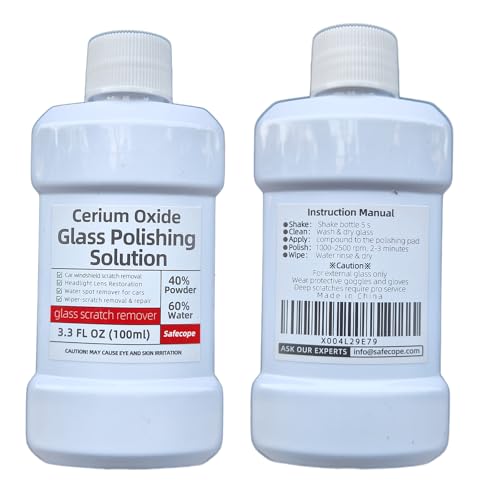
SafeCope 3.3 oz (100ml) Cerium Oxide Glass Polishing Liquid
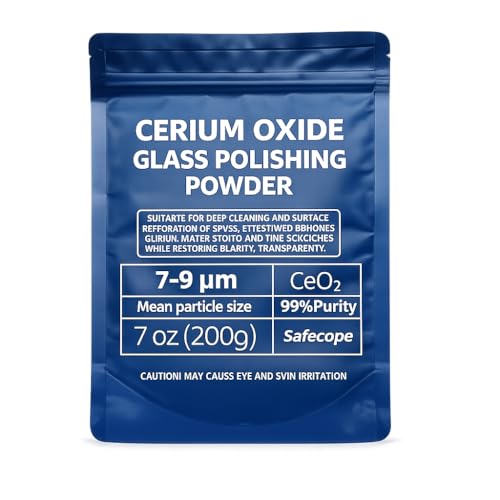
SafeCope 7 oz (200g) 99% Cerium Oxide Glass Polishing Powder (7-9 µm)

XIRUJNFD Lens Scratch Removal Spray (1 Pc)
ZXIE-Cloud 1.69FI Oz Cerium Oxide Glass Polish
Why These Options Stand Out
Rolite’s Ultra Fine formula isn’t a glass polish in the traditional sense; it’s a purpose-built compound for softer transparent plastics and acrylics. Strataglass and Eisenglass boat enclosures, polycarbonate headlights, and even aquarium panels fall inside its lane, which is a rare combination in this category. If you live near saltwater or run a bass boat, hazed eisenglass is an annual annoyance this bottle quietly solves.
The 4oz bottle is a manageable size for weekend boaters who touch up a panel or two each season rather than refinish a full enclosure. Application is hand-friendly with a microfiber cloth, though a low-speed machine buffer speeds things up on larger flat sections. Compared to the cerium oxide powders further down this list, Rolite’s paste skips the slurry-mixing step entirely.
Where It Excels
- Formulated for vinyl and acrylic, not just glass, so it won’t craze soft marine enclosures
- 4oz bottle covers multiple headlight restorations or a small eisenglass panel
- Hand application works without a polisher, useful for boat owners without a workshop
- Tends to leave a clear, non-yellowing finish on UV-exposed plastic over time
Trade Offs To Consider
- Not designed for true silicate glass, so don’t reach for it on a windshield scratch
- Multiple thin passes are usually required, which means patience on deeper scuffs
Built With In Mind
Boat owners, RV travelers, and anyone maintaining convertible top rear windows or polycarbonate headlight covers in a coastal climate.
Look Elsewhere When
The SafeCope 7 oz Cerium Oxide Glass Polishing Powder suits you better when the scratches are on real glass like a shower door or windshield.
These Gold Label Detailing felt discs aren’t a polish on their own. They pair with cerium oxide (a fine rare-earth powder commonly used in professional glass refinishing) to do the actual abrasion, which makes them a tool, not a product in the bottle sense. The 5-pack covers three useful sizes (3, 5, and 6 inch) on a hook-and-loop backing, so you can move from a phone-booth tight corner to a broad windshield sweep without swapping drill chucks.
For anyone already invested in a rotary or dual-action polisher, the felt face grips cerium slurry and releases it evenly, avoiding the hot spots a foam pad would create. If you’re starting from scratch, factor in the cost of a polisher and a separate powder or pre-mixed liquid like the SafeCope 3.3 oz option reviewed below.
Benefits That Matter
- Three included diameters handle everything from headlight corners to full windshields
- Felt construction holds cerium slurry better than foam for slower, cooler polishing
- Hook-and-loop backing fits most standard backing plates, no special adapter required
Where It May Fall Short
- Requires a separately sold polisher and cerium source to actually remove scratches
- Felt pads tend to glaze over with residue, so expect to clean them mid-job
- Beginners may overshoot and dish the glass if pad pressure runs too high
The Right Fit
Detailers and DIYers with a polisher on the bench who want a versatile pad set for ongoing glass correction work.
Swap It Out When
You’d rather skip the tool side entirely; the SafeCope 3.3 oz Cerium Oxide Polishing Liquid is ready to apply without a felt pad system.
NOVUS builds a real progression rather than a single miracle compound. Bottle 1 cleans, Bottle 2 handles fine scratches, and Bottle 3 grinds down heavier damage before the lighter steps restore clarity. The included Polish Mates disposable towels are a thoughtful touch, since paper towel lint is the enemy of a clean plastic finish.
Each bottle is 8oz, which feels generous next to the 4oz Rolite above. If you’ve inherited a stack of hazy motorcycle windscreens, an old convertible window, or a polycarbonate greenhouse panel, this kit walks you through the whole recovery arc. The trade-off is intentional friction: the system asks you to work through three stages when a paste-and-buff product would do one pass.
Where It Delivers
- Stepped grit logic produces noticeably better clarity on heavy scratches than single-stage pastes
- Three 8oz bottles cover a long run of projects before any refill is needed
- Disposable Polish Mates towels reduce the lint-and-residue problem common in plastic finishing
Honest Caveats
- Three steps means more time per panel than a one-bottle polish
- Specifically tuned for plastic, not real silicate glass
Whose Shelf It Belongs On
Hobbyists, vintage vehicle restorers, and anyone maintaining a fleet of clear plastic shields who appreciates a structured finish.
A Better Fit Elsewhere
Reach for the Biaoyun Lens Scratch Removal Spray when scratches are on coated eyeglass or camera lenses, not plastic panels.
The Biaoyun kit ships two 100ml bottles aimed squarely at coated optical surfaces. Eyeglasses, sunglasses, camera lenses, phone screens, and tablets all sit within its stated use range, which is a wider net than most eyeglass-specific sprays cast. The twin-bottle format keeps a backup at the office or in the car.
Realistic expectations matter with optical sprays. Light haze and fingerprint film lift easily. Anything that catches a fingernail usually needs professional resurfacing or replacement, since coating layers are thin. Use it as a maintenance spray, and it earns its place; expect it to vanish a deep scratch, and you’ll be disappointed.
The Practical Payoff
- Two-bottle value means a backup stays in the car, bag, or office drawer
- Compatible with coated eyeglass lenses, sunglasses, camera glass, and touchscreens
- Spray format avoids the gritty residue some pump-bottle lens cleaners leave behind
Points To Keep In Mind
- Won’t erase a fingernail-catching scratch, only surface haze and film
- Overuse on anti-reflective coatings can occasionally cause streaking if not buffed fully
Made For
Glasses wearers, photographers, and remote workers who want a low-effort daily lens-care spray within arm’s reach.
Consider Something Else When
The XIRUJNFD Lens Scratch Removal Spray suits you better when you only need a single bottle for occasional touch-ups.
Striplus’s 14oz jar is the heavyweight in this roundup, and the format tells you the intended user. Cerium oxide powder is the same abrasive pros use for windshield refinishing, and at 400 grams you can tackle a couple of full car windows, a shower enclosure, or a tabletop with powder to spare. The 7-9 µm particle size hits the sweet spot between cutting speed and surface finish.
The catch is mixing and tooling. You’ll be blending a slurry (a wet paste of powder and water) by hand, then working it with felt pads like the Gold Label set above, or a rotary polisher. The 99% purity claim matters here: cheaper cerium mixes leave residues that haze the glass you’re trying to clear.
The Value In It
- 14oz jar offers the lowest per-gram cost among the powders reviewed
- 99% purity reduces the slurry residue that plagues budget cerium
- Particle grade of 7-9 µm balances cutting power and final clarity
Less Ideal Details
- Requires slurry mixing and a felt pad or polisher to do real work
- Powder format can stain clothing and benchtops if spilled dry
Feature Snapshot
Right Fit For
Homeowners restoring shower doors or aquarium glass, and detailers who burn through cerium on a regular rotation.
Not Your Match When
The SafeCope 3.3 oz Cerium Oxide Polishing Liquid is a smarter buy for one-off small jobs where mixing slurry feels like overkill.
SafeCope’s pre-mixed liquid trades the bulk of the 14oz Striplus powder for pure convenience. Shake, apply to a felt pad or microfiber, work the area, and wipe clean. No measuring, no slurry bowls, no dust. For a first-time user staring at a wiper-marked windshield, that ease can be the difference between finishing the project and abandoning it halfway.
The 3.3oz bottle covers a single windshield or one shower door, give or take scratch density. If you have a multi-panel job ahead, stepping up to the SafeCope 7oz powder is the natural move. The liquid is a sampler, not a bulk supply.
Bright Spots
- Pre-mixed format removes the slurry-learning curve for first-timers
- Liquid viscosity clings to vertical glass without running immediately
- Works on automotive windshields, side windows, and shower glass alike
Some Limits To Know
- 3.3oz runs out fast on a large windshield, so a single bottle may not finish the job
- Bottle must be shaken well before each use, or the abrasive settles unevenly
Who Should Grab It
First-time detailers and homeowners who want a small, no-prep glass polish to see if DIY restoration is worth pursuing further.
Another Choice May Suit
The SafeCope 7 oz Cerium Oxide Polishing Powder is a smarter reach when you already know you’ll tackle multiple panels and don’t mind mixing your own slurry.
SafeCope’s 7oz jar sits in the practical middle of the cerium oxide market. Big enough to handle a two-car household’s worth of glass polishing, small enough that a hobbyist won’t be staring at expired powder two years from now. The 7-9 µm grade mirrors the 14oz Striplus above, so the cut and finish should feel familiar.
This is a good “starter plus” size. Run the SafeCope 3.3oz liquid on a test patch first to confirm the scratch is workable, then commit to this jar for the main pass. The trade-off versus the 14oz Striplus is a higher per-gram cost, but you avoid the bulk-storage question entirely.
The Helpful Details
- 7oz size lands between sampler and bulk, which fits most household glass projects
- Same 7-9 µm particle grade as larger jars, so results stay consistent
- Glass-only formula, so there’s no risk of misapplying it to a plastic panel
Details To Watch
- Per-gram cost is higher than the 14oz Striplus, even with the same grade
- Still requires slurry mixing and a felt pad or polisher for real results
Who Will Love This
DIYers restoring a couple of windows or shower doors who want enough powder for the full project without committing to a 14oz jar.
Reach For A Different Pick When
The Striplus 14 oz powder makes more sense financially if you already own a polisher and routinely handle full-vehicle glass correction.
XIRUJNFD’s single-bottle format is the no-commitment option in the lens category. One bottle, no bundle math, no second unit to store. For someone whose glasses have light haze or surface film but no deep gouges, the spray handles daily maintenance without overpromising. If the scratch is severe enough to catch a fingernail, you’re outside its lane entirely.
Compared to the Biaoyun two-bottle kit reviewed earlier, this is the lighter, more casual choice. You’ll likely use the same bottle for months of occasional touch-ups before needing a replacement, and there’s no pressure to “get your money’s worth” out of a backup bottle you forgot in a drawer.
Reasons It Performs
- Single-bottle purchase keeps cost low for one-user, one-pair setups
- Spray format suits quick daily lens wipes before meetings or commutes
- Compact size fits a desk drawer, glove box, or small bag pocket
Points To Note
- Only one bottle included, so no spare for travel or office use
- Won’t address deep scratches that catch a fingernail edge
Best Suited To
Anyone with a single pair of everyday glasses who wants a fuss-free spray for light haze and film.
Where Another Pick Suits Better
The Biaoyun 2 x 100 ml kit makes more sense for households where multiple people need lens care, or for keeping a backup at the office.
ZXIE-Cloud bundles cerium oxide polish with a small applicator brush, which makes it the most giftable option in the lineup. The 1.69oz size targets small jobs: a couple of mirrored cabinet doors, a scratched tabletop, a glass phone back. The stated use range also covers stone, mineral, marble, ceramic, and select metal surfaces, which broadens its appeal beyond pure glass repair.
Versatility has a trade-off. The smaller bottle won’t realistically refinish a full car windshield, and results on stone or metal are more about stain removal than scratch elimination. Treat it as a precision kit for small surfaces, and it earns its place on the shelf.
Features That Help
- Included applicator brush removes the need to buy a separate pad or cloth
- Multi-surface compatibility covers mirrors, tempered glass, ceramics, and marble
- Small bottle suits precision work on tabletops and decorative glass panels
Practical Considerations
- 1.69oz size limits how much real glass work you can tackle per bottle
- Multi-surface claims mean careful testing is wise on unfamiliar stone finishes
Perfect Match For
Apartment dwellers and crafters dealing with small scratches on tabletops, mirrors, and decorative glass where a full-size powder feels wasteful.
Skip It When
The SafeCope 7 oz Cerium Oxide Powder is the better reach for anyone with a full windshield or shower door to refinish.
What Matters Most Before Choosing Glass Scratch Removers
Match The Abrasive To The Surface
Cerium oxide is the go-to compound for real silicate glass, like windshields, shower doors, and tabletops. It works through a slow chemical-mechanical process that physically removes a thin layer of glass. Plastic and acrylic need gentler pastes, like Rolite or NOVUS, because cerium can haze or dull softer surfaces. Lens sprays work on coatings, not the lens substrate, so they live in a different category entirely. Reaching for the wrong abrasive is the fastest way to swap a small scratch for a permanently cloudy panel.
Decide On Liquid, Powder, Or Pre-Mixed Paste
Powder offers the best value and longest shelf life, but you mix a slurry each session and clean up afterward. Pre-mixed liquid skips the mess, costs more per ounce, and has a shorter usable life once opened. Pastes in a tube sit between the two and work well for hand application. For occasional one-panel jobs, the convenience premium of a liquid is reasonable. For multi-panel or repeat work, powder pays off quickly.
Tooling Changes The Whole Experience
Felt pads, rotary polishers, and dual-action polishers all change how a cerium product behaves. The Gold Label felt disc set pairs with most backing plates, but you still need a polisher to drive them. Hand rubbing with a microfiber cloth is possible on small scratches, though it stretches the time and effort considerably. For first-timers, the SafeCope pre-mixed liquid with a hand pad is a forgiving starting point.
Set Realistic Expectations On Depth
Surface haze, wiper marks, water spots, and very fine scratches respond well to DIY polishing. Anything deep enough to catch a fingernail is a tougher proposition and may require professional refinishing or replacement. The honest read: glass scratch removers work best on the lightest 30% of damage, and disappointment comes from expecting them to perform miracles on the rest.
Key Considerations Across These Picks
Pitfalls Shoppers Hit
The single most common mistake is buying a cerium oxide product and applying it to a plastic panel. The abrasive is too aggressive for acrylic and polycarbonate, leaving a permanent haze that no polish will fix. A related error is assuming a lens spray will erase a fingernail-catching scratch. It won’t. Lens sprays clean coatings; they don’t remove material from the lens itself. The final trap is underestimating the prep work. Glass needs to be genuinely clean before any polish touches it, or you’ll grind dust and grit into the surface and create new scratches while fixing old ones.
When Paying More Pays Off
The premium tier in this category typically buys higher cerium purity, larger powder quantities, or bundled applicators that match the polish to the job. A 99% cerium jar leaves less residue than a budget 80% mix, which translates directly into clearer glass at the end. Larger powder sizes lower the per-gram cost for anyone with a multi-panel project ahead. Bundled applicators save the guesswork of matching pads to compounds, which matters when you don’t already own a polisher. The upgrade pays off most when the project is large or the scratch is borderline; for one tiny tabletop nick, the budget end is plenty.




