


A good fish finder does two jobs at once: it shows you what’s under the hull and tells you where you are while doing it. The five units below cover that range, from a compact 5-inch sonar unit to a full touchscreen chartplotter. Whether you fish small lakes from a jon boat or run bigger water in search of structure, one of these will match how you actually spend your time on the water.
The Essentials At A Glance

Humminbird Helix 5 Sonar G2
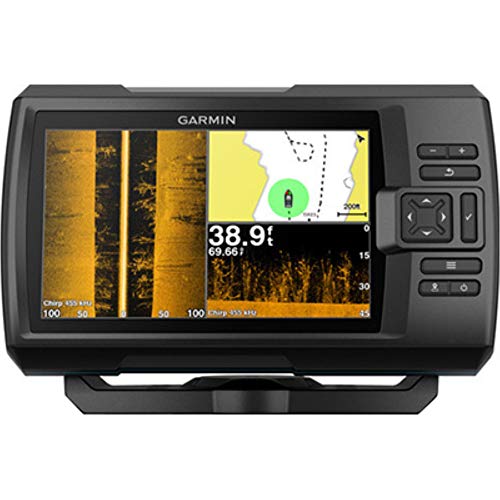
Garmin Striker 7SV with Transducer

Garmin Striker Vivid 7cv U.S.
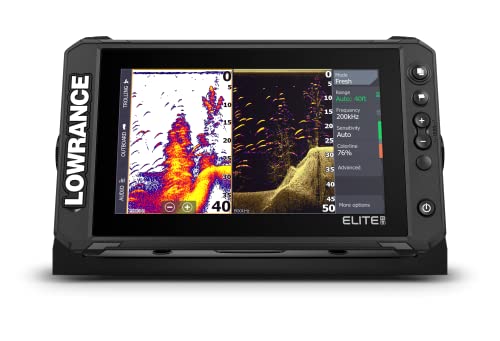
Lowrance Elite FS Fishfinder/Chartplotter

Humminbird Helix 5 Chirp GPS G3
The Picks, Examined More Closely
The Helix 5 Sonar G2 skips GPS entirely and puts its budget into sonar quality instead. That makes it a smart fit for anglers who already know their home lake and just want a sharper picture of what’s below. On a small aluminum boat where dash space is tight, the 5-inch widescreen earns its spot without crowding anything else.
Its SwitchFire system is the reason this unit stands apart: two display modes let you strip the screen down to raw returns or layer in depth, temperature, and turbulence data with a single button press. Watching your lure presentation scroll across the screen in real time changes how you work a jig.
Strong Points
- SwitchFire modes let you add or remove screen detail instantly, so cluttered water stays readable.
- Dual Beam PLUS pairs a narrow beam for precise fish arches with a wide beam covering more water per pass.
- You can view both beams separately, side by side, or blended, matching coverage roughly equal to your depth.
- The widescreen layout keeps bottom profile and structure easy to read in bright sun.
Things To Consider
- No GPS means no waypoint marking, so you’ll need another device to return to hot spots.
- Owners commonly report the transducer mounting position matters a lot; a poorly placed puck will muddy returns.
Key Specs
Who It Suits Best
Anglers fishing familiar water who want strong sonar performance without paying for navigation features they won’t use.
A Better Fit Elsewhere
Anyone exploring new lakes should look at the Humminbird Helix 5 Chirp GPS G3 below, which adds full GPS mapping to the same footprint.
Where the Humminbird above focuses on traditional sonar, the Striker 7SV spreads its attention across three views at once. CHIRP traditional sonar handles fish separation, ClearVu scans straight down, and SideVu paints the water flanking your boat. On reservoirs where fish hold along channel edges, that side picture alone can fill a cooler.
The 7-inch screen gives all three feeds room to breathe, and built-in Quickdraw Contours lets you draw your own maps with 1-foot contours as you idle around. Over a season, your home lake becomes a chart no one else has.
What Earns Its Place
- Three simultaneous sonar types mean fewer blind spots than single-beam units.
- Quickdraw Contours stores up to 2 million acres of user-drawn mapping with 1-foot contours.
- CHIRP processing delivers noticeably better target separation than older fixed-frequency sonar.
- Transducer ships in the box, so installation is a same-day job for most boats.
Small Caveats
- Three active sonar views drain attention fast; new users may find the screen busy until they learn to prioritize.
- Transducer cable routing takes some planning on fiberglass hulls, per common owner reports.
Made For
Intermediate anglers running larger lakes or coastal water who want side imaging without stepping up to a big-screen chartplotter.
Swap It Out When
Fishermen who want simpler menus and vivid color sonar should consider the Garmin Striker Vivid 7cv next on this list.
First-time fish finder owners tend to struggle most with reading gray-scale sonar, and that’s exactly the problem the Vivid 7cv attacks. Its high-contrast color palettes paint fish and structure in distinct hues, turning an abstract blob into something you can interpret within a few outings. The included GT20 transducer runs Garmin’s CHIRP traditional sonar alongside ClearVü scanning sonar.
High-sensitivity GPS rounds out the package, letting you mark waypoints, plan routes, and watch boat speed on the same 7-inch display. Compared with the Striker 7SV above, you give up SideVu but gain easier readability and a friendlier menu structure.
Standout Benefits
- Vivid color palettes make sonar interpretation dramatically faster for newer anglers.
- GT20 transducer combines CHIRP traditional and ClearVü scanning sonar in one puck.
- GPS supports waypoint marking, route planning, and live speed readout.
- Menu logic is straightforward enough that most owners report a short learning curve.
Points To Note
- No SideVu scanning, so you won’t see fish holding off to either side of the boat.
- The transducer needs clean mounting away from hull turbulence; sloppy installs commonly cause noisy readings.
Feature Snapshot
Right Fit For
Newer anglers upgrading from their first basic depth sounder who want modern scanning sonar without a steep learning curve.
Where A Sibling Pick Shines
Anglers chasing suspended fish over open water will get more from the Lowrance Elite FS, whose Active Imaging adds SideScan coverage.
This is the step up from everything before it. The Elite FS is a true fishfinder/chartplotter hybrid built around a bright, high-resolution IPS touchscreen, the kind of panel that stays readable through polarized sunglasses and afternoon glare. Lowrance sells it bundled with the Active Imaging 3-in-1 transducer or bare, which matters if you’re reusing existing hardware.
The bundled transducer covers CHIRP, SideScan, and DownScan in one unit, and FishReveal overlays fish targets onto DownScan imagery so hard-to-read arches become obvious. Integration with Lowrance’s wider tool ecosystem makes this the natural hub for a growing electronics stack.
Everyday Perks
- Active Imaging 3-in-1 delivers CHIRP, SideScan, and DownScan from a single transducer.
- FishReveal blends sonar targets into DownScan pictures for clearer identification.
- IPS touchscreen holds contrast in direct sunlight better than standard panels.
- Available with or without a transducer, suiting upgrades and fresh installs alike.
- Chartplotter functions support serious navigation beyond simple waypoint marking.
Honest Caveats
- Touchscreens demand more cleaning than button-driven units; fingerprints and spray build up fast on the water.
- The feature set rewards time invested, and casual weekend anglers may leave capability unused.
Who Will Love This
Dedicated anglers running tournaments or long days on big water who want a scalable electronics platform rather than a standalone sonar box.
Reach For A Different Pick When
Smaller boats and tighter budgets are better served by the Humminbird Helix 5 Sonar G2, which keeps things lean and affordable.
Think of this as the Helix 5 Sonar G2 from pick one with the missing half added back. Dual Spectrum CHIRP sonar offers Wide Mode for maximum coverage and Narrow Mode for detailed scanning, delivering tight 2D target separation through the Low-Q transducer. You get the same compact 5-inch format, now paired with genuine navigation.
The built-in Humminbird Basemap charts more than 10,000 lakes plus continental U.S. coastlines, so marking waypoints and following contours works right out of the box. For anglers who tow between lakes, that coverage removes the guesswork from unfamiliar ramps and drop-offs.
The Practical Payoff
- Dual Spectrum CHIRP switches between wide search coverage and narrow precision scanning.
- Basemap includes 10,000+ lakes and U.S. coastal waters preloaded.
- Low-Q transducer produces sharp 2D target separation for finicky fish.
- Same 5-inch footprint as the base Helix 5, fitting small dashes easily.
Trade Offs To Consider
- Screen size limits split-screen use; running sonar and charts together gets cramped.
- Some owners note the Basemap lacks the fine contour detail of premium cartography on very small lakes.
Core Details
Best Suited To
Multispecies anglers who trailer to different lakes each weekend and want sonar and GPS in one compact, affordable head unit.
Not Your Match When
Anglers wanting side-view scanning should step up to the Garmin Striker 7SV earlier in this list, which adds SideVu to the mix.
What Matters Most Before Choosing Gps And Depth Finders
Screen Size And Readability
Screen real estate drives everything else. A 5-inch unit like the Helix 5 works well on small boats and single-task use, while 7-inch displays handle split-screen sonar and charts far more comfortably. Bright, high-contrast panels matter more than raw resolution once midday glare hits.
Sonar Type Matched To Your Water
Traditional 2D sonar reads fish arches and bottom hardness. DownScan and SideScan add photographic-style views below and beside the boat, which pays off on reservoirs and open water. Pond and river anglers can often skip side imaging entirely and save money.
Navigation Needs
GPS turns a fish finder into a wayfinding tool: waypoints, routes, and speed readouts. Preloaded basemaps covering thousands of lakes remove setup friction, though dedicated map cards still offer finer detail on smaller bodies of water.
Transducer Quality And Installation
The transducer is half the performance equation. A well-placed, quality puck outperforms a superior head unit mounted badly. Plan cable routing and mounting location before purchase day, especially on fiberglass hulls.
Key Considerations Across These Picks
Traps First Timers Fall Into
The most common mistake is buying more sonar than your water requires, then never using it. Another frequent misstep: ignoring transducer placement, which degrades even excellent units. Measure your dash space first, too, since 7-inch screens don’t fit every console.
What Separates Premium From Basic
Higher-tier models buy you scanning sonar types, larger touchscreens, and expandable ecosystems. That investment pays off for anglers logging serious hours on big water. Weekend pond fishermen rarely recover the difference.
Frequently Asked Questions
Do I need GPS on a fish finder?
GPS lets you mark productive spots and navigate back to them precisely. Anglers fishing the same small lake repeatedly can manage without it, but anyone exploring new water benefits greatly.
What’s the difference between DownScan and SideScan?
DownScan images the water column directly beneath your boat in high detail. SideScan extends that view outward to both sides, covering far more area per pass.
Can I install a fish finder myself?
Most transom-mount installations are straightforward DIY jobs requiring basic tools and sealant. Fiberglass hulls and in-hull mounts benefit from professional installation.
Does CHIRP really make a noticeable difference?
Yes, particularly in target separation. CHIRP sweeps a range of frequencies rather than pinging one, producing crisper fish arches and cleaner structure definition.
How important is screen brightness?
Very. Glare off the water washes out dim panels by mid-morning. Look for high-brightness or IPS-type displays if you fish during daylight hours.
Closing Thoughts
Every unit here solves the core problem differently: the Helix 5 Sonar G2 keeps costs low, the Garmin pair balances features against simplicity, the Lowrance Elite FS scales with serious ambitions, and the Helix 5 Chirp GPS G3 splits the difference neatly. Match the sonar type and screen size to your water, install the transducer carefully, and any of these will earn its dash space for seasons to come.




