


Espresso punishes sloppy grinding more than any other brew method. A blade grinder or a stale pre-ground bag turns a decent machine into a bitter disappointment, and that’s the problem this list solves. Each option here covers a different budget and workflow, from a hand-cranked travel companion to programmable electric burr mills built for daily shots. Whether your counter is a studio-apartment sliver or a full kitchen setup, one of these five will match how you actually drink coffee.
A Snapshot Of The Selections
Baratza Sette 30 Conical Burr Grinder

KINGrinder K6 Manual Coffee Grinder Stainless Burr

SHARDOR Conical Burr Espresso Grinder with Precision Timer 2.0
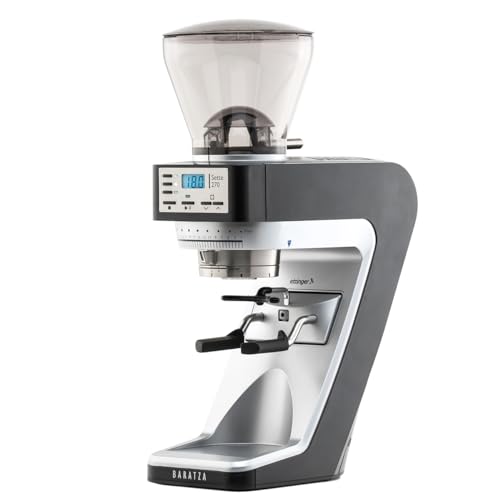
Baratza Sette 270 Conical Burr Coffee Grinder

Lonkion Burr Coffee Grinder Electric 28 Settings
The Picks, Examined More Closely
A conical burr is two toothed metal surfaces that crush beans to a uniform size instead of smashing them randomly like blades do, and the Sette 30 leans on that design for espresso-grade fineness. The digital timer reads down to a tenth of a second, which matters because espresso doses swing wildly with even half a second of extra grinding.
In a morning routine where you pull shots before work, that timer becomes your repeatability tool: same dose, same basket, fewer surprises. Baratza’s reputation for support among home baristas is well documented too, which softens the ownership risk of any first grinder.
Features That Help
- Tenth-of-a-second timer gives repeatable espresso doses without a scale ritual every morning.
- Conical burrs grind fine enough for espresso, Aeropress, V60, and Chemex from one hopper.
- Brand support is widely reported as responsive, a real comfort for first-time owners.
- Simple single-dial operation keeps the learning curve short.
Things To Consider
- Fine adjustment relies on stepped settings, so dialing in light-roast espresso can take patience.
- Owners commonly report the Sette line runs loud during its fast grind cycle.
Who It Suits Best
New espresso drinkers who want a trusted name and repeatable doses without learning a complex interface.
Another Choice May Suit
The SHARDOR Precision Timer 2.0 fits mixed households that also brew French press and drip regularly.
Where the Baratza plugs in, the K6 asks for thirty seconds of elbow grease, and in exchange you get an all-aluminum body with stainless burrs that shrug off baggage handling. The external adjustment nut clicks in 16-micron steps, sixty clicks per rotation with up to four rotations available, so the gap between espresso-fine and French press coarse is wide and clearly marked.
Microns are millionths of a meter; sixteen per click means each adjustment is small enough to actually taste the difference between settings. That precision at this build level is why manual grinders keep winning converts. The honest trade-off is effort: dark roasts crank easily, but dense light roasts demand a firmer arm than some people expect.
The Case For It
- 16-micron click resolution lets you chase extraction tweaks shot by shot.
- Full metal construction travels well and outlasts plastic-bodied rivals.
- No motor means silent mornings and zero outlet dependence at campsites.
Small Caveats
- Hand grinding light roasts for multiple servings takes real effort.
- Burrs need occasional brushing out; oils accumulate faster than owners anticipate.
Quick Facts
Right Fit For
Campers, office-desk brewers, and apartment dwellers who value precision over automation.
Skip It When
Households pulling several back-to-back shots daily will tire of cranking; the Baratza Sette 270 automates that workload.
This is the busiest feature sheet on the list: a touchscreen, fifty-one grind settings, cup-count dosing from 1 to 12, and an anti-static treatment aimed at the mess that plagues every grinder owner. The 40mm stainless conical burr set spins slow enough, by design intent, to limit heat buildup that would otherwise cook off aromatic oils.
For a household where one person pulls espresso while another brews pour-over, the breadth here earns its place. You may find the sheer setting count slightly overwhelming at first, though most people settle on three or four favorites within a week and never touch the rest.
What Helps Most
- 51 settings span espresso-fine through French press coarse on one machine.
- Cup quantification from 1 to 12 removes guesswork for drip brewing.
- Anti-static handling cuts the grounds cloud that clings to counters.
Points To Note
- Touchscreens collect fingerprints and can feel less durable than physical dials over years of use.
- More electronics mean more potential failure points than a purely mechanical grinder.
Feature Snapshot
Who Will Love This
Mixed-method households and gadget-minded cooks who want one grinder doing every job on the counter.
Reach For A Different Pick When
Shot-focused hobbyists chasing micro-adjustments will get more satisfaction from the KINGrinder K6’s micron-level clicks.
Think of the 270 as the Sette 30’s older sibling who went to barista school. Three programmable dose buttons store your go-to recipes to within a tenth of a second, and dual dosing lets grounds land straight into a portafilter held under the chute or into the included bin for other brew methods.
That portafilter-friendly geometry is the real story here: no funnel juggling, less spillage, faster shot-to-shot turnaround when friends visit. Compared with the SHARDOR’s broad feature set, this machine narrows its ambition to espresso and executes it with better workflow ergonomics. The honest read is that casual drip-only drinkers pay for capability they won’t use.
What Pays Off
- Three saved dose presets make switching between single and double shots instant.
- Direct-to-portafilter grinding keeps the counter clean during busy mornings.
- Tenth-of-a-second dosing accuracy supports serious dial-in work.
- Backed by a brand home baristas widely praise for after-sale help.
Worth Bearing In Mind
- Espresso-centric design offers less value for households that mostly brew drip.
- Like the Sette 30, the high-speed grind is audible enough to wake light sleepers.
Built With In Mind
Daily espresso drinkers ready to move past entry-level gear and treat dialing in as part of the ritual.
Swap It Out When
Budget-conscious starters should begin with the Sette 30 and upgrade later once the habit sticks.
The Lonkion uses a flat metal burr head, a design where two parallel plates shear beans evenly, and pairs it with 28 coarseness steps plus cup selection from 2 to 12. That combination targets the same convenience territory as the pricier SHARDOR, just with a shorter settings ladder and a simpler interface.
For someone replacing a blade grinder on a tight budget, the step up in cup consistency is dramatic: flat burrs produce far fewer boulders and fines, which translates directly into less bitterness. Expect to nudge settings occasionally as beans age, since flat burr grinds shift subtly with roast freshness.
The Upside
- Flat burr grinding delivers an even particle size that smooths out harsh flavors.
- 28 settings cover espresso through French press adequately for everyday brewing.
- Cup-count control from 2 to 12 suits both solo mugs and guest batches.
Less Ideal Details
- Coarser adjustment steps make fine espresso tuning harder than with the K6 or Sette models.
- Stainless housing shows fingerprints and needs regular wiping to stay presentable.
Core Details
Whose Shelf It Belongs On
First-time burr-grinder owners upgrading from blades who want electric convenience at an approachable cost.
Consider Something Else When
Serious espresso tinkerers should stretch toward the Baratza Sette 270 for finer control and saved presets.
What Matters Most Before Choosing Grinders For Espresso
Burr Type And Consistency
Conical burrs crush beans between a toothed cone and ring, running cooler and quieter, while flat burrs shear them between parallel plates for a very even particle spread. Neither is objectively better; conical designs tend to be more forgiving for beginners, and flat burrs reward careful dialing. Either beats a blade grinder by a mile, since uniform grounds extract evenly instead of mixing bitter fines with sour boulders.
Adjustment Range And Steps
Espresso lives in a narrow window of fineness, so the number of distinct settings between “espresso” and “slightly less fine” determines how precisely you can correct a shot. Micron-level click systems, like the K6’s 16-micron increments, let you respond to bean age day by day. Coarser ladders of 28 or 51 broader steps still work, but expect trial and error.
Dosing Workflow
Timers measured in tenths of a second, cup-count programs, and saved presets all serve one goal: repeating yesterday’s good shot tomorrow. Daily espresso drinkers benefit most from programmable dosing, while occasional brewers can weigh grounds manually without losing much.
Noise, Size, And Upkeep
High-speed grinders wake sleeping households, manual options stay silent but cost effort. Measure your counter clearance before ordering, and plan on brushing out burrs weekly to prevent oil buildup that dulls flavor.
Key Considerations Across These Picks
Wrong Turns To Avoid
The classic mistake is buying a blade grinder to save money, then wondering why every shot tastes harsh. Another trap: choosing a grinder with too few fine-step adjustments, which makes espresso dialing frustrating. Match the adjustment precision to your actual brew habits before committing.
What Separates Premium From Basic
Higher-tier machines spend money on tighter burr tolerances, quieter motors, and programmable dosing memory. Those features compound over hundreds of mornings. Casual drinkers gain little; anyone pulling multiple shots daily recovers the difference quickly in consistency alone.
Frequently Asked Questions
Do I really need a burr grinder for espresso?
Yes, because espresso demands uniform particle size that blades cannot produce. Uneven grounds extract unevenly, giving you bitter and sour notes in the same cup.
Can a manual grinder handle daily espresso?
It can, especially all-metal models with fine click adjustments. The cost is thirty seconds or so of cranking per serving, which some people find meditative and others find tedious.
How often should I clean my grinder?
A quick brush-out of the burr chamber weekly prevents oil buildup. A deeper cleaning every month or two keeps older beans from contaminating fresh ones.
Does grind size matter more than the coffee machine?
For espresso, arguably yes. A modest machine fed perfectly ground coffee routinely outperforms expensive equipment running inconsistent grounds.
Are more grind settings always better?
Not necessarily. What matters is how many distinct steps fall inside the espresso range, since that’s where fine-tuning happens. Fifty coarse-focused settings won’t help dial in a shot.
Bottom Line
Your best choice comes down to workflow, not spec sheets. Start with the Baratza Sette 30 for a dependable first step, go manual with the KINGrinder K6 for travel and silence, or commit to the Sette 270 if espresso is already a daily ritual. Whichever direction fits your counter and your mornings, fresher grounds will change your cup more than any other upgrade you can make.




