


Pour over rewards consistency more than any other brew method, and that consistency starts at the grind. The right grinder turns uneven, bitter cups into something clean and sweet, while the wrong one fights you every morning. This roundup covers five options across the spectrum, from a reusable steel dripper that pairs with your current setup to electric burr machines built for daily brewing. Whether you grind by hand before work or batch-grind on Sundays, there’s a fit here.
A Snapshot Of The Selections
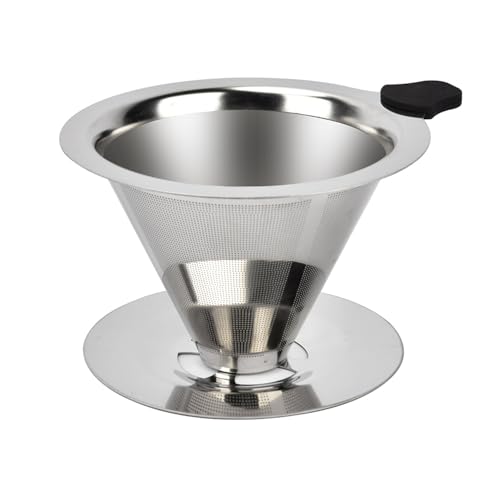
NKOVE Stainless Steel Pour Over Dripper

KINGrinder K6 Manual Coffee Grinder Stainless Burr

Alpaca Ventures Manual Conical Burr Grinder

Fellow Ode Gen 2 64mm Flat Burr Grinder

SHARDOR Electric Coffee Grinder 70g
A Deeper Look At The Lineup
This one isn’t a grinder at all, but it earns its spot because grind quality only matters if the rest of your setup holds up. The NKOVE dripper uses a reusable stainless steel basket instead of disposable paper, so nothing gets thrown away after each cup. Metal filtration also lets coffee oils through, which shifts the body of your brew fuller and smoother than paper typically allows.
In practice, this suits anyone who brews pour over daily and is tired of restocking filters. It’s also a sensible companion to any hand grinder in this list, since finer grinds can slow metal-basket flow noticeably.
The Good Stuff
- No recurring filter purchases, which quietly saves money over months of daily brewing.
- Dual-layer steel construction rinses clean under the tap with no paper residue to peel off wet grounds.
- Oils pass into the cup for a rounder, heavier body than paper-filtered pour over.
Small Caveats
- Metal baskets highlight fines, so an inconsistent grinder will taste more obvious here; the Fellow Ode below pairs better if uniformity is your priority.
- Cleaning the mesh thoroughly takes a soft brush, and neglected oils can turn rancid over time.
The Right Fit
Routine-driven home brewers who value sustainability and full-bodied cups over absolute clarity.
A Better Fit Elsewhere
Clarity-focused drinkers chasing bright, tea-like cups should lean toward the KINGrinder K6 plus a paper dripper instead.
Adjustment precision is what separates a hobbyist grinder from a toy, and the K6 plays in serious territory. Its external adjustment nut moves in 16-micron steps, meaning each click shifts particle size by a barely perceptible margin. That granularity matters most for pour over, where a click too coarse drains fast and sour, and a click too fine stalls the drawdown.
The full-metal body and stainless conical burrs give it heft you feel the moment you pick it up. Compared with the lighter Alpaca Ventures unit later in this list, the K6 trades some portability for dialing accuracy, a trade most enthusiasts accept gladly. Sixty clicks per rotation across four rotations covers everything from espresso-fine to French press coarse.
Advantages To Know
- 16-micron per-click steps let you repeat yesterday’s exact recipe without guesswork.
- External adjustment means no disassembly between grind settings, unlike older internal-adjust designs.
- All-metal build shrugs off kitchen drops and travel bag abuse far better than plastic-bodied rivals.
- One tool handles espresso through cold brew, so upgrading your brewer never strands the grinder.
Points To Keep In Mind
- Hand grinding a full dose takes real wrist effort at finer settings, something owners commonly mention during the first weeks.
- Static cling can make grounds stick to the catch cup in dry climates; a drop of water on beans helps.
Key Specs
Who Will Love This
Home enthusiasts who log recipes, chase extraction tweaks, and want espresso capability in the same tool.
Where A Sibling Pick Shines
Anyone prioritizing effortless cranking over micron precision will be happier with the bearing-assisted Alpaca Ventures grinder.
Manual grinding usually means a forearm workout, and this is where the Alpaca Ventures unit makes its case. An internal bearing supports the crank shaft, reducing wobble and the effort needed per rotation, while a lengthened stainless handle adds leverage. No batteries, no outlet, no noise complaints from a sleeping household at 5 a.m.
The compact footprint slides into a backpack or carry-on alongside a travel dripper like the NKOVE above. Precision adjustment is advertised but not quantified in the source details, so treat step counts as unverified and judge fineness by your own brews. For hotel rooms, campsites, and office desks, though, the formula is hard to argue with.
Notable Upsides
- Bearing-mounted crank spins smoothly, so a dose for two cups feels manageable rather than exhausting.
- Stainless conical burrs hold their edge through years of routine use.
- Silent operation makes pre-dawn or shared-space grinding genuinely practical.
Honest Caveats
- Small capacity means grinding multiple servings in batches, which adds a few minutes to weekend brunch prep.
- Adjustment markings are less documented than the K6’s, so repeatable recipes take some note-taking on your end.
Right Fit For
Travelers, campers, and quiet-hour brewers who want fresh grounds anywhere without cords or batteries.
Swap It Out When
Recipe repeatability tops portability in your priorities; the KINGrinder K6’s 16-micron clicks serve that crowd better.
Fellow designed the Ode around a specific philosophy: brewed coffee first, espresso not at all. That focus shows in the 64mm flat burrs, whose two-stage geometry aims for tight particle distribution, the trait behind clean, sweet pour over. Thirty-one settings cover drip through French press and cold brew, and single-dosing means beans stay fresh in their bag until the moment you grind.
Two practical touches stand out against the manual picks earlier here. Anti-static treatment keeps grounds from clinging to the hopper and counter, a small thing that changes daily cleanup. And the motor runs quiet enough that early grinding won’t wake the house, a common complaint with budget electrics like the SHARDOR below.
Why It Works Well
- Large flat burrs produce the uniform particles that pour over clarity depends on.
- Quiet operation suits apartments, early risers, and shared walls.
- Anti-static design cuts mess and wasted grounds stuck to surfaces.
- Single-dose workflow keeps beans fresher than hopper-stored setups.
- Thirty-one settings give headroom as your brewing preferences evolve.
Things To Consider
- No espresso range, so buyers of that method need a different machine entirely.
- Counter footprint exceeds any hand grinder here; measure your space first.
Feature Snapshot
Made For
Daily pour over drinkers ready to invest once in an electric machine built specifically for filter coffee.
Reach For A Different Pick When
Espresso sits on your roadmap; the KINGrinder K6’s fine-range clicks handle that job instead.
Blade grinders get a bad name among purists, yet they fill a real niche, and SHARDOR’s timing knob narrows the gap more than most. Instead of holding a button and hoping, you dial seconds marked on the knob, so Tuesday’s grind matches Monday’s. The 70g bowl handles up to roughly twelve cups in one run, which suits households brewing pots rather than single mugs.
It doubles as a spice and grain mill too, adding kitchen versatility the dedicated burr machines can’t match. Against the Fellow Ode, expect less particle uniformity and therefore a slightly muddier cup, but also a fraction of the cost. As an entry point or a guest-room backup, it’s a reasonable compromise.
Real-World Strengths
- Marked timing knob delivers repeatable coarseness without guesswork.
- 70g capacity covers a full carafe or several days of single cups per session.
- Handles herbs and grains, consolidating one appliance instead of three.
- Quiet motor keeps early grinding neighborly.
Where It May Fall Short
- Blade chopping produces mixed particle sizes, so pour over clarity trails the Ode noticeably.
- Grounds retention inside the bowl means a quick brush-out between uses to avoid stale flavor carryover.
Quick Facts
Whose Shelf It Belongs On
Budget-conscious multi-cup households and first-time grinder owners testing whether fresh grinding changes their mornings.
Consider Something Else When
You’ve caught the pour over bug and want competition-grade uniformity; the Fellow Ode Gen 2 is the natural next step.
What Matters Most Before Choosing Grinders For Pour Over
Burr Type Sets Your Ceiling
Conical and flat burrs crush beans to a consistent size, while blades chop randomly. Consistency controls how evenly water extracts flavor, which is why every serious pour over recipe assumes a burr grinder. Flat burrs like the Ode’s tend toward clarity; conical burrs lean slightly sweeter and more forgiving.
Adjustment Range Beats Click Count
A grinder spanning espresso-fine to cold-brew-coarse outlives any single brewer you own. External adjustment, as on the K6, saves you from disassembling the burrs every time you switch methods. Check that the finest settings actually reach filter range before committing.
Match Capacity To Your Routine
Single-dose machines keep beans fresh but demand attention each morning. Batch-capacity units like the SHARDOR suit pot brewers and meal-prep-style routines. Honest self-assessment here prevents an expensive mismatch.
Noise And Counter Space Are Real Costs
Apartments and shared walls make quiet motors worth paying for. Measure your available counter depth before buying an electric, and remember hand grinders store in a drawer.
Key Considerations Across These Picks
Traps First Timers Fall Into
The most common mistake is buying for espresso ambitions you don’t yet have, then discovering your machine can’t do coarse pour over well. Another is ignoring cleanup: blade bowls trap grounds, and mesh filters harbor oils. Choose the workflow you’ll actually maintain.
What Separates Premium From Basic
Higher-tier grinders spend money on burr diameter, motor quality, and static control. Those add up to uniformity, quieter mornings, and less mess. Paying up pays off once you brew daily and notice the difference; casual weekend brewers often won’t.
Frequently Asked Questions
Do I really need a burr grinder for pour over?
Yes, in almost every case. Uniform particle size is the single biggest lever on flavor clarity, and blades can’t deliver it.
Can I use a metal dripper with any grind size?
You can, but finer grinds slow drainage and may over-extract. Medium-coarse settings usually suit stainless baskets best.
How often should grinder burrs be cleaned?
A quick brush weekly and a deeper cleaning monthly covers typical home use. Oily dark roasts may need more frequent attention.
Is a manual grinder slower enough to matter?
For one or two cups, most people find hand grinding takes under a minute. Larger doses or very fine settings change that math considerably.
Why does my grinder produce static?
Dry air makes grounds cling to surfaces and containers. A tiny splash of water on the beans before grinding, a known trick among enthusiasts, reduces it noticeably.
Closing Thoughts
Grind quality is the cheapest upgrade your pour over will ever get, and any of these five moves you forward. Start with the SHARDOR to learn what fresh grinding does, step up to the KINGrinder K6 when recipes become a hobby, or commit straight to the Fellow Ode for a lifetime of quiet, consistent mornings. Pair whichever you choose with the NKOVE dripper and you’re set. Your cup decides from there.




