


Framing work punishes the wrong tool. A head that’s too light leaves nails standing proud after five swings, a handle that transmits every impact straight into your wrist ends the day early, and a smooth face that skates off nail heads costs you time and skin. The right framing hammer solves all three at once.
This roundup covers five options across different weights, handle designs, and face styles, from a budget-friendly general-purpose claw to a one-piece forged steel workhorse. Whether you’re hanging drywall on weekends or sheathing roofs for a living, there’s a fit here for your hands and your workload.
A Closer Look At The Lineup

IRWIN Fiberglass General Purpose Claw Hammer, 16 oz.
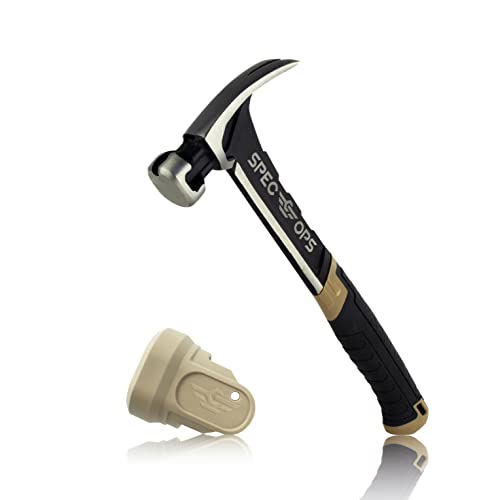
Spec Ops Tools Nailing Hammer, Rip Claw, 20 Oz

Fiskars Pro IsoCore Milled-Face Framing Hammer, 22oz

ESTWING Ultra Series Hammer, 19oz Milled Face

ESTWING Ultra Series Hammer, 15oz Milled Face
A Deeper Look At The Lineup
The 16-ounce weight sits right in the sweet spot for most home projects: heavy enough to drive 16d nails in a reasonable number of swings, light enough that your shoulder doesn’t complain by hour two. The fiberglass handle is the star here. Unlike wood, it won’t dry out or crack when left in a cold garage, and unlike bare steel, it dampens some of the sting on mis-hits.
The smooth face matters more than people expect. It leaves fewer marks on visible trim and finished lumber than a milled face would, which saves you sanding later. For anyone assembling a first tool bag, this is the sensible starting point.
The Upside
- Fiberglass shaft shrugs off garage humidity and temperature swings better than wood handles tend to
- Smooth face reduces surface marking on trim and painted lumber
- Rip claw gives you real leverage for pulling nails and light prying
- Cushioned grip stays comfortable through longer sessions
Things To Consider
- No magnetic nail starter, so one-handed starts take practice
- Owners commonly report the grip coating can wear shiny with heavy daily use
Who It Suits Best
A first-time homeowner or DIYer who wants one dependable hammer for decks, fences, and furniture without spending much.
Another Choice May Suit
The Spec Ops 20 Oz delivers far more driving force for framers who swing all day.
This is the hammer you reach for when the material fights back. At 20 ounces with a high-carbon steel head, it drives big framing nails fast, and the included mallet cap turns it into a two-in-one tool for tapping blocks into place. Where the IRWIN above aims at versatility, this one aims at raw output.
The shock-absorbing grip takes some of the edge off a full day of swinging, though you may find the extra weight tiring if your projects lean toward finish work rather than framing. Contractors and roofers get the most out of it; occasional users might feel over-hammered, so to speak.
Noteworthy Benefits
- 20-ounce head moves large nails with noticeably fewer strikes
- Mallet cap adds a second function without carrying another tool
- High-carbon steel head holds up to prying and demolition abuse
- Rip claw pulls bent nails out of framing lumber cleanly
- Shock-absorbing grip reduces hand fatigue over long shifts
Small Caveats
- The weight penalty shows up in overhead work like ceiling joists
- Mallet cap is a wear item; check its condition periodically on active job sites
Feature Snapshot
Right Fit For
Professional framers, roofers, and remodelers who need maximum driving power day after day.
Swap It Out When
The Fiskars IsoCore below suits anyone whose wrists ache after long nailing sessions, thanks to its vibration control system.
Here’s the pick for bodies that log serious hours. Fiskars built this around its patented IsoCore Shock Control System, which absorbs impact inside the handle and transfers roughly four times less shock to your hands than a traditional wood handle does. That difference compounds fast over a thousand-swing day.
The milled face, meaning a textured striking surface with fine grooves, grips nail heads so they don’t skate sideways on contact. Compared to the smooth-faced Spec Ops, you trade a little surface polish for noticeably surer strikes. At 22 ounces it’s the heaviest here, but the vibration control offsets much of that in practice.
What Makes Sense
- IsoCore design transfers about 4X less shock than wood handles, easing wrist and elbow strain
- Dual-layer insulated sleeve further cuts vibration on hard strikes
- Milled face locks onto nail heads and minimizes missed hits
- 16-inch handle length gives solid swing leverage
Points To Note
- Milled texture will leave small impressions on soft or finished wood
- Heaviest option in this lineup; overhead work demands stronger shoulders
Quick Facts
Made For
Carpenters and serious DIYers who drive nails for hours and want their joints to feel it less tomorrow.
Where Another Pick Suits Better
The ESTWING EB-15SM fits anyone who wants a lighter, faster swing for trim and lighter framing duties.
Estwing builds these differently than everyone else in this list: the whole hammer, head through handle, is forged from a single piece of American tool steel. No welds means no joints to fail, which is why old Estwings outlast the trucks they ride in. The black Shock Reduction Grip adds cushion over the steel core.
The magnetic nail starter is the feature you’ll miss everywhere else. Set a nail against the magnet, swing one-handed, and skip the smashed thumbs entirely. On ladders or rooftops, that convenience earns its keep daily. The 19-ounce milled-face version splits the difference between speed and power nicely.
The Good Stuff
- One-piece forged steel construction eliminates weak points entirely
- Magnetic nail starter enables fast, accurate one-handed starts
- Rip claw handles nail pulling, prying, and light demolition
- Milled face keeps nail heads from slipping off target
Honest Caveats
- Steel-core handle transmits more vibration than the Fiskars IsoCore design
- Grip covers are replaceable parts; inspect yours after drops on concrete
Built With In Mind
Working carpenters and roofers who want an indestructible tool with one-handed nail starting built in.
Look Elsewhere When
The IRWIN fiberglass model makes more sense for casual users who don’t need jobsite-grade durability.
Same forged-one-piece DNA as its 19-ounce sibling above, just trimmed down for faster swings and finer control. Fifteen ounces won’t sink 16d spikes in three hits, but for sheathing, furring strips, and repair work, the lighter head lets you nail longer with less effort. Smaller hands also find it noticeably easier to manage.
You still get the magnetic nail starter, the rip claw, and the same American steel construction with no joints to fail. In our view, this is the smartest Estwing choice for mixed-duty use where pure driving power isn’t the priority. Think of it as the precision instrument of the family, while the 19-ouncer does the brute work.
Useful Highlights
- Light 15-ounce head speeds up repetitive nailing and cuts fatigue
- Magnetic starter supports quick one-handed nail placement
- Single-piece forged build stands up to years of rough handling
- Easier to control in tight spaces and overhead positions
- Milled face improves strike accuracy on nail heads
Where It May Fall Short
- Lacks the mass for heavy structural framing or dense hardwoods
- Like any milled face, it can mark softer finish surfaces
Details At A Glance
Who Will Love This
DIYers, punch-list crews, and anyone with smaller hands doing mixed repair and light framing work.
Reach For A Different Pick When
The Spec Ops 20 Oz is the better call for heavy structural framing where every swing counts.
What Matters Most Before Choosing Hammers For Framing
Weight And What It Costs You
Heavier heads drive big nails faster but drain your arms sooner, especially overhead. Most framers settle between 16 and 22 ounces; anything lighter belongs in finish work. Match the weight to your typical task, not the biggest job you occasionally face.
Face Style: Smooth Vs Milled
A milled face has fine grooves that bite into nail heads, preventing slips on hard swings. The trade-off is surface marking, which matters on visible wood. Smooth faces treat finishes kinder but demand more accurate strikes.
Handle Material And Vibration
Wood feels classic but dries and cracks. Fiberglass resists weather and absorbs some shock. Steel lasts longest yet passes more vibration through unless the design compensates, as Fiskars’ IsoCore system does. Your elbows will thank you for thinking this through.
Claw Design
Rip claws run straight along the handle, giving strong leverage for pulling nails and prying boards apart. Curved claws pry less aggressively but rock nails out of delicate work more gently. Framers almost always want the rip style.
Key Considerations Across These Picks
Traps First Timers Fall Into
Grabbing a 22-ounce monster because it looks professional is the classic error; fatigue ruins accuracy fast. Skipping the face-style decision is the second. Buying purely on weight alone ignores how handle design changes how that weight actually feels.
When Paying More Pays Off
Premium models earn their price through shock reduction, one-piece forging, and features like magnetic nail starters. Daily users recoup that cost in saved fatigue and fewer replaced tools. Weekend warriors rarely need the top tier.
Frequently Asked Questions
What weight hammer is best for framing?
Most framers prefer 16 to 22 ounces. Heavier heads drive large nails with fewer swings but tire you out faster.
Should I choose a milled or smooth face?
Milled faces grip nail heads and prevent slips during powerful strikes. Smooth faces leave cleaner surfaces on finished or visible wood.
Why does handle material matter so much?
It determines vibration transfer, durability, and comfort. Steel lasts longest, fiberglass balances both concerns, and wood offers tradition with more upkeep.
Are one-piece forged hammers really stronger?
Yes, since there are no welded joints that can separate under stress. That construction is why many last decades on job sites.
Do I need a magnetic nail starter?
It’s not essential, but it makes one-handed nail placement faster and safer, especially on ladders or rooftops.
Bottom Line
Pick the hammer that matches your actual workload, not the heaviest one on the shelf. Casual projects suit the IRWIN’s balanced 16-ounce design, while full-time framers should weigh the Fiskars’ shock control or Estwing’s forged toughness. Whatever you choose, a well-matched hammer turns a long day of nailing into a manageable one.




