The right hammer makes framing a deck, hanging shelves, or breaking up old tile feel like half the work. The wrong one leaves your wrist sore by noon and your thumb black and blue. This lineup covers the full range: an all-purpose claw hammer, two serious masonry strikers, a compact travel-friendly option, and a pro-grade framer with a magnetic nail start. Each entry below breaks down where it shines, where it falls short, and who should actually spend money on it.
The Leading Options At A Glance

IRWIN Fiberglass General Purpose Claw Hammer, 16 oz
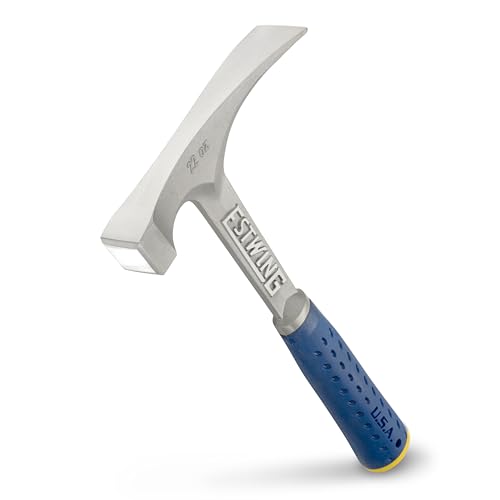
ESTWING Bricklayers Mason’s Hammer, 22 oz E6-22BLC

ESTWING Sure Strike Engineer’s Hammer MRF40E

ALLWIN Small Claw Hammer with Magnetic Starter (Purple)

ESTWING Ultra Series Hammer EB-19SM
A Deeper Look At The Lineup
Most households need exactly one hammer, and this is the profile that fits. The 16-ounce head sits in the sweet spot between driving power and control, so you can sink deck screws’ neighbors, the nails, without tiring out mid-project. A solid forged steel head paired with a fiberglass shaft gives you a tool that shrugs off drops and damp garage corners.
The smooth face matters more than people expect. It leaves fewer marks on soft trim wood, which means less putty and sanding when you’re finishing a room. The rip claw handles nail removal and light prying around the house.
A Few Strong Suits
- Fiberglass handle absorbs vibration better than bare steel, so long nailing sessions hurt less
- Smooth face keeps visible surfaces clean on trim and furniture work
- Forged steel head resists chipping through years of general use
- Rounded grip shape suits smaller hands as well as larger ones
- Curved handle base helps keep the tool seated in your palm during full swings
Things To Consider
- The fiberglass coating can pick up scuffs in a crowded toolbox, though owners commonly report it holds up fine functionally
Key Product Details
Who Will Love This
First-time homeowners and weekend DIYers who want one dependable claw hammer for hanging, assembling, and small repairs.
Where A Sibling Pick Shines
Anyone doing brick or stone work should step up to the ESTWING Bricklayers Mason’s Hammer E6-22BLC instead, since a general claw design isn’t built to split masonry.
Where the IRWIN above is a household generalist, this Estwing is a trade tool through and through. The head and handle are forged from a single piece of American tool steel, which eliminates the joint where most hammers eventually loosen or snap. That construction choice explains why these show up on job sites decade after decade.
The oversized striking face is the real draw for masonry work. More surface area means fewer missed blows when you’re dressing brick or tapping block into mortar beds, and the double-tempered head stands up to hard material without mushrooming quickly.
What It Does Well
- One-piece forged build means no welds or bonded joints to fail over time
- Larger face improves strike accuracy on brick, block, and stone
- Molded shock-reduction grip softens the jolt that reaches your hand
- Nylon end caps add durability at the handle’s most vulnerable points
- Polished finish wipes clean of mortar dust easily after a day’s work
Small Caveats
- At 22 ounces, it’s noticeably heavier than a standard claw hammer, and some users find it fatiguing for overhead work
- The specialized chisel edge has little use outside masonry tasks
Right Fit For
Bricklayers, landscapers building hardscape features, and serious DIYers tackling retaining walls or stone edging projects.
Swap It Out When
For pure demolition and heavy striking rather than precision masonry shaping, the ESTWING Sure Strike Engineer’s Hammer MRF40E delivers far more force per blow.
This is the mini sledge category, and the 40-ounce forged head does the talking. Geologists and prospectors have long favored this format for breaking rock, but the same physics serve contractors driving stakes, tapping pavers level, or knocking apart stubborn concrete edges. You get sledgehammer authority in a package that still fits one hand.
Compared to the 22-ounce masonry model earlier in this list, the extra mass translates directly into striking energy, roughly two and a half pounds of head behind every swing. The fiberglass shaft and cushioned no-slip grip keep that energy from rattling back into your arm.
A Few Highlights
- Two-and-a-half-pound forged head delivers genuine demolition-level force
- Cushion grip dampens recoil during repeated heavy swings
- Compact length works in tight spots where a full sledge can’t swing
- Suits both professional crews and property owners clearing land
Points To Note
- The weight demands decent upper-body strength, so casual users may tire faster than expected
- Overkill for nail-driving tasks, and the head weight can bend thin fasteners
- Store it low and secure; a dropped 40-ounce head cracks tile floors easily
Feature Snapshot
Who Should Grab It
Contractors, rockhounds, and landowners who regularly break stone, drive stakes, or demolish small concrete structures.
Another Choice May Suit
Shoppers wanting everyday nailing comfort will get far more use from the ESTWING Ultra Series EB-19SM, which trades raw mass for speed and precision.
An 8-ounce head sounds tiny next to the Estwing tools above, and that’s entirely the point. Lighter heads swing faster with less effort, which makes this stubby design a smart match for campers pounding tent stakes, kids helping with a first birdhouse, or anyone whose grip strength rules out heavier tools. It stows in a glovebox or daypack without a thought.
The magnetic slot near the head is the feature that earns its keep. Set a nail against it, position the tip, and release without holding the fastener between your fingers. First-timers learning to drive nails will appreciate not smashing their thumb while they figure out their aim.
Practical Pluses
- High-density carbon steel construction with rust-resistant treatment for outdoor storage
- Magnetic nail holder enables true one-handed starting
- Soft non-slip handle stays comfortable in smaller or younger hands
- Compact size packs easily for camping, tailgating, or car emergency kits
Less Ideal Details
- Eight ounces won’t drive large framing nails fully in dense lumber, so plan on finishing bigger fasteners elsewhere
- The short stubby handle limits leverage on stuck nails compared to a full-length claw
Made For
Campers, students in a dorm or first apartment, and parents buying a child’s first real tool.
Look Elsewhere When
Households needing one do-everything hammer will find the IRWIN 16 oz General Purpose Claw Hammer far more capable for interior repair work.
Framers and anyone who drives nails all day know the difference a magnetic nail start makes. Press a nail into the magnet on this 19-ounce head, tap once to seat it, then swing away with both hands free. No fumbling, no pinched fingers, and noticeably faster wall assembly over a full shift.
The milled face deserves a quick definition: it’s a waffle-textured striking surface that grips nail heads so they don’t glance off mid-swing. That texture leaves small marks, so it belongs on structural framing rather than finished trim. Like the other Estwing picks here, the head and handle are one-piece forged American steel with no welds to fail.
The Practical Payoff
- Magnetic starter allows accurate one-handed nail placement without thumb risk
- Milled face bites nail heads and prevents slips at speed
- Lightweight design reduces fatigue across long framing sessions
- Rip claw pulls nails and handles prying during teardown phases
- Shock-reduction grip cushions thousands of swings per project
What To Weigh
- The milled face marks softwood surfaces, so finish carpenters should choose a smooth-face variant instead
- Owners commonly report the textured face collects sawdust and needs an occasional wipe-down
Technical Highlights
Whose Shelf It Belongs On
Carpenters, framers, and dedicated DIY builders who swing a hammer weekly and value speed plus hand protection.
Skip It When
Occasional users doing mixed household tasks are better served by the IRWIN 16 oz, whose smooth face handles both rough and finished work gracefully.
Factors To Weigh Before Choosing Hammers
Weight Drives Everything Else
Head weight determines both power and stamina. An 8-ounce head suits stakes and small fasteners, 16 to 19 ounces covers most household and framing work, and 40 ounces enters demolition territory. Match the number to your typical task rather than buying heavy “just in case.”
Handle Construction And Comfort
You’ll choose between three main builds: solid forged steel (nearly indestructible but transmits shock), fiberglass (good vibration damping at moderate cost), and composite or rubberized grips. For multi-hour sessions, a molded shock-reduction grip pays for itself in reduced wrist strain.
Face Type Matches Your Material
Smooth faces leave clean surfaces on trim and furniture. Milled faces grip nail heads during rapid framing but mark the wood. Buying the wrong face for your project means extra sanding later, or worse, bent nails and slipped strikes.
Specialty Features Worth Considering
Magnetic nail starters, rip claws versus curved claws, and oversized faces each solve specific problems. Framers benefit most from magnets, masons from big faces, and campers from compact size. Skip specialty features you won’t actually use.
Key Considerations Across These Picks
Traps Shoppers Hit
The most common error is buying too heavy. A 22-ounce mason’s hammer feels powerful until hour two of hanging drywall. Another slip: choosing a milled face for finish work, which leaves dents in every board. Read the face description before committing.
The Case For Spending Up
Higher-tier hammers cost more mainly because of one-piece forging and premium grip materials. Forged-in-a-single-blow heads have no joints to loosen, which is why tradespeople keep Estwing tools for decades. Frequent users recover the price difference quickly in durability alone.
Frequently Asked Questions
What hammer weight works best for general home use?
A 16-ounce head handles most household nailing comfortably. Heavier options suit framing and demolition, while lighter ones fit delicate tasks.
Is a milled-face or smooth-face hammer better?
Milled faces grip nails during fast framing work but leave surface marks. Smooth faces protect visible wood on trim and furniture projects.
Why do forged one-piece hammers last longer?
With no weld or bonded joint connecting head to handle, there’s nothing to crack or loosen. The whole tool absorbs impact as a single unit.
Do fiberglass handles really reduce vibration?
Yes, fiberglass flexes slightly and dampens shock before it reaches your hand. Steel handles transmit nearly all impact energy directly.
Can a small 8-ounce hammer replace a full-size one?
Not for structural work, since it lacks the mass to drive larger nails home. It excels at camping, crafts, and light household fixes.
Closing Remarks
Match the tool to the task and you’ll rarely regret the purchase. The IRWIN covers household duty, the two Estwing specialty models handle masonry and demolition, the ALLWIN travels light, and the Ultra Series rewards frequent framers. Start with the job in front of you, and the right choice tends to make itself.