A hand auger is the quiet workhorse of the tool shed, whether you’re planting bulbs by the dozen or boring a peg hole at a backcountry campsite. The right one turns an hour of digging into minutes of steady turning. This shortlist covers both worlds: drill-driven planting bits and classic manual scotch-eye augers, plus one adjustable garden veteran. Match the pick to your soil, your drill, and your pack weight, and you’ll wonder why you ever dug by hand.
How The Shortlist Stacks Up

K-Brands Auger Drill Bit Set 3 Pack with Extension
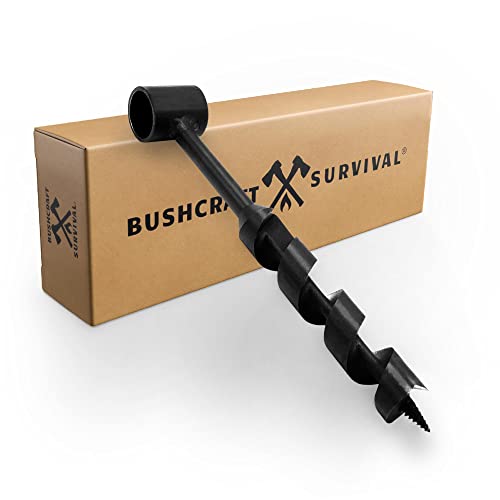
Bushcraft Survival 1 Inch Scotch Eye Auger

KOSIBATE Hand Auger Wrench with Leather Case (Brown)

KOSIBATE Scotch Eye Wood Drill with Leather Case

Seymour AUA2 Adjustable Auger with Wood Handle
A Closer Look At Each Pick
Planting season punishes anyone still using a trowel. This three-bit set covers small bulb holes up to wider shrub starts, and a 16.5-inch extension saves your knees from deep digging. Everything mounts on any 3/8-inch hex drive drill, so no special equipment is required.
For gardeners who churn through hundreds of bulbs each fall, the size range matters more than any single bit. The trade-off shows up in rocky ground, where even a good auger stalls and your drill clutch takes the strain.
A Strong Showing
- Three bit sizes handle bulbs, seedlings, and larger transplants without swapping tools mid-project
- The long extension lets you bore standing up instead of kneeling over every hole
- Standard 3/8-inch hex shank fits most common cordless drills already in the garage
- Works across different soil types, from loose loam to packed clay beds
Small Caveats
- Spiral flutes hold soil after use, so a quick rinse and dry before storage keeps rust away
- Dense clay or root-filled beds may slow progress noticeably compared to sandy ground
Who Will Love This
Avid home gardeners who plant in volume and want one set that scales from crocus bulbs to bare-root roses.
Where Another Pick Suits Better
Backpackers drilling wood at camp should look at the Bushcraft Survival 1 Inch Scotch Eye Auger instead, since it needs no drill or battery.
This is the old-school settlers’ wrench design: a scotch-eye auger where you thread a stick through the eye for leverage. Nothing battery-powered, nothing to break, roughly ten inches of working length that bores clean one-inch holes in green or seasoned timber. Shelter builders and bushcrafters prize exactly this simplicity.
The build quality stands out against cheaper imports, with hand-welded construction and hardened oxidized steel protected by an electrophoresis coating, which is an electrically bonded finish that resists corrosion. In our view, that combination is what separates a camp tool you trust from one you baby.
The Upside
- Razor-sharp cutting edge bites into hardwood without pre-drilling
- Hardened steel body with protective coating shrugs off damp pack conditions
- Scotch-eye head accepts a found stick, so there’s no handle to snap or lose
- Compact enough to live in a pack side pocket all season
Things That May Matter
- The exposed spiral edge has no sheath included, so wrap it before stowing near gear
- One fixed diameter means larger pegs need a second tool
Quick Facts
Made For
Bushcraft practitioners and camp builders who want a dependable manual boring tool that works anywhere, batteries optional.
Swap It Out When
Gardeners chasing speed should grab the K-Brands Auger Drill Bit Set, which pairs with a power drill for rapid bulb work.
KOSIBATE’s take on the scotch-eye design leans on thick high-carbon steel, a material chosen because it holds an edge longer than softer alloys under repeated twisting. Where the Bushcraft Survival model ships bare, this one arrives with a genuine leather sheath, and that changes daily handling more than you’d expect.
Slide it under a belt or hang it from a pack ring, and the sharp spiral never touches your tent fabric or your fingers. For weekend carvers and camp cooks who value tidy kit organization, that sheath alone justifies the choice.
Everyday Perks
- Thick high-carbon steel keeps its bite through seasons of camp woodworking
- Stitched leather case with sturdy snaps protects both the edge and everything around it
- Belt or ring attachment makes carry genuinely convenient on multi-day trips
Points To Note
- Leather needs occasional conditioning to stay supple after wet outings
- You may find the single fixed diameter limiting for oversized joinery
Feature Rundown
The Right Fit
Camping hobbyists who keep a curated leather-and-steel kit and want their auger stored properly rather than rattling loose.
Reach For A Different Pick When
Anyone facing soggy coastal climates may prefer the KOSIBATE Scotch Eye Wood Drill variant, whose coated finish adds corrosion resistance.
At first glance this looks like the previous KOSIBATE wrench, and functionally it is: same settlers’-wrench layout, same genuine leather sheath, same thick high-carbon steel body. The difference sits in the surface treatment. An added electrophoresis coating bonds a protective layer over the steel, and that layer is what fights the rust that plagues tools stored in damp garages or humid climates.
Owners of the uncoated sibling commonly report needing more diligent drying routines. Here, the finish does some of that maintenance for you, which makes it the sensible pick for paddlers, coastal campers, and anyone whose kit lives near salt air.
A Few Highlights
- Coated high-carbon steel resists corrosion far better than bare finishes
- Same comfortable stick-through-eye operation as traditional designs
- Leather sheath keeps the sharp spiral contained during transport
- Edge retention suits repeated camp joinery without constant re-sharpening
Worth Noting
- Still one fixed bore diameter, so plan your peg sizes around it
- The coating can wear at the cutting edge over heavy use, leaving exposed steel there
Whose Shelf It Belongs On
Paddlers, coastal dwellers, and four-season campers whose metal tools face moisture regularly and need low-fuss upkeep.
Another Choice May Suit
Dry-climate users watching their budget will be happy with the standard KOSIBATE Hand Auger Wrench, which skips the coating but carries the same core design.
Everything so far bores one material or one diameter. Seymour’s AUA2 breaks that pattern with an adjustable design that varies its hole width, aimed squarely at soil rather than timber. Steel blades riveted to a malleable iron yoke give it the heft to chew through general-purpose ground, and a welded steel tee handle gives you two-handed torque.
Fence builders and mailbox installers are its natural audience. Depending on your soil, expect solid performance in loam and mixed ground; concrete-hard clay will test your patience like any manual digger.
The Helpful Details
- Adjustable mechanism bores holes of varying diameters, replacing several single-size tools
- Riveted steel blades on a tough iron yoke handle rough ground season after season
- Welded steel tee handle delivers real leverage for dense soil
- General-purpose geometry suits lawns, gardens, and light fencing jobs alike
Factors To Consider
- Heavier than backpacking augers, so it lives in the shed rather than a pack
- Wooden handle benefits from occasional oiling to prevent splitting outdoors
Key Specs
Right Fit For
Homeowners tackling fence posts, deck footings, and seasonal yard projects who prefer muscle over motorized equipment.
Not Your Match When
Ultralight backpackers should stick with the Bushcraft Survival 1 Inch Scotch Eye Auger, built specifically for pack-friendly camp work.
What Matters Most Before Choosing Hand Augers
Match the Tool to Your Material
Wood and soil demand completely different cutting geometries. Scotch-eye augers with narrow spirals excel at boring timber for pegs and joints, while wide-flighted garden bits move dirt efficiently. Buying a wood auger for fence-post work wastes effort, and vice versa.
Power Source and Leverage
Drill-driven bits like the K-Brands set multiply your output dramatically but tie you to a charged battery. Manual scotch-eye designs trade speed for total independence, using any stick as a handle. Decide first whether your job sites have power nearby.
Steel Quality and Coatings
High-carbon steel holds an edge far longer than budget alloys, which matters when re-sharpening in the field is impractical. Electrophoresis coatings add corrosion resistance for humid or coastal storage. Bare steel performs identically on day one but demands more care afterward.
Carry and Storage Reality
A leather sheath, an extension shaft, or a fixed tee handle each shape how the tool travels. Weigh what your typical outing actually requires before committing.
Key Considerations Across These Picks
Traps First Timers Fall Into
The most common slip is buying a single-diameter auger for a project that needs multiple hole sizes, then paying twice. Another frequent mistake: assuming every hand auger handles soil. Most bushcraft models will dull quickly in rocky ground. Check the intended material before ordering.
What Separates Premium From Basic
Higher-tier options spend money where it counts: hardened steel, protective coatings, and included carry protection. Those details translate directly into fewer sharpening sessions and less rust management. For occasional light use, basic builds suffice; for weekly fieldwork, the upgrade pays for itself in longevity.
Frequently Asked Questions
What does “scotch eye” mean on a hand auger?
It refers to the ring-shaped eye at the top of the auger where you insert a stick as a lever handle. Turning the stick rotates the bit, giving you leverage without any attached handle.
Can I use a planting auger bit in any drill?
Most planting bits use a standard 3/8-inch hex shank, which fits the vast majority of cordless and corded drills. Confirm your chuck size before purchasing to be sure.
How do I maintain a carbon steel hand auger?
Wipe it dry after each use, apply a light coat of oil to bare metal, and store it in a sheath or dry spot. Leather sheaths also benefit from occasional conditioning.
Will a hand auger work in clay soil?
Manual augers do cut clay, but progress slows considerably compared to looser ground. Rocky or bone-dry clay may require pre-wetting or a heavier-duty adjustable design like the Seymour AUA2.
Are hand augers suitable for beginners?
Yes, especially drill-driven planting sets, which require no technique beyond holding a drill steady. Manual scotch-eye augers take a few sessions to find the right rhythm and pressure.
Closing Thoughts
Every pick here solves a specific problem well. The K-Brands set earns its place in busy gardens, the two KOSIBATE wrenches cover camp woodworking with different climate priorities, and the Seymour AUA2 anchors the heavy-soil end of the list. Start with the material you’ll actually bore most often, and the right choice becomes obvious. Whichever you settle on, a little post-use care will keep it turning for years.