A morning pour-over tastes different when you grind the beans yourself, and a good hand burr grinder is the most affordable way to find out why. These manual mills run quieter than any electric model, travel well, and put you in full control of particle size, the single biggest factor in how your coffee actually tastes. The list below covers nine solid options across budgets, brew methods, and travel setups so you can pick the one that fits the way you drink coffee.
An Overview Of The Picks

TIMEMORE Chestnut C2S Manual Coffee Grinder 25g Capacity

KINGrinder K6 Manual Coffee Grinder Stainless Burr

Alpaca Ventures Manual Coffee Grinder Travel Size
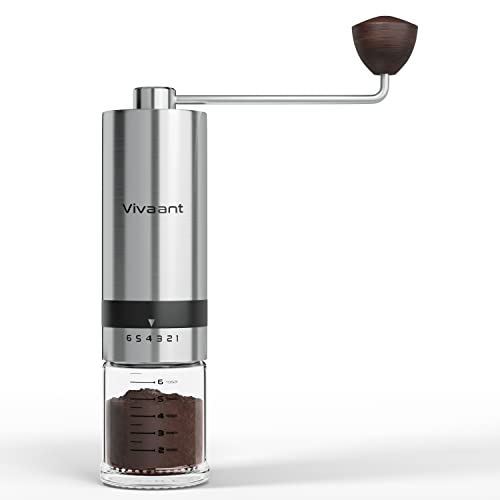
Vivaant Manual Coffee Grinder Hand Crank Conical Burr
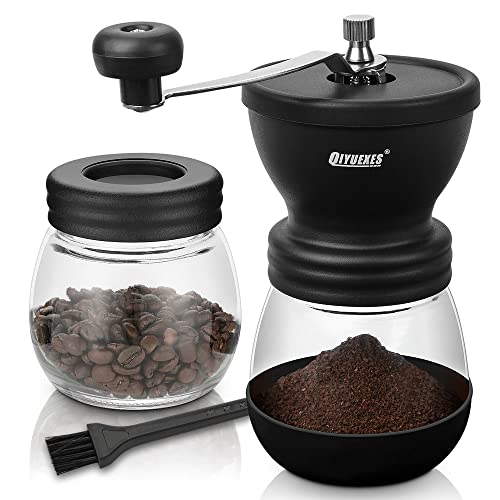
QIYUEXES Manual Coffee Grinder 80g Capacity 48 Settings

CEVING 60g Manual Coffee Grinder 40 Settings Stainless Burr

SimCoker Manual Coffee Grinder 20g Ceramic Burr

CEVING 60g Manual Coffee Grinder 40 Settings Ceramic Burr

OXO Brew Compact Conical Burr Electric Grinder 50g
Taking A Closer Look At The Options
TIMEMORE built its reputation in the hand grinder world, and the C2S is the everyday workhorse most people start with. A 38mm stainless steel conical burr (the cone-shaped steel grinder inside the mill) sits inside a full unibody metal shell, which feels sturdier than the plastic top pieces on older C2 models. The double-bearing axle keeps the grind path stable, so the grounds that land in your cup are fairly consistent from the first crank to the last.
For most home kitchens this is the one that simply disappears into the routine. The 25g hopper covers a single pour-over or a small French press, and the adjustment dial clicks cleanly through settings without much guesswork. Espresso pulling works in a pinch, though serious espresso fans may want a finer-tune mill.
Positive Points
- Solid metal unibody construction outclasses plastic rivals in the same bracket
- Double-bearing central axis helps keep grind particle size even, cup after cup
- Compact footprint fits a small apartment counter or a kitchen drawer
- Wide adjustment range handles pour-over, drip, French press, and basic espresso
Trade Offs
- 25g capacity means refilling for anything beyond a single mug or two-person pour-over
- Hand cramping on long sessions, a common note from owners who grind multiple batches back to back
- The catch cup is glass, so dropping it from a counter is a real risk
Who Will Love This
Daily pour-over drinkers making one to two cups at a time who want a reliable, long-lasting manual mill.
Consider Something Else When
Larger households that brew for four or more should look at the QIYUEXES 80g grinder instead, where capacity matters more than the C2S’s compact charm.
The K6 sits a step up from entry-level hand mills, aimed at people chasing espresso-grade consistency without plugging anything in. Its external adjustment nut moves the burrs in roughly 16-micron increments, which is the kind of fine control that matters when you are dialing in shots. Sixty clicks per full turn and up to four rotations open a wide range, from Turkish-style fine to coarse French press in the same grinder.
You feel the upgrade as soon as you pick it up. The aluminum body has a confident weight, and the stainless burr set is built to keep its edge through heavy daily use. For pour-over, it is honestly overkill, but the versatility means you can host a Chemex morning and a single-origin espresso afternoon with the same tool.
The Value In It
- 16-micron per-click adjustment gives espresso dial-in a real chance
- External adjustment collar means you never have to open the hopper to change settings
- Stainless burr set on a full metal frame, durable enough for daily heavy use
- Straight handle design offers a comfortable, repeatable cranking motion
Things To Consider
- Priced noticeably above basic starter hand grinders, so the cost only makes sense if you actually use the fine adjustment
- Heavier than compact travel options like the SimCoker, making it less backpack-friendly
- Clean-up of fine espresso grounds takes a bit more care to avoid losing powder in the burr chamber
Best Suited To
Home baristas who pull espresso shots and want manual control over grind size down to the micron.
Look Elsewhere When
Casual drip coffee drinkers will get more value from the TIMEMORE C2S, where the extra K6 precision goes unused.
Travel hand grinders live or die on a few details: weight, size, and how much arm-twisting a 20-gram dose demands. The Alpaca Ventures grinder leans into portability with a compact body and a lengthened handle that gives you better leverage per crank, which matters more than it sounds on a campsite or in a hotel room. The internal bearing keeps the burrs spinning smoothly so the effort stays low.
It is built for the road, not for batch brewing. Owners who pack it into a carry-on or a weekend bag get the full benefit, while anyone brewing for a household of four will outgrow its hopper quickly. Compared to the bulkier CEVING 60g mill further down this list, this is the one you actually want in a duffel bag.
What Pays Off
- Lengthened handle reduces the per-crank effort, useful on a long pour-over session
- Stainless conical burr holds up to road vibration better than ceramic in this size class
- No batteries, no power outlet, perfect for off-grid brewing
- Compact frame slips into a backpack side pocket
Honest Caveats
- Small hopper means several refill cycles for anything beyond a single cup
- Adjustment dial can drift slightly on rougher trips, a commonly reported issue with smaller mills
- Less stable on a flat counter than wider, heavier options like the Vivaant
Made For
Campers, road-trippers, and frequent flyers who want fresh grounds without hauling a full home setup.
Swap It Out When
Home users grinding for multiple cups at once will find the CEVING 60g model a much better match thanks to its larger bean chamber.
The Vivaant grinder is a friendly first step into hand grinding, with a stainless steel conical burr and a glass catch jar that comes apart easily for cleaning. The “Dragon Tooth” burr design is marketed as a fast grinder, and in real kitchens it does feel a bit quicker than some competing entry-level mills. The compact body fits comfortably in one hand, so new owners are not juggling a heavy block while they crank.
Where it really helps beginners is the simplicity. The adjustment is straightforward, the parts are few, and the whole thing rinses out in under a minute. It does not have the fine espresso dial-in of the KINGrinder K6, but most people starting out are brewing drip or pour-over anyway, where this mill is at home.
Useful Highlights
- Stainless conical burr stays sharp longer than blade-style alternatives
- Glass catch jar is easy to pour from and dishwasher-friendly
- Compact size works well on a crowded counter or in a small kitchen
- Setup takes about a minute, ideal for first-time hand grinder owners
Points To Note
- Glass jar is breakable, so dropping it on tile is a real risk for clumsy mornings
- Grind consistency is good for drip, less reliable for fine espresso
- Fewer adjustment clicks than higher-end picks, so dialing in is more about feel than precision
The Right Fit
Newcomers to hand grinding who want a no-fuss mill for drip, French press, or basic pour-over.
A Better Fit Elsewhere
Espresso-focused home baristas should step up to the KINGrinder K6 for the micro-adjustment range they actually need.
Few hand grinders hold 80 grams of beans at once, and that single fact makes the QIYUEXES stand out for anyone brewing for more than one person. With 48 external grind settings, you can swing from coarse cold-brew grounds to a tight espresso range without swapping tools. Two glass jars come in the box, so you can grind and store at the same time, which is genuinely useful during weekend brunches.
It is not a compact travel mill, and owners should expect a heavier, taller body on the counter. For a family kitchen or a shared workspace where multiple cups happen back to back, the trade-off is worth it. The adjustment ring feels sturdier than some cheaper competitors, though it is still a step behind the K6 in espresso precision.
Useful Touches
- 80g bean capacity is the largest on this list, so you grind less often per session
- 48-step adjustment range covers cold brew, pour-over, drip, and espresso
- Two included jars cut down on cleanup and let you pre-grind for later
- External adjustment ring is easy to tweak mid-session without opening the hopper
Smaller Limitations
- Bulkier than travel-focused picks like the SimCoker or Alpaca Ventures
- Two glass jars means more pieces to keep track of, especially in a busy kitchen
- Cranking 80g by hand takes a few minutes of steady effort, so it rewards batch brewing over single cups
Perfect Match For
Families or shared kitchens that brew multiple cups at once and want one grinder to handle everything.
Skip It When
Solo drinkers who only brew one cup at a time will find the 80g capacity wasted and should look at the SimCoker 20g instead.
CEVING positions this 60g mill as the sweet spot between travel-sized and full kitchen capacity, and on the spec sheet it has the case. A stainless conical burr set, 40 external grind settings, and a bean chamber large enough for two standard pour-overs in one fill. The external adjustment collar means you change settings without cracking open the hopper, which keeps grounds from spilling mid-tweak.
Compared to the 25g TIMEMORE earlier in the list, the extra capacity is a real upgrade for couples or small families, and you do not sacrifice portability. The trade-off is weight: it is heavier in a backpack than the Alpaca Ventures, so it is more of a cabin-bag grinder than a hiking one.
Practical Advantages
- 60g capacity doubles what most starter hand grinders offer
- 40 external settings give you meaningful control without overcomplicating the dial
- Stainless conical burr set is durable for daily use
- External adjustment collar avoids the grounds-spill issue common with internal dials
A Few Limitations
- Heavier than travel-specific picks, so it is better for cabin luggage than backpacking
- Larger footprint on a small counter compared to the SimCoker
- Cranking 60g still takes real effort, a trade-off inherent to any hand mill this size
Who Should Grab It
Couples and small households who want one grinder that handles drip, pour-over, and travel days alike.
Reach For A Different Pick When
Solo travelers packing light will find the Alpaca Ventures grinder easier to carry on a long trip.
The SimCoker is the smallest grinder on this list, with a 20g capacity and a ceramic conical burr that runs cooler than steel during grinding. Less heat transfer means the volatile aromatic oils in the bean stay intact, which matters for pour-over and AeroPress drinkers chasing clean flavor. The 304 stainless steel body resists rust, so it handles humid kitchens and travel bags without pitting.
It is genuinely pocketable for a burr grinder, which makes it a popular pick for office desks and short overnight trips. Where it loses ground is batch use: 20g is a single cup at best, so anyone making coffee for two will refill mid-session. Compared to the larger CEVING 60g mill, this is the trade-off, smaller and cooler, but capped at single servings.
A Strong Showing
- Ceramic burr runs cooler than steel, preserving more delicate flavor notes
- 304 stainless body holds up to humid environments and frequent travel
- Compact enough to live on an office desk or in a carry-on
- Adjustable grind covers a usable range from AeroPress to French press
Trade Offs
- 20g capacity means constant refills for multi-cup brewing
- Ceramic burrs can chip if dropped, so the small body needs careful handling
- Less suited to fine espresso work than the steel-burr KINGrinder K6
Whose Shelf It Belongs On
Office workers, students, and single-cup drinkers who want a compact mill that fits in a small space.
Where Another Pick Suits Better
Multi-cup households will get more mileage out of the QIYUEXES 80g, which removes the constant refill cycle.
This is the ceramic-burr sibling of the CEVING stainless mill reviewed above, and it earns a separate spot because ceramic and steel grind quite differently. Ceramic stays cooler during the grind, which some tasters find produces a cleaner, brighter cup on light-roasted pour-over coffees. Same 60g capacity, same 40 external settings, same external adjustment collar, just a different burr material.
It is one of the more affordable ways to get a 60g hand mill with a real adjustment range, so budget-conscious shoppers get genuine value here. The trade-off is durability: ceramic burrs can chip if the grinder takes a hard fall, more so than the stainless version. Treat it kindly and it lasts, but it is not the right pick for rough camping trips.
Positive Takeaways
- Ceramic burr runs cooler than steel, often producing brighter, cleaner flavors in the cup
- 60g capacity is generous for the price bracket
- External adjustment collar keeps grounds contained during setting changes
- Strong value for shoppers who want capacity without the premium cost
Factors To Consider
- Ceramic burrs can chip if the grinder takes a hard drop, unlike the more forgiving steel burrs
- Heavier than compact travel options, so it is a cabin-bag pick rather than a hiking one
- Fewer settings than the KINGrinder K6 for fine espresso work
Right Fit For
Shoppers on a tighter budget who brew light-roasted pour-over or drip and want a cool-running burr.
Another Choice May Suit
Rough outdoor travelers should pick the Alpaca Ventures or stainless CEVING instead, since ceramic is more fragile.
Including an electric option in a hand grinder roundup is a fair question, but the OXO Brew Compact earns its place for anyone who genuinely does not want to crank. The stainless conical burr set, 15 settings plus 29 micro-adjustments, and a 50g hopper deliver consistent grounds at the push of a button. It makes enough coffee for roughly six cups per fill, which covers most morning routines without babysitting a hand crank.
The trade-off versus every other pick on this list is obvious: it needs a power outlet, and it is not packable for travel. For a kitchen counter where convenience matters more than portability, it is a strong alternative. Just expect a different experience from a hand mill, faster, easier, but less meditative.
Well-Handled Touches
- Push-button operation removes the arm fatigue that comes with any hand mill
- 15 main settings plus 29 micro-adjustments give meaningful control
- Stainless conical burr set is consistent across the grind range
- 50g hopper covers a standard pour-over or drip batch in one fill
Points To Note
- Needs an outlet, so it stays on the counter, unlike every hand mill on this list
- Not travel-friendly at all, which matters if you camp or fly often
- Electric noise and vibration are a clear step up from the silence of a hand mill
Made For
Kitchen-bound users who want burr-quality grounds without the cranking effort, especially for daily drip or pour-over.
Consider Something Else When
Anyone who travels regularly or enjoys the ritual of hand grinding will be happier with the TIMEMORE C2S or CEVING 60g.
What Really Matters In A Hand Burr Grinder
Burr Material And How It Shapes Flavor
Steel and ceramic are the two burr types you will run into across this list, and they grind in noticeably different ways. Steel burrs hold their edge through heavy use and tend to produce a more uniform particle distribution, which espresso fans often prefer. Ceramic burrs run cooler, so the bean loses less heat during grinding, a detail that light-roast pour-over drinkers tend to appreciate because it preserves more delicate aromatics. For most home use, either works, and the choice usually comes down to whether you prioritize durability (steel) or cooler grinding (ceramic).
Capacity Versus Portability
The grinders above range from a 20g office-sized mill to an 80g batch brewer, and the right size depends on how many cups you actually make. Solo drinkers and frequent travelers get the most from the compact end, while families and small households benefit from the 60g to 80g range. A common mistake is buying a too-small grinder and then dreading the refill cycle, or buying a too-big one and never taking it on the road.
Adjustment Range For Your Brew Method
The number of grind settings matters less than the range, since a 40-step grinder that covers only medium grind is less useful than a 24-step one that spans espresso to French press. Pour-over drinkers typically do not need ultra-fine micro-adjustment, but espresso users should look for a grinder with at least 15 to 20 distinct steps in the fine end. If you brew multiple methods, an external adjustment ring is genuinely helpful because you do not have to open the hopper and risk spilling grounds every time you switch.
Build Quality And Long-Term Care
Hand grinders live hard lives, dropped on counters, packed in bags, rinsed under faucets. Look for stainless or aluminum bodies over plastic where possible, and check how easy the burr chamber is to open for cleaning. Most owners who keep their grinders for years report that a quick brush-out of the burrs every few weeks is the only real maintenance, and that any grinder with a metal burr set will outlast its plastic housing if the housing cracks first.
Things Worth Knowing Before You Commit
Pitfalls Shoppers Hit
The most common mistake in this category is buying a hand grinder based on capacity alone and ignoring the adjustment range. A 60g mill with only ten steps is harder to dial in for espresso than a 25g mill with sixty. Another trap is assuming ceramic burrs are automatically better because they cost more; they run cooler but chip more easily, so they are not the right pick for rough travel. Finally, shoppers often overlook the catch jar material. Glass jars pour cleanly but break, while plastic jars survive drops but retain static and coffee dust.
Why Top Tier Costs More
The jump from a budget hand mill to a premium one, like the KINGrinder K6, usually buys three things: a more precisely machined burr set, a finer adjustment mechanism (the 16-micron clicks versus coarser steps), and a sturdier frame that does not flex during cranking. None of that matters for someone who only brews drip coffee, but for espresso dial-in or daily heavy use, the smoother grind path and the micro-adjustment are worth real money. The upgrade pays off when you actually push the grinder toward its limits; otherwise a mid-range mill is plenty.
Frequently Asked Questions
How long does it take to grind coffee by hand?
A 25g dose on a standard hand mill takes roughly 45 to 90 seconds at a steady pace, depending on the grind size. Finer grinds for espresso take longer than coarser grinds for French press, and larger-capacity mills like the 60g and 80g options need a few minutes per fill.
Can a hand burr grinder really make good espresso?
Yes, but only grinders with a fine enough adjustment range. Models like the KINGrinder K6 with 16-micron per-click adjustment can produce the fine, consistent grounds that espresso needs, while a basic 10-step mill is unlikely to dial in properly.
Is a ceramic or steel burr better?
Steel burrs are more durable and tend to produce a more uniform grind, which espresso fans prefer. Ceramic burrs run cooler and are often quieter, making them a good fit for pour-over and drip drinkers who want to preserve delicate flavors.
How do I clean a hand burr grinder?
Most hand grinders come apart at the burr chamber, and a quick brush-out of the grounds every few weeks is the only real maintenance. Avoid running water through the burr chamber on mills that are not designed for it, since trapped moisture can cause rust on steel burrs.
Are hand burr grinders worth it over blade grinders?
For flavor, yes. Burr grinders crush beans to a consistent size, which is the single biggest factor in even extraction. Blade grinders chop unevenly, producing a mix of dust and chunks that leads to bitter, inconsistent cups.
The Takeaway
A good hand burr grinder is one of the cheapest upgrades you can make to your daily coffee, and the right pick depends mostly on how many cups you brew and how often you travel. Match the capacity to your routine, pick burr material that suits your brew method, and you will taste the difference in the very first cup.