Hand crank cheese graters solve a problem every home cook knows well: shredding a block of parmesan by hand is slow, messy, and hard on your knuckles. A rotary grater turns that chore into a few seconds of easy cranking, and it works just as well for carrots, chocolate, and nuts. This roundup covers five options spanning a classic stainless drum design to modern multi-blade machines, so you can match one to your kitchen and your cooking style.
A Closer Look At The Lineup

Küchenprofi Stainless Steel Single Drum Rotary Cheese Grater

Geedel Upgraded Rotary Cheese Grater Hand Crank

GORCI Rotary Cheese Grater with 3 Interchangeable Blades (Red)
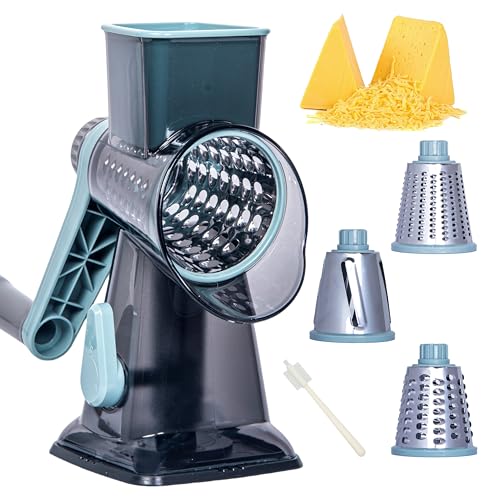
Mannilayco Rotary Cheese Grater Handheld (Blue)

KitchenAid KE321OHOBA Classic Etched Fine Grater (Black)
Taking A Closer Look At The Options
This German-made drum grater takes a deliberately simple approach: one stainless steel drum, one hand crank, no plastic parts doing the heavy lifting. In a drawer full of gadget clutter, that single-purpose focus reads as refreshing rather than limiting.
Cooks who grate hard cheeses weekly tend to appreciate how an all-steel body shrugs off years of use, and it handles chocolate and nuts without complaint too. One thing worth knowing up front: because this ships through the global store, return handling and any manufacturer coverage may differ from what domestic listings offer.
The Upside
- Stainless steel construction throughout resists staining and odors, so garlic or blue cheese never lingers in the drum.
- The single-drum design means fewer parts to misplace, clean, or break over time.
- Handles cheese, chocolate, and nuts, making it a quiet workhorse for dessert prep as well as pasta night.
Points To Keep In Mind
- With only one drum included, switching between coarse shreds and fine grating means buying attachments separately.
- International shipping terms may complicate returns compared with locally stocked alternatives.
Who It Suits Best
Cooks who value long-term durability over versatility and grate mostly one texture of cheese.
A Better Fit Elsewhere
The Geedel Upgraded Rotary Cheese Grater suits anyone who wants multiple blade options without hunting down add-ons.
Where the Küchenprofi keeps things minimal, the Geedel goes the other way entirely: four blades, a reinforced suction base, and a redesigned feed chute built for volume. The brand positions this generation as faster than earlier models, with a wider inlet that accepts most uncut vegetables.
For batch cooking, taco nights, or meal-prep Sundays, that throughput matters more than elegance. The BPA-free plastic body keeps weight down, which some cooks love and others see as a step back from all-metal builds.
Standout Benefits
- Four interchangeable blades cover shredding, slicing, and grinding in one tool, cutting down on drawer clutter.
- A stronger suction base anchors the unit to smooth countertops, so aggressive cranking does not walk it around.
- The widened chute accepts whole carrots and cucumbers, trimming your prep time before grating even starts.
- Larger, sharper drums move more food per rotation, which you notice most when shredding for a crowd.
Honest Caveats
- More blades mean more washing; owners commonly report rinsing and drying each drum promptly to keep them sharp.
- The suction grip needs a flat, non-textured surface and will not hold on tile with grout lines.
Key Specs
Right Fit For
Busy households that shred large quantities of cheese and vegetables several times a week.
Where A Sibling Pick Shines
Occasional graters who find four blades excessive will get everything they need from the GORCI model below.
The GORCI lands squarely in the sweet spot for first-time rotary grater shoppers: three stainless steel drums, a suction base, and a transparent barrel, at a level of complexity most beginners can handle straight out of the box.
You get a coarse shredder, a fine shredder, and a slicer, which covers pizza toppings, salads, and gratins without much thought. Compared with the Geedel’s four-drum setup, you give up one blade but keep the same core workflow.
Key Advantages
- Three round stainless steel drums handle most everyday cooking needs, from parmesan to zucchini ribbons.
- The strong suction base holds the unit steady on clean, smooth counters, so one-handed cranking feels secure.
- A transparent barrel lets you watch shredded pieces fall through without clogging, so you can gauge volume at a glance.
- Works on cheese, radish, carrot, cucumber, potato, chocolate, and nuts for salads and garnishes.
Small Limitations
- Suction bases depend on surface condition; a slightly damp or textured counter can weaken the hold.
- The bright red housing will not blend into minimalist kitchens the way the black KitchenAid does.
Feature Snapshot
Who Will Love This
First-time rotary grater owners who want solid versatility without paying for features they rarely use.
Swap It Out When
Households with young helpers at the counter should look at the Mannilayco instead, thanks to its more explicit finger-protection design.
Safety is the headline here. The Mannilayco pairs its three stainless drums with a food pusher, a protective handle, and an enclosed barrel, so fingers stay well clear of the cutting surfaces even during enthusiastic cranking.
That makes it a sensible choice for families where kids want to help with dinner. Cleaning is straightforward too: the unit detaches for a rinse under the tap or a trip through the top dishwasher rack.
Features That Help
- Built from 430 stainless steel drums and BPA-free ABS housing, a combination aimed at years of regular use.
- No electricity needed, so it works anywhere from a campsite table to a dorm room.
- Suction feet anchor the base during cranking, keeping both hands free to feed and turn.
- The enclosed drum and pusher shield fingers from sharp edges, a real difference around curious helpers.
- Detachable parts make cleanup quick under running water or on the dishwasher’s top rack.
Things To Consider
- Plastic housings can develop hairline cracks near stress points over very long service lives, depending on care.
- Like the GORCI, it needs a smooth countertop for the suction feet to bite properly.
Whose Shelf It Belongs On
Families with children who join in meal prep, plus anyone prioritizing safe, low-fuss cleanup.
Consider Something Else When
Purists who dislike plastic near their food should step up to the all-steel Küchenprofi drum grater instead.
Not everyone needs a drum machine. This KitchenAid paddle-style grater uses etched micro-serrations, tiny razor-sharp teeth that cut in two directions, to make fine grating and citrus zesting feel effortless.
It excels at jobs the rotary models handle awkwardly: ginger, nutmeg, lemon zest, and fluffy mounds of parmesan. The 304 stainless steel blade stays sharp through regular use, and a silicone foot rests the tip against the counter or bowl edge while you work.
The Case For It
- Micro-serrations cut on both strokes, roughly halving the effort per pass versus single-direction rasps.
- The extra-sharp 304 stainless blade turns hard cheese into fine snow quickly.
- A silicone foot grips bowls and counters, freeing your second hand for steadying ingredients.
- Flat profile stores in a utensil drawer, unlike bulky drum units.
Softer Spots
- Volume work is slower than a rotary grater; shredding a full block takes noticeably longer.
- The exposed blade demands careful storage, ideally with a guard or sleeve in crowded drawers.
Quick Facts
Best Suited To
Bakers and home cooks whose grating leans toward zest, spices, and small amounts of hard cheese rather than bulk shredding.
Reach For A Different Pick When
Large weekly batches of shredded cheese call for the Geedel’s higher-throughput drum system instead.
What Matters Most Before Choosing
Blade Count And Type
A single drum keeps things simple, but most households benefit from at least a coarse and a fine option. Coarse drums suit pizza and pasta toppings, while fine drums produce the powdery parmesan that melts evenly into sauces. Slicing drums add salad capability at little extra cost.
Mounting Stability
Suction bases separate comfortable tools from frustrating ones. They need a smooth, dry, non-porous surface; textured stone tiles and wooden counters often defeat them. Check your countertop material before committing to this design, since a wobbling grater slows you down and raises safety concerns.
Material Choices
All-stainless bodies, like the Küchenprofi, resist stains and odors indefinitely but cost more and usually ship with fewer attachments. BPA-free ABS housings keep weight and price down and are widely used across this category. Neither approach is wrong; it comes down to how heavily you cook.
Cleanup Reality
Drum graters have more nooks than a flat rasp, so detachable parts matter. Models rated for top-rack dishwashing save real time after big meals, though many owners still rinse drums immediately to protect blade sharpness.
Key Considerations Across These Picks
Traps First Timers Fall Into
The most common mistake is choosing on blade count alone and ignoring whether the suction base matches your actual countertop. Another frequent stumble is skipping the cleaning question; drums left wet overnight dull faster and can trap food residue in the housing seams.
What Separates Premium From Basic
Higher-tier models spend their cost on materials and engineering: full stainless drums, tighter tolerances between drum and housing, and smoother crank mechanisms that waste less effort per rotation. That polish shows up in daily use, especially for anyone grating several times a week rather than occasionally.
Frequently Asked Questions
Can a rotary grater handle soft cheeses?
Soft cheeses like mozzarella tend to smear rather than shred cleanly. Chilling the cheese first firms it up enough for decent results.
Are these graters good for vegetables too?
Yes, most models here handle carrots, cucumbers, potatoes, and zucchini without issue. Firmer vegetables actually perform better than soft ones.
How do I keep the drums sharp?
Rinse and dry the drums soon after use rather than letting them soak. Avoid abrasive scouring pads on the etched surfaces.
Do suction bases work on wood countertops?
Usually not reliably, since porous or uneven wood breaks the seal. Smooth stone, glass, and sealed laminate hold best.
Is a paddle grater ever better than a rotary one?
For small amounts of zest, ginger, or nutmeg, yes. Paddle styles also store flatter and clean faster than drum assemblies.
Bottom Line
Every pick here earns its place for a different cook. The Küchenprofi rewards those who want metal that outlasts trends, the Geedel serves high-volume kitchens, the GORCI balances price and versatility, the Mannilayco protects helping hands, and the KitchenAid nails fine grating. Match the tool to how often and what you grate, and any of these five will quietly earn counter space for years.