Nothing ruins a tidy lawn faster than ragged grass creeping over walkway edges. A mower can’t reach those tight strips along fences, beds, and patios, and a string trimmer often chews more than it cuts. That’s where a good pair of hand grass clippers earns its keep. This roundup covers five options spanning cordless power, classic manual steel, and clever rotating handles, so you can match the tool to your yard and your hands.
An Overview Of The Picks

GARDENA Cordless Hedge Trimmer and Grass Shears 09887

JARDINEER Sharp Grass Shears for Lawn Edging
Corona GS 6750D ClassicCUT Grass Shear
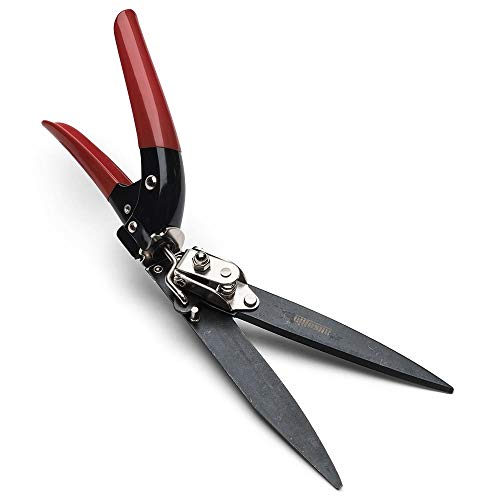
Kings County Tools Grass Shears with Rotating Handle

Edward Tools Hand Grass Shears with Swivel Head
A Breakdown Of The Leading Choices
Most manual shears ask your hands to do all the work, and after twenty minutes of edging you feel every squeeze. The GARDENA swaps that effort for a rechargeable lithium battery, delivering up to 80 minutes of runtime per charge. For anyone maintaining a mid-size lawn, that’s enough to finish the whole perimeter without hunting for an outlet.
The blade set is interchangeable too, so the same body handles both grass detail work and light shaping of small shrubs. Ergonomic grips help during longer sessions, which matters more than most people expect.
Everyday Wins
- Up to 80 minutes of cordless runtime covers a full edge pass on most suburban lots
- Swappable blades let one tool handle lawn edges and small bushes alike
- No cord means no dragging, snagging, or staying tethered to a socket
- Ergonomic handles reduce grip strain across longer trimming sessions
- Optional damage-protection coverage is available at purchase, covering drops, spills, and breakdowns with parts, labor, and shipping included
Things To Consider
- Battery tools need charging discipline; a dead pack mid-job sends you back to hand shears
- Owners commonly report lithium packs lose capacity over years, so storage in a dry, temperate spot helps longevity
Key Specs
Who It Suits Best
Homeowners with medium to large lawns who trim weekly and want to spare their wrists entirely.
Where A Sibling Pick Shines
For tiny courtyards or occasional touch-ups, the Corona GS 6750D does the same job with zero charging involved.
Where the GARDENA brings a motor, the JARDINEER keeps things refreshingly simple: heat-treated steel blades and nothing else to charge or maintain. Heat treatment hardens the metal so the edge holds up through repeated cuts against tough grass stems. A non-stick coating on the blades helps sap and wet clippings wipe away instead of gumming up the pivot.
The honest appeal here is weight. At a handy, light heft with an anti-slip grip, this pair suits gardeners whose wrists complain after a few minutes of squeezing. In our view, that makes it a sensible first pair or a backup for quick touch-ups between mows.
Practical Pluses
- Heat-treated steel holds a sharp edge through a full season of regular use
- Non-stick blade coating means sticky residue wipes off with a damp cloth
- Light build with an anti-slip grip keeps wrist fatigue down on small jobs
Points To Note
- Manual cutting takes real hand effort on thick or overgrown patches
- Like any coated blade, the non-stick layer wears eventually, so gentle cleaning extends its life
Made For
Gardeners with small yards or container-heavy spaces who trim occasionally and want a low-cost, low-maintenance tool.
Another Choice May Suit
Anyone facing long fence lines every week will get more done with the GARDENA’s battery-powered cutting action.
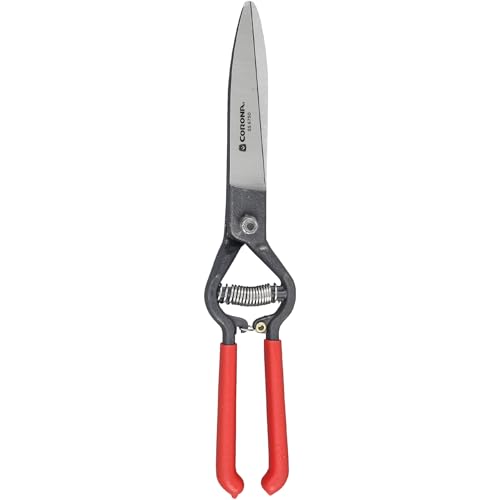
Corona has built garden tools for decades, and the ClassicCUT line shows why the name sticks around. Its 4.5-inch precision-ground steel blades are sized for exactly the job most people buy these for: crisp lines along sidewalks, driveway seams, and flower bed borders where a mower can’t reach. Compared with the lighter JARDINEER, this shear feels more planted in the hand, which translates into straighter cuts.
Durability is the headline attribute. Steel construction throughout means the tool tolerates being left in the shed, dropped on concrete, and sharpened year after year. You may find the fixed blade angle less forgiving in tight corners, but for open-edge work it’s steady and predictable.
Why It Works Well
- 4.5-inch precision blades deliver smooth, accurate cuts for clean lawn borders
- All-steel construction stands up to years of outdoor storage and resharpening
- Sized well for edging along walks, fences, and beds where mowers fall short
- A trusted brand with replacement-friendly support culture among longtime owners
Small Caveats
- Fixed head angle limits reach into awkward corners compared with rotating-handle designs
Feature Snapshot
Right Fit For
Traditionalists who value a single, dependable manual tool and don’t mind putting muscle into each cut.
Reach For A Different Pick When
Gardeners who also shape small hedges should look at the Kings County Tools shears below, whose rotating handle doubles for shrub work.
Every gardener knows the frustration of contorting a wrist to cut grass tucked into a corner or hugging a curved bed edge. Kings County solves that with a handle that rotates to 45 or 90 degrees, letting the blade meet the grass at a natural angle while your arm stays comfortable. It’s a small mechanical trick that changes how the whole job feels.
The brand positions these as dual-purpose clippers, equally at home manicuring walkway borders and shaping small shrubs or hedges. Unlike the fixed-head Corona above, that flexibility makes this the more versatile single tool for mixed gardens, though the mechanism adds a part worth keeping clean and lightly oiled.
The Good Stuff
- Rotating handle locks at 45 and 90 degrees for corners and vertical edging
- Precision-oriented blades suit walkway borders where grass meets pavement
- Doubles as light hedge shears for small shrubs and bushes
Less Ideal Details
- The rotation joint needs occasional cleaning to stay smooth, especially after dusty sessions
- Manual operation still demands hand strength on dense growth
- Multi-angle designs add moving parts that simpler shears simply don’t have
Who Will Love This
Gardeners with curved beds, tight corners, and a few ornamental shrubs who want one tool doing double duty.
Skip It When
If your only task is long, straight sidewalk edging, the Corona GS 6750D’s simpler fixed design serves just as well with fewer parts.
The Edward Tools shears take the rotating idea from the Kings County pair and push it further, offering three lockable swivel angles rather than two. Tempered steel forms the blade, a process that strengthens metal against chipping, and a rust-resistant coating protects it through humid summers and damp sheds alike.
Two comfort features stand out for anyone trimming more than a few minutes at a stretch. An automatic spring reopens the blades after each cut, so your hand only works on the squeeze, and a safety lock secures the blades closed in storage. Depending on how much edging your yard demands, those touches add up to noticeably less hand fatigue by the end of a session.
Noteworthy Benefits
- Swivel head locks at three angles for flat, angled, and vertical trimming
- Auto-return spring halves the hand work compared with plain scissor-action shears
- Tempered steel blade stays sharp longer than standard grass scissors
- Rust-resistant coating simplifies upkeep in humid climates
- Safety lock keeps blades closed in drawers and tool bags
Trade Offs To Consider
- More locking positions mean slightly more fiddling than a fixed-blade shear
- Owners commonly note the coating needs a dry wipe-down after wet grass to prevent surface spotting
Quick Facts
The Right Fit
Detail-focused gardeners with arthritis-prone hands or large decorative borders who trim often and want every ergonomic advantage.
Swap It Out When
Shoppers wanting cordless speed over manual control will prefer the GARDENA’s battery-powered approach for bigger properties.
What Matters Most Before Choosing Hand Grass Clippers
Blade Quality Comes First
The blade determines everything about how a clipper performs. Look for hardened or tempered steel, which resists dulling and chipping when it meets woody stems or gritty soil. Non-stick coatings are a genuine bonus in wet climates because sap and clippings rinse off rather than building up around the pivot. A dull blade tears grass instead of slicing it, leaving brown tips that spoil the clean line you’re chasing.
Power Versus Muscle
Manual shears cost less and never need charging, but they ask your hand to close every cut. Cordless models like the GARDENA shift that burden to a battery, which matters enormously on properties with long fence lines. Match the tool to your yard size honestly: under a quarter acre, manual usually wins on simplicity; beyond that, runtime becomes the spec to watch.
Grip And Fatigue
Spring-loaded actions, rotating heads, and anti-slip grips aren’t gimmicks. They directly reduce the repetitive strain that makes edging a chore. Gardeners with smaller hands or joint sensitivity should prioritize these features over raw blade size.
Maintenance Reality
Every option here needs basic care: wiping blades dry, occasional oiling at the pivot, and periodic sharpening for manual pairs. Choose a design you’ll actually maintain, because neglected clippers degrade fast.
Key Considerations Across These Picks
Traps First Timers Fall Into
Many shoppers grab the cheapest pair available, then discover thin blades flex on tough grass and dull within weeks. Others ignore grip ergonomics entirely and quit trimming halfway through the first session. Check blade material and handle design before anything else, and be realistic about how much area you actually need to cover.
What Separates Premium From Basic
Higher-tier models spend money where it counts: hardened steel, spring mechanisms, rotating heads, and in the cordless case, battery capacity. Those upgrades pay off for frequent users tackling big perimeters. Occasional trimmers with modest yards rarely notice the difference, so spending up only makes sense when the extra features match your routine.
Frequently Asked Questions
How often do hand grass clippers need sharpening?
For typical seasonal use, once or twice a year keeps manual blades cutting cleanly. Heavy use or contact with soil and grit shortens that interval considerably.
Can grass shears replace a string trimmer?
They complement rather than replace one. Shears excel at precise finishing work along edges and obstacles, while string trimmers clear larger overgrown areas faster.
Are cordless grass shears worth the extra cost?
For medium and large lawns trimmed regularly, yes, since they eliminate hand fatigue entirely. Small yards rarely justify the added expense and charging routine.
What’s the best way to store grass clippers?
Wipe blades dry, apply a light oil film, and keep them closed or locked in a dry spot. This prevents rust and protects the cutting edge between uses.
Do rotating-head shears actually help?
They make a visible difference in corners, along curves, and when switching between horizontal and vertical edging. Straight-line work sees little benefit.
Closing Thoughts
Choosing among these five comes down to scale and stamina. Big yards reward the GARDENA’s battery, mixed gardens suit the rotating designs from Kings County or Edward Tools, and straightforward edging jobs remain the Corona’s territory. Whichever direction fits your property, a sharp blade and a comfortable grip matter more than any other feature. Pick the tool that matches your actual routine, and those crisp lawn edges take care of themselves.