Refinishing a dresser or smoothing chair spindles by hand teaches you quickly that the right sanding tool matters more than raw effort. A block that fits your palm or a profile grip that hugs a curve turns an hour of frustration into twenty minutes of steady progress. This roundup covers five options spanning manual pads, detail kits, and compact power tools, matched to different project sizes and skill levels.
A Snapshot Of The Selections

POWERTEC 21 Profile Contour Sanding Grip Set (71620)

S SATC 5 Inch Hook and Loop Sanding Blocks, 2 PCS

lvanji 90PCS Micro Detail Sander Kit with Mini Block
Genesis GPS080 Detail Palm Sander
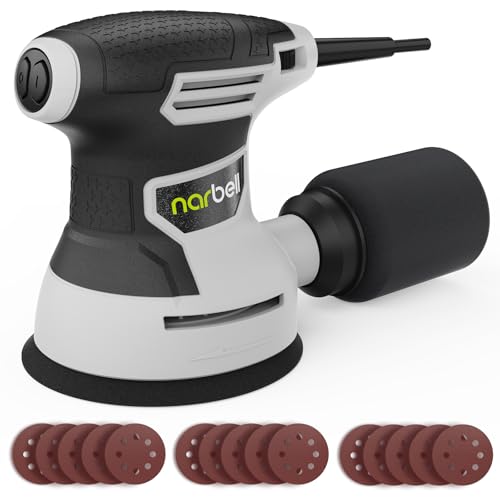
NARBELL 3.0AMP Random Orbit Sander with Dust Bag
A Breakdown Of The Leading Choices
Curved moldings and carved details defeat flat blocks every time, which is exactly where this eleven-piece set earns its keep. Each grip is shaped around a specific contour, from gentle convex arcs to tight concave channels, so you match the pad to the profile instead of fighting it.
The dense flexible foam construction gives just enough under pressure to follow wood grain without collapsing. Restorers working on picture frames, spindles, or auto body trim will find the assortment covers most shapes they meet.
The Helpful Details
- Twenty-one distinct profiles mean you rarely improvise with the wrong shape on detailed trim.
- Dense foam bodies hold their form through repeated sessions, so the set tends to outlast cheaper sponge pads.
- No power needed, making it a quiet option for evening work in shared spaces.
- Works across woodworking, crafts, and automotive touch-ups, stretching one purchase over several hobbies.
Things To Consider
- You supply your own abrasive sheets, so budget for a grit variety pack alongside it.
- Small grips can be easy to misplace in a crowded drawer; a labeled storage bin helps.
Who It Suits Best
Hobbyists and restorers who regularly face curved trim, carvings, or contoured surfaces where flat sanders simply cannot reach.
A Better Fit Elsewhere
For broad, flat tabletop work, the NARBELL random orbit sander covers far more area per pass than any contour grip can.
Where the POWERTEC set specializes in curves, this two-block pair handles the bread-and-butter work of furniture restoration: flat panels and right-angle corners. You get a round five-inch pad plus a mouse-shaped block, both sized to sit naturally in your hand during long sessions.
Hook and loop backing is the headline here. That fastener system (the same Velcro-style attachment used on most power sanders) lets you swap grits in seconds without peeling adhesive or folding paper edges.
Standout Benefits
- Grit changes take seconds, keeping momentum through multi-stage finishing sequences.
- The mouse block’s dual-sided hook and loop design reaches ninety-degree corners cleanly.
- Standard five-inch discs are widely available, so replacements are never hard to source.
- Secure attachment prevents paper from shifting or spinning mid-stroke, giving more even results.
Worth Noting
- Hook and loop fasteners collect dust over time; a quick brush-out keeps the grip reliable.
- Two shapes cover less ground than the lvanji kit’s three-in-one arrangement for intricate work.
Key Specs
Made For
DIY refinishers stripping and re-coating furniture who want dependable hand tools without a learning curve.
Where A Sibling Pick Shines
Anyone needing dozens of grit options and micro profiles should step up to the lvanji 90-piece kit instead.
Ninety sheets spanning nine grits from coarse 60 up to polish-ready 400 make this the most complete abrasive package in the lineup. The included mini block uses lightweight PU foam with an ergonomic shape, built for the small joints, grooves, and edges where full-size tools feel clumsy.
Compared with the S SATC pair, you trade pad size for sheer versatility. Wood, plastic, and metal all fall within its range, which suits crafters juggling mixed materials.
The Case For It
- The full 60-to-400 grit ladder carries a project from rough shaping to final polishing without extra purchases.
- Featherweight foam block reduces hand fatigue during extended detail sessions.
- Three-in-one configuration adapts to tight spots standard blocks cannot enter.
Small Caveats
- Sheets are consumables, so heavy users will burn through the supply faster than casual crafters expect.
- The mini format means slower coverage on wide surfaces; pair it with a larger block for panels.
Right Fit For
Craft makers and model builders working small wooden pieces, miniatures, or restoration touch-ups in confined areas.
Swap It Out When
Larger flat surfaces call for the Genesis palm sander, which powers through panel work these hand sheets would take hours to cover.
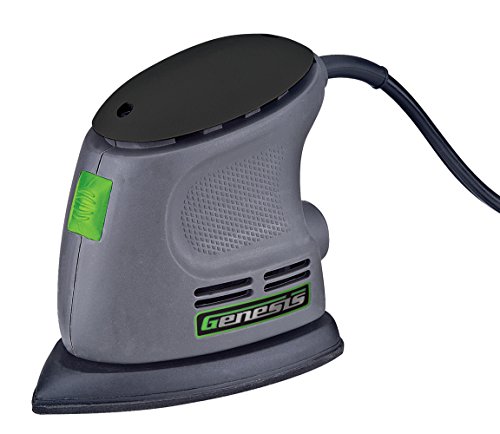
This is where powered sanding enters the conversation. The mouse-style body runs at 14,000 orbits per minute, a figure describing how many tiny circular strokes the pad makes each second of operation, and that speed turns tedious spindle sanding into a quick chore.
Chair legs, table stands, and narrow rails are its natural territory. A vacuum port attaches to shop vac hoses for dust control, and the dust-proof switch keeps debris out of the mechanism, a common failure point on budget sanders.
Everyday Perks
- 14,000 OPM motor removes old finish noticeably faster than hand blocks on detailed furniture parts.
- Vacuum port pairs with your existing shop vac to cut airborne dust dramatically.
- Hook and loop pad accepts fresh sheets in moments between grit stages.
- Sealed switch resists the fine dust that kills lesser detail sanders over time.
Points To Note
- Corded operation ties you to an outlet, unlike battery-powered alternatives.
- The pointed tip concentrates wear there, so tip-area sheets need replacing more often.
Feature Snapshot
Built With In Mind
Weekend refinishers tackling chairs, side tables, and trim who want powered speed without investing in a full-size sander.
Consider Something Else When
Wide tabletops and cabinet faces suit the NARBELL orbital sander better, since its five-inch pad covers flat areas far quicker.
Random orbit action means the pad spins and oscillates simultaneously, leaving no swirl marks on visible surfaces. That matters enormously on furniture, where scratch patterns show through stain and varnish. The 360-watt, 3.0-amp motor drives the five-inch pad at up to 14,000 RPM.
Six variable speeds let you dial output down for delicate veneer or open it up for aggressive stock removal. Fifteen included sandpapers and a dust bag round out a kit that’s ready to run straight from the box.
A Favorable Mix
- Six speeds adapt one tool to everything from light scuff-sanding to heavy finish stripping.
- Solid copper motor windings reduce friction loss, supporting consistent output over long sessions.
- Random orbit pattern minimizes visible swirl marks on stained surfaces.
- Integrated dust bag captures debris when a shop vac isn’t handy.
- Fifteen starter sheets mean your first project needs no additional purchases.
Factors To Consider
- The dust bag fills quickly on big jobs and needs frequent emptying to maintain suction.
- Its size overshoots tiny detail work, where the lvanji mini block remains the smarter companion.
Core Details
Who Will Love This
Serious DIYers refinishing tables, dressers, and cabinetry who want adjustable power and dust management in one tool.
Not Your Match When
Carved details and concave moldings still demand the POWERTEC contour grips, which reach shapes no orbiting pad can follow.
What Matters Most Before Choosing Hand Sanders For Furniture
Match The Tool To The Surface
Flat panels reward wide pads and power; spindles and carvings punish them. Before shopping, list the actual surfaces in your project. A five-inch orbital covers a tabletop in minutes but cannot enter a concave channel, while contour grips do the opposite.
Grit Range Decides Your Finish
Grit numbers describe abrasive coarseness, with lower numbers cutting aggressively and higher numbers refining. Furniture finishing typically moves through several stages, so a kit offering 60 through 400 saves repeat trips to the store. Single-grit purchases add up fast.
Dust Control Is Comfort Control
Sanding fine furniture generates clouds of particulate that settle everywhere and irritate airways. Powered models with vacuum ports or collection bags keep the workspace usable, especially indoors during winter projects.
Hand Fatigue Is Real
Long sessions with hard, poorly shaped blocks leave hands sore and results uneven. Ergonomic foam bodies and palm-fit designs distribute pressure, letting you hold a consistent stroke longer. Weight matters too on overhead or vertical work.
Key Considerations Across These Picks
Traps First Timers Fall Into
Newcomers often buy one aggressive grit and skip the progression, leaving scratches that finish magnifies. Another common slip is choosing a large power sander for detailed work, then discovering it gouges edges. Start by mapping your project’s surfaces honestly.
The Case For Spending Up
Higher-tier sanders justify their cost through variable speed, sealed switches, and better dust handling. Those features extend tool life and improve surface quality on visible furniture. Occasional crafters gain little; anyone refinishing regularly will feel the difference within a few projects.
Frequently Asked Questions
Can I restore furniture using only hand sanders?
Absolutely, and many restorers prefer the control. Expect slower progress on large flats, though detail work often goes faster by hand than with power tools.
What grit should I start with on old furniture?
Begin around 80 or 100 grit to strip old finish efficiently. Move progressively finer, finishing near 220 before staining or sealing.
Do hook and loop pads really save time?
Yes, swapping sheets takes seconds versus peeling adhesive-backed paper. Over a multi-grit project, that adds up to meaningful saved minutes.
Is a random orbit sander safe for veneer?
With low speed settings and light pressure, generally yes. Veneer is thin, so test on a hidden spot first and keep the tool moving.
How do I clean sanding blocks after use?
Tap off loose dust and brush the abrasive surface with a stiff bristle brush. Keeping hook and loop faces clear preserves their gripping strength.
Wrap Up
Your project should drive the choice, not the other way around. Curved trim points toward the POWERTEC grips, everyday restoration suits the S SATC blocks, and craft-scale detail favors the lvanji kit. Powered speed lives with the Genesis for small parts and the NARBELL for broad surfaces. Match the tool to the wood in front of you, and the finish will follow.