Sanding by hand sounds simple until your forearm gives out halfway through a tabletop. The right tool changes that completely, whether you’re stripping an old dresser or knocking down drywall seams before paint. This roundup covers five options across the spectrum: two manual sanding blocks for detail work and three powered random orbit sanders for bigger surfaces. Each one earns its spot for a specific kind of project and a specific kind of user.
Your Options, Compared

S SATC Sanding Blocks 5 Inch Hook and Loop, 2 PCS

ONEAND 18V Cordless 5 in. Random Orbit Sander
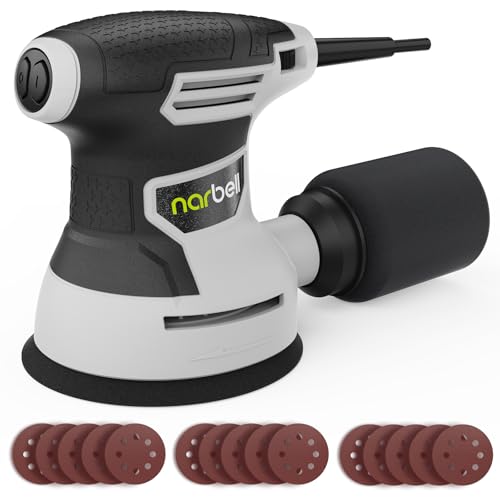
NARBELL Orbital Sander 3.0AMP(360W), 14000RPM

Afruxy Sanding Sponge 60/80/120/220 Grit 4-Pack
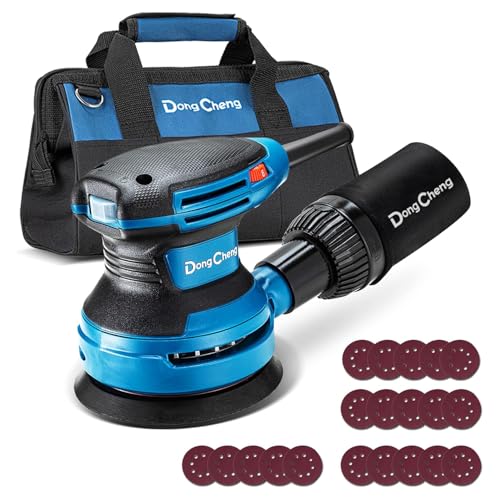
Dong Cheng 5-Inch Random Orbital Sander 3.2A
Why These Options Stand Out
This two-piece set pairs a round pad with a mouse-shaped block, and the shapes matter more than they first appear. The mouse profile reaches into 90-degree corners where a round disc simply can’t sit flat, so chair spindles and cabinet edges stop being a fight.
Hook and loop backing means you swap abrasive sheets in seconds without peeling adhesive residue off foam. For anyone restoring furniture on a kitchen table rather than in a workshop, that quick-change design keeps mess and downtime low.
Bright Spots
- The mouse-shaped pad grips vertical corners cleanly, letting one sheet of paper do double duty across edges.
- Both blocks fit the hand naturally, which reduces fatigue during long sessions on a dresser top.
- Hook and loop attachment holds discs steady so they don’t spin or shift mid-stroke.
- No cords, batteries, or outlets needed, so it travels to any job site in a toolbox drawer.
Things To Consider
- You supply the muscle, so large tabletops will take noticeably longer than with a powered option like the Narbell below.
- Owners commonly report that hook and loop backing loses grip over months of heavy use, so keep spare sheets on hand.
Who It Suits Best
Craft hobbyists and furniture restorers working small pieces who want control over pressure and angle without spending much.
A Better Fit Elsewhere
Anyone facing full-room drywall or wide panels should step up to the Dong Cheng orbital sander instead, since motorized coverage beats hand effort every time.
A random orbit sander spins the pad while oscillating it in overlapping circles, which is why it leaves fewer visible swirl marks than a plain orbital. This Ryobi-branded unit runs on an 18V battery platform, so there’s no cord trailing across wet finish or snagging on sawhorses.
The 5-inch pad suits deck rails, shelving, and door faces, and cordless operation shines outdoors where extension cords are a hassle. Note that this listing is the bare tool only, meaning battery and charger come separately unless you already own compatible packs.
Well-Handled Touches
- Cordless design lets you sand a fence line or stair rail without hunting for an outlet.
- Random orbit action produces a smoother finish on wood and drywall than single-motion pads.
- Fits existing 18V batteries from the same platform, saving money for current platform users.
Points To Note
- Tool-only packaging means first-time buyers face extra cost for a battery and charger.
- Runtime depends entirely on battery capacity, so big jobs may need a spare pack charged and ready.
Key Specs
Made For
DIYers already invested in an 18V battery system who want a light-duty sander for weekend projects around the house.
Consider Something Else When
Shoppers starting from zero gear will find better value in the Narbell kit, which arrives with everything needed to start sanding today.
Where the ONEAND trades on battery convenience, this Narbell goes the corded route and bundles nearly everything a newcomer needs. The 360-watt motor drives the 5-inch pad up to 14,000 RPM, and six speed settings let you dial output down for delicate veneer or open it up for rough stock removal.
A dust bag catches debris at the source, which matters more than most people expect. Sanding indoors fills a room with fine powder fast, and bag collection keeps cleanup to a single shake-out instead of a vacuum session.
Where It Delivers
- Six variable speeds cover everything from final polish passes to aggressive material removal.
- The included dust bag captures fine particles, keeping indoor air and surfaces cleaner.
- Fifteen sanding sheets ship in the box, so the tool works straight out of the package.
- Corded power means no runtime ceiling on long refinishing days.
Small Caveats
- The dust bag needs emptying frequently during heavy use, and some owners report fine dust still escaping around the port.
- Cord length limits reach, so distant corners of a garage may need an extension lead.
Feature Snapshot
Right Fit For
First-time sander owners tackling furniture refinishing or drywall touch-ups who want a complete starter setup at a modest cost.
Reach For A Different Pick When
Users needing maximum torque on dense hardwood will get more headroom from the Dong Cheng’s 380-watt-class motor further down this list.
Sanding sponges bend where rigid blocks can’t, and that flexibility is the whole point here. Foam backing conforms to curves, moldings, and rounded edges, making these the natural companion to the S SATC blocks reviewed earlier: those handle flat panels and corners, these handle everything organic-shaped.
The four grits span coarse through fine, covering a full progression from stripping old varnish down to pre-paint smoothing. A pair of protective gloves comes along too, a small inclusion that saves your palms during extended hand-sanding stretches.
Strong Points
- Four grit levels in one pack eliminate separate purchases across a whole project’s progression.
- Foam construction conforms to curved trim and rounded furniture profiles that flat blocks skip over.
- Rinse-and-reuse design extends service life compared with disposable paper sheets.
- Included gloves protect hands during longer manual sessions.
Where It May Fall Short
- Sponges wear faster than hard blocks on very rough surfaces, so aggressive stripping chews through the coarse grit quickest.
- Manual effort only, which makes them a poor match for large floor-level areas.
Who Will Love This
Woodworkers and crafters finishing curved pieces, picture frames, or trim details who value a complete grit range in one compact set.
Swap It Out When
Flat-panel work dominates your list, in which case the S SATC hook and loop blocks offer firmer backing and quicker sheet changes.
This is the muscle of the group. A 3.2-amp motor pushes the pad from 8,000 up to 12,800 orbits per minute across six gears, giving it the widest speed envelope here and enough torque to hold pace on dense hardwood where lighter sanders bog down.
The internal ventilation channels air through the body to keep the motor cooler during long runs, and twenty sanding sheets plus a detachable dust bag round out the kit. Compared with the Narbell, you trade a slightly higher entry point for more sustained power and a larger paper supply.
Everyday Advantages
- Wide 8,000 to 12,800 OPM range handles both gentle polishing and heavy leveling passes.
- Hook and loop pad accepts fresh sheets in seconds between grit changes.
- Internal airflow design helps the motor sustain output through extended sessions.
- Twenty included sandpapers cover a long stretch of projects before restocking.
Potential Sticking Points
- Higher power draws more current, so older household circuits shared with other tools may trip breakers.
- The detachable dust bag clips on and off, and loose seating is a commonly reported annoyance worth checking before each session.
Core Details
Who Should Grab It
Serious home woodworkers and frequent refinishers who need sustained power on tabletops, doors, and hardwood furniture.
Not Your Match When
Occasional users doing light touch-ups will find the Narbell’s lower power draw and simpler setup easier to live with.
What Matters Most Before Choosing Hand Sanders
Match the Tool to the Surface
Flat panels forgive almost any tool, but curved legs, spindles, and moldings demand conformable foam or shaped pads. Manual blocks give you pressure control that motors can’t, which matters on veneer and thin trim where aggressive sanding cuts through the good layer. Powered random orbit sanders earn their keep on anything wider than a shoebox lid.
Power and Speed Control
For electric models, amperage roughly signals staying power under load. Six-speed dials sound like marketing until you try to feather a finish coat at full tilt; variable speed turns one tool into several. Corded units remove runtime anxiety, while battery platforms reward shoppers already owning compatible packs.
Dust Management
Fine sanding dust settles everywhere and lingers in the air. A dust bag attached at the pad collects most of it at the source, though none capture everything. Indoor projects especially justify paying attention to this feature.
Abrasive Supply and Grip
Hook and loop backing swaps sheets in seconds versus peeling adhesive. Standard 5-inch discs stay cheap and available everywhere, while odd sizes lock you into specific refills. Kits shipping with sandpapers save a second order and get you working immediately.
Key Considerations Across These Picks
Traps First Timers Fall Into
Skipping grit progression is the classic error; jumping from coarse 60 straight to 220 leaves scratches that finish magnifies. Another common slip is buying a powerful sander for tiny craft projects, then fighting its weight on delicate work. Start with the smallest tool that fits the job.
When Paying More Pays Off
Extra money in this category buys motor headroom, speed control, and dust collection. Light annual use rarely justifies the top tier, but anyone sanding weekly will feel the difference in fatigue and finish quality within the first afternoon.
Frequently Asked Questions
What does “random orbit” mean on a sander?
The pad spins and simultaneously moves in small overlapping orbits. That combined motion prevents the swirl patterns a single spinning disc leaves behind.
Can I use regular sandpaper with hook and loop pads?
Only sheets with loop backing grip properly. Plain paper slides off, so buy discs labeled for hook and loop attachment.
Are sanding sponges reusable?
Yes, quality foam sponges rinse clean and dry for repeated use. They do wear down eventually, with coarse grits fading fastest.
Do I really need variable speed?
For hardwoods and finish work, yes. Low settings prevent gouging softwood and burning veneer, while high settings clear old coatings quickly.
Corded or cordless for a beginner?
Corded usually wins for beginners thanks to unlimited runtime and lower total cost. Cordless makes sense once you own batteries from a matching tool platform.
Closing Thoughts
Five tools, five different jobs. The S SATC blocks and Afruxy sponges cover detail work for pennies, the Narbell bundles a complete starter kit, the ONEAND rewards existing battery owners, and the Dong Cheng brings serious power for bigger builds. Match the tool to your actual projects rather than the biggest spec sheet, and any of these will serve you well for years of smooth finishes ahead.