A handheld welder changes what you can fix on your own schedule. Broken gate hinges, a cracked trailer tongue, a wobbly patio frame, none of it needs a shop visit when a light arc gun lives in your trunk. The five machines below cover the realistic range for home garages and job sites: stick-style handheld guns, one multi-process MIG unit, and a true industrial soldering gun for lighter electrical work. Each entry breaks down what the specs mean once you’re actually holding an electrode at arm’s length.
A Side-By-Side Look

GZ GUOZHI 130Amp Portable ARC Welder Gun with Digital Display

Weller 300-Watts Industrial Soldering Gun Kit D650PK

GZ GUOZHI 140A MIG Welder, 3-in-1 FLUX MIG/ARC/Lift TIG (Black)
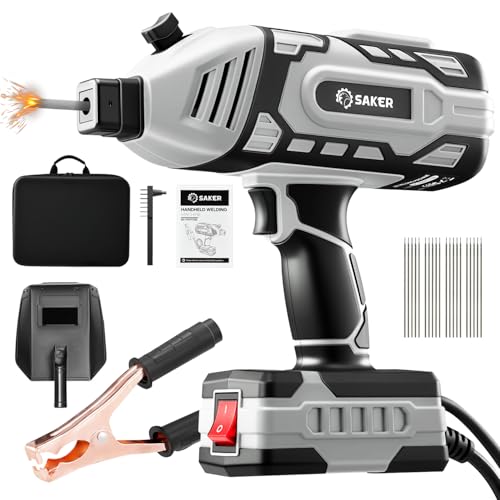
Saker Portable Electric Welding Machine, IGBT Inverter (Grey)
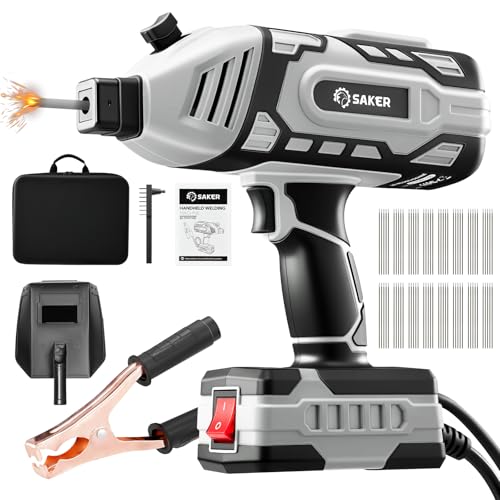
Saker Portable 110V ARC Welder, 80 Rods, 5-Level IGBT
What Each Pick Brings To The Table
This gun-shaped ARC welder runs on a standard 110V outlet and pushes a genuine 20 to 130 amps, which covers thin sheet metal up through heavier mild steel stock. The aerospace-inspired housing keeps it compact enough to carry up a ladder, something owners doing aerial or awkward-position work tend to appreciate. A digital readout shows your set amperage directly on the tool.
The included welding tool set and toolbox mean you’re working out of the box rather than piecing together accessories. Compared with the Saker units later in this list, you trade some portability for extra amperage headroom.
Notable Gains
- Digital display lets you repeat known settings instead of guessing by ear.
- Hot start function strikes the arc quickly, which matters most on rusty farm steel.
- Handles stainless steel, mild steel, and iron, the materials most household repairs involve.
- Over-heating, over-current, and over-loading protection cut the risk of cooking the inverter mid-bead.
- Rated to weld normally down to minus 20 degrees Celsius, useful for unheated barns and winter jobsites.
Honest Caveats
- No aluminum capability, so bike frames and boat parts stay off the menu.
- Owners commonly report that duty cycle limits mean pausing on long continuous beads to let it cool.
Key Specs
Who It Suits Best
A homeowner or ranch user who wants one capable steel-welding gun plus accessories in a single purchase.
Where Another Pick Suits Better
Anyone wanting wire-feed convenience should look at the GZ GUOZHI 140A MIG Welder instead, since flux core forgives sloppy fit-up far more than stick rod does.
Not every “gun” melts steel, and this Weller makes the distinction clear. At 300 watts, the D650PK is a soldering gun built for heavy electrical joints, auto wiring, gutter seams, and light tin work, not structural welding. Weller has built professional-grade soldering tools for decades, and this kit reflects that industrial orientation.
In a busy shop, the trigger-style instant heat means you’re not babysitting a warm-up cycle between tasks. Electricians and HVAC techs who move between service calls all day are the natural audience here.
Good Reasons To Consider
- High wattage recovers heat fast on thick copper lugs and heavy-gauge terminals.
- Kit format bundles tips and accessories so replacement parts are straightforward to source.
- Trigger activation heats only while in use, extending tip life compared with always-on irons.
Things To Keep In Mind
- This joins metal with solder, not fusion welding, so load-bearing repairs need a different machine.
- Tips wear with heavy use, and keeping spares on hand avoids mid-job downtime.
Made For
Tradespeople and serious DIYers whose work centers on electrical connections and light sheet metal rather than structural welds.
Consider Something Else When
For actual arc welding on steel, the Saker Portable 110V ARC Welder below delivers far more joining strength per dollar.
Where the first GZ GUOZHI gun handles one process well, this 140A unit handles three. FLUX MIG feeds self-shielded wire continuously, ARC mode accepts stick rods, and Lift TIG starts a tungsten arc by touch for cleaner finish work. The welding gun ships included, so flux-core welding works immediately after setup.
The synergistic control is the feature worth understanding. Adjust one dial and voltage plus wire feed speed shift together automatically, which removes the two-knob guessing game that frustrates new MIG users. In our view, that alone justifies choosing this over a single-process stick gun if you plan to grow your skills.
Strong Points
- Synergistic control keeps the arc stable with less splash, even while you’re still learning settings.
- Three processes replace what would otherwise be two or three separate purchases.
- Lift TIG opens the door to tidier beads on thinner material later on.
- Runs on 110V household power, so no electrician visit is needed.
Potential Drawbacks
- Flux core leaves slag that must be chipped and brushed after every pass, adding cleanup time.
- Lift TIG requires buying a TIG torch separately, a cost worth budgeting for upfront.
Quick Facts
Right Fit For
A committed hobbyist upgrading from occasional repairs to regular fabrication projects in a home garage.
A Better Fit Elsewhere
Occasional users who only want quick stick welds will find the simpler Saker Portable Electric Welding Machine easier to live with.
Saker’s take on the handheld arc gun leans on IGBT inverter technology, which converts incoming power efficiently and holds output steady as your hand moves. Higher no-load voltage makes striking the arc less of a fight, and consistent current means fewer stuck rods, the complaint that drives most beginners away from stick welding entirely.
Five variable current steps give you real control across material thicknesses. For weekend fence repair, gate hinges, or garden furniture, the honest read is that this hits the practical sweet spot without paying for features you won’t touch.
The Value In It
- IGBT inverter design supports cleaner welds with reduced spatter, cutting post-weld grinding.
- Five-step adjustment helps match heat to material so thin panels don’t blow through.
- Easier arc starting reduces frustration during those first learning sessions.
Small Caveats
- Fits 3/32-inch rods specifically, so stocking other electrode sizes means checking compatibility first.
- Step-based adjustment offers less fine-tuning than a fully variable dial.
Best Suited To
DIYers tackling periodic steel repairs around the property who want dependable results without complexity.
Skip It When
Shoppers wanting maximum portability should weigh the Saker Portable 110V ARC Welder next door, which trims weight further for carry-everywhere use.
Weight is where this Saker separates itself. At roughly 1.7 kilograms, the whole gun weighs about what a cordless drill does, which changes how you weld overhead or inside tight frames. You stop bracing against fatigue and start focusing on the bead.
Current spans 20 to 120 amps across five levels, paired with the same IGBT inverter platform as its sibling above. The lower top end means very thick stock is off the table, though for exhaust hangers, brackets, and light fabrication, most owners find the range plenty forgiving while learning.
Well-Handled Touches
- 1.7kg build makes overhead and one-handed positioning genuinely manageable.
- 20A floor setting protects razor-thin sheet metal from burn-through.
- Simple five-level control shortens the learning curve dramatically.
Room For Improvement
- 120A ceiling limits you to lighter material than the GZ GUOZHI guns handle.
- Like any stick welder, spent rods and slag create ongoing consumable costs and cleanup.
The Details
Who Will Love This
First-time welders and anyone prioritizing grab-and-go portability over raw amperage.
Another Choice May Suit
Heavier structural work calls for the GZ GUOZHI 130Amp Portable ARC Welder Gun, whose higher output handles thick steel confidently.
Choosing Between These Welders Without Regret
Match The Process To Your Projects
Stick welding, the process these handheld guns use, melts a coated electrode into the joint. It tolerates rust, paint, and wind better than any other method, which suits fence posts and farm equipment perfectly. Wire-feed MIG, like the GZ GUOZHI 140A, produces faster, cleaner beads but demands cleaner metal and more setup discipline.
Decide honestly how often you’ll weld. Monthly gate repairs favor a simple stick gun; weekly project work rewards a multi-process machine.
Power Supply And Duty Cycle Reality
Every unit here runs on 110V household outlets, which caps output around 140 amps. That’s ample for anything under roughly a quarter-inch of steel. Thicker sections need multiple passes and patience. Also note duty cycle: inverters need cooling pauses on long beads, so continuous production work belongs on bigger shop machines.
Key Considerations Across These Picks
Traps First Timers Fall Into
The classic mistake is buying on amperage alone and ignoring electrode size compatibility. The Saker grey model fits 3/32-inch rods only, so confirm consumable availability before committing. Another common slip is assuming “handheld” means aluminum-capable; several options here explicitly exclude it. Read the material list, not the marketing headline.
When Paying More Pays Off
Extra money in this category buys process flexibility, synergistic controls, and accessory bundles. The multi-process GZ GUOZHI earns its premium the moment you attempt your first TIG-style bead. Casual users gain nothing from that headroom, so spend according to ambition, not aspiration.
Frequently Asked Questions
Can a handheld welder run on a normal home outlet?
Yes, every machine listed operates on standard 110V power. Avoid sharing the circuit with high-draw appliances to prevent tripped breakers.
Are these suitable for complete beginners?
The Saker 110V ARC Welder and the Saker grey model both suit newcomers thanks to simple stepped controls. Start on scrap steel before touching anything structural.
Can any of these weld aluminum?
No. The GZ GUOZHI 130A gun explicitly excludes aluminum, and stick processes generally struggle with it. Aluminum requires specialized AC TIG equipment.
What safety gear do I need alongside the gun?
An auto-darkening helmet, flame-resistant gloves, and long sleeves are the baseline. Welding arcs emit intense UV light that damages eyes and skin instantly.
How do I maintain an inverter welder?
Blow out dust with compressed air periodically and store the unit dry. Moisture and metal dust are the main enemies of inverter electronics over time.
Closing Remarks
Your choice comes down to matching the machine to the metal in front of you. Light, occasional repairs point toward the lightweight Saker; growing skills justify the multi-process GZ GUOZHI; electrical work belongs to the Weller. Whichever route you take, buy the helmet and gloves first, then practice on scrap until the bead looks right.