


Handheld welding machines have shrunk the trade down to something you can carry in one hand. Instead of dragging a heavy transformer box across the garage floor, you plug in a gun-shaped unit, dial a current level, and strike an arc where the work actually is. That matters for fence repairs, trailer hitches, gate hinges, and anything bolted down in an awkward spot.
This roundup covers five 110V handheld arc welders suited to home shops, farm duty, and field fixes. Each runs on standard household power, so there’s no need for a dedicated 220V circuit in most cases. The honest caveat up front: these are light-duty tools built for thin to medium steel, not fabrication-shop output. Match the machine to the job and you’ll be pleased.
A Quick View Of The Lineup

GZ GUOZHI 110V 130Amp Handheld ARC Welder with Toolbox
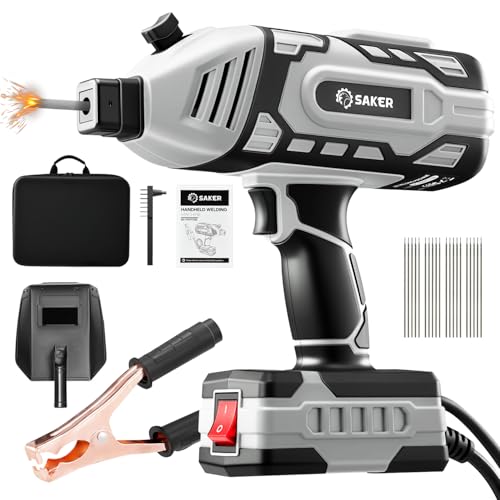
Saker Portable Welder Gun with IGBT Inverter (Grey)

Saker Portable 110V ARC Welder, 40 Rods
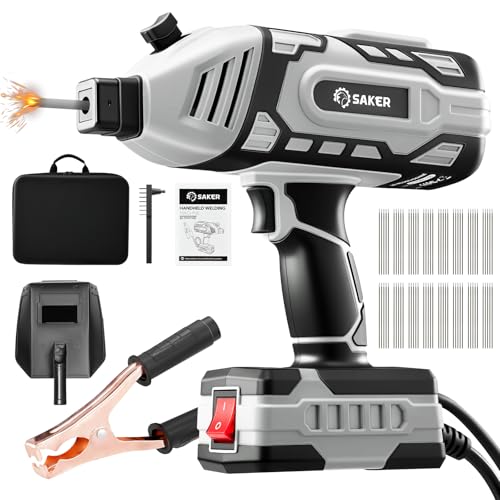
Saker Portable 110V ARC Welder, 80 Rods
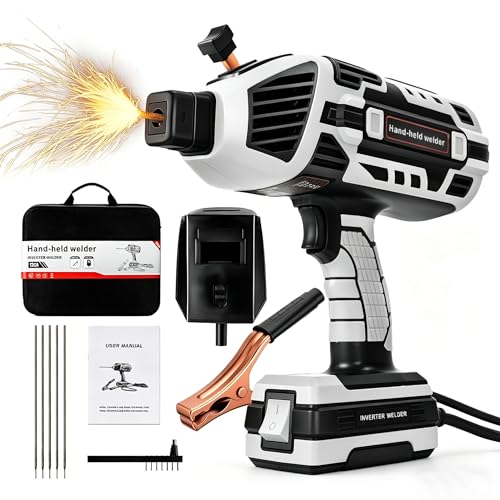
YesRight 110V 120Amp Handheld ARC Welder Gun
The Strengths Of Each Pick
This is the most complete package of the group, shipping with a welding tool set and a hard toolbox alongside the gun itself. The aerospace-inspired housing gives it a distinct look, but the practical payoff is a compact body that tucks into a truck bed or shelf without fuss. Its 130-amp ceiling is also the highest here, which helps on slightly thicker mild steel.
The digital display showing output from 20 to 130 amps removes guesswork when switching rod sizes. A hot start function kicks extra current in at ignition, so striking an arc feels less like a wrestling match for newcomers.
Everyday Perks
- Toolbox and tool set mean you can start welding the day it arrives rather than hunting for accessories.
- Over-heating, over-current, and over-loading protection guard the internals during long repair sessions.
- Rated to operate down to minus 20 degrees, handy for unheated barns and winter garages.
- Handles stainless steel, mild steel, and iron, covering most household repair stock.
- Digital readout makes matching current to rod diameter straightforward.
A Few Limitations
- No aluminum capability, so keep your expectations set on ferrous metals only.
- The case adds bulk; owners commonly report leaving it behind for quick one-hand jobs.
Key Specs
Who Should Grab It
Home shop owners who want a ready-to-run kit with the strongest output ceiling of this shortlist will get the most from it.
Where A Sibling Pick Shines
Shoppers who mostly weld outdoors in tight spots may prefer the YesRight 120Amp Welder Gun, which is lighter and shaped for true one-handed use.
Saker’s flagship gun leans on IGBT inverter technology, which converts household 110V power into a steadier, more controllable arc than older transformer designs manage. Higher no-load voltage makes ignition easier, and that single trait does more for a nervous first-timer than any other spec on the sheet. Five current steps let you climb gradually as confidence grows.
It’s sized for 3/32-inch rods, a forgiving diameter that burns smoothly on thin steel. Compared with the GZ GUOZHI kit above, you give up the included toolbox but gain a simpler setup with fewer parts to learn.
The Helpful Details
- Inverter-based arc stability reduces spatter, meaning less grinding cleanup afterward.
- Five adjustable current levels make it easy to match heat to thin sheet metal without burn-through.
- Consistent current output helps beginners lay flatter beads on their first attempts.
- Optional protection plans cover accidental drops and spills, worth considering for jobsite use.
Points To Note
- Rod selection is limited to 3/32-inch, so thicker stock calls for a higher-amperage unit like the GZ GUOZHI.
- Step-based adjustment is coarser than a continuous dial; fine tuning between levels isn’t possible.
Right Fit For
New welders practicing on scrap steel and light household repairs will find this the gentlest entry point in the group.
Swap It Out When
Anyone planning frequent long sessions should look at the Saker 80-Rod version below, which bundles more consumables so you’re not restocking every weekend.
Weighing just 1.7 kg, this version of the Saker gun is the featherweight of the list. At that mass, one-handed welding over your head or reaching across a fence line stops being an arm workout. The 40 rods bundled in the box are enough practice material to burn through several weekends before you spend another cent.
Current spans 20 to 120 amps across five levels on the same IGBT platform as its sibling above. For occasional users who don’t want to overthink settings, that’s a sensible middle ground.
What Works In Its Favor
- The 1.7 kg body suits garage shelves, car trunks, and overhead work equally well.
- 40 included rods mean genuine practice time before buying consumables.
- Five-level control from 20A keeps heat gentle on thin fence panels and auto body patches.
Honest Caveats
- At 120 amps maximum, heavy plate is out of reach; plan on multiple passes for thick sections.
- Stored rods can absorb moisture over time, so keeping them sealed in a dry container preserves weld quality.
Quick Facts
Made For
Casual DIYers tackling gates, brackets, and garden hardware a few times a month are the natural audience here.
Consider Something Else When
Users needing more headroom for heavier steel should step up to the GZ GUOZHI 130Amp unit, whose wider amperage window handles tougher joints.
This is the same 1.7 kg, five-level IGBT gun as the 40-rod Saker above, doubled up on consumables. Everything about the tool itself carries over: the 20 to 120 amp spread, the grey handheld form factor, and the same suitability for garage and outdoor DIY. The difference is purely practical, twice the rods means half the reordering.
For anyone past the learning stage and actually fixing things regularly, that math adds up quickly. Practice welders burn through 40 rods faster than they expect.
What It Does Well
- 80 rods support a full season of weekend repairs without a consumables run.
- Same lightweight 1.7 kg build keeps fatigue low during extended overhead or awkward-angle work.
- Five current levels remain beginner-safe while still handling medium-gauge steel.
- Accidental-damage coverage plans are available, useful for truck-bed and jobsite storage.
Small Caveats
- Identical hardware to the cheaper 40-rod sibling, so value depends entirely on how fast you weld.
- Like all stick setups, spent rod stubs accumulate; a small metal bucket keeps cleanup tidy.
The Right Fit
Weekend repairers who already know their way around an arc and go through rods steadily will appreciate the larger bundle.
Another Choice May Suit
Total beginners burning through practice scrap slowly are better served by the 40-rod Saker, since doubling consumables won’t help someone still learning to strike an arc.
At roughly 9.8 by 10 inches and 3.9 pounds, the YesRight gun is built around true one-handed operation. That geometry pays off most away from the bench, patching equipment in a pasture or working off a ladder where a two-hand grip isn’t realistic. Anti-stick protection cuts the rod loose before it welds itself to the workpiece, a small mercy for anyone welding vertical seams.
Rod compatibility spans 1/16 to 1/8 inch, the broadest stated range here, so you can step up rod size as the job demands. Against the Saker units, it trades their lighter weight for that flexibility.
Key Advantages
- Accepts 1/16-inch through 1/8-inch rods, letting you match consumable thickness to the metal.
- Anti-stick behavior prevents frozen rods, saving both frustration and wasted electrodes.
- Compact footprint leaves nearly the whole workbench free for clamps and prep.
- Smooth arc character helps produce cleaner beads with less post-weld grinding.
- Five variable current levels suit both delicate tack work and fuller structural passes.
Worth Bearing In Mind
- Heavier than the Saker guns at 3.9 pounds, which you’ll feel during long overhead stretches.
- No rod bundle is mentioned, so budget for consumables separately.
Feature Snapshot
Who Will Love This
Farm, ranch, and roadside repair users who weld standing up in awkward positions will value the one-hand ergonomics most.
Look Elsewhere When
Shoppers prioritizing minimum weight over rod flexibility will be happier with the 1.7 kg Saker 40-Rod model instead.
What To Weigh Before Choosing A Handheld Welder
Power Supply And Output Range
All five machines run on 110V household outlets, which is their shared superpower and shared ceiling. A standard 15 or 20-amp circuit supports these units comfortably for thin-to-medium steel, but sustained high-output welding can trip breakers on older wiring. Check your panel before committing to long sessions.
Weight And Grip Style
The gap between 1.7 kg and 3.9 pounds sounds minor until minute ten of overhead work. Lighter guns favor hobbyists and ladder work; slightly heavier bodies often buy broader rod compatibility and sturdier housings. Decide honestly how long your typical weld lasts.
Current Control And Arc Behavior
Inverter technology, which converts AC input into finely regulated DC output, is what separates modern handhelds from buzzy old buzz-box welders. Five-step controls are simple and repeatable, while digital displays add precision. Beginners benefit most from stable arcs and anti-stick features, since those forgive shaky hands.
Consumables And Kit Completeness
Rods are the ongoing cost nobody budgets for. Bundled supplies matter more than they first appear, and included tool sets or cases can tip the value equation for first-time buyers setting up from zero.
Key Considerations Across These Picks
Traps First Timers Fall Into
The classic error is overbuying amperage for thin metal, then fighting burn-through on every pass. Another common stumble is ignoring rod diameter compatibility, since not every gun accepts every electrode size. Match the machine to your actual stock, not your ambitions.
When Paying More Pays Off
Higher-tier units earn their cost through wider amperage windows, better arc stability, and included accessories. Spending up makes sense once you’re welding weekly; casual users rarely feel the difference.
Frequently Asked Questions
Can these weld aluminum?
No, none of these five units are rated for aluminum. They handle mild steel, stainless, and iron.
Do I need special wiring?
A standard 110V household outlet works for all five. Older circuits with weak wiring may trip breakers during long, high-current runs.
What rod sizes do these accept?
Coverage varies by model, from 3/32-inch on the Sakers to 1/16 through 1/8-inch on the YesRight. Check each listing against your planned electrodes.
Are handheld welders good for beginners?
Yes, particularly models with hot start, anti-stick, and stepped current control. Those features shorten the learning curve considerably.
How portable are they really?
Very. Between 1.7 kg and 3.9 pounds, each fits in a car trunk or toolbox and works far from any bench.
Closing Remarks
Every machine here runs on ordinary wall power and fits in one hand, which was unthinkable at this size a decade ago. Your choice comes down to weight, rod flexibility, and how many consumables arrive in the box. Start with the job you actually have, not the shop you might build someday, and any of these five will serve you well.




