


A handmade pocket knife does a job any factory folder can do, but it does it with personality. The layered steel patterns, wood scales, and hand-finished bolsters turn a cutting tool into something you actually enjoy pulling out of your pocket at camp or in the workshop. That said, not every hand-forged blade deserves your money, and the differences between them matter more than the photos suggest. This shortlist sorts five genuinely well-built folders by who they suit best, so you can match the knife to the way you’ll actually carry and use it.
How The Shortlist Stacks Up

BLAYDZ Damascus Pocket Knife with Leather Sheath (Texas Flag Handle)

Benkey Damascus Pocket Knife with Clip Leather Sheath VG10 Core

Princeton Craft Personalized Handmade Damascus Pocket Knife
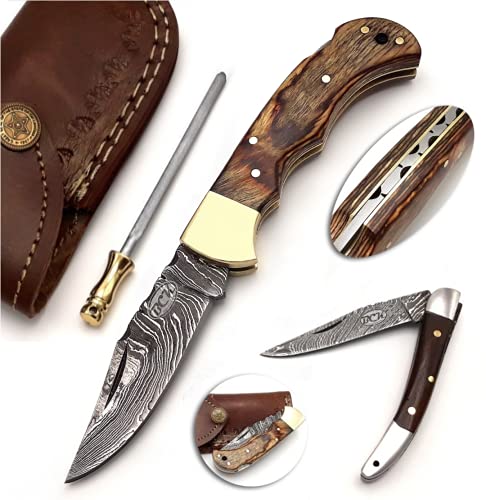
BCK Pocket Knife 4 Pcs Set 6.5" Damascus Folding Knife (Brown)
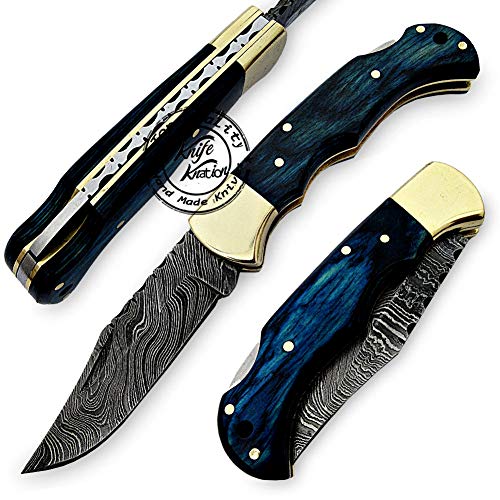
Knife Knation Blue Wood Handmade Damascus Pocket Knife
What Each Pick Brings To The Table
This is the largest folder on the list, opening to 8.25 inches and folding down to 4.75 inches. The 288-layer Damascus blade gives you the wavy pattern Damascus is known for, where alternating steels are forge-welded together so the etched surface shows flowing lines. In practice, more layers usually mean a finer, tighter pattern.
The handle pairs camel bone with walnut wood, dressed up with a Texas flag motif. Camp cooks and hunters who want a knife that fills the hand will appreciate the scale here; smaller-handed users may find it bulky for pocket carry despite the included leather sheath.
Useful Touches
- The 288-layer pattern holds its visual depth through years of sharpening, since the layers run through the whole blade.
- A back lock keeps the blade fixed open under load, a mechanism many owners trust for heavier camp tasks.
- Camel bone and walnut give a warm, grippy feel that plastic scales can’t match on cold mornings.
- The leather sheath protects the edge in a pack or on a belt.
Worth Bearing In Mind
- At 4.75 inches closed, this one rides heavy in jeans pockets; belt or sheath carry suits it better.
- High-carbon Damascus needs a wipe of oil after wet weather, or the pattern can dull with surface staining.
Feature Rundown
Who It Suits Best
Hunters, campers, and collectors who want a substantial hand-forged folder with genuine visual presence.
Where Another Pick Suits Better
Anyone prioritizing slim daily carry should look at the Knife Knation Blue Wood model instead, since its shorter folded frame disappears into a pocket far more easily.
Where the BLAYDZ leans decorative, the Benkey leans metallurgy. Its blade sandwiches a VG10 core inside 76 layers of high-carbon steel, heat treated to 59-60 HRC. HRC is simply a hardness scale: higher numbers mean the edge resists rolling longer but can be slightly harder to sharpen in the field. VG10 is a Japanese stainless formula prized for holding a keen edge.
That combination makes this the most practical cutter of the five for daily tasks, from breaking down boxes to field dressing game. The abalone seashell handle adds iridescent flair, though shell scales can feel slicker than wood when your hands are wet. A liner lock secures the blade, which sits lighter in the pocket than a back lock design.
What Makes Sense
- The VG10 core resists corrosion better than plain high-carbon Damascus, so humid climates and kitchen duty are less punishing.
- Edge retention at 59-60 HRC means fewer touch-ups during a long hunting trip.
- The pocket clip plus leather sheath gives you two carry options right away.
- Liner locks deploy and close one-handed, handy when your other hand is occupied.
Small Caveats
- The seashell handle looks striking but may show wear faster than hardwood around the pins.
- Hardened VG10 rewards a quality sharpener; a cheap pull-through tool will struggle.
Made For
Commuters and outdoor users who want one knife that handles box cutters Monday and camp duty Saturday without complaint.
Consider Something Else When
Shoppers buying a presentation piece will get more emotional value from the Princeton Craft personalized folder, whose engraving option turns the knife itself into the gift.
This Princeton Craft folder exists for the moment you hand it over. The listing supports personalization, which transforms a good knife into a wedding, anniversary, or retirement gift that actually gets carried. Underneath the sentiment sits a legitimate blade: 150 layers forged from 1080 and 15N20 high-carbon steels, etched into a ladder pattern. Those two steels are the classic Damascus pairing, chosen because they etch to contrasting shades.
The handle uses blue and black Pakka wood, a stabilized composite that shrugs off moisture far better than raw timber, set with brass spacers and steel bolsters. Compared with the natural camel bone on the BLAYDZ, Pakka trades a little organic charm for easier upkeep.
The Helpful Details
- Personalization makes this a standout groomsmen or Father’s Day gift without extra shopping trips.
- Stabilized Pakka wood resists swelling and cracking in damp conditions.
- The ladder pattern photographs beautifully, which matters for a gift moment.
- Steel bolsters add forward weight balance for controlled cuts.
Points To Note
- Being high-carbon steel, the blade wants prompt drying and an occasional oil wipe to stay ahead of patina.
- Order lead time for engraved pieces runs longer than stock knives, so plan gifts ahead.
Quick Facts
Right Fit For
Gift shoppers marking weddings, retirements, or Father’s Day for someone who carries a knife every day.
A Better Fit Elsewhere
Buyers wanting maximum working performance per dollar should compare the Benkey VG10 folder, whose core steel simply outcuts this one on edge life.
Four handmade Damascus folders in one purchase changes the math entirely. Each knife in this BCK set opens to about 6.5 inches, uses a back lock like the BLAYDZ, and wears brown Pakka wood scales with a matching sheath. Hand-forged blades vary piece to piece, so expect slight differences in pattern and finish across the four, which honestly adds charm rather than taking anything away.
The obvious play is gifting: groomsmen sets, father-and-son presents, or outfitting a hunting group. As working tools they hold their own, though individual fit and finish won’t match what a single premium folder delivers. The honest read is that this set trades refinement for reach.
Useful Strengths
- Four complete knife-and-sheath packages solve group gifting in one order.
- Back locks give each blade a secure, simple locking action suited to beginners.
- Hand forging means no two patterns match, which recipients tend to notice and appreciate.
Things To Consider
- Quality control across four handmade units can vary; inspect each hinge and lock on arrival.
- High-carbon blades here demand the same oiling routine as the other picks on this list.
- No pocket clip is mentioned, so sheath or pouch carry is the default.
Who Should Grab It
Anyone buying for a wedding party, family, or hunting crew who wants matching handmade gifts without sourcing four separate knives.
Swap It Out When
A single recipient deserving one refined blade is better served by the Princeton Craft personalized knife, which puts the same budget behind one polished piece.
Size is the story here. The Knife Knation folds to just 3.75 inches and opens to 6.5, making it the easiest of these five to forget you’re carrying until you need it. The blue-dyed wood handle sits between brass bolsters, and the maker includes file work, which is decorative notching filed along the spine by hand, plus brass linings inside the frame.
In the field, that compact footprint suits skinning and light cutting far better than chopping. Hunters moving light will find the balance point comfortable, and the blue wood stands out visually against the browns dominating this category.
What Helps Most
- At 3.75 inches closed, it pockets comfortably even in slimmer jeans or a vest.
- Brass bolsters and linings resist corrosion at the joints where moisture collects first.
- File-worked spine gives your thumb a tactile reference point during precise cuts.
- The blue wood finish makes this an easy gift pick that doesn’t look like every other folder.
Less Ideal Details
- The short blade limits heavy camp chores; big jobs belong to the BLAYDZ.
- Dyed wood can fade with heavy sun exposure over seasons of belt carry.
Details At A Glance
Whose Shelf It Belongs On
Light-pack hunters and everyday carriers who value discretion and comfort over maximum blade length.
Reach For A Different Pick When
Heavy-duty camp and kitchen prep calls for the larger BLAYDZ Damascus folder, whose 8.25-inch open length handles those tasks with room to spare.
Choosing Between These Folders Without Guesswork
Blade Steel Comes First
Damascus describes the layered look, not a single steel, so ask what’s inside the layers. The Benkey’s VG10 stainless core resists rust and holds an edge longest here, while pure high-carbon builds like the Princeton Craft and Knife Knation take a keener edge but stain without care. Match the steel to your climate and maintenance habits before falling for a pattern.
Lock Type Shapes Daily Use
Back locks, found on the BLAYDZ and BCK, engage with a strong spring and suit gloved hands and heavier cuts. Liner locks, like the Benkey’s, close one-handed and sit slimmer in the pocket. Neither is wrong; the choice comes down to whether you prioritize strength under load or quick single-hand operation.
Handle Materials And Carry Style
Natural bone and wood feel warm but swell or crack with neglect, while stabilized Pakka wood tolerates damp conditions with almost no fuss. Then weigh folded length against how you dress: anything past 4.5 inches closed lives happily on a belt sheath but complains in tight jeans pockets.
Key Considerations Across These Picks
Traps First Timers Fall Into
The most common mistake is buying a pattern instead of a knife. A striking etch says nothing about edge geometry or heat treatment, so read the steel composition before committing. Second, skipping the maintenance question: nearly every high-carbon Damascus blade on this list needs drying and occasional oiling, and ignoring that habit is the fastest route to a stained blade.
The Case For Spending Up
Higher-tier folders justify their cost through steel quality and finishing time. A VG10-cored blade like the Benkey’s outlasts basic carbon steel between sharpenings, and hand-filed details such as the Knife Knation’s spine work take hours a machine skips. Pay more when the knife becomes a daily companion; pay less when it’s an occasional-use gift.
Frequently Asked Questions
Are handmade Damascus pocket knives actually better than factory folders?
They offer distinctive patterns, natural handle materials, and individual character mass production can’t copy. Performance depends on the specific steel, so check the composition rather than assuming handmade automatically means superior.
How do I maintain a Damascus steel blade?
Dry it after exposure to moisture and apply a thin coat of mineral oil periodically. High-carbon layers develop patina over time, which is normal and often prized by owners.
What does the layer count mean?
Layer count refers to how many times steels were folded and welded together during forging. More layers generally produce a finer, more detailed pattern, though it doesn’t directly equal hardness or sharpness.
Is a back lock or liner lock safer?
Both lock securely when functioning properly, and neither replaces careful handling. Back locks typically feel sturdier under heavy pressure, while liner locks favor speed and one-handed closing.
Can these knives be carried every day?
Yes, provided local laws permit carrying folding knives and the folded length suits your clothing. Models under 4 inches closed, like the Knife Knation, disappear into a pocket most comfortably.
Closing Remarks
Every folder here brings genuine hand-forged character, so the decision mostly comes down to size, steel, and purpose. Carry daily and the Benkey earns its spot; shop for a milestone gift and the Princeton Craft personalization does the talking. Whatever you land on, keep the blade dry and oiled, and it’ll outlast plenty of factory-made alternatives in both function and looks.




