


Anyone who has tried to hold a radio, a clipboard, and a coffee at the same time knows why wearable two-way radios exist. The five options here clip to a collar, hang from a neck lanyard, or plug into your ear so both hands stay on the task. They suit event staff, warehouse crews, caregivers, campers, and anyone coordinating a group without shouting across a parking lot.
A Closer Look At The Lineup
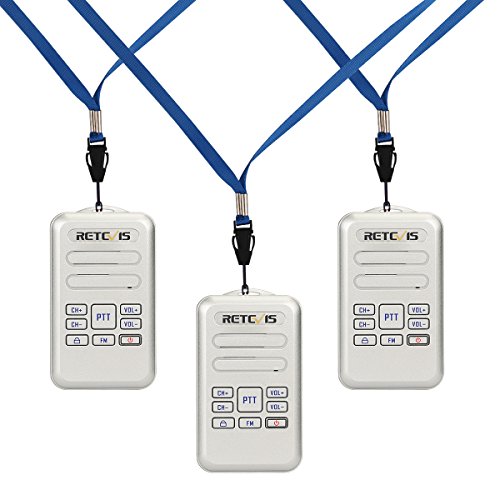
Retevis RT20 Wearable Walkie Talkie 3 Pack

BTECH FRS-A1 Walkie Talkies with USB-C Charging

SINORISE Super Mini Walkie Talkies 3 Pack
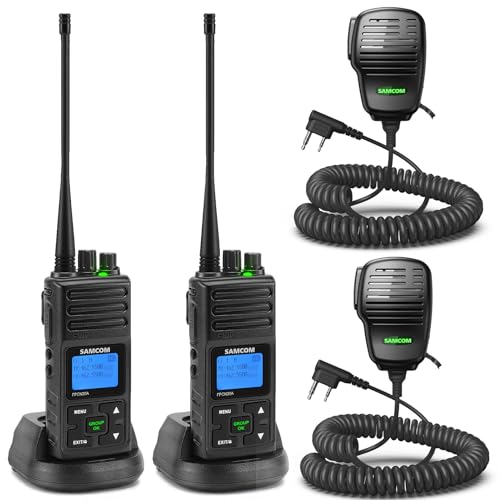
SAMCOM Long Range Walkie Talkies with IP67 Speaker Mic
HAOO 2 Pack Mini Walkie Talkies IP54
Inside Each Recommended Option
Around three and a half inches tall and barely two ounces, this little radio is built to disappear into daily life. It ships in a three-pack, which makes it an easy starting point for a household or small team that needs everyone reachable.
The included blue lanyard hangs it around your neck, so there’s nothing to grip while you cook, garden, or push a stroller. Volume adjusts through eight levels on its own button, a detail older users tend to appreciate because they can dial sound up without hunting through menus.
The Case For It
- Neck lanyard keeps the unit secure and weightless during chores or walks
- Eight-step volume control lets hard-of-hearing users set loudness independently
- Three radios per pack covers a family or small crew right away
- Front-facing buttons are simple enough for first-time radio owners
Things To Consider
- The lanyard can tangle with scarves or apron strings; some owners swap it for a shorter cord
Who Will Love This
Seniors, caregivers, and grandparents who want a grab-and-talk radio with zero learning curve.
Where A Sibling Pick Shines
Teams working loud outdoor sites will get more range and weather alerts from the BTECH FRS-A1 instead.
FRS stands for Family Radio Service, a license-free frequency band in the US, which means these radios work out of the box with no paperwork. Power them on, pick a channel, press to talk. That simplicity pairs with a feature list the Retevis RT20 can’t match.
USB-C charging means one cable type for the whole family’s gear, and NOAA weather channels add a safety layer for backcountry trips where forecasts change fast. Dual Watch lets you monitor two channels at once, handy when parents and kids are on separate frequencies.
Reasons It Performs
- Named channels like CAMP or STAFF replace number memorization for groups
- NOAA weather reception gives early warning during storms on trail or water
- IP54 rating shrugs off dust and light rain around campsites
- USB-C port charges from the same brick and cable as most phones
- No license, subscription, or setup ritual before first use
Worth Noting
- Only two units per pack, so larger groups need a second order
- The fuller feature set takes a few minutes to learn compared with single-button radios
Quick Facts
Made For
Families, campers, and road-trip groups who want modern conveniences without radio hobbyist complexity.
Skip It When
Indoor commercial crews needing wall-penetrating power are better served by the SAMCOM long-range radio below.
At roughly half an ounce each, these are closer to earbuds than radios. The G-shaped ear hook wraps over one ear, and soft tips in three sizes help you find a fit that survives a full shift. Where the Retevis RT20 hangs on a lanyard, this one lives entirely on your head.
The headset rotates a full 360 degrees, so left-ear and right-ear people are equally covered, and a collar clip keeps the body anchored to a uniform. Restaurant servers and retail floor staff commonly favor this style because it looks discreet next to a name tag.
Strengths Worth Knowing
- G-hook design spreads weight over the ear instead of pressing on it
- Three ear-tip sizes accommodate different canal shapes for longer wear
- Rotating boom works on either ear without buying separate units
- Collar clip prevents the radio body from swinging during movement
Small Caveats
- Earpiece-only listening means you’ll miss calls if you take it off; cleaning the tips regularly keeps hygiene in check
- Three-pack sizing suits small teams, not large events
Details At A Glance
Right Fit For
Hospitality workers, tour guides, and retail teams wearing radios through entire shifts.
Another Choice May Suit
Outdoor users wanting speaker audio and weather channels will prefer the HAOO mini pair instead.
This is the workhorse of the list. Its higher output power is aimed squarely at concrete walls, steel shelving, and basement dead zones, the exact environments where consumer-grade radios go quiet. Security patrols and maintenance crews moving between a parking garage and a rooftop are the intended crowd.
The IP67-rated speaker mic adds another layer of practicality: that rating means dust-tight construction plus survival in brief submersion, so rain-soaked shifts won’t end the shift early. A dedicated GROUP button broadcasts to every team member at once, even across different channels, which matters during an incident when seconds count.
Good Reasons To Consider
- Higher transmit power cuts through building materials that stall weaker radios
- One-press GROUP call reaches the whole team instantly across channels
- IP67 mic tolerates heavy rain, dust, and accidental drops into water
- Built for garage-to-rooftop coverage in large facilities
Points To Note
- Extra power draws more battery, so charging routines matter on long shifts
- Bulkier than the wearable picks here; pocket carry is less natural
- Overkill for casual family use around a neighborhood
Core Details
Who Should Grab It
Security, facilities, and warehouse supervisors running multi-floor operations where signal loss isn’t acceptable.
Swap It Out When
Light-duty home or trip use costs far less with the SINORISE mini three-pack above.
Roughly two inches long and under an ounce, the HAOO pair is built for adults who want communication gear nobody notices. There’s a catch worth knowing upfront: with no external speaker, the included earpiece does the talking and listening, and VOX voice activation isn’t supported, so you’ll press a button to respond.
An IP54 rating protects against dust and splashing rain, which puts it a step ahead of bare-bones toy-style radios for beach days, farmers markets, or festival crowds. Compared with the SINORISE ear-hook trio, this one trades a third unit and rotating fit for a simpler two-person setup.
Real-World Strengths
- Pocket-sized body disappears into a jacket or bag
- IP54 shell handles dust and light moisture outdoors
- Earpiece audio stays private in quiet or crowded settings
Less Ideal Details
- No VOX mode, so every reply needs a button press; keep the PTT habit in mind while driving or carrying items
- Earpiece is mandatory hardware, and losing it disables the radio until replaced
Feature Snapshot
Whose Shelf It Belongs On
Couples, duos at events, and anyone wanting low-profile private comms rather than team broadcast.
Consider Something Else When
Groups of three or more will stretch further with the Retevis RT20 three-pack at the top of this list.
What Matters Most Before Choosing Hands Free Walkie Talkies
Fit And Carry Style
The best radio is the one you forget you’re wearing. Neck lanyards like the RT20’s suit seniors and slow-paced settings, while ear-hook designs win for eight-hour shifts. Clip-on bodies work well over uniforms. Match the mount to how long you’ll actually wear it, since comfort failures are the top reason wearable radios end up in a drawer.
Environment And Durability
An IP54 rating handles dust and splashes, which covers most outdoor trips. IP67 goes further, surviving dust storms and brief dunking, which matters on job sites. Indoor concrete buildings also demand more transmit power than open parks do, so think about walls before you think about miles.
Controls And Group Size
Single-button radios suit children, seniors, and anyone allergic to menus. Named channels and dual-watch features pay off once your group passes four people. Count your team first, then choose a pack size that matches, because mixing brands across a group rarely plays nicely.
Charging And Daily Upkeep
USB-C ports simplify life by sharing cables with your phone. Earpiece models need occasional tip cleaning, and lanyards wear out before radios do. Budget a minute of weekly maintenance and these devices last for years.
Key Considerations Across These Picks
Traps First Timers Fall Into
Shoppers often buy on claimed range alone, then discover walls and terrain cut it sharply. Another common slip is ignoring pack size, ending up one radio short of the group. Read the audio setup too: earpiece-only models surprise people who expected a speaker.
What The Higher Tier Buys
Paying more typically gets you stronger transmitters, better ingress ratings, and features like weather channels or group calling. Casual weekend users rarely need any of it. Crews working large buildings or rough weather recover the extra cost in reliability within weeks.
Frequently Asked Questions
Do hands free walkie talkies need a license?
Models using the FRS band, like the BTECH FRS-A1, operate license-free in the United States. Always confirm the band listed by the manufacturer before purchase.
How long do batteries usually last?
It varies widely with transmit power and screen size. Light-duty wearable units often run a day or more per charge, while high-power work radios may need nightly charging.
Can different brands talk to each other?
Sometimes, but only when they share the same frequency band and privacy codes. Sticking with identical models across a group avoids compatibility headaches entirely.
Is VOX the same as hands free?
VOX means the radio transmits automatically when it hears your voice, no button needed. Several compact models skip VOX, so check the spec sheet before assuming.
Are these suitable for children?
Most picks here are sized and tuned for adults, and the HAOO pair states that explicitly. Look for simplified single-button models with volume limits for younger users.
Closing Thoughts
Hands free radios earn their keep the moment your second hand fills up, whether that’s holding a tool, a tray, or a leash. Match the carry style to your shift length, the durability rating to your environment, and the pack size to your actual headcount. Any of these five will keep your group connected without tying up your hands, and the right one simply depends on where your day takes you.




