


Anyone who welds on a job site knows the awkward dance of swapping between a hard hat and a welding hood. One protects against falling debris, the other against arc flash, and juggling both costs you time and leaves gaps in coverage. This roundup covers five options that solve that problem from different angles: an adapter system, vented hard hats, a compact pipeliner hood, and a leather cap-style hood for lighter work.
Your Options, Compared

Jackson Safety Welding Helmet Interchange System (38426)

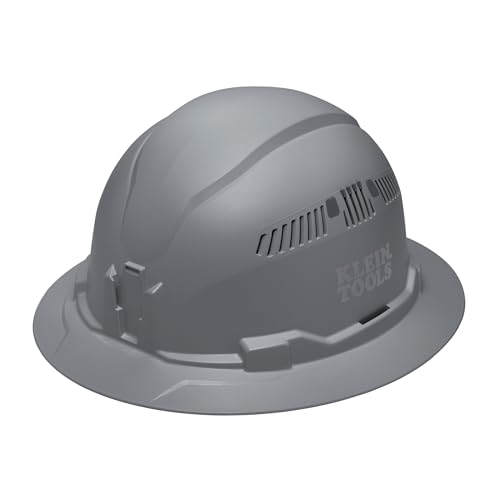
Klein Tools Vented Full Brim Hard Hat
Klein Tools Vented Full Brim Hard Hat
Fibre-Metal Pipeliner Welding Hood
LeaSeek Leather Welding Hood
Inside Each Recommended Option
This one isn’t a helmet or a hat at all. It’s the adapter that makes the rest of your gear work together, letting you mount a welding helmet onto a hard hat and release it with a quick-release mechanism rather than pulling everything off your head.
The vertical lock keeps the helmet parked out of your line of sight when you’re grinding, cutting, or walking the site. An audible click confirms the assembly is locked in, which matters more than it sounds when gloved hands are doing the work.
Everyday Advantages
- Quick release means no removing the hard hat mid-task, so head protection stays on continuously
- Audible click gives instant confirmation the connection is secure before you strike an arc
- Vertical lock tucks the helmet up and away during non-welding work
- Works with existing helmets, which spares you from replacing gear you already own
Things To Consider
- You still need a compatible helmet and hard hat, so budget for those separately if starting fresh
- The added mounting hardware sits on the hat’s suspension, and some owners report a slight weight increase over long shifts
Who It Suits Best
Fabricators and maintenance crews who move between welding, cutting, and general site work throughout a single shift.
Where Another Pick Suits Better
Welders who never wear a hard hat will get more value from the Fibre-Metal Pipeliner hood, which handles protection on its own.
Klein built this full-brim hat around a problem every summer crew knows: heat buildup under a sealed shell. Adjustable vents on the top, front, and back move air through the hat, and they close down when conditions call for it.
It’s rated Class C, Type 1 under ANSI Z89.1-2014, meaning it guards against top impacts but is vented, so it trades electrical insulation for airflow. That’s a fair deal for most above-ground work, though live electrical environments need a different hat.
Good Reasons To Consider
- Certified to ANSI Z89.1-2014 (HT/LT), CSA Z94.1-15, and EN397 standards for top and lateral impact protection
- Adjustable vents across the crown, front, and back keep air moving on hot days
- Self-wicking sweatband pulls moisture off your forehead instead of letting it drip into your eyes
- Odor-resistant band material holds up better between washings than basic foam liners
- Full brim shades your neck and shoulders, which you’ll notice on open-frame steel jobs
Small Caveats
- Class C vented hats provide no dielectric protection, so linemen and electricians working near energized equipment should look elsewhere
At A Glance
Right Fit For
Outdoor construction crews and ironworkers who sweat through summer shifts and want certification without the sauna effect.
Consider Something Else When
Electrical trade workers near live circuits should choose a non-vented Class E hat instead of this Klein model.
Same design language as the pick above, listed as a separate variant, and the differences come down to fit preference and availability. You get the identical vented shell, padded self-wicking sweatband, and multi-standard impact rating in a slightly different configuration.
In practice, crews often run both versions across a team so everyone gets the same protection profile with the size or colorway each person prefers. The shared spec sheet keeps replacement parts and care routines simple.
A Favorable Mix
- Meets ANSI, CSA, and EN397 requirements including lateral deformation testing
- Padded suspension spreads weight evenly, reducing pressure points over a ten-hour day
- Wicking sweatband cuts down on the salt-stiffening that ruins cheaper liners within months
Worth Bearing In Mind
- Being vented rules out use in classified electrical zones, a limitation worth checking against your site policy
- Suspension parts need periodic inspection and eventual replacement like any hard hat component
- Full brims catch wind more than cap styles on elevated or exposed sites
Built With In Mind
General contractors and site supervisors outfitting a mixed crew who want consistent, standards-backed head protection.
A Better Fit Elsewhere
For tight quarters where a brim snags, the compact Fibre-Metal Pipeliner hood is the smarter shape.
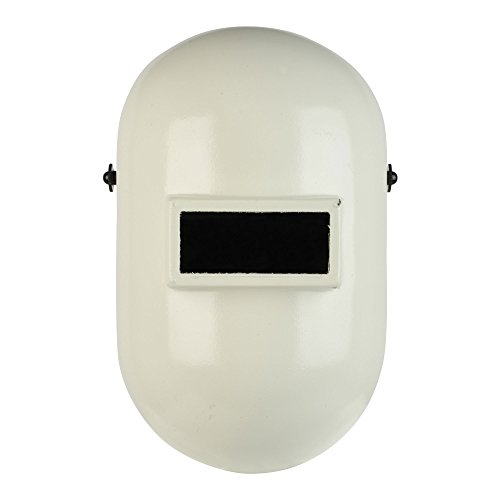
Pipeliner hoods exist because standard welding helmets simply don’t fit inside ditches, pipe joints, or tight structural work. This Fibre-Metal version carries a deliberately compact shell that reaches spaces a full-size helmet can’t, and it’s a long-standing favorite among pipeline welders for exactly that reason.
The fiberglass construction shrugs off moisture and won’t crack, chip, or split the way lesser shells do when dropped on rock or steel. A smooth, deflective surface sheds sparks and slag, and the material self-extinguishes rather than carrying a flame.
Why It Works Well
- Compact profile accesses confined weld joints where full-size helmets physically won’t fit
- Moisture-imperious shell handles rain, humidity, and wet trench conditions without degrading
- Self-extinguishing, spark-deflecting surface adds a margin of safety around slag and spatter
- Ratchet headgear option available where space allows easier sizing adjustments
Trade Offs To Consider
- The small viewing window demands precise positioning, and new welders may find the sight picture cramped at first
- Fixed-shell design offers less adjustability than modern auto-darkening helmets
Quick Facts
Whose Shelf It Belongs On
Journeyman pipeline and structural welders who regularly work inside pipe, ditches, and other restricted clearances.
Reach For A Different Pick When
Occasional hobbyists doing bench work will find the LeaSeek leather hood simpler and better matched to light-duty tasks.
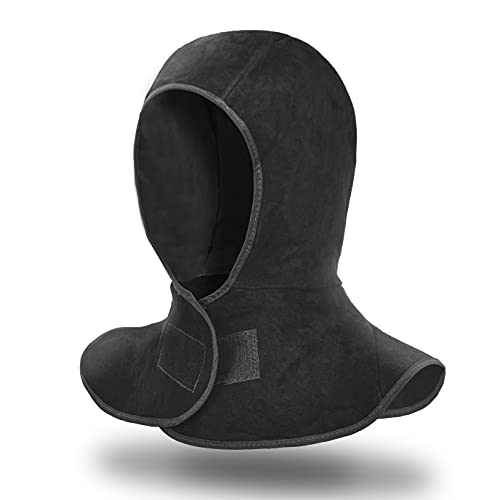
Where the Fibre-Metal hood is rigid armor, this LeaSeek cap-style hood is soft protection. Split cowhide leather forms the outer layer, chosen for pliability along with abrasion and heat resistance, while a cotton lining keeps the interior comfortable against skin and hair.
The coverage extends past the head to shield eyes, neck, and shoulders, which makes it genuinely useful for overhead grinding or short tack welds. Fold it flat when done and it takes up almost nothing in a toolbox or truck cab.
What It Does Well
- Heat- and spark-resistant leather exterior stands up to grinding sparks and brief arc exposure
- Neck and shoulder drape covers areas most hard hats leave exposed
- Folds flat for storage, a real advantage in crowded tool bags
Points To Note
- Leather needs occasional conditioning and airing out, since sweat and heat will stiffen untreated hide over time
- It’s a supplementary hood, not a substitute for a shaded lens during sustained arc welding
Feature Snapshot
The Right Fit
Beginners, students, and DIY welders tackling tack welds, plasma cutting, and angle-grinder work around the shop.
Swap It Out When
Production welders running beads all day need the Jackson Safety Interchange System paired with a proper auto-darkening helmet instead.
What Actually Matters Before You Buy
Match Protection Class To Your Site
Hard hats split into classes by electrical rating. Type 1 covers top impacts; Class C adds vents but drops dielectric protection, while Class E insulates against high voltage. Check what your site requires before falling for comfort features, because a vented hat in a wrong environment fails the audit regardless of build quality.
Compatibility Beats Features
An adapter like the Jackson system only helps with helmets designed to pair with it. Measure your current gear, confirm mounting points, and read the manufacturer’s compatibility notes first. The best accessory on paper is useless hardware if it doesn’t mate with the helmet already hanging on your hook.
Weight And Heat Add Up
A pound sounds trivial until hour six of a shift. Stacked systems, adapter plus hat plus helmet, concentrate load on your neck and suspension. Vented shells and wicking sweatbands offset that in warm climates, but cold-weather crews sometimes prefer sealed hats anyway. Choose for your actual season, not the catalog photo.
Think About Lens Workflow
Flip-up hoods suit frequent start-stop tack welding; fixed shells favor long continuous beads. Your process dictates the right answer here more than any spec sheet does.
Key Considerations Across These Picks
Mistakes Worth Dodging
The most common error is buying a vented Class C hat for electrical work, then discovering site rules reject it. The second is stacking incompatible brands, where an adapter fits loosely and rattles loose mid-shift. Confirm certifications and pairing lists before checkout, not after delivery.
When Paying More Pays Off
Higher-tier gear earns its cost through materials and longevity. Fiberglass shells outlast molded plastic in abrasive environments, and quality suspensions hold adjustment far longer than bargain liners. Daily professional use justifies the upgrade; weekend projects rarely do.
Frequently Asked Questions
Can any welding helmet attach to a hard hat?
No, only helmets designed for hard-hat mounting work with adapter systems. Always verify compatibility between the specific helmet and adapter models before purchasing.
What does Class C mean on a hard hat?
Class C indicates a conductive, usually vented hat with no electrical insulation rating. It prioritizes impact protection and airflow but cannot be worn near energized conductors.
Is a leather welding hood enough protection by itself?
A leather hood shields skin from sparks, heat, and UV scatter, but it doesn’t replace a shaded lens for arc work. Treat it as supplemental coverage alongside proper eye protection.
How often should I replace my hard hat suspension?
Inspect the suspension regularly for cracks, frayed straps, and lost elasticity, replacing it at the first sign of wear. Many manufacturers suggest suspension replacement well before the shell itself ages out.
Do pipeliner hoods meet the same safety standards as regular helmets?
Pipeliner hoods are welding hoods, not hard hats, so they serve different purposes and aren’t interchangeable. Crews needing both protections pair them or use a combo-rated setup approved by their safety officer.
Bottom Line
Your workflow decides this list, not marketing. Multi-trade workers should anchor their kit with the Jackson Safety Interchange System and add the Klein vented hat for comfort. Pipeline hands will reach for the Fibre-Metal compact hood daily, while hobbyists get honest value from the LeaSeek leather cap. Match the tool to the task, check compatibility twice, and your gear will quietly earn its place every shift.




