


Heat guns do quiet work in a soldering setup: softening shrink tubing, lifting old components, sealing wire splices, and prepping surfaces before iron ever touches metal. The trouble is that most shoppers grab the first gun they see and end up either scorching delicate work or underpowered on heavy jobs. This roundup splits five very different tools across real scenarios, from a workbench rework station to a glovebox wiring kit.
A Snapshot Of The Selections

Weller 300-Watt Industrial Soldering Gun Kit (D650PK)

QWORK Mini Heat Gun, 300W Portable Hot Air Tool with Stand

CRAFTSMAN CMEE531 Corded Heat Gun, 1500 Watt
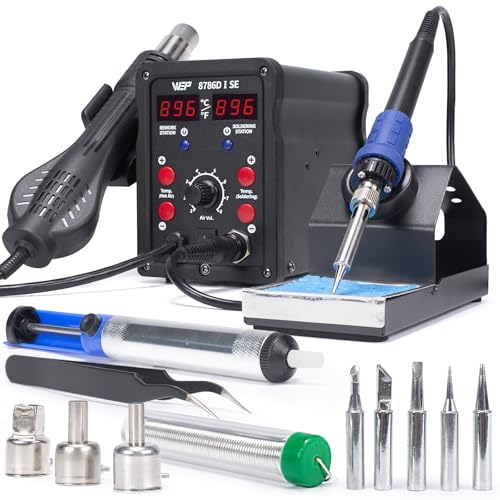
WEP 8786D-I SE Hot Air Soldering Station Kit

Kuject Mini Heat Shrink Gun Kit with Solder Seal Connectors
A Closer Look At Each Pick
A soldering gun works differently from an iron: pull the trigger and current heats the tip almost instantly, so you’re ready within seconds rather than minutes. That matters on a shop bench where you jump between tasks all afternoon. Weller built the D650PK around a 300-watt element aimed at demanding industrial work.
Anyone who solders heavy gauge wire, battery terminals, or sheet-metal joints will appreciate the fast recovery between joints. The honest read is that this is a specialist tool, not a general-purpose heater, and it behaves like one.
The Good Stuff
- Trigger activation means no waiting around for warm-up during a long wiring session
- Industrial-grade construction holds up to daily shop use without feeling fragile
- Kit format gives you what’s needed to start working right away
- Suits thick conductors that would overwhelm a low-wattage pencil iron
Things To Consider
- Gun-style tips run hot near the body, so keep a tip-cleaning habit going or oxidation builds quickly
- Bulkier than a mini gun, which makes tight circuit-board work awkward
Who Will Love This
Professional technicians and serious DIYers who solder heavy electrical connections regularly and want gear that survives years of shop abuse.
A Better Fit Elsewhere
Hobbyists working on small electronics will get far more control from the WEP 8786D-I SE station instead of this trigger gun.
Where the Weller gun above chases raw power, this little pen-shaped tool chases precision. It runs on standard 110V household power and pushes focused air at roughly 390°F, which is exactly the range resin crafters want for popping bubbles without warping their molds.
The retractable stainless steel stand is the detail that earns its keep: set it upright on the table between passes and the nozzle never touches your work surface. Shrink tubing, vinyl wrap edges, candle tops, and wet paint all respond well at this gentle output level.
Real Benefits
- Focused airflow lets you direct heat onto a single spot without disturbing neighboring details
- Pensize body keeps your wrist comfortable during long detailing sessions
- Stand doubles as surface protection, so hot rests don’t scar your desk
- Light enough to toss into a craft caddy or tool bag
Worth Noting
- Single fixed temperature means no adjustment for thicker materials needing more heat
- At 300W it won’t tackle paint stripping or heavy shrink jobs; owners commonly report it’s strictly a detail tool
Made For
Craft makers, resin pourers, and model builders who need gentle, targeted heat on small projects at a home workstation.
Swap It Out When
For automotive wiring repairs needing higher temperatures and bundled supplies, the Kuject kit covers far more ground than this pen can.
This is the generalist of the group. A 1500-watt corded body paired with a variable temperature dial spanning roughly 120°F to 1200°F means one tool handles everything from thawing a frozen pipe line to loosening stubborn adhesive. Compared with the QWORK pen’s fixed output, the dial changes what jobs are even possible.
Two fan speeds give you a second axis of control: low flow for careful work near trim, high flow when you need volume over finesse. An integrated support stand lets the gun sit upright hands-free, which is genuinely useful mid-project when both hands belong to your material.
A Favorable Mix
- Wide temperature range covers delicate warming through aggressive stripping in a single tool
- Dual fan speeds balance airflow against precision depending on the task
- Built-in stand frees your hands and protects nozzle contact with benches
- 1500W output delivers sustained heat for extended sessions
Small Caveats
- Nozzle stays dangerously hot well after shutdown; plan storage time accordingly
- Corded design ties you to an outlet, unlike compact kit guns meant for fieldwork
Quick Facts
Right Fit For
Homeowners and weekend renovators who want one capable gun for paint removal, thawing, adhesives, and occasional shrink-tubing duty.
Another Choice May Suit
Bench-bound electronics work calls for the WEP 8786D-I SE station, whose controlled airflow beats a general-purpose gun every time.
Rework is the word that defines this pick. A rework station combines a temperature-controlled soldering iron with directed hot air, letting you desolder surface-mount chips and reflow joints, something none of the standalone guns here can do safely. Two independent power switches mean you run just the iron or just the air wand as needed.
Each channel gets its own digital readout in Fahrenheit plus separate controls for air volume and temperature, so settings stay repeatable across sessions. The accessory bundle is generous too: lead-free solder wire, a desoldering pump, tweezers, three hot air nozzles, and five iron tips covering common tip profiles.
Well-Handled Touches
- Independent switches save energy and reduce wear when only one function is needed
- Digital Fahrenheit readouts make repeatable settings possible across different boards
- Adjustable air volume protects tiny components from being blown off the board
- Nearly complete starter bundle removes the need for separate accessory purchases
Points To Note
- Bench footprint is larger than any handheld here, so it demands dedicated workspace
- Calibration drift is a commonly reported issue on budget stations; periodic check against a known reference helps
Details At A Glance
Who Should Grab It
Electronics hobbyists and repair techs working on circuit boards who need genuine rework capability in one organized bench unit.
Where Another Pick Fits Better
Field electricians doing vehicle or marine wiring will find the Kuject kit far more practical than a stationary station.
This isn’t just a gun, it’s a complete wiring repair system in a box. The mini heat gun runs between roughly 482°F and 752°F, squarely in the sweet spot for activating solder seal connectors, which melt an internal solder ring while the surrounding tubing shrinks to form a sealed splice. One pass finishes a joint that would otherwise need an iron, solder, and tape separately.
The carrying case deserves mention: removable compartments sort butt connectors by gauge, and an ergonomic handle makes trunk-to-dock transport painless. With 820 pieces spanning AWG 26 down to 10, you’re covered for everything from sensor wires to battery cables.
Points In Its Favor
- All-in-one case means nothing gets left behind on a job site
- Modular dividers keep connector sizes sorted under vibration and travel
- Gauge range spans fine electronics wire through heavy automotive cable
- Gun temperature suits solder seal activation without scorching insulation
Trade Offs To Consider
- Fixed-range gun lacks the fine dial control the CRAFTSMAN offers for non-wiring tasks
- Case bulk makes glovebox storage unrealistic despite the “mini” gun label
Core Details
Whose Shelf It Belongs On
Boat owners, off-roaders, and mobile mechanics who need weatherproof wire splices done anywhere, without hauling a full bench setup.
Reach For A Different Pick When
Workshop users wanting broad temperature control for varied household tasks should step up to the CRAFTSMAN CMEE531 instead.
What Matters Most Before Choosing Heat Guns For Soldering
Match Power To Your Materials
Wattage and temperature ceiling decide what a gun can actually handle. Detail work on resin or thin tubing needs modest, stable heat, while stripping paint or soldering heavy lugs demands 1000°F-plus output. Buying below your workload leaves you frustrated; buying far above it risks scorched components.
Control Beats Raw Numbers
A wide dial range only helps if adjustments feel predictable. Variable temperature, selectable fan speeds, and digital readouts turn guesswork into repeatability. Fixed-output mini guns trade that flexibility for simplicity, which suits single-purpose users fine.
Think About Where You’ll Work
Bench stations reward permanence with precision but demand outlets and space. Handheld kits favor portability for vehicles, boats, and job sites. Honest self-assessment of your usual workspace prevents an expensive mismatch.
Count The Bundle Value
Kits that include tips, nozzles, connectors, or pumps stretch your budget further than bare tools. Just verify each included piece is one you’d actually buy alone, otherwise you’re paying for drawer filler.
Key Considerations Across These Picks
Traps First Timers Fall Into
The classic error is matching wattage to price instead of task. A 300W craft pen cannot strip paint, and a 1500W gun will destroy resin molds. Nozzle heat lingering after shutdown catches people off guard too, so always plan cool-down before storing any unit.
The Case For Spending Up
Higher-tier models buy calibration, independent controls, and durability. A station like the WEP pays for itself the moment you need to lift a chip without destroying the board, something budget handhelds simply cannot attempt.
Frequently Asked Questions
Can a heat gun replace a soldering iron?
Not entirely. Heat guns excel at shrink tubing, desoldering, and reflow work, but precise joint-by-joint soldering needs an iron’s concentrated tip. Stations combining both cover the full range.
What temperature works for shrink tubing?
Most polyolefin tubing activates around 212°F to 248°F. Guns offering roughly 400°F to 750°F give you headroom without melting insulation.
Are mini heat guns powerful enough for electronics?
They handle shrink tubing and adhesive softening well. Actual component removal requires controlled airflow and higher temperatures, which points toward a rework station instead.
How long do heat guns typically last?
Quality units often serve many years with basic care. Keeping vents clear of dust and letting nozzles cool fully before storage are the habits that matter most.
Do I need special outlets for these tools?
The 110V picks here run on standard household circuits. Higher-wattage corded models draw significant current, so avoid daisy-chained extension cords on long sessions.
Bottom Line
Your workspace decides the winner here more than any spec sheet does. Bench-focused builders should look hard at the WEP station, shop professionals at the Weller gun, and mobile repair folks at the Kuject kit. Match the tool to the actual job in front of you and every option on this list will earn its shelf space.




