Anyone who has wrestled a dead raspberry cane or a half-inch rose stem with a dull hardware-store clipper knows the frustration: crushed wood, sore palms, and a job that takes twice as long as it should. The right heavy duty hand pruner changes that math entirely. A sharp bypass blade slices living growth like paper, while a well-built anvil head powers through dry, woody branches that would stall lesser tools. This roundup covers five options across the spectrum, from a forged classic to a German-made anvil specialist and a full three-piece yard set, so you can match the tool to your actual pruning workload rather than settling for whatever is closest at hand.
The Lineup, Simplified

GARDEN GURU Classic Bypass Pruning Shears, Forged Steel

Original LÖWE Professional Anvil Pruner 1.104

YRTSH Loppers, Hedge Shears & Pruners Combo Set
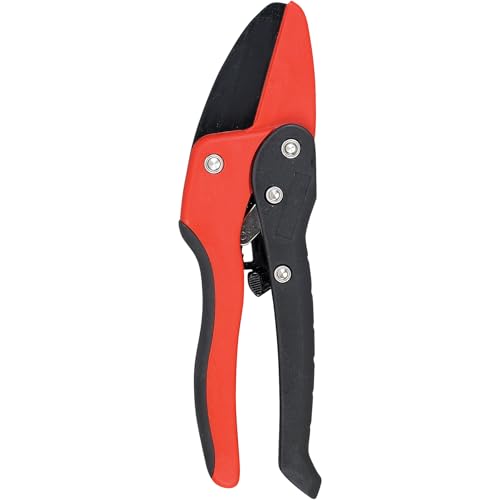
Corona Tools Ratchet Hand Pruner, 3/4-Inch

GEROSSI Premium Bypass Pruning Shears, SK-5 Steel
More On The Choices That Made The List
There’s a reason bypass pruners remain the default choice for live growth: two curved blades slide past each other, producing a clean wound that heals faster than a crushed cut. This pair follows that classic design with a forged steel body, which means the metal was shaped under pressure rather than cast, giving it a dense, substantial feel in the hand.
The curved cutting blade stays razor sharp through routine deadheading and shrub shaping, and it handles branches up to an inch across, which covers most rose canes and fruit-tree suckers. Non-slip grips keep your hold secure during long sessions, even with damp gloves.
Useful Strengths
- Forged steel construction gives the tool real heft and long-term durability
- Cuts branches up to 1 inch in diameter, enough for most household pruning
- Curved blade geometry produces clean cuts on living stems
- A safety lock keeps blades closed between tasks and in storage
- Non-slip comfort grips reduce hand fatigue during extended trimming
Things To Consider
- The weight some owners praise also makes it heavier than lightweight plastic-handled rivals
- Blade edges need occasional oiling and sharpening to stay at their sharpest season after season
Who Should Grab It
Dedicated home gardeners who want one substantial, classic-feeling pruner for daily deadheading and shrub work.
Where A Sibling Pick Shines
Gardeners cutting mostly dry, hardened wood will get better results from the Original LÖWE Professional Anvil Pruner 1.104 instead.
Anvil pruners work differently from the bypass design you saw above: a sharp blade presses straight down onto a flat base, like a knife on a cutting board. That arrangement trades finesse on green stems for raw power on hard material, and this German-made model is built around exactly that job. Old orchard wood, brittle twigs, dried-out canes, all of it yields without the squeezing fight you’d get from a bypass blade.
The carbon steel blade carries a sliding lacquer coating that resists corrosion while lowering friction through the cut, so sap wipes off more easily. Power transfer through the mechanism is tuned for medium to large hands, which taller gardeners tend to appreciate after an hour of cleanup.
Useful Highlights
- Handles hard, dry, and old wood that stalls conventional bypass blades
- Made in Germany with a reputation for tight tolerances and consistent quality
- Every part is replaceable, so a worn spring or blade doesn’t retire the whole tool
- One-hand safety lock lets you open and close it without setting the pruner down
Potential Sticking Points
- Anvil crushing action isn’t ideal for delicate green stems where a clean bypass cut matters
- The handle sizing favors medium to large hands; smaller-handed users may find reach awkward
At A Glance
Built With In Mind
Orchard keepers and anyone clearing neglected, woody overgrowth who values a serviceable professional-grade tool.
Consider Something Else When
Rose growers focused on fresh green stems should lean toward the GEROSSI Premium Bypass Pruning Shears instead.
Not everyone needs a single perfect pruner; plenty of yards need three different jobs done in one afternoon. This YRTSH bundle answers that with a 26-inch compound-action lopper for high or thick branches, a 23-inch hedge shear for shaping boxwood and privet, and an 8-inch handheld pruner for detail work near the ground. Compound action refers to a linkage system that multiplies your squeeze force, which matters most when a branch sits above shoulder height and you can’t lean into the cut.
All three pieces use alloy steel blades with a low-friction coating, so sticky sap doesn’t gum up the edges as quickly. For a new homeowner facing an overgrown lot, this set covers nearly every trimming scenario out of the box.
Advantages To Know
- Three coordinated tools cover overhead branches, hedge faces, and fine snips
- Compound-action lopper linkage multiplies cutting force on thicker limbs
- Low-friction coated alloy steel blades shed sap and resist sticking
- Buying the trio together usually costs less than assembling pieces separately
Honest Caveats
- No individual piece matches the refinement of a dedicated premium single tool
- Long loppers and shears demand storage space; a garage hook or wall rack helps
Right Fit For
New homeowners and weekend landscapers tackling mixed overgrowth across an entire property rather than one plant type.
Another Choice May Suit
Apartment dwellers with only container plants and small shrubs are better served by the lighter GEROSSI Premium Bypass Pruning Shears alone.
Here’s the smartest design idea in this lineup for anyone with limited grip strength: a ratchet mechanism that cuts in stages. Squeeze until it clicks, release slightly, squeeze again, and the blade advances a little deeper each round. By splitting one hard cut into three easy ones, the Corona turns a branch that would normally require serious hand force into something almost effortless.
The trade-off is speed. Each ratcheted cut takes longer than a single clean slice, which you’ll notice during big deadheading sessions on soft material. For tough, woody stems up to three-quarters of an inch though, that patience pays off, especially for gardeners managing arthritis, smaller hands, or simply a long day of pruning. The comfortable grip and durable steel blade make it a dependable workhorse rather than a flashy one.
Useful Touches
- Ratchet action multiplies leverage, dramatically reducing required hand effort
- 3/4-inch capacity handles woody shrub and tree branches most gardens produce
- Comfortable grip suits extended sessions and users with weaker grip strength
Points To Note
- Staged cutting is slower than a standard bypass slice on soft green stems
- The ratchet pivot collects debris; owners commonly report it needs periodic cleaning to click smoothly
Feature Card
Made For
Gardeners with arthritis, reduced grip strength, or lots of thick woody growth who value ease over raw cutting speed.
Swap It Out When
Speed-focused deadheaders working mainly soft annual and perennial stems will prefer the quicker GARDEN GURU Classic Bypass Pruning Shears.
SK-5 steel is a Japanese-grade high-carbon alloy prized for holding a fine edge, and GEROSSI builds its entire bypass pruner around it. The drop-forged body and handles give the tool structural toughness, while an ultra-fine polish and corrosion-resistant coating on the blade keep cuts clean and rust at bay through humid summers. Compared to the heavier GARDEN GURU above, this one aims for precision over heft.
Two details stand out for daily users. A compression spring snaps the handles back open after every cut, so your hand never fights the tool on the return stroke. And a sap groove, a small channel beside the blade, catches sticky residue before it gums the works, which is exactly what rose and tomato growers need. The safety lock operates one-handed, keeping workflow smooth when both hands are full of clippings.
What Works In Its Favor
- Japanese-grade SK-5 high carbon steel holds a keen edge through heavy seasons
- Sap groove prevents blade sticking during sticky-stem plants like roses
- Compression spring returns handles open automatically, easing repetitive cutting
- Ergonomic non-slip grips stay comfortable across long trimming sessions
- One-handed safety lock engages quickly without interrupting your rhythm
Small Caveats
- Capacity tops out around 3/4-inch branches, short of the GARDEN GURU’s 1-inch rating
- High-carbon steel demands a wipe-down and light oil after wet weather use to prevent surface rust
Quick Facts
The Right Fit
Rose enthusiasts, flower gardeners, and detail-oriented pruners who prioritize cut quality and comfort over maximum branch size.
Look Elsewhere When
Thick orchard limbs beyond 3/4 inch call for the staged power of the Corona Tools Ratchet Hand Pruner.
What Matters Most Before Choosing Heavy Duty Hand Pruners
Blade Type Comes First
Bypass blades scissor past each other and suit living, green growth where wound cleanliness affects plant health. Anvil designs press onto a flat base and excel at dead, dry wood. Match the mechanism to what you actually cut most often, not to marketing language.
Capacity And Your Hands
A 1-inch rating sounds generous, but cutting near maximum capacity strains both the tool and your wrist. Most home gardeners rarely exceed 3/4-inch branches. Equally important is fit: handle span and grip shape determine whether an hour of pruning feels fine or leaves your palm aching.
Steel And Serviceability
High carbon steels such as SK-5 hold sharper edges but need drying and oiling after rain. Coated or lacquered blades resist corrosion and wipe clean faster. Replaceable parts, as on the LÖWE, turn a five-year tool into a fifteen-year one.
Single Tool Or Kit
Honest self-assessment pays here. One excellent pruner serves most established gardens; a combo set makes sense for new properties or varied hedges.
Key Considerations Across These Picks
Traps First Timers Fall Into
The commonest mistake is buying capacity you don’t need, then wrestling an oversized tool through tiny stems. Another is ignoring maintenance entirely; even coated blades collect sap and dull within a season without a quick wipe. Check handle fit against your hand size before committing, since ergonomics vary widely between models.
When Paying More Pays Off
Higher-tier pruners spend their extra cost on steel quality, tighter manufacturing tolerances, and replaceable components. That translates into sharper cuts for longer and a tool that survives decades rather than seasons. Casual gardeners trimming twice a month won’t feel the difference; daily users absolutely will.
Frequently Asked Questions
What’s the difference between bypass and anvil pruners?
Bypass pruners use two curved blades passing each other like scissors, ideal for green, living stems. Anvil pruners press a single blade onto a flat base, delivering more force on dry or woody branches.
How do I keep my pruners sharp?
Wipe blades after each session, apply a drop of oil to the pivot, and sharpen the beveled edge with a whetstone or file a few times per season. Sticky sap comes off best with a solvent-dampened cloth.
Can one pruner handle all my garden tasks?
For gardens under roughly a quarter acre, a quality bypass pruner covers most jobs. Larger properties with hedges and mature trees benefit from adding loppers or a ratchet model.
Are ratchet pruners worth it?
They’re worth it for anyone with limited grip strength or frequent thick-stem cutting. The staged mechanism reduces effort significantly, though each cut takes slightly longer.
How should I store my pruning shears?
Keep them closed with the safety lock engaged in a dry spot away from soil moisture. A light oil film on the blades before winter storage prevents corrosion during damp months.
Closing Remarks
The right heavy duty hand pruner is the one matched to your plants, your hands, and how often you actually prune. Start there, and any of these five will serve you well for years.