


A good tool belt disappears on your body. A bad one reminds you of itself every time you climb a ladder, kneel on decking, or reach into a stud bay. Anyone who frames houses, wires panels, or just keeps a serious home workshop running knows that a flimsy pouch costs more in lost time than it saves in cash.
This roundup focuses on heavy duty tool belts built for daily abuse: reinforced stitching, load-bearing hardware, and layouts that keep fasteners and drivers where your hand expects them. Five options made the cut, each suited to a different trade and budget.
A Snapshot Of The Selections

DEWALT DWST540602 Tool Belt Organizer With Suspenders

Gatorback B400 Pro-Comfort Back Support Tool Belt, Medium

LEFOR·Z Tool Belt with 4 D-Rings, 27 Pockets
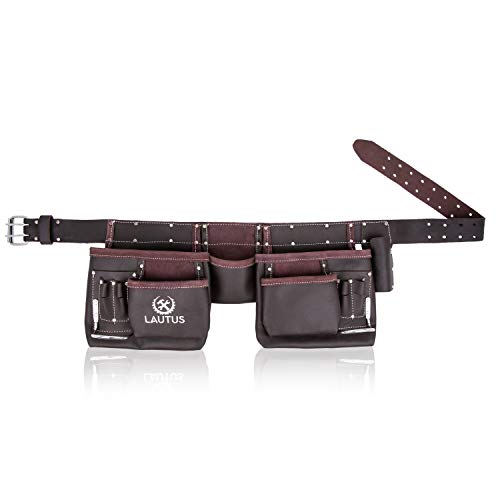
LAUTUS Oil Tanned Leather Tool Belt/Pouch/Bag
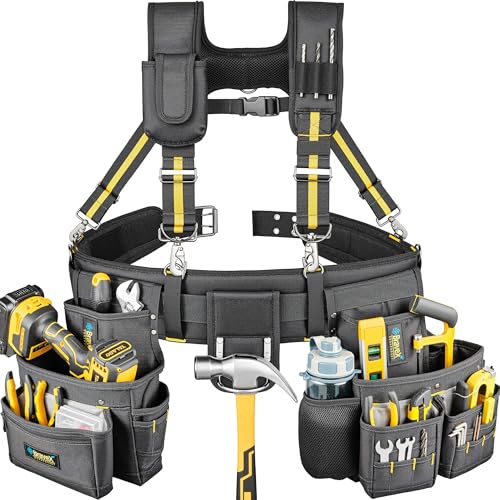
Bravex Tool Vest Pro Ultra H-Style Suspenders Combo
A Closer Look At Each Pick
Denier is the fabric-weight unit here: at 1680 denier, this DEWALT uses a notably dense weave that shrugs off abrasion against concrete and lumber edges. The tarpaulin coating repels dirt and moisture, which matters on muddy job sites where lesser bags turn to grime sponges.
With 25 pockets plus suspenders to carry the load across your shoulders instead of your hips, this setup suits anyone who spends eight-hour days moving between rough framing and finish work. Wide-open structured pockets mean you can grab a driver without looking down, a small thing that adds up over hundreds of reaches per day.
A Few Highlights
- 1680 denier fabric with double stitching holds up where belts typically tear first, around pocket seams and rivet points
- Dirt-repellant tarpaulin finish wipes clean after dusty demo work
- Suspenders shift hammer-and-nail weight off your lower back during long days
- Structured wide-mouth pockets keep tools visible and reachable one-handed
- Reinforced rivets add strength at high-stress attachment points
Things To Consider
- The full pocket count adds bulk; owners commonly report it feels heavy before tools even go in
- Sizing runs as one-size configurations sold in packs, so check fit expectations carefully before ordering
Who It Suits Best
Full-time contractors and remodelers who need maximum organized storage and want suspenders to handle the weight.
Where A Sibling Pick Shines
Anyone prioritizing back comfort over capacity will get more from the Gatorback B400, whose support-focused design targets exactly that problem.
Most tool belts compete on pockets. The B400 competes on how your back feels at hour six. Its patented ventilation system uses molded air channels that let heat escape between the belt and your waist, while memory foam padding cushions without collapsing under a loaded pouch.
The medium size fits waists from roughly 32 to 36 inches measured over clothing, and the brand offers sizing guidance for anyone caught between sizes. Compared with the DEWALT’s storage-first approach, this one trades some organization for all-day wearability, which for roofers and drywall hangers is usually the right trade.
Positive Takeaways
- Ventilated channels reduce sweat buildup during summer exterior work
- High-resistance memory foam resists over-compression so padding stays effective month after month
- Back-support focus helps anyone who already ends long shifts with a sore lower back
Small Caveats
- You must match your waist measurement to the right size band, and ordering wrong means an exchange cycle
- Pocket layout is less expansive than the DEWALT or LEFOR·Z options on this list
Key Specs
Made For
Roofers, drywall installers, and anyone whose shifts run long enough that waist comfort becomes a productivity issue.
Swap It Out When
Tradespeople who need more than twenty pockets should look at the Bravex vest combo instead, which spreads a bigger load across both shoulders.
Here’s the pick for people whose workload changes by the day. Three of its pouches detach independently, so Monday’s electrical rough-in can carry the full 27-pocket layout while Thursday’s punch-list trim needs only two. Quick-release buckles and extra-long straps cover waists from about 31 to 48 inches, which makes this one of the most forgiving fits here.
The widened, thickened belt carries four D-loops for hanging extras like a tape measure or hammer holder. Against the Gatorback’s fixed sizing, this adjustability wins for shared crews or growing DIYers, though the lighter build won’t match the DEWALT’s fabric density over years of hard use.
Where It Helps
- Detachable pouches let you strip down to a light rig when the task calls for mobility
- Adjustable straps span roughly 31 to 48 inches, fitting a wide range of body types
- Quick-release buckles make getting in and out of the rig fast at breaks
- Four D-rings give you anchor points for clip-on accessories
Points To Note
- With fewer tools aboard, detached pouches need somewhere to live, so plan your truck or bag storage
- Some users report the buckles take a few sessions to operate smoothly one-handed
The Right Fit
Handymen and multi-trade DIYers whose daily tool list changes and who value modularity over a single heavy-duty build.
Reach For A Different Pick When
Full-time carpenters wanting leather that molds to them over time will prefer the LAUTUS oil-tanned belt reviewed next.
Oil-tanned leather tells you two things immediately: this belt will soften and shape itself to your hips over months of wear, and it’ll shrug off rain and scuffs better than untreated hide. Where the DEWALT relies on synthetic density, the LAUTUS bets on a material that ages well rather than wears out.
The maker positions it across trades from handyman work to framing and electrical, and the flexible design accommodates waists from roughly 28 up to 46 inches. Pocket count is generous enough that running out of room mid-job isn’t a realistic complaint. One honest note: leather demands occasional conditioning to stay supple, unlike nylon rigs you can hose off.
What Works In Its Favor
- Genuine oil-tanned leather develops a custom fit as it breaks in
- Naturally resistant to scuffs, moisture, and jobsite grime compared with untreated leather
- Wide 28-to-46-inch waist accommodation covers most adult sizes
- Ample pocket layout suits everything from fasteners to hand planes
Worth Bearing In Mind
- Leather needs periodic conditioning, a maintenance step nylon belts skip entirely
- Expect a stiffer feel during the first weeks until the material softens
Right Fit For
Carpenters, framers, and traditionalists who want gear that looks and performs better after five years than it did new.
Another Choice May Suit
Anyone who wants zero-maintenance synthetic fabric and suspenders included should go back to the DEWALT DWST540602 at the top of this list.
This is the max-capacity option, built like a vest rather than a belt. The H-style suspender frame distributes a fully loaded rig across both shoulders, which framers carrying nail guns’ worth of fasteners will appreciate by lunchtime. Twenty pockets across five combo sections include ten main compartments plus smaller organizers for blades and bits.
Material choice shows real thought: 1200D ballistic nylon forms the wear-prone bottoms while breathable 800D Oxford cloth with an inner PU coating handles the rest, balancing toughness against flexibility. Aramid thread (the same family used in heat-resistant applications) stitches it together alongside black nickel-plated hardware. Unlike the Gatorback’s comfort-first padding, this one solves overload through distribution.
Positive Points
- H-style suspenders spread heavy loads across shoulders instead of concentrating weight at the waist
- 1200D ballistic nylon bottoms resist punctures where pouches contact rough surfaces
- Breathable 800D Oxford upper sections keep airflow moving against your torso
- Aramid thread and nickel-plated hardware point to a long service life
A Few Limitations
- The vest format traps more heat than a simple belt in hot attics, depending on your climate
- Twenty pockets mean a longer habit-building curve; finding each tool takes a week or so
- More surface area means more cleaning after drywall or insulation work
Feature Snapshot
Who Should Grab It
Framers, electricians pulling heavy wire, and production carpenters who routinely carry a near-complete toolkit on their body.
Consider Something Else When
Light-duty users doing weekend repairs will find the LEFOR·Z modular belt far less cumbersome for smaller loads.
What Matters Most Before Choosing Heavy Duty Tool Belts
Match The Rig To Your Trade
A framer’s daily load looks nothing like an electrician’s. Framing demands deep nail pouches and hammer loops positioned for a natural swing, while electrical work favors smaller, segmented pockets for connectors and testers. List the five tools you reach for most, then confirm the belt puts each within easy one-handed reach.
Weight Distribution Decides Your Workday
Every loaded pound sits on your hips unless something else takes it. Suspenders, whether standalone like the DEWALT’s or built into a vest like the Bravex, move that load upward. Over a career, this is the difference between finishing a shift fresh and nursing a sore back. Prioritize it over raw pocket count.
Material Trade-Offs Are Real
Ballistic nylon cleans easily and dries fast but eventually abrades. Oil-tanned leather outlasts nearly everything and molds to you, yet asks for conditioning. Denier ratings tell you fabric density: higher numbers mean tougher weaves. Choose based on your jobsite’s mud, moisture, and metal exposure.
Sizing Deserves More Attention Than It Gets
Measure your waist over the clothes you actually work in, not your jeans size. Adjustable rigs like the LEFOR·Z forgive estimation errors; fixed-size belts like the Gatorback don’t.
Key Considerations Across These Picks
Traps First Timers Fall Into
The classic error is buying on pocket count alone, then discovering the belt rides poorly or sags under real weight. Another frequent miss: ignoring waist-over-clothing measurements, which leads to exchanges. Skip both by matching the rig to your heaviest typical day, not your average one.
What The Higher Tier Buys
Pricier belts spend their budget where failures happen: aramid thread, riveted stress points, denser denier, and shaped padding that doesn’t compress flat. For someone working five days a week, that durability math works out quickly. Weekend users rarely recoup the difference.
Frequently Asked Questions
How many pockets do I actually need?
Count the tools you carry simultaneously on a normal day, then add three or four slots for fasteners and odds. Most pros land somewhere between 15 and 25 pockets.
Are suspenders worth adding?
For loads over roughly ten pounds, yes. They shift weight from hips to shoulders and reduce end-of-day fatigue noticeably.
Leather or nylon: which lasts longer?
Well-maintained leather typically outlasts nylon by years. Nylon wins on maintenance, since it wipes clean and tolerates soaking.
How should a tool belt fit?
Snug over work clothes with no sag when loaded, and pouches sitting at your hip bones rather than your thighs. Measure your waist wearing what you’d normally work in.
Can I wash a heavy duty tool belt?
Nylon and polyester rigs tolerate spot cleaning with mild soap and water. Leather requires conditioning products instead of water immersion.
Wrap Up
Your best match depends on how hard and how often you work. The DEWALT covers storage-heavy professional days, the Gatorback protects your back through long climbs, and the LAUTUS rewards patience with leather that improves for decades. Modular needs point to the LEFOR·Z; maximum capacity points to the Bravex. Measure first, buy once, and let the belt disappear into your routine.




