


A slow router shows up at the worst moments: the video call freezes mid-sentence, the game lags right as you line up a shot, and the 4K stream starts buffering while someone else downloads a huge file upstairs. The five routers below attack that problem from different angles, from budget Wi-Fi 6 workhorses to quad-band Wi-Fi 7 flagships with multi-gig wired ports. Each one suits a specific home size and device load, so the right choice depends less on raw speed numbers and more on how many people and gadgets share your network. Here’s what each brings to a real household.
The Shortlist At A Glance

GL.iNet GL-BE9300 Flint 3 Tri-Band Wi-Fi 7 Router
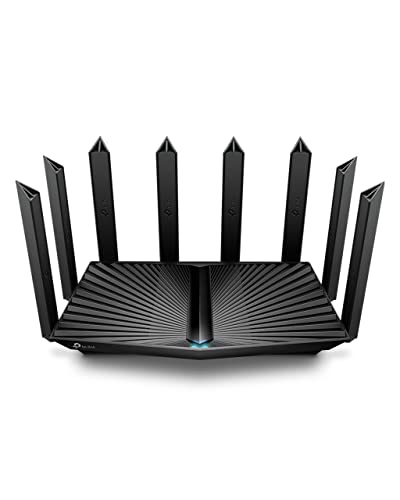
TP-Link Archer AX80 AX6000 Wi-Fi 6 Router

NETGEAR Nighthawk RS200 WiFi 7 Router

NETGEAR R6700AX WiFi 6 Router

ASUS ROG Rapture GT-BE98 Pro WiFi 7 Gaming Router
What Each Pick Brings To The Table
The Flint 3 is built for people who want control over their network, not just fast Wi-Fi. Its tri-band Wi-Fi 7 radio setup pairs with five 2.5G ports, which is unusual at this level and means you can wire a NAS, a gaming PC, and a multi-gig modem without bottlenecking any of them.
Where it really separates itself from the TP-Link and NETGEAR options here is VPN handling: WireGuard and OpenVPN both run at up to 680Mbps, so routing your whole home through a VPN no longer cripples your connection. AdGuard Home support adds DNS-level blocking of trackers across every device, including ones you can’t install software on.
Positive Points
- WireGuard and OpenVPN speeds reach 680Mbps, so encrypted browsing stays usable for streaming and calls
- Five 2.5G ports let you build a fully multi-gig wired backbone
- AdGuard Home blocks unwanted tracking at the DNS level for every connected device
- Tri-band radios help separate heavy traffic across channels in busy homes
- Open, tweakable firmware appeals to anyone who likes fine-grained control
Things To Consider
- Real VPN throughput depends heavily on your provider, server location, and line quality, so expect some variance day to day
- The advanced settings can feel overwhelming until you’ve spent time in the interface
Who Will Love This
Privacy-conscious users, remote workers tunneling through VPNs daily, and home-lab hobbyists who want hardware they can configure deeply.
Another Choice May Suit
Households that just want plug-and-play speed will find the NETGEAR Nighthawk RS200 simpler to live with.
The Archer AX80 sits in the sweet spot between the budget NETGEAR R6700AX and the Wi-Fi 7 models above it. You get dual-band Wi-Fi 6 rated up to 4804Mbps on the 5GHz band and 1148Mbps on 2.4GHz, plus eight high-gain antennas with beamforming, a technology that focuses the signal toward each device instead of spraying it evenly.
For a three-bedroom home with a mix of laptops, consoles, and streaming boxes, that combination covers the realistic workload well. A 2.5G multi-gig port also future-proofs your wired side as ISPs push past gigabit plans, something the cheaper pick in this list can’t match.
A Favorable Mix
- Eight antennas with beamforming push signal deeper into far rooms
- 2.5G port keeps wired connections ahead of gigabit internet tiers
- High combined bandwidth handles simultaneous 4K streams and video calls comfortably
- Wi-Fi 6 efficiency means many devices share airtime more fairly
Points To Note
- Dual-band only, so there’s no dedicated backhaul band for mesh expansion later
- Eight antennas give it a wider footprint; measure your shelf before ordering
Key Specs
Made For
Families in mid-size homes who want strong all-around performance without paying flagship prices.
Look Elsewhere When
Gamers chasing sub-millisecond responsiveness should step up to the ASUS ROG Rapture GT-BE98 Pro instead.
This is the sensible way into Wi-Fi 7, the newest wireless standard that adds wider channels and better handling of crowded networks. The RS200 is rated up to 6.5Gbps, roughly 1.2 times faster than comparable Wi-Fi 6 gear, and NETGEAR specifies coverage up to 2,500 square feet with capacity for 80 connected devices.
In practice, that device count is the headline. Modern homes run phones, TVs, doorbells, thermostats, and speakers simultaneously, and older routers choke long before 80 connections. A 2.5 Gig internet port keeps the wired side current too. Compared with the ASUS GT-BE98 Pro, you give up quad-band radios and 10G ports but keep most of the everyday benefit.
Everyday Wins
- Handles up to 80 devices, enough headroom for a fully loaded smart home
- Coverage rated to 2,500 sq. ft. reaches most single-family floor plans from a central spot
- 2.5 Gig port supports multi-gig internet plans without a bottleneck
- Wi-Fi 7 efficiency reduces lag when several streams run at once
Honest Caveats
- Dual-band design means fewer lanes than tri-band or quad-band rivals under extreme load
- Placement matters; thick walls can shrink that 2,500 sq. ft. rating noticeably
Feature Snapshot
Right Fit For
Owners of device-heavy smart homes who want next-gen wireless without flagship pricing or complexity.
Swap It Out When
Apartment dwellers with modest needs save money with the NETGEAR R6700AX below.
Not everyone needs six-figure speed ratings, and the R6700AX exists for exactly those homes. This compact dual-band unit delivers AX1800-class Wi-Fi 6 performance, up to 1.8Gbps combined, covering around 1,500 square feet and roughly 20 devices at once.
That’s plenty for an apartment or small house where two or three people stream, take calls, and scroll together. Owners commonly report it as a straightforward swap for an aging ISP rental box, and setup is about as painless as this category gets. The honest trade-off is ceiling: heavy 4K households or gamers will feel its limits sooner than with the RS200 or Archer AX80.
What It Does Well
- Wi-Fi 6 efficiency keeps 20 devices sharing the network smoothly
- Compact body fits shelves and media consoles without hogging space
- Simple setup makes it a low-stress first router upgrade
- Covers up to 1,500 sq. ft., matching most apartments and small homes
Small Limitations
- No multi-gig wired port, so very fast internet plans get capped at standard gigabit Ethernet
- 20-device ceiling fills quickly in gadget-packed households
Who Should Grab It
First-time router shoppers in apartments or starter homes who want dependable Wi-Fi 6 at an entry-level commitment.
Reach For A Different Pick When
Larger homes with dozens of smart devices fit the NETGEAR Nighthawk RS200 far better.
At the top of this list sits the GT-BE98 Pro, a quad-band Wi-Fi 7 flagship rated up to 30Gbps. Quad-band means four separate radio bands, including two dedicated 6GHz bands, so competitive traffic never fights for airtime. Dual 10Gbps ports handle multi-gig fiber plans and wired NAS transfers without blinking.
It also supports Multi-Link Operation, a Wi-Fi 7 feature that lets a device use multiple bands simultaneously for lower latency, which is precisely what gamers and streamers care about. Mesh capability lets you extend coverage later with compatible ASUS nodes. Against the GL.iNet Flint 3, this is the more powerful but less customizable machine; against everything else here, it’s simply in another weight class.
Standout Benefits
- Quad-band design with dual 6GHz bands isolates demanding traffic
- Two 10Gbps ports accommodate multi-gig internet and fast local storage
- Multi-Link Operation trims latency for gaming and live streaming
- Mesh support expands coverage across big or multi-floor homes
- 30Gbps rating leaves enormous headroom for years of ISP upgrades
Trade Offs
- Premium pricing puts it out of reach for casual users who’d never touch its ceiling
- Large chassis and cooling demands need open shelf space and decent ventilation
Core Details
Built With In Mind
Competitive gamers, content creators uploading large files daily, and enthusiasts running multi-gig fiber connections.
Consider Something Else When
Most mid-size households get everything they need from the TP-Link Archer AX80 at a fraction of the investment.
What Actually Matters Before You Buy
Match Coverage To Your Floor Plan
Router range ratings assume open air, not drywall. A 2,500 sq. ft. claim shrinks fast in a two-story home with plaster walls, so place the router centrally and treat the rating as a best case. Apartment dwellers can safely downsize; sprawling homes should plan for mesh nodes from the start.
Count Your Devices Honestly
Every phone, TV, camera, bulb, and console counts against a router’s capacity. Twenty devices sounds like a lot until you inventory a typical family home. Wi-Fi 6 and Wi-Fi 7 handle dense device loads far better than older standards, which is why the standard matters as much as the speed number.
Don’t Ignore The Wired Side
The port on the back determines whether a fast internet plan actually reaches your devices. Standard gigabit Ethernet caps out at 1,000Mbps, while 2.5G and 10G ports unlock multi-gig plans. Anyone with a desktop PC, gaming console, or network storage benefits from at least one multi-gig port.
Think About Software And Control
Some routers prioritize simplicity, others expose deep settings like VPN clients, DNS filtering, and per-device rules. Casual users should favor easy apps; tinkerers will regret buying locked-down hardware. Decide which camp you’re in before comparing spec sheets.
Key Considerations Across These Picks
Traps First Timers Fall Into
The most common mistake is overbuying speed while ignoring coverage, then wondering why the far bedroom still lags. Another is skipping the device count: a router rated for 20 connections buckles in a 40-device smart home. Check your internet plan’s actual speed too, since a router rated ten times faster than your line delivers no visible benefit.
What Separates Premium From Basic
Higher-tier models add radio bands, multi-gig ports, and latency-focused features like Multi-Link Operation. Those extras matter most to gamers, creators, and homes on multi-gig fiber. For a household streaming and browsing on a gigabit plan, the upgrade payoff is smaller, and a well-placed mid-range pick often feels identical day to day.
Frequently Asked Questions
Do I need Wi-Fi 7 if my devices are older?
No, older devices connect fine and still benefit from a stronger router. You’ll see the full Wi-Fi 7 advantage once your phones and laptops support the standard.
How much router speed do I actually need?
Match the router’s rating to roughly double your internet plan’s speed for comfortable headroom. Beyond that, extra speed mostly helps local transfers between your own devices.
Where should I physically place my router?
Central, elevated, and away from metal objects and thick walls works best. Corners and inside cabinets cut effective coverage significantly.
Can one router cover a whole large house?
Sometimes, though multi-floor or sprawling layouts usually need mesh satellites. Plan for expansion if your home exceeds roughly 2,500 square feet.
Is a gaming router worth it for non-gamers?
Only if you stream, create content, or run many devices at once. Otherwise, a balanced mid-range model serves equally well.
Closing Thoughts
The right router is the one sized to your home, not the one with the biggest number on the box. Small spaces do well with the NETGEAR R6700AX, busy mid-size homes suit the Archer AX80 or Nighthawk RS200, privacy-focused users get real value from the Flint 3, and serious gamers have the GT-BE98 Pro waiting. Measure your space, count your devices, and pick accordingly.




