


Running a new vent through a basement block wall or setting a tile fixture calls for clean, round holes, not chipped edges and wandering bits. That is where hollow core drill bits earn their keep: they cut a clean circle through masonry, tile, stone, or cured concrete instead of grinding away the entire plug. The challenge is matching shank, bond, diameter, and wet-versus-dry design to your drill, your material, and the hole size you need. This roundup lines up nine options across small hole-saw work, large wet coring, and rotary engraving burrs so you can find the right tool without guesswork.
The Choices Worth Comparing
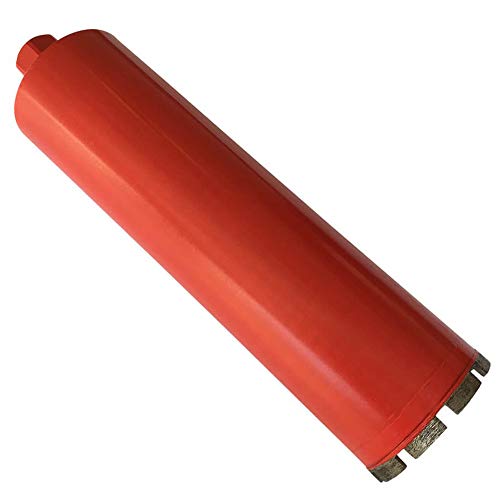
EDiamondTools 3″ Wet Diamond Core Bit 1-1/4″-7 Arbor

PHITUODA 1/4-Inch Diamond Drill Bits, 15pcs

PHITUODA 1/8-Inch Diamond Drill Bits, 15pcs

PHITUODA 5/32-Inch Diamond Drill Bits, 15pcs

PHITUODA 3/4-Inch Diamond Drill Bits, 2pcs
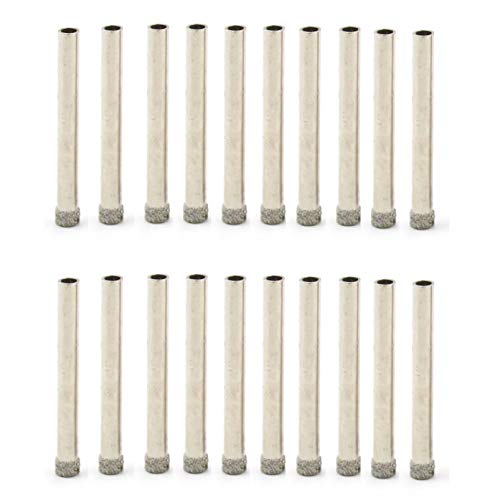
JINGLING 5mm Diamond Drill Bits for Glass, 20 Pack

DKIBBITH 1/4″ Dry Diamond Core Bits, 2 Pack
SALI 1″ Diamond Core Bit 10″ Depth, 5/8-11 Thread

Luo ke 10 Pcs Hollow Cup Diamond Burr 3/32″ Shank
Meet The Standout Selections
This is the wet-dedicated end of the roundup, built for serious masonry and concrete work. The 1-1/4″-7 threaded arbor is the industry standard for handheld core drills and rig setups, so it should bolt right onto equipment you may already own. A 3-inch cutting diameter covers most plumbing, vent, and conduit penetrations through poured walls and block. Rotary-only operation means you need a proper core rig or a heavy handheld motor to control it well.
If you compare it to the smaller tile-focused bits later in this list, the difference is depth and aggression. Where the PHITUODA bits are designed to nibble a quarter-inch hole in porcelain, this one chews through a 14-inch run in cured concrete with steady water feed.
A Few Strong Suits
- Industry-standard 1-1/4″-7 arbor pairs with common core rigs and heavy handheld motors
- 14-inch drilling depth handles full-thickness wall and slab penetrations
- Embedded diamond segment designed for extended service life on hard masonry
- Handles concrete with light rebar, a step up from bits limited to plain block
Practical Considerations
- Wet-only operation means you need a water source and slurry management
- A core drill or rig is required; a regular rotary hammer will not drive it safely
- 3-inch holes are overkill for fixture work where a small hole saw would suffice
Built With In Mind
Contractors and serious DIYers running plumbing, HVAC, or electrical penetrations through poured concrete or block walls who already own a core rig.
Consider Something Else When
Tile setters hanging a single bathroom fixture will find the PHITUODA 1/4-Inch Diamond Drill Bits faster and easier to control for small-diameter work.
Small hole-saw bits for tile and glass are easy to burn through on a single rough job, so a 15-pack changes the math. This PHITUODA set delivers 1/4-inch (6mm) cutting holes in a nickel-plated body with a 7/32-inch (5.6mm) shank, plenty for standard cordless drill chucks. The total length of just over 2 inches keeps the bit stable in tight corners, like behind a faucet stub-out.
Compared to the wet core bit you just read about, the trade-off is material scope. You give up deep concrete coring in exchange for dry-friendly small holes through ceramic, glass, and softer stone.
Good Reasons To Consider
- 15-bit count lets you keep spares when the diamond coating wears out
- 1/4-inch (6mm) hole size matches common plumbing and shower fixture openings
- Nickel-plated finish resists corrosion in humid bathroom storage
- Compact 2.07-inch total length improves control on handheld drills
Small Caveats
- Not built for cured concrete or block; expect rapid wear on masonry
- Requires low RPM and water lubrication to avoid burning the diamond coat
Right Fit For
DIYers drilling a handful of anchor or fixture holes in porcelain tile and willing to keep the bit wet and slow.
Skip It When
You need clean 3/4-inch openings for shower valves, which the PHITUODA 3/4-Inch Diamond Drill Bits handles more directly.
Sometimes the job calls for jewelry-scale precision rather than plumbing-scale aggression. This 1/8-inch (3mm) set delivers small, clean holes through glass, sea glass, tile, and stone for crafts, model work, and small fixtures. The 3/32-inch (2.53mm) shank fits the same rotary tools the rest of the PHITUODA line uses, so your existing collet should accept it.
Where the 1/4-inch set above targets fixture work, this 1/8-inch version is the one you reach for when overshoot would ruin the project.
The Helpful Details
- 1/8-inch (3mm) cutting diameter suits small craft and model projects
- 15-bit quantity cushions breakage on brittle materials like glass
- High-speed steel core with diamond dust coating extends bit life on hard surfaces
- Short 1.98-inch length reduces flex when working freehand
Less Ideal Details
- Too small for plumbing anchors or standard tile fixtures
- Requires very low speeds to avoid chipping the diamond edge
Best Suited To
Crafters and hobbyists drilling decorative holes in glass, tile, and small stone pieces where precision matters more than depth.
Not Your Match When
You need versatile mid-size holes, in which case the PHITUODA 5/32-Inch Diamond Drill Bits offer a more practical everyday diameter.
The 5/32-inch (4mm) size sits in an awkward middle ground, but it is also the most versatile diameter for small craft and light fixture work. The 9/64-inch (3.45mm) shank fits standard rotary tool collets, and the same nickel-plated body style as the rest of the PHITUODA line keeps corrosion at bay in damp shops.
Versus the 1/8-inch set, you give up a hair of clearance for a noticeably larger hole, useful for things like beading wire passes or thin tubing anchors.
What Stands Out
- 5/32-inch (4mm) cutting diameter covers common craft and light fixture needs
- Bulk 12-bit count is generous for the price tier
- Nickel-plated body holds up to repeated water cooling cycles
- Same shank family as other PHITUODA bits, simplifying tool changes
Worth Noting
- Bit count is actually 12 rather than the 15 of sibling sets, despite shared packaging style
- Still too small for shower valve or drain holes in tile
Feature Snapshot
Who Should Grab It
Workshop regulars needing a flexible small-diameter diamond bit for glass, ceramic, and tile that fits most rotary tools.
Look Elsewhere When
Your projects center on engraving and shaping stone, where the Luo ke 10 Pcs Hollow Cup Diamond Burr is a better tool fit.
Step up to 3/4-inch (20mm) and you are firmly in shower valve, pipe stub-out, and large fixture territory. This 2-pack keeps the same nickel-plated body style as the smaller PHITUODA bits, so you get one running and one spare, or one for the shop and one in the truck. The 7/32-inch (7.78mm) shank still fits most standard drill chucks without an adapter.
Where the 1/4-inch set barely scratches a tile install, this one handles the work in fewer passes per hole.
The Value In It
- 3/4-inch (20mm) cutting diameter matches common shower and drain openings
- Two-bit pack means you are not stuck mid-project when a bit wears out
- Same corrosion-resistant body as the rest of the PHITUODA line
- 2.17-inch total length reaches through most standard tile thicknesses
Trade-Offs
- Two-bit count is modest compared to the bulk 15-piece sets above
- Dry drilling large porcelain or granite generates significant heat; water cooling is still wise
Whose Shelf It Belongs On
Bathroom remodelers and tile setters drilling 3/4-inch openings for valves, drains, and supply lines through porcelain or ceramic.
Where Another Pick Suits Better
Pros running full-depth wall penetrations will want the SALI 1″ Diamond Core Bit 10″ Depth for longer reach and rig-ready threading.
Glass, marble, and glazed tile punish bits hard, so buying in bulk is the sane move. JINGLING’s 20-pack offers 5mm (roughly 3/16-inch) cutting holes with a 3.2mm inner diameter and 4.5mm shank, ideal for standard rotary tools. The 16mm working depth reaches through most craft glass and tile, and the diamond-coated cutting edge handles marble and granite as well.
Compared to the 15-pack PHITUODA sets, you trade brand familiarity for a higher bit count at a similar price point, a useful trade for anyone working through a stack of blanks.
Useful Touches
- 20-bit bulk count suits production-style craft sessions
- 5mm cutting diameter is versatile for small craft and hobby tile work
- Works on glass, marble, ceramic, and granite with the same bit
- Standard 4.5mm shank fits most hobby rotary tools without adapter fuss
Honest Caveats
- Diamond coating wears faster on harder granite than purpose-built masonry bits
- Shank-to-collet size mismatch is a common beginner stumble; double-check the collet before purchase
Quick Facts
Made For
Crafters running through stacks of glass, ceramic, or marble blanks where having 20 bits on hand keeps the project moving.
A Better Fit Elsewhere
Angle grinder users wanting dry drilling on hard tile will prefer the DKIBBITH 1/4″ Dry Diamond Core Bits for a simpler setup.
Most diamond bits insist on water cooling, but the DKIBBITH set ships with internal cooling wax inside the barrel. The wax melts during use, distributing heat across the cutting edge so the bit can run dry on ceramic, porcelain, granite, marble, and stone. The 5/8-11 thread pairs directly with angle grinders and wet polishers, so no separate arbor is needed.
If you have wrestled with a spray bottle and a slow drill on a vertical wall, the dry-cutting design here removes that whole step.
What Earns Its Place
- Internal cooling wax allows true dry cutting on hard tile and stone
- 5/8-11 thread mounts directly to common angle grinders and polishers
- 1/4-inch (6mm) cutting diameter handles grout lines and small anchor holes
- 35mm working depth covers standard tile plus thin backer board
Small Limitations
- 2-bit count leaves you short if you burn through both on a long job
- Cooling wax is consumed over time; once gone, you are back to water-cooling discipline
Perfect Match For
Tile setters and remodelers who already own an angle grinder and want to skip the wet-mess setup on vertical surfaces.
Swap It Out When
You are drilling deep into cured concrete walls, where the SALI 1″ Diamond Core Bit 10″ Depth has the reach and bonded segments for the job.
When a single pass has to punch through a foundation wall, a 1-inch (25.4mm) core bit with a 10-inch (254mm) drilling depth is the right tool. SALI ships turbo laser-welded segments for cutting cured concrete, brick, block, and masonry, and the 5/8-11 thread is the same standard as the DKIBBITH set, so it works on angle grinders and core drills alike. Two adapters come in the box, a 3/8-inch hex shank and an SDS Plus shank, removing the need for a separate arbor purchase.
Versus the EDiamondTools 3″ bit you saw first, this one is narrower but more flexible, friendly to handheld drills with the right adapter.
A Favorable Mix
- 10-inch drilling depth handles thick foundation and retaining walls in one pass
- Turbo laser-welded segments are built for hard cured concrete
- Two included adapters (3/8″ hex and SDS Plus) cover most common drills
- 5/8-11 thread pairs with standard angle grinders and core rigs
Trade-Offs To Consider
- 1-inch diameter is narrow for pipe penetrations; many plumbing runs need 2 to 4 inches
- Wet-cutting use generates slurry that needs management on interior walls
Tech Notes
Who It Suits Best
Contractors and serious DIYers needing long-reach coring through cured concrete, brick, or block without buying a separate arbor.
Reach For A Different Pick When
Plumbers running 3-inch drain lines through basement walls will want the larger EDiamondTools 3″ Wet Diamond Core Bit for fewer overlapping cuts.
Most picks in this roundup cut holes. The Luo ke set does something different: the hollow cup shape grinds and carves material away rather than slicing a clean circle. A 3/32-inch shank fits the same rotary tools, Dremels, and small pneumatic tools that accept standard engraving bits, and the diamond grit handles agate, jade, glass, ceramics, and carbide. The 10-pack means you can keep a fresh burr on hand as the working surface wears down.
Think of it as a complement to the hole-saw bits above rather than a competitor, the right pick when your project involves shaping rather than drilling.
The Good Stuff
- Hollow cup design removes stock fast for carving and shaping
- 3/32″ shank fits most hobby rotary and pneumatic tools
- Works on glass, agate, ceramics, marble, and carbide
- 10-bit count keeps a fresh edge on hand during long sessions
Points To Keep In Mind
- Not a drilling bit; produces dust and chips rather than clean cores
- Requires dust extraction or wet grinding for safe use on stone
Built With In Mind
Jewelry makers, lapidary hobbyists, and crafters shaping stone, glass, and ceramic pieces on a rotary tool.
Consider Something Else When
You need clean through-holes in tile, where the PHITUODA 1/4-Inch Diamond Drill Bits is purpose-built for that job.
Choosing Hollow Core Drill Bits That Actually Fit the Job
Match the Bit to the Material First
Diamond grit bond hardness dictates where a bit should and should not be used. Softer bonds release fresh grit faster, which suits hard materials like cured concrete and dense stone where the diamonds would otherwise polish over. Harder bonds hold the grit longer, ideal for abrasive materials like brick and asphalt. Buying the wrong bond is a common cause of bits that either wear out in minutes or glaze over without cutting. If you mostly drill glazed tile and glass, a mid-grade nickel-plated bit like the PHITUODA line covers the bases without overspending on concrete-grade tooling.
Diameter and Depth Drive the Tool Choice
Small fixture holes under 1/4 inch fall in the hole-saw and craft bit category, and buying in bulk is the practical move since diamond coatings burn through quickly. Midsize openings for shower valves, supply lines, and anchors generally run 1/2 inch to 1 inch, and a 5/8-11 threaded dry bit like the DKIBBITH set handles most of that work. Anything over 1 inch on cured concrete or block calls for a proper core bit with a standard 1-1/4″-7 or 5/8-11 arbor, plus a drill or rig rated for the torque. Depth matters equally: a 14-inch run on a poured wall is not the same tool as a 2-inch reach through a tile backer.
Shank and Thread Compatibility
A diamond bit that does not match your drill is dead weight. Standard cordless drills accept 1/4-inch and smaller round shanks directly. Larger bits use threaded arbors (1-1/4″-7 for full-size core rigs, 5/8-11 for angle grinders and mid-size core drills), and the SALI set is a good example of one that ships adapters so you can use it on a hex or SDS Plus chuck without buying extras. Always check the chuck or spindle spec on your tool before committing to a bit diameter that requires more than a standard collet.
Cooling, Speed, and a Realistic Workload
Most diamond bits cut best wet, and a slow steady feed beats high RPM every time. The DKIBBITH set is the rare exception, using internal cooling wax to allow dry cutting, useful on vertical tile work where water would run everywhere. Run too fast and dry, and you will burn the diamond coating in a single hole. A spray bottle, sponge, or a steady trickle from a hose keeps the bit and the cut cool. On cured concrete, you can plan on a longer cycle per hole; on ceramic, expect faster progress with the trade-off of higher breakage risk if you push.
Key Considerations Across These Picks
Pitfalls Shoppers Hit
Buying on bit count alone is the most common stumble. A 20-pack of 5mm craft bits is useless if you need a single 3/4-inch hole for a shower valve. The reverse is also true: a heavy core bit in the wrong drill chuck is a safety hazard. Skipping the cooling step is the next frequent error. Diamond coatings glaze over and burn out fast when run dry on hard tile, and once the diamonds polish smooth, the bit will not cut again no matter how much pressure you apply. Confirming the shank size, the arbor thread, and whether the bit is wet-only or dry-rated saves both money and frustration.
When Paying More Pays Off
Higher-tier core bits earn their price through laser-welded segments, deeper barrels, and bonded diamond concentration tuned to specific materials. The SALI 1″ bit and the EDiamondTools 3″ bit are aimed at users who run multiple holes per job, where a single misfire wastes time and materials. Spending up makes sense for contractors and serious DIYers who hit cured concrete, brick, or block regularly, or for anyone needing consistent results across dozens of holes. For a handful of tile projects a year, a budget bulk pack is the smarter call.




