


A good hopper grinder earns its counter space fast. Whether you’re cracking corn for chicken feed on a homestead or dialing in espresso before work, the right mill turns a chore into a five-minute routine. This lineup covers both worlds: rugged cast iron hand mills built for grain, beans, and feed, plus electric burr grinders that treat coffee with real precision. Each pick below fits a different kitchen, budget, and patience level, so you can match the tool to what actually lands in your hopper.
An Overview Of The Picks
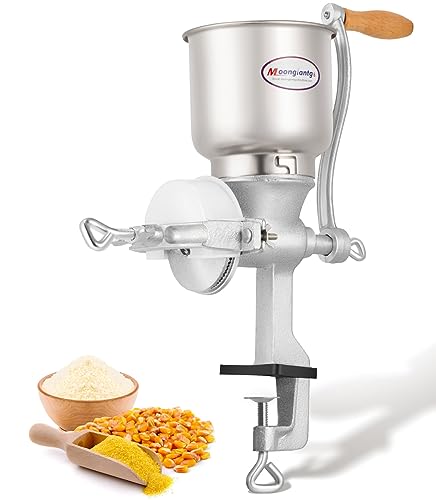
Moongiantgo Cast Iron Manual Grain Mill with Large Hopper

KIRAINAFLY Electric Burr Coffee Grinder, 28 Settings

Corona Manual Grain Mill, Molino para Moler Maiz

Tuni G1 Conical Burr Coffee Grinder, 48 Settings (Silver)
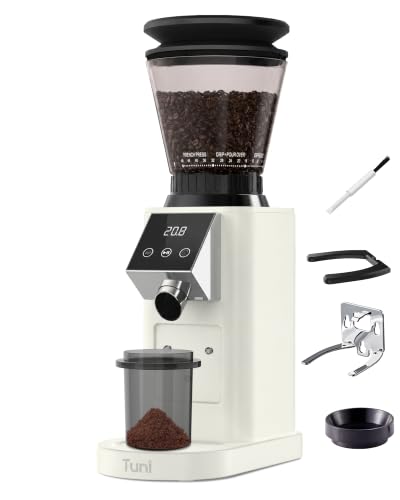
Tuni G1 Conical Burr Coffee Grinder, 48 Settings (Ivory)
A Deeper Look At The Lineup
This is the workhorse of the group, a cast iron hand mill whose oversized hopper lets you load a serious batch of corn, wheat berries, barley, chickpeas, or dried beans without constant refilling. On a small homestead, that capacity difference is real: fewer stops means you finish a bucket of scratch feed before your arm gives out.
The adjustable grind runs coarse by design, which suits animal feed and home brewing crushes well. It’s a muscle-powered tool, so expect some effort with hard kernels, but there’s no motor to burn out and nothing electrical to keep dry.
Everyday Perks
- Large-capacity hopper cuts down refills during big batch sessions
- Handles an unusually broad ingredient list, from pepper and poppy seeds to soybeans and coffee
- All-mechanical build works off-grid and shrugs off damp barn conditions better than electronics would
- Coarse output is exactly right for poultry feed and brewing grains
Honest Caveats
- Not built for fine flour, wet grain, or nut butters, so pastry bakers will hit a wall
- Cast iron needs a dry wipe-down after use to prevent surface rust, a common maintenance note among long-term owners
Built With In Mind
Rural households, backyard flock keepers, and home brewers who want a no-electricity mill that processes bulk grain without fuss.
A Better Fit Elsewhere
For traditional masa and fresh corn flour at a finer texture, the Corona Manual Grain Mill below is the stronger match.
Where the Moongiantgo mill is all muscle, this KIRAINAFLY is all convenience. It’s a compact electric burr grinder, meaning two abrasive surfaces crush beans evenly instead of blades hacking them unevenly, and that single design choice does more for cup quality than anything else at this level.
Operation stays simple: set the coarseness dial across its 28 positions, choose your cup count up to 12, and press once. In most kitchens, that’s the whole morning ritual, no scale required.
Positive Takeaways
- 28 grind settings span French press coarseness down to espresso fineness
- One-touch operation with a cup-count selector removes guesswork from dosing
- Burr mechanism produces a more even particle size than blade grinders, which translates to smoother, less bitter coffee
Small Limitations
- Fine-tuning between adjacent settings is coarser than enthusiast machines offer, so dialing in espresso may take trial and error
- Ground coffee left in the chute can go stale; a quick brush-out after each session keeps flavors clean
Who Should Grab It
Drip and French press drinkers upgrading from a blade grinder who want set-and-forget simplicity on a modest budget.
Reach For A Different Pick When
Serious espresso tinkerers will get far more control from the Tuni G1’s 48 settings and timed dosing further down this list.
Some designs stick around because they work. The Corona has been made in Colombia for generations, and its heavy cast iron body is the reason you’ll still see decades-old units turning out masa in family kitchens. Compared to the Moongiantgo above, it leans toward finer food-grade output rather than coarse feed crushing.
The large hopper takes corn, wheat, rice, and coffee, and the adjustment mechanism moves from cracked grain toward flour territory. Hand-cranking hard kernels takes effort, as with any manual mill, but the trade-off is a machine with essentially no electronics to fail.
Strengths Worth Knowing
- Generational cast iron construction that owners commonly report passing down intact
- Adjustable output covers everything from coarse cracked grain to fine homemade flour
- Wide hopper handles batch cooking for tortillas, arepas, and fresh masa
- Simple mechanics mean cleaning is a wipe-down, not a teardown
Things To Consider
- You supply the power, so large batches demand steady cranking
- Like any bare cast iron, it should be stored dry to avoid rust spots over time
Key Specs
Right Fit For
Cooks who make masa, fresh corn flour, or heritage recipes regularly and value a mill that outlives trends.
Swap It Out When
Feed-grinding bulk grain for animals is the priority, where the Moongiantgo’s coarse-focused output fits better.
This is where the list shifts from farm tools to coffee craft. The Tuni G1 uses a conical burr set, two shaped steel surfaces that funnel beans downward while cutting them, and it offers 48 stepped settings, more than double the KIRAINAFLY’s range. That granularity matters most at the espresso end, where tiny changes swing the shot from sour to bitter.
An LED touchscreen drives an electronic timer adjustable in half-second increments up to 40 seconds, plus cup sizing from 2 to 12 servings. An anti-static treatment helps grounds drop cleanly instead of clinging to the chute, a small touch that keeps the counter tidy.
Practical Advantages
- 48 settings give genuine headroom for espresso, pour-over, cold brew, and French press
- Half-second timer steps let you repeat a dose precisely, shot after shot
- Anti-static stainless burrs reduce mess and retention around the exit chute
- Touchscreen controls feel faster than dials once you’ve saved your routine
Potential Sticking Points
- More settings mean more variables to learn, which can overwhelm someone who just wants one button
- Electronics add weight and a plug dependency the manual mills here never have
Feature Snapshot
Who Will Love This
Home baristas pulling daily espresso shots who want repeatable, timed grinding without paying cafe-equipment money.
Consider Something Else When
Counter space is tight and mornings are simple; the KIRAINAFLY’s one-touch flow covers drip duty with less learning curve.
Functionally, this is the same grinder as the silver Tuni G1 above: 48 conical burr settings, a 40-second timer in half-second steps, 2-to-12-cup dosing, and anti-static stainless burrs. The difference sits entirely in the finish, trading brushed metal for a soft ivory shell that blends into lighter kitchens instead of standing against them.
In our view, that’s a legitimate deciding factor rather than a gimmick. A grinder lives on the counter, visible every day, and the ivory version reads calmer next to cream cabinets or pastel appliances. Performance expectations stay identical, including the same learning curve around its many settings.
Useful Strengths
- Identical 48-setting precision and timed dosing as the silver model
- Ivory finish suits bright, Scandinavian-style kitchens where black machines clash
- Anti-static burr behavior keeps grounds where they belong, in the basket
Worth Bearing In Mind
- Light-colored housings tend to show coffee dust and fingerprints sooner, so a weekly wipe keeps it looking sharp
- Same feature depth as the silver unit, so color is the only reason to choose between them
Whose Shelf It Belongs On
Design-minded home brewers who want espresso-grade control wrapped in a finish that matches their kitchen palette.
Another Choice May Suit
Anyone indifferent to aesthetics saves nothing but gains nothing either way; the silver Tuni G1 delivers the identical grinding package.
What Matters Most Before Choosing Hopper Grinders
Match The Mechanism To The Ingredient
Manual cast iron mills like the Moongiantgo and Corona excel at dry, hard inputs: corn, wheat berries, beans, and feed grain. They crack and crush coarsely, which is ideal for masa, brewing grains, and animal feed but wrong for fine pastry flour or wet ingredients. Electric burr grinders, meanwhile, are engineered for coffee alone and reward you with uniform particle size, the single biggest driver of balanced extraction.
Count Your Settings Honestly
More grind steps only help if you actually adjust them. Drip drinkers rarely move off two or three positions, so the KIRAINAFLY’s 28 settings cover that life comfortably. Espresso enthusiasts chase half-step differences, which is why the Tuni G1’s 48 positions and half-second timer earn their complexity.
Weigh Power Source Against Batch Size
Hand mills never die and work anywhere, but they cost elbow grease on large batches. Electric models process a week of beans in seconds yet need an outlet, dry storage, and occasional brush cleaning. Homestead volume pushes you manual; apartment counters push you electric.
Think About Upkeep Before Day One
Cast iron wants a dry wipe and oiled storage to resist rust. Burr grinders want periodic brushing of the chute and burr chamber. Neither is hard, but skipping both shortens the machine’s life noticeably.
Key Considerations Across These Picks
Traps First Timers Fall Into
The classic error is buying a coffee grinder for grain or a grain mill for espresso. They’re different tools despite sharing a hopper. Second mistake: ignoring capacity. A small hopper on a big-batch day turns ten minutes of grinding into thirty.
What Separates Premium From Basic
Higher-tier grinders spend their extra cost on burr precision, motor stability, and dose repeatability. The Tuni G1’s timer and 48 steps exist so your tenth shot matches your first. Casual brewers won’t feel that gap; daily espresso drinkers will.
Frequently Asked Questions
Can a manual grain mill grind coffee?
Yes, models like the Corona handle coffee beans, though the grind skews coarse and consistency trails a dedicated burr grinder. It works well for French press and percolator brewing.
How fine can the Moongiantgo mill grind?
It’s designed for coarse output suited to feed and brewing grains. Fine flour and pastes fall outside its intended use.
Do more grind settings actually improve coffee?
They improve your ability to match a specific brewer and bean. Beyond roughly 30 settings, gains matter mainly for espresso, where small adjustments shift flavor noticeably.
Is cast iron hard to maintain?
Routine care is simple: wipe dry after use and store away from moisture. Owners commonly report rust only when the mill is put away damp.
Are the two Tuni G1 colors identical inside?
Yes, both share the same 48 settings, timer, cup selector, and anti-static stainless burrs. The choice comes down to silver versus ivory styling.
Closing Remarks
Your best pick depends on what goes into the hopper. Feed grain and masa point straight at the Moongiantgo or Corona, both honest cast iron tools that ask for muscle instead of electricity. Daily coffee points at the KIRAINAFLY for simplicity or the Tuni G1 in either finish for precision. Match the mill to the ingredient, keep up with basic cleaning, and any of these five will hold its place on your counter for years.




