


Fixing phones, reviving dead game consoles, or reflowing a stubborn BGA chip all come down to one thing: controlled heat you can trust. A combined hot air and soldering station saves bench space, keeps your workflow in one place, and costs far less than buying separate units. The five stations below cover a range of budgets and skill levels, from first-time hobbyists to technicians who need a built-in power supply for board-level diagnostics. Each one earns its spot on real attributes: temperature range, airflow control, safety features, and what actually arrives in the box.
A Fast Comparison Of The Options
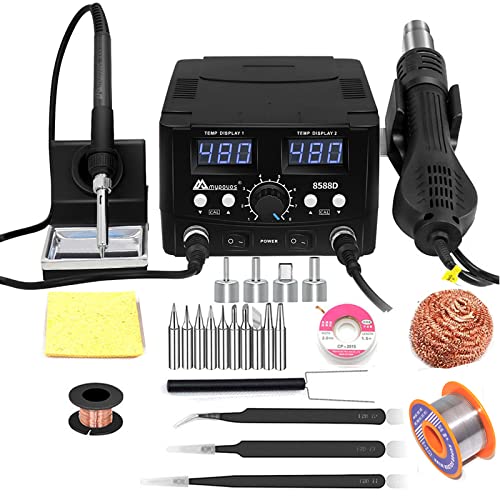
MYPOUOS 8588D 750W LED Digital Rework Station
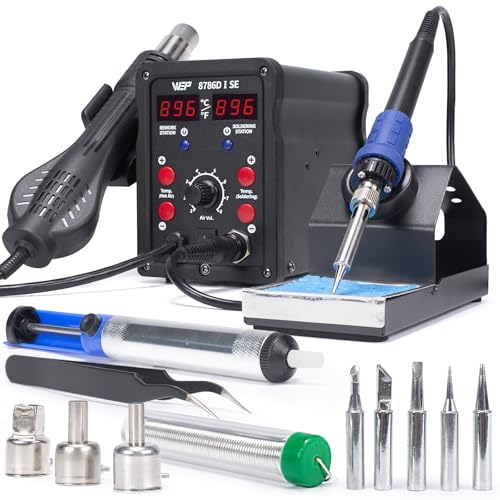
WEP 8786D-I SE Hot Air Soldering Station Kit

TXINLEI 858D 110V Digital Hot Air Rework Station

NEWACALOX 500°C Hot Air Rework Station

YIHUA 853D USB 3A Three-Tool Station
A Deeper Look At The Lineup
The 8588D pairs a heat gun with a soldering iron in one compact ABS-cased body, so a crowded repair desk loses nothing to a second footprint. A handle induction system means hot air flows only while you’re holding the gun, then automatic cooling kicks in once it’s back on the shelf. For anyone doing daily phone or PCB work, that idle-off behavior quietly extends element life.
Dual blue LED screens show both channels at once, which matters when you’re bouncing between desoldering and iron work mid-job.
The Helpful Details
- Temperature adjusts from 100°C to 480°C in single-degree steps, giving fine control over delicate SMD components
- Factory tolerance sits within ±2°C, tight enough for lead-free profiles that punish sloppy heat
- Anti-static design throughout helps protect sensitive ICs during handling
- Built-in fault self-detection warns you before a failing element ruins a board
- 750W output heats quickly enough for back-to-back rework sessions
Things To Consider
- The ABS housing keeps weight down but owners commonly report it scuffs faster than steel-bodied rivals like the TXINLEI 858D
- Nozzles beyond the included set may need separate sourcing depending on your chip sizes
Key Specs
Who It Suits Best
Technicians who repair phones and PCBs regularly and want precise, repeatable heat without paying premium-station prices.
Where A Sibling Pick Shines
First-timers still assembling a full toolkit will get more value from the WEP 8786D-I SE, since it bundles solder wire, tips, nozzles, tweezers, and a pump in the box.
Where the MYPOUOS above focuses on precision, the WEP 8786D-I SE wins on completeness. The kit ships with lead-free solder wire, five soldering tips, three hot air nozzles, tweezers, and a desoldering pump, which is essentially a starter bench in one purchase. You won’t spend your first weekend ordering missing accessories.
Independent digital readouts in Fahrenheit, plus separate power switches and adjustable air volume, keep operation simple while you’re still learning what each dial does.
Key Advantages
- Complete accessory bundle means you can start reworking boards the day the box arrives
- Separate switches for iron and gun let you run one tool without heating both
- Adjustable airflow helps you match air volume to component size, reducing the chance of blowing small parts off the board
- Fahrenheit readout suits US-based users who don’t want mental conversions
Small Caveats
- Entry-level tip quality is serviceable rather than exceptional, so heavy users typically upgrade tips within the first year
- The desoldering pump is manual, which takes more wrist effort than a powered vacuum station
At A Glance
Made For
Hobbyists and students setting up their first electronics repair bench who want every consumable included from day one.
A Better Fit Elsewhere
Experienced techs who already own tweezers, pumps, and preferred tips will find the MYPOUOS 8588D’s tighter ±2°C tolerance more useful than this bundle’s extras.
The TXINLEI 858D sticks to the fundamentals: a microcomputer-controlled heater, a digital LED temperature display, and a handle sensor that starts airflow the moment you lift the gun. High power brings quick warm-up, and temperature holds steady even as air passes through, which matters when a long desoldering job would otherwise drift cooler over time.
Low operating noise is the detail people mention most. In a shared garage or apartment workspace, that’s worth more than an extra feature you’d rarely touch. Tweezers and a desoldering pump come along too, covering basic extraction work without extra spending.
A Strong Showing
- Handle-mounted sensor wakes the unit instantly and cools it on return, saving wear on the element
- Stabilized temperature resists droop during extended airflow sessions
- Low-noise fan keeps long sessions comfortable in quiet spaces
- Kit includes tweezers and a desoldering pump for immediate use
Honest Caveats
- Manufacturer documentation is thinner than rivals’, so you’ll rely on community guidance for advanced settings
- Owners commonly report the brush-style fan filter needs periodic cleaning to maintain steady airflow
Right Fit For
Budget-minded tinkerers handling occasional SMD removal and general soldering who want dependable basics over feature depth.
Reach For A Different Pick When
Chip-level work on BGA packages calls for more headroom, and the NEWACALOX 500°C station below offers a higher thermal ceiling with adjustable airflow for those jobs.
Compared to the TXINLEI’s sensible basics, the NEWACALOX pushes further where it counts for chip work: a 500°C maximum and airflow you can dial independently of temperature. That combination suits BGA, SOIC, QFP, and PLCC packages, where lifting a shielded chip demands more heat than a connector swap ever will.
Microcomputer control gets the nozzle to your set point within seconds according to the manufacturer, and a digital LED readout keeps the number honest. The brushless fan runs quietly and lasts longer than brushed designs, and an automatic cooling cycle after shutdown protects the heating element, one less thing to remember at the end of a session.
The Case For It
- 500°C ceiling provides genuine headroom for shield removal and large-package rework
- Independent airflow adjustment lets you soften the blast around fragile passives
- Rapid warm-up, reported at 3 to 5 seconds, cuts waiting between operations
- Brushless fan delivers low noise with a longer service life
- Automatic post-shutdown cooling extends element longevity
Points To Note
- Higher heat demands respect: new users should practice on scrap boards before touching customer hardware
- Nozzle storage isn’t built in, so keeping the included tips organized falls to your own bench setup
Quick Facts
Whose Shelf It Belongs On
Intermediate-to-advanced repair techs tackling BGA and QFP work who need thermal headroom beyond entry-level ceilings.
Skip It When
Your projects need a regulated DC source alongside heat, because the YIHUA 853D below integrates a full 0-15V power supply that this unit doesn’t offer.
This is the most ambitious machine here: a soldering iron station, a hot air rework gun, and a 0-15V, 0-3A DC power supply integrated into one chassis, all usable simultaneously. Diagnosing a shorted phone board often requires powering the board while reheating a component, and normally that means two separate purchases sharing one outlet.
You also get USB output for charging test devices, switchable Celsius and Fahrenheit displays, digital calibration, and a sleep function that drops iron temperature during idle stretches. The honest trade-off is complexity: more controls mean a steeper learning curve than the WEP kit, and the added circuitry gives you more to troubleshoot if something ever misbehaves.
Practical Advantages
- All three stations run at once, streamlining live board diagnostics
- Adjustable 0-15V, 0-3A output supports testing phones and tablets directly
- Sleep mode lowers iron temperature automatically, extending tip life between uses
- User-adjustable digital calibration keeps readings accurate over years of service
- Celsius/Fahrenheit toggle removes conversion friction for mixed teams
Trade Offs
- Larger footprint than any two-tool rival here, so plan your bench space before ordering
- Three-in-one integration means a single fault can affect multiple functions until repaired
The Details
The Right Fit
Serious electronics technicians and repair-shop owners who need powered testing alongside rework and have the desk space to match.
Another Choice May Suit
Occasional home repairs rarely justify the extra capability, and the TXINLEI 858D covers light SMD work at a friendlier price and size.
What To Weigh Before Choosing A Rework Station
Temperature Precision First
Accuracy beats raw numbers. A station holding within ±2°C, like the MYPOUOS, lets you follow manufacturer soldering profiles confidently, while a wide-but-vague range invites scorched pads. Lead-free solder especially punishes guesswork, since its working window is narrower than old leaded alloys.
Airflow Control And Nozzle Fit
Airflow is the other half of the equation. Adjustable volume lets you lift a large shielded chip with force while staying gentle near tiny passives that blow away easily. Match the included nozzles to the package sizes you actually service; square nozzles concentrate heat on chips, round ones suit broader areas.
Bundled Extras Versus Bare Units
Kits such as the WEP save beginners real money by including solder wire, pumps, tweezers, and multiple tips. Experienced techs usually own better versions of those extras already, so a leaner unit frees budget for the station itself. Count what’s genuinely missing from your bench before deciding which side of that line you’re on.
Key Considerations Across These Picks
Traps First Timers Fall Into
Chasing maximum wattage is the classic error. A 750W unit with poor regulation serves you worse than a modest one holding steady heat. The second trap is skipping nozzle compatibility checks, then discovering your favorite chip size has no matching tip. Read the included-accessory list closely before committing.
The Upgrade Payoff
Higher-tier stations buy calibration, sleep modes, and integrated test gear rather than just hotter air. Those features pay off through fewer damaged boards and less wasted time. Repair professionals recover the cost quickly; weekend hobbyists rarely do, which is why the value picks dominate casual benches.
Frequently Asked Questions
Can one station handle both soldering and chip removal?
Yes, that’s the entire appeal of these combo units. Independent controls let you run the iron and hot air gun separately or together.
Do I need a 500°C maximum temperature?
Rarely for everyday work, since most solder melts well below 400°C. The extra headroom mainly benefits BGA rework and shield removal.
What maintenance do these stations require?
Keep the fan intake clear of dust and inspect tips for oxidation regularly. Owners commonly report that a quick monthly cleaning preserves airflow consistency.
Are these stations suitable for beginners?
The WEP kit is designed for exactly that, bundling every consumable needed to start. Practice on scrap boards before touching valuable electronics.
Does voltage matter when choosing?
It does outside North America. Several models listed are 110V units, so international buyers need a compatible supply or transformer.
Closing Thoughts
Every station here solves the same problem differently. The MYPOUOS leads on precision, the WEP welcomes newcomers with a complete kit, the TXINLEI keeps things simple and affordable, the NEWACALOX brings serious thermal headroom, and the YIHUA consolidates a full diagnostic bench into one chassis. Match the tool to your actual workload rather than the longest spec sheet, start with scrap practice, and whichever you choose will serve your bench well for years.




