


Blade work lives or dies on the grinder. A good belt sander turns a rough bar of steel into a bevel you can actually finish by hand, and the wrong one turns every session into a fight against tracking belts and clogged dust bags. Whether you’re profiling your first kitchen knife from a worn-out file or bevel-grinding blades in a small garage shop, this shortlist covers both handheld and benchtop routes. Each option below was assessed on motor strength, control features, dust handling, and how realistically it fits a knife-maker’s workflow rather than a general woodworking one.
The Picks In Brief

Jellas 7-Amp Handheld Belt Sander with Dust Bag

Metabo HPT SB8V2 3 x 21 Inch Belt Sander

Woodskil 4.3A Belt Disc Sander Combo
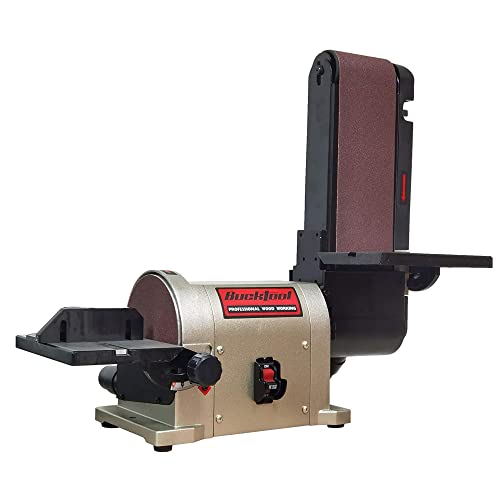
BUCKTOOL Bench Belt Disc Sander 4×36

BUCKTOOL Pro BD4801-M 1HP Belt Disc Sander
Inside Each Recommended Option
The clever part here is the flip trick: two metal C-clamps let you mount this 3-by-21-inch sander upside down to a bench, turning a handheld tool into a makeshift stationary grinder. That matters for knife work because clamping a blade blank and drawing it across a fixed belt gives far more consistent bevels than freehand passes.
A lock-on button keeps the trigger engaged during long flattening sessions, so your hand isn’t cramping halfway through a handle scale. For occasional makers working in shared garages, that flexibility beats buying two machines.
Strong Points
- Converts from handheld to bench-mounted use with the included C-clamps
- Lock-on switch reduces hand fatigue during extended sanding runs
- Dust bag captures debris instead of coating your entire workbench
- Standard 3 x 21-inch belt size means cheap, widely available abrasive replacements
Things To Consider
- Handheld units need regular belt alignment checks; owners commonly report minor drift after heavy sessions
- No variable speed dial listed, so light finishing work takes a careful touch
The Right Fit
Hobbyist makers who profile a few blades per month and want one tool covering both handheld cleanup and bench-top grinding.
Where A Sibling Pick Shines
Anyone wanting speed control for delicate bevel blending should step up to the Metabo HPT SB8V2 instead.
Nine amps is serious muscle for a handheld frame, roughly a third more draw than the Jellas above. That headroom shows up when you’re hogging off thick stock or stripping old finishes from handle material before shaping. The soft-grip housing keeps vibration manageable through long passes.
The speed dial sits at the base of the handle, which sounds like a small thing until you’re mid-bevel and want to slow down without shifting your grip. In our view, that placement is the most ergonomic of any handheld sander on this list.
Key Advantages
- 9-amp, 1,020-watt motor handles aggressive stock removal without bogging
- Variable speed dial within thumb reach lets you match pace to the task
- Soft-grip body dampens vibration over long grinding sessions
- Ships with a sanding belt and dust bag, so it works out of the box
Worth Noting
- More weight than lighter handhelds, which some users find tiring overhead
- Long-term ownership depends on keeping the dust bag emptied; neglect clogs airflow quickly
Feature Snapshot
Who Should Grab It
Intermediate makers doing regular bevel work who want pro-level power in a portable format.
Another Choice May Suit
Folks needing a fixed station for repeatable plunge lines will get more from the BUCKTOOL Pro BD4801-M benchtop unit.
This is the entry point into stationary grinding, and honestly, that’s its whole appeal. A 4 x 36-inch belt paired with a 6-inch disc covers profiling and flat-edge truing in one footprint, something neither handheld pick can do. The belt tilts anywhere from horizontal to vertical, so you can grind bevels standing up or flatten spines lying down.
The trade-off is raw power. At 4.3 amps feeding a 3/4 HP-class motor, it moves wood happily but asks for patience on thicker steel. Beginners learning belt discipline will actually benefit from that gentler pace.
What Earns Its Place
- Tilting belt adjusts across a full range for horizontal or vertical grinding positions
- Two surfaces in one machine stretch a starter budget further
- Adjustable work table supports smaller blanks during disc sanding
Small Caveats
- Lower amperage means slower stock removal on hard materials
- Benchtop combo units like this typically need periodic belt tension adjustments as part of routine upkeep
Best Suited To
First-time makers setting up a compact home shop who want stationary capability without a large spend.
Swap It Out When
Shoppers planning frequent steel grinding should look at the quieter BUCKTOOL 5A bench model below.
Where the Woodskil uses a conventional belt-driven layout, this BUCKTOOL connects the sanding assembly straight to the motor shaft. No drive belt means no tensioning, no belt swaps when one wears out, and less power lost between motor and abrasive. Owners commonly highlight how little maintenance these direct-drive designs demand compared to traditional combos.
The fully enclosed induction motor also runs noticeably quieter, a genuine quality-of-life upgrade in a garage shared with the household. Same 4 x 36-inch belt and 6-inch disc format as the Woodskil, just executed with fewer moving parts.
Practical Pluses
- Direct-drive design removes belt tensioning and drive-belt replacement entirely
- Fully enclosed induction motor delivers quiet, steady output session after session
- Efficiency gains from direct coupling translate into consistent cutting under load
- Same standard belt and disc sizes keep abrasive costs low
Potential Sticking Points
- Fixed-speed operation offers less finesse than variable-speed rivals
- Direct-drive units leave less internal forgiveness; keeping the abrasive surface clean protects the motor over time
Core Details
Made For
Weekend makers who value reliability and low upkeep over adjustable speed settings.
Look Elsewhere When
Metal-focused grinders chasing higher horsepower belong with the BUCKTOOL Pro BD4801-M instead.
This is the only machine here built with blade grinders explicitly in mind. Knife grinding accessories mount onto the belt plate and remove when unused, effectively giving you a budget-friendly platform closer to a dedicated grinder than a generic sander. One horsepower of direct-drive muscle backs it up, comfortably ahead of the 3/4 HP units earlier in the list.
Details show real thought: hook-and-loop disc attachment makes abrasive swaps quick, and an aluminum dust outlet near the belt resists heat buildup during long steel-grinding runs. You may find the larger 8-inch disc especially handy for squaring bolster surfaces flat.
Everyday Advantages
- Removable knife grinding accessories convert the belt plate for blade work
- Hook-and-loop disc paper changes take seconds between grits
- Aluminum belt-side dust outlet stands up to heat from metal grinding
- Doubles capably for woodworking when blade projects pause
Honest Caveats
- Larger benchtop footprint demands more dedicated shop space than the handheld options
- Metal grinding generates sparks; clear nearby combustibles before each session
Quick Facts
Whose Shelf It Belongs On
Dedicated blade makers grinding regularly in a permanent shop space who’ve outgrown entry-level combos.
Not Your Match When
Apartment dwellers or anyone needing portability should stick with the Jellas handheld sander instead.
What Matters Most Before Choosing Knife Making Belt Sanders
Motor Power And Speed Control
Amperage is your best proxy for staying power. A 4-to-5 amp benchtop motor handles wood and light steel prep, while 7 to 9 amps suits sustained stock removal, and 1 HP-class machines hold their nerve through heavy blade grinding. Variable speed earns its keep during finishing, letting you drop the pace for blending bevel lines rather than fighting a single fixed setting.
Handheld Versus Benchtop
Handheld sanders suit makers short on space or those profiling occasional blanks, and models that clamp upside-down to a bench borrow stationary capability cheaply. Benchtop combos deliver repeatability: a fixed platen angle produces consistent bevels pass after pass, which freehand work rarely matches. Serious knife work almost always drifts toward the bench eventually.
Dust And Heat Management
Steel grinding throws sparks and hot particles, so look for metal-rated components near the belt path, such as aluminum outlets that resist melting. Wood dust calls for a bag or port you’ll actually empty; a clogged system strangles suction within a session or two.
Key Considerations Across These Picks
Traps First Timers Fall Into
The classic error is buying on amperage alone and ignoring abrasive availability. Standard sizes like 3 x 21-inch belts and 6-inch discs cost pennies everywhere; odd formats lock you into scarce replacements. Another slip is skipping the accessory question entirely, then discovering your new bench sander has no path to knife-specific attachments.
When Paying More Pays Off
Higher-tier machines buy three things: direct-drive simplicity, enclosed motors that run cooler and quieter, and purpose-built extras like removable grinding plates. Spending up makes sense once you’re grinding weekly. For a handful of projects a year, the budget tier does the job fine.
Frequently Asked Questions
Can a regular belt sander actually grind knife bevels?
Yes, particularly benchtop models with adjustable or removable tool rests. Handheld units work for rough profiling, though consistent bevel angles come much easier from a fixed station.
What grit belt should I start profiling with?
Most makers begin around 36 to 60 grit for shaping and stock removal. Finer belts from 120 upward handle blending and pre-heat-treat cleanup.
Do I need variable speed for knife making?
It’s helpful but not mandatory. Fixed-speed machines cut fast and well; variable control mainly adds finesse during final blending passes.
How often do sanding belts need replacing?
It depends entirely on use intensity and material. Steel dulls abrasives faster than wood, so blade work may consume a coarse belt in a single heavy session.
Is a belt and disc combo useful for knife makers?
The disc excels at flattening scales, bolsters, and spine edges square. Pairing both surfaces in one machine saves bench space and money versus separate tools.
Closing Thoughts
Match the machine to how often you’ll actually grind. The Jellas covers casual makers beautifully, the Metabo HPT brings handheld power worth respecting, and the BUCKTOOL Pro rewards anyone committed to blade work long-term. Start honest about your volume, and the right choice here will outlast plenty of sharper-looking impulse buys.




