


Anyone who has fought a small router table knows the frustration: workpieces teetering at the edge of the fence, bits you can’t raise smoothly, sawdust going everywhere but the port. A proper large router table setup fixes that, and the accessories around it matter just as much as the surface itself. This roundup covers a full lift system, a complete benchtop table, and the jigs and base plates that turn either one into a precision joinery station. Whether you’re building cabinet doors in a garage shop or upgrading from a benchtop starter kit, there’s something here that fits your workflow.
The Picks In Brief

O’SKOOL Router Lift System 4.2″ Motor Fit

POWERTEC Benchtop Router Table w/Metal Stand & Fence Set

POWERTEC Rail Coping Sled for Router Tables

POWERTEC Acrylic Base Plate 6-1/2″ Letter-Marked Holes
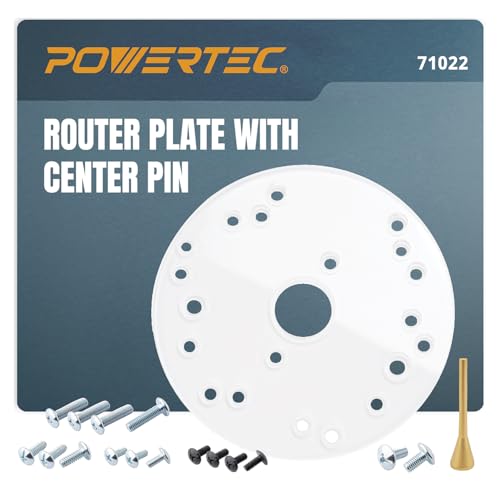
POWERTEC 6-1/2″ Clear Acrylic Router Base Plate (71022)
Inside Each Recommended Option
A router lift lets you raise and lower your bit from above the tabletop instead of reaching underneath mid-cut, and this O’SKOOL unit is built around the popular 4.2-inch motor format used by routers like the Triton TFBR001 and Porter Cable 7518. The aluminum plate measures 11-3/4 by 9-1/4 inches with a 3/8-inch thickness and 3/4-inch corner radius, sizing that matches many commercial router tables.
In practice, that means fewer interruptions during profile work and repeatable depth changes when switching between a rabbet bit and a panel cutter. The trade-off is compatibility: check your motor diameter against the listed models before committing.
Positive Points
- Above-table height control keeps both hands on the workpiece during adjustments
- Fits proven 4.2″ motor platforms such as the Porter Cable 7518 and MLCS 9564
- The generous 11-3/4″ x 9-1/4″ plate spreads weight evenly across large tops
- Aluminum construction resists flex better than thinner phenolic plates
- Corner radius matches many commercial table openings for a clean install
Things To Consider
- Owners commonly report needing careful shimming to get perfectly flush plate seating
- Limited to 4.2″ motors, so smaller routers won’t drop in
Key Specs
Built With In Mind
Intermediate woodworkers running a dedicated large router table who want pro-style depth control without crawling under the bench.
A Better Fit Elsewhere
Shop owners starting fresh should look at the POWERTEC Benchtop Router Table with Metal Stand, which bundles a complete table, fence, and stand in one package.
Where the O’SKOOL lift upgrades an existing station, this POWERTEC package is the whole station. The 24 by 16 inch laminated MDF top gives edge profiles and small panels room to breathe, while the included aluminum insert plate accepts common routers without custom machining.
The deluxe 24-inch fence ships with an adjustable bit guard, featherboard, and fence stop, so material control is handled from day one rather than pieced together later. A 2-1/2 inch dust port connects to most shop vacuums, which matters more than people expect in a garage where fine MDF dust lingers. The steel stand uses vibration-dampening rubber feet, a detail that keeps chatter down during aggressive passes. For most home shops, this is the fastest route from box to first cut.
The Practical Payoff
- Everything arrives together: top, stand, fence, guard, featherboard, and stop
- The 24″ x 16″ surface supports longer stock than typical benchtop units
- Rubber-footed steel stand steadies the machine on uneven garage floors
- 2-1/2″ dust port hooks straight into standard vacuum hose
Small Caveats
- MDF tops can swell along exposed edges in humid basements, so sealing cutouts is wise maintenance
- No lift mechanism included, meaning bit changes happen below the table
- At benchtop scale, very long moldings may need outfeed support you supply yourself
Quick Facts
Who Will Love This
Beginners and apartment-scale woodworkers who want one purchase that covers the entire routing station without sourcing parts separately.
Swap It Out When
Woodworkers already owning a quality table will get more value from the O’SKOOL Router Lift System, since adding above-table adjustment beats replacing a good top.
Coping rail ends for frame-and-panel doors is one of those cuts where hand pressure alone invites trouble. A coping sled holds the narrow rail vertical and square against the fence while a sacrificial block backs up the cut, which is how end-grain blowout gets prevented before it starts.
This POWERTEC sled uses clear acrylic guides so the bit stays visible throughout the pass, and its adjustable clamps grip rails of varying widths without re-jigging between pieces. Anyone producing a run of shaker doors or drawer fronts will notice the consistency immediately: matched cope profiles across every joint. It pairs naturally with the benchtop POWERTEC table above, though it works on any flat-top setup with a standard fence. The honest caveat is that sleds demand a square fence and a sharp bit; neither the jig nor anything else rescues a dull cutter.
The Value In It
- Sacrificial block stops end-grain tearout on delicate rail ends
- Clear acrylic guides keep the cutting line visible for safer passes
- Adjustable clamps handle different rail widths without extra setup
- Delivers repeatable joints across a full run of cabinet doors
Points To Note
- Acrylic surfaces scratch over time, so periodic cleaning keeps visibility clear
- Results depend on a true fence; a misaligned table will telegraph into every cope
The Right Fit
Cabinet and furniture makers cutting repeated cope-and-stick joints who value safety and uniformity over improvisation.
Reach For A Different Pick When
General template and trim work calls for the POWERTEC 71022 Acrylic Base Plate instead, since a sled solves joinery while a sub-base broadens everyday routing.
A sub-base is the removable plate under your router, and swapping the factory version for an oversized clear one does two things: it adds bearing surface around template work and lets you see the bit line. What separates this 71369 model from the older 71022 design below is the letter-marked predrilled hole pattern, which lines up with specific Bosch, DeWalt, Ryobi, Porter Cable, and Makita models per the printed chart.
That labeling removes the guesswork that usually comes with matching screw holes, and the included centering pin trues the plate to the collet so the oversized ring runs concentric. The 5/16-inch acrylic thickness adds stiffness without much added height. You may find the fit chart worth checking twice, since hole patterns vary even within one brand’s lineup.
Why It Works Well
- Letter-marked holes map directly to listed router models, cutting install time
- Clear acrylic shows the workpiece and bit alignment during guided cuts
- Centering pin ensures the larger plate spins true to the collet
- Screws are included, so no hardware scavenging required
Worth Bearing In Mind
- Compatibility depends on the printed chart; unlisted models need drilling you’d have to do yourself
- Thicker acrylic slightly raises the base, worth noting on shallow-depth cuts
Whose Shelf It Belongs On
Diyers doing template lettering, hinge mortising, and pattern work with a listed Bosch or DeWalt router who want a faster, more accurate mount than the stock plate.
Consider Something Else When
Owners of older or unlisted routers often find the classic POWERTEC 71022 plate a simpler match, since its broader hole layout suits a wider range of machines.
This is the long-running original that the letter-marked 71369 above refined, and it remains the easier recommendation for mixed toolboxes. Its predrilled hole layout accommodates a wide assortment of standard routers from Bosch, DeWalt, Milwaukee, Makita, Porter Cable, and Craftsman, which helps households whose router collection grew one clearance-aisle purchase at a time.
The 6-1/2 inch clear acrylic footprint supports template routing, trimming, grooving, inlaying, edge shaping, and flattening, and the larger ring rides steadily along curved templates where a stock base would tip. A centering pin and mounting screws come in the package, so installation is a ten-minute job. Compared with the newer model, you give up labeled hole mapping and gain broader flexibility, a reasonable exchange for general-purpose users.
A Few Highlights
- Hole pattern fits many standard routers across six major brands
- Clear acrylic aids visibility on inlay and template-following work
- Centering pin and screws included for straightforward setup
Potential Sticking Points
- Unlabeled holes mean some trial-and-error alignment for less common routers
- Acrylic can craze if over-tightened, so snug rather than force the screws
Right Fit For
New router owners and multi-brand households wanting one affordable sub-base upgrade that covers trimming, grooving, and template work alike.
Another Choice May Suit
Users with a specifically listed DeWalt or Makita model get the cleaner install from the POWERTEC letter-marked 71369 plate covered earlier in this list.
Factors That Matter Before You Commit
Match The Platform First
Compatibility decides everything here. A lift built for 4.2-inch motors won’t accept a compact trim router, and a base plate drilled for one brand rarely aligns with another. Measure your motor diameter and compare it against the manufacturer’s listed models before anything else.
Surface Size And Stability
The working area determines what stock you can handle comfortably. A 24 by 16 inch top like the POWERTEC’s handles door rails and modest panels, while larger commercial tops suit full cabinet faces. Laminated MDF stays flat but needs sealed edges in humid spaces; cast or machined plates cost more and hold tolerance longer.
Accessories Beat Raw Size
A big top with a flimsy fence produces sloppy work. Prioritize setups including a rigid fence, featherboard, bit guard, and a real dust port. These four items separate productive stations from frustrating ones, and buying them bundled usually costs less than assembling them piece by piece later.
Key Considerations Across These Picks
Where Shoppers Go Wrong
The most frequent mistake is ordering a lift or plate without verifying motor diameter or hole spacing, then discovering the mismatch after opening the box. Another common slip is prioritizing table size over fence quality; a small table with a solid fence outperforms the reverse nearly every time. Read the compatibility charts closely and measure twice.
The Case For Spending Up
Higher-tier gear earns its price through rigidity and repeatability. An aluminum lift plate holds flat under load where thin phenolic flexes, and a machined fence stays parallel through years of adjustment cycles. For occasional hobby cuts, budget options serve fine. Once joinery accuracy matters, the stiffer components pay for themselves in saved stock.
Frequently Asked Questions
What counts as a large router table?
Generally, any top offering roughly 24 by 16 inches of working surface or more, giving adequate support for longer boards and panel work. Smaller benchtop units exist, but they limit stock length and stability.
Do I need a router lift for a large table?
Not strictly, but lifts let you adjust bit height from above the table, which saves time and keeps hands away from the cutter. Serious production work benefits most.
Can I mount any router into these tables?
It depends on motor size and plate compatibility. The O’SKOOL lift requires a 4.2-inch motor, while insert plates typically accept mid-size routers with matching hole patterns. Always confirm against the published fit lists.
Why use a coping sled instead of freehand?
Freehand coping leaves narrow rails unsupported, inviting kickback and blowout. A sled clamps the work square, backs the cut with a sacrificial block, and produces identical joints across a batch.
How do I maintain an acrylic base plate?
Keep it clean with mild soap and water, avoid solvent-based cleaners that can cloud the material, and tighten mounting screws snugly rather than forcefully. Store it flat to prevent warping.
Closing Thoughts
Large router tables reward planning more than impulse. Start by confirming your router fits whatever platform catches your eye, then weigh surface size against the quality of the fence and dust handling. The five options above cover the full arc, from a complete benchtop station down to the small plates and jigs that sharpen accuracy on equipment you already own. Choose based on the joinery you actually build, and each of these picks will earn its place on the bench.




