A check engine light never picks a convenient moment. It shows up the morning of a road trip or right after you’ve paid for new tires, and a trip to a shop for a code read costs time and money every single time. That’s the problem a good OBD2 scanner solves: plug it into the port under your dash, pull the fault codes yourself, and decide whether it’s a loose gas cap or something that genuinely needs a mechanic.
This roundup covers five options across the range, from a pocket-sized code reader to bidirectional tools that can command vehicle components directly. Weekend wrenchers will find plenty here, and so will home mechanics who handle their own oil changes, brake work, and battery swaps. Each pick below is matched to a specific kind of owner, because a scanner that’s overkill for one garage is underpowered for another.
A Closer Look At The Lineup

LAUNCH CR319 OBD2 Code Reader

LAUNCH CRP129I V3.0 Elite Scanner
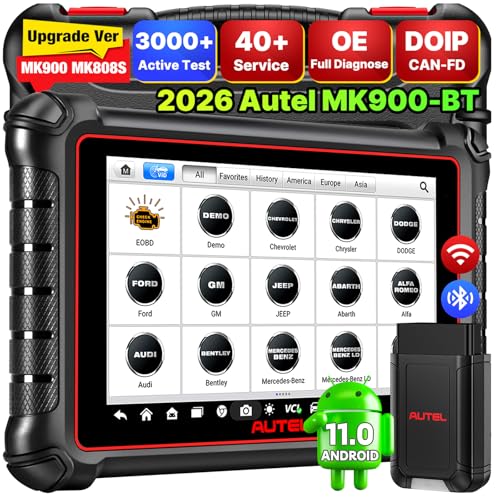
Autel MaxiCOM MK900BT Bidirectional Scanner

TOPDON AD800BT V2.0 Scanner

LAUNCH CRP123 V2.0 Scanner
Why These Options Stand Out
The CR319 is the tool you reach for before anything else in this list matters. It plugs into any OBD2-protocol car (that’s every US-sold gasoline vehicle since 1996) and handles the full set of ten OBDII test modes, which means it can read codes, clear them, and pull freeze frame data showing what conditions were present when a fault triggered.
For someone who just wants to know why the check engine light came on before deciding whether to drive on, that’s the whole job done. Emission-related monitors like oxygen sensors and the EVAP system are visible too, which helps ahead of state inspections.
Real-World Strengths
- Covers all ten OBDII modes, so nothing basic gets skipped when diagnosing an engine light.
- Freeze frame data lets you see driving conditions at the moment a fault appeared, which makes patterns easier to spot.
- Reads and clears codes and turns off the malfunction indicator lamp without a shop visit.
- Emission monitor checks help you confirm readiness before an inspection appointment.
Things To Consider
- Engine coverage only; ABS, airbag, and transmission faults stay hidden, so deeper issues still need a fuller tool.
- No reset services, meaning routine jobs like oil light resets happen elsewhere.
Who It Suits Best
First-time owners and commuters who want fast answers about a check engine light without learning a complex interface.
A Better Fit Elsewhere
Home mechanics who also service brakes or batteries will get far more from the LAUNCH CRP129I V3.0 Elite below.
Where the CR319 stops at the engine bay, the CRP129I V3.0 Elite keeps going. This upgraded version of LAUNCH’s CRP123 line carries twelve reset services, spanning TPMS relearn, oil resets, brake work, battery registration, SAS calibration, throttle adaptation, DPF regeneration, injector coding, ABS bleeding, A/F setting, AFS reset, and AdBlue reset.
In practice, that list covers most recurring maintenance tasks a home mechanic faces across a multi-car household. You may find yourself using only four or five of those functions regularly, but having the rest on hand saves a dealer visit when a less common job pops up.
Features That Help
- Twelve reset services mean oil changes, battery swaps, and steering angle calibration all stay in-house.
- Adds ABS bleeding and injector coding that many mid-range tools leave out.
- Positioned above the CRP123 series, so the function set is broader than its sibling’s three resets.
- Saves real money over time by handling dealer-level maintenance procedures at home.
Worth Noting
- The sheer number of reset functions takes some menu navigation to learn, so expect a short learning curve.
- Vehicle coverage for specific resets varies by make and model, so verify your cars are supported first.
Key Specs
Made For
Hands-on owners who perform their own scheduled maintenance and want one tool covering nearly every reset procedure.
Where A Sibling Pick Shines
Shoppers who only need four-system scanning and three core resets should look at the cheaper LAUNCH CRP123 V2.0 instead.
This is where the category stops being a code reader and starts being workshop equipment. The MK900BT offers bidirectional control, meaning it sends commands to vehicle components rather than just listening, and it supports modern network protocols CAN-FD and DoIP that newer vehicles increasingly rely on. More than forty service functions round out the package.
Compared with the TOPDON AD800BT further down, the Autel leans harder into professional-grade coverage and protocol support. One thing worth considering: software updates run for a year out of the box, so ongoing renewal is part of long-term ownership math.
Where It Helps
- Bidirectional control lets you activate components directly, turning guesswork into confirmation during diagnosis.
- CAN-FD and DoIP support future-proofs the tool against newer vehicle architectures.
- Over forty service functions cover the procedures independent shops bill for regularly.
- Wireless operation frees you to move around the vehicle while scanning.
Potential Sticking Points
- Software updates are included for one year; renewals add to ownership cost after that.
- Some advanced features depend on subscription status, so check which functions matter before committing.
- The capability depth is more than a casual owner checking one dashboard light will ever use.
Feature Snapshot
The Right Fit
Advanced DIYers and small-shop operators who diagnose varied vehicles daily and need protocol coverage for newer models.
Swap It Out When
Owners wanting bidirectional control with lifetime updates rather than annual renewal should weigh the TOPDON AD800BT instead.
The AD800BT V2.0 brings active testing down to a friendlier commitment level. Its bidirectional control lets you fire solenoids, trigger actuators, and cycle sensors on demand, so a suspect window motor or fuel pump gets answered with a direct yes or no instead of a hunch. Functions like ACC shut-off, window calibration, A/F reset, and coolant bleed procedures sit alongside standard diagnostics.
The headline difference from the Autel MK900BT is the update policy: TOPDON includes free software updates for the life of the tool, which removes the subscription question entirely. For a garage tool you’ll keep for years, that’s a meaningful distinction, though the trade-off is somewhat narrower coverage than the Autel’s professional-tier package.
Strengths Worth Knowing
- Lifetime free updates keep vehicle coverage current without recurring fees.
- Active testing confirms whether actuators and sensors actually respond, cutting diagnostic time sharply.
- Bluetooth connectivity lets you walk around the car while commands run.
- Calibration and bleed functions handle post-repair steps many scanners skip.
Honest Caveats
- Function availability varies between makes, so confirm coverage for your specific vehicles before relying on it.
- Menu depth takes a few sessions to feel natural for anyone stepping up from a basic reader.
- Owners commonly report needing to double-check connection stability on some older models during long scan sessions.
Who Will Love This
Enthusiasts upgrading from a code reader who want active tests now and zero update fees later.
Consider Something Else When
Shops needing the broadest late-model protocol support will find the Autel MaxiCOM MK900BT better matched.
The CRP123 V2.0 hits a sweet spot the CR319 misses: it scans four systems, not just the engine. Engine, transmission, ABS, and SRS (airbag) modules all report through this unit, which covers the warning lights most drivers actually encounter. Three reset services come along too: oil life reset, throttle adaptation, and SAS reset.
It works straight out of the box with no setup ritual, and LAUNCH backs it with lifetime software updates plus a stated five-year data backup. Next to the pricier CRP129I V3.0 Elite, you give up nine reset functions but keep the core scanning ability most households need, which makes this the rational starting point for a lot of garages.
Standout Benefits
- Four-system scanning reveals ABS and airbag faults a basic reader like the CR319 cannot see.
- Lifetime software updates protect the investment as vehicles evolve.
- Ready to use immediately, with no registration hurdles before the first scan.
- Three everyday resets cover the most frequent maintenance-light situations.
Small Limitations
- No bidirectional control, so component testing stays out of reach.
- Three resets cover basics only; jobs like DPF regeneration require the CRP129I V3.0 Elite.
Quick Facts
Best Suited To
Budget-conscious owners of one or two vehicles who want full-system visibility without paying for professional extras.
Reach For A Different Pick When
Anyone needing twelve reset services or injector coding should step up to the LAUNCH CRP129I V3.0 Elite.
What Matters Most Before Choosing Launch Scan Tools
Match Coverage To Your Vehicles
Every scanner here speaks OBD2, but coverage beyond that varies wildly. Confirm your car’s make, model, and year against each tool’s supported list before committing, especially for reset services and bidirectional functions. Newer vehicles using CAN-FD or DoIP networks only work with tools that explicitly support those protocols.
Decide Where Bidirectional Fits Your Plans
Bidirectional control sounds impressive, and it genuinely is, but it earns its keep only when you diagnose problems actively. Someone replacing a part once a year won’t use it; someone chasing intermittent electrical gremlins monthly will wonder how they managed without it. Buy for the next two years of your garage, not yesterday’s.
Weigh Update Policies Carefully
Software subscriptions are the hidden cost of this category. A tool with lifetime updates may cost more upfront yet end up cheaper than a lower-priced unit with paid annual renewals. Read the update terms before purchase, since they shape the true cost of ownership more than any sticker figure.
Key Considerations Across These Picks
Traps First Timers Fall Into
The most common mistake is buying on function count alone. Twelve reset services mean little if your specific vehicle isn’t supported for half of them. Check compatibility lists first, and skip features tied to protocols your cars don’t use. Another slip: ignoring update terms, then discovering renewal fees a year later.
What Separates Premium From Basic
Higher-tier tools pay for deeper module access, faster processors, wider protocol support, and active testing. The upgrade pays off when you work on multiple vehicles or tackle repairs beyond routine maintenance. For single-car households handling oil changes and occasional fault codes, a well-chosen mid-range unit delivers nearly everything at a fraction of the spend.
Frequently Asked Questions
Will these scanners work on my older car?
Any gasoline vehicle sold in the US since 1996 uses the OBD2 protocol, so all five picks connect. Deeper system coverage beyond the engine depends on the individual model.
What does bidirectional control actually do?
It sends commands to vehicle components, letting you activate solenoids, pumps, or actuators to verify whether they respond. That turns uncertain diagnoses into confirmed ones.
Are the reset services safe to run myself?
These are manufacturer-defined maintenance procedures like oil light resets and throttle relearn. Follow the on-screen prompts exactly, and the risk to your vehicle is minimal.
Do I need to pay yearly for updates?
The TOPDON AD800BT and LAUNCH CRP123 V2.0 include lifetime updates, while the Autel MK900BT includes one year with optional renewal. Factor this into total cost.
Can a scanner fix the problem it finds?
No scanner repairs anything; it identifies fault codes and guides diagnosis. Some issues clear after a repair, and the tool confirms the fix worked.
Closing Remarks
The right choice comes down to honest self-assessment about how deep you go under the hood. Casual owners get genuine value from the LAUNCH CR319 or CRP123 V2.0, dedicated home mechanics should lean toward the CRP129I V3.0 Elite or TOPDON AD800BT, and anyone running a small shop will justify the Autel MK900BT quickly. Whichever fits, owning one of these beats paying for a code read every time a dash light appears.