Compacted soil quietly starves a lawn of water, air, and nutrients long before the grass turns brown. The right aerator fixes that without hiring a crew or renting heavy machinery. Whether you manage an acre behind a tractor or just want to loosen a stubborn backyard patch on foot, this list covers both ends of the job.
A Closer Look At The Lineup
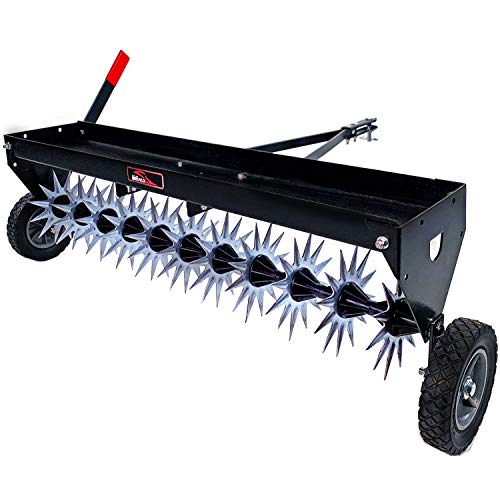
Brinly SAT2-40BH-P Tow Behind Spike Aerator 40″

Opmeiro Fully Assembled Aerator Shoe Pair

MILLUXXi Heavy Duty Aerator Shoes, One Size

Jardineer 36″ Manual Spike Aerator

BARAYSTUS Rotary Cultivator Hand Tiller 29.7-57in
More On The Choices That Made The List
Anyone dragging a push aerator across half an acre knows how fast that chore wears you down. This Brinly attaches to a lawn tractor or ATV and covers a full 40-inch swath per pass, which turns an afternoon of aeration into a couple of relaxed loops around the yard. Transport wheels let you roll it across driveways and paths without tearing up pavement.
The build leans heavily on galvanized steel stars rather than flat tines, and that matters in hard-packed clay where thin spikes tend to bend. Owners commonly report it holds up season after season with little more than a rinse and dry before storage.
Real-World Strengths
- 40-inch working width means fewer passes and less fuel burned per acre.
- Galvanized steel star tines resist rust through wet spring and fall sessions.
- Transport wheels protect paved surfaces between the shed and the lawn.
- Tow-behind design spares your back entirely compared to walk-behind units.
Things To Consider
- You need a tractor or riding mower with a hitch; there is no manual option.
- Storage takes real garage space given the wide frame.
Who It Suits Best
Rural and suburban property owners with large lawns and existing towing equipment get the most from this machine.
Where Another Pick Suits Better
For small yards or renters without a tractor, the Jardineer 36″ Manual Spike Aerator handles targeted work at a fraction of the footprint.
Spike shoes turn a routine mow into an aeration session, and this Opmeiro pair arrives already built, so there is no fumbling with dozens of straps and nuts on day one. The 11.5 by 5 inch base fits women’s sizes 6 through 10 and men’s 6 through 9, adjusted with three hook-and-loop straps that wrap around the heel for a snug hold.
The sole combines aluminum alloy with plastic, a pairing meant to survive repeated stomping in damp soil better than all-plastic designs. For most modest front lawns, a few laps while the sprinkler runs is all the effort involved.
Standout Benefits
- Fully assembled out of the box, unlike many shoe kits that need bolt-by-bolt setup.
- Three adjustable straps keep the pair locked to your foot on uneven ground.
- Metal-reinforced base adds durability where cheaper plastic-only soles crack.
- Aeration happens incidentally during normal yard walks.
Small Caveats
- Coverage depends entirely on your walking pattern, so results are uneven compared to a towed unit.
- Straps collect mud and need rinsing after each wet session.
Key Specs
Made For
Budget-conscious homeowners with small to medium lawns who want zero-machinery maintenance.
A Better Fit Elsewhere
Shoppers wanting a wider one-size fit with reinforced instep support may prefer the MILLUXXi Heavy Duty Aerator Shoes instead.
Loose straps are the most common complaint about aerator shoes, and MILLUXXi attacks that problem directly with reinforced dual straps across the instep. The result is a fit that stays put while you walk, so each step punches cleanly into the turf instead of twisting sideways. Where the Opmeiro pair relies on three heel-and-instep straps, this design doubles up on the top of the foot for stability.
It ships pre-assembled and claims one-size-fits-all flexibility, which makes sharing between family members painless. The maker also suggests watering your lawn first, a tip worth following since moist soil accepts spikes far more readily than baked-hard ground.
What Pays Off
- Dual instep straps deliver a non-wobble fit during longer walking sessions.
- Pre-assembled construction means usable within minutes of unboxing.
- Heavy-duty build targets durability through repeated seasons of use.
- One-size design suits households with several different foot sizes.
Points To Keep In Mind
- Walking-based aeration demands more time than mechanical options on larger lots.
- Spike depth varies with your body weight and soil moisture.
The Right Fit
Weekend gardeners who enjoy low-effort, walk-as-you-go lawn care and value a secure strap system will feel at home here.
Swap It Out When
Anyone needing deeper, consistent penetration across a big yard should look at the Brinly SAT2-40BH-P tow-behind unit instead.
Spot-treating compacted patches near patios, fence lines, and garden beds calls for precision, and that is exactly what this Jardineer offers. Twelve heat-treated steel spikes work together on every press, reaching roughly 2.75 inches total length to break into clay, sand, and loam alike. Unlike the shoe-style picks earlier in this list, it gives you control over exactly where each hole lands.
The 36-inch shaft keeps most users upright while working, sparing the lower back during longer sessions. It comes pre-assembled too, so the first use involves no wrench time at all.
The Upside
- Heat-treated steel spikes hold their shape in dense, compacted ground.
- Precise placement lets you treat trouble spots without disturbing healthy turf.
- Long handle reduces bending and back strain.
- Arrives ready to use straight from the box.
- Works well for pre-seeding preparation in small areas.
Honest Caveats
- Manual pressing over a whole lawn is slow going; owners commonly report fatigue beyond a quarter acre.
- Spikes benefit from cleaning after clay-heavy soil sticks to them.
Quick Facts
Who Should Grab It
Homeowners with small yards, garden beds, or specific compacted patches who want surgical accuracy will appreciate this tool.
Another Choice May Suit
For loosening entire vegetable beds rather than punching holes in turf, the BARAYSTUS rotary cultivator does the broader job better.
This BARAYSTUS earns its place by doing double duty: its star-shaped rolling head crushes and loosens soil like an aerator, then keeps working as a cultivator for beds and borders. Four aluminum wheels sit on the rotary head, letting it roll smoothly forward while breaking up crusty topsoil, a motion far gentler on your arms than repeated jabbing.
The telescoping handle adjusts anywhere from about 29.7 to 57 inches, so tall users can stand fully upright and shorter gardeners still get comfortable leverage. Stainless construction throughout suggests it will shrug off wet-soil seasons without complaint, though rinsing the wheels after muddy days remains smart practice.
Everyday Wins
- Adjustable handle spans nearly 30 to 57 inches to match any user height.
- Rolling action requires less force per square foot than spike pressing.
- Star-shaped head handles both aeration and bed cultivation tasks.
- Aluminum wheels keep weight manageable during long sessions.
Worth Noting
- It disturbs soil more broadly than a dedicated spike aerator, so avoid it over established shallow roots.
- Wheel tines can clog with wet clay and need periodic clearing.
At A Glance
Right Fit For
Gardeners juggling lawn care and vegetable beds who want one tool covering both jobs will find this a capable companion.
Not Your Match When
Those focused purely on deep turf aeration with minimal soil disturbance are better served by the Jardineer 36″ Manual Spike Aerator.
Factors To Consider When Choosing Lawn Aerator Tools
Match The Tool To Your Yard Size
A quarter-acre lot rarely justifies towed equipment, while anything approaching an acre becomes punishing with shoes or a hand tool. Measure honestly before committing. The Brinly rewards tractor owners; everyone else should lean toward the manual and wearable options here.
Soil Type Drives Everything
Clay compacts hard and demands heat-treated or galvanized steel tines that resist bending. Sandy soils forgive almost any design. Watering a day before aeration softens the ground and improves penetration regardless of which tool you own, a habit experienced gardeners rarely skip.
Coverage Style And Effort
Spike shoes aerate passively while you walk but leave hole patterns to chance. Push and hand tools give deliberate placement at the cost of physical effort. Decide whether you want convenience or control, because few tools deliver both.
Build Quality Over Gadgetry
Look for metal reinforcement at stress points, adjustable straps with solid fasteners, and pre-assembled designs that save setup frustration. These attributes predict longevity far better than feature counts do.
Key Considerations Across These Picks
Wrong Turns To Avoid
The classic mistake is buying a tow-behind unit without a compatible hitch, or choosing shoes sized wrong for household feet. Skipping the pre-watering step is another common slip; dry soil defeats even quality spikes. Read fit ranges carefully before ordering.
What Separates Premium From Basic
Higher-tier tools spend their extra cost on materials: galvanized steel that resists rust, alloy bases that outlast plastic, and reinforced straps that hold tension. That translates directly into seasons of reliable use rather than a single summer, which matters for anyone maintaining a lawn year after year.
Frequently Asked Questions
How often should a lawn be aerated?
Most lawns benefit from aeration once a year, typically during the growing season for your grass type. Heavily used or clay-heavy yards may need it twice annually.
Do aerator shoes actually work?
They create useful holes when soil is moist and walking is thorough, though coverage is less uniform than mechanical tools. They suit small lawns and light compaction best.
Should I water before aerating?
Yes, watering a day ahead softens soil so spikes penetrate deeply instead of skimming the surface. Avoid soggy conditions, which cause mud buildup on tines.
Can I aerate and overseed at the same time?
Absolutely, since fresh holes give seed direct soil contact and improve germination. Spread seed immediately after aerating for the strongest results.
What is the difference between spike and core aeration?
Spike tools punch holes into the soil, while core aerators remove small plugs of earth. Core methods relieve compaction more thoroughly, but spike tools are simpler and more affordable for home use.
Closing Thoughts
Compacted grass rarely announces itself until growth stalls, so acting early pays dividends all season. Pick the Brinly for serious acreage, the Jardineer for precise patchwork, the shoes for effortless upkeep, and the BARAYSTUS when beds and lawn share your attention. Whichever route you take, water first, work steadily, and your roots will thank you come summer.