


Hanging a mirror into drywall, then watching it tilt, says everything about why a good level stud finder earns its place in the toolbox. The right tool reads wood, metal, or live wire behind the surface, then tells you exactly where to drill. With shelves, gallery walls, and TV mounts on most weekend project lists, having a tool that finds solid framing fast matters more than people think.
The picks below cover magnetic, electronic, and hybrid designs, from battery-free pocket units to multi-mode wall scanners with laser lines. Each one targets a slightly different workflow, so the right match depends on the wall you’re standing in front of and how much feedback you want in your hand.
The Shortlist At A Glance

Zircon StudSensor A100 Stud Finder

OFIRCREATION Stud Finder with Laser Level

Klein Tools MSF100 Magnetic Stud Finder

Klein Tools MSF1002 Magnetic Stud Finder 2-Pack

Franklin Sensors ProSensor MAX 13-Sensor Stud Finder

CH Hanson Battery-Free Magnetic Stud Finder

StudPoP Dual Moving Magnet Stud Finder
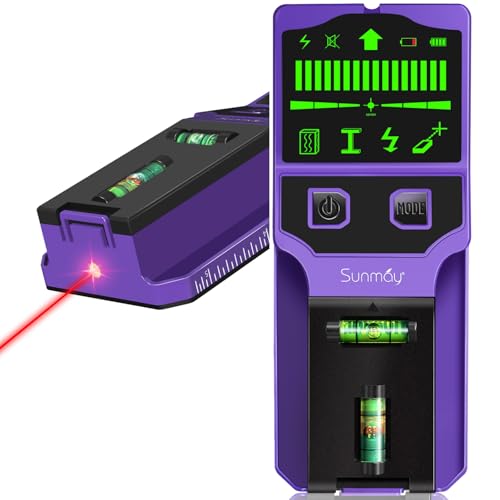
SUNMAY 7-in-1 Stud Finder with Laser Level

MOCITA 5-in-1 Stud Finder Wall Scanner
A Breakdown Of The Leading Choices
The Zircon StudSensor A100 is the kind of wall scanner most people picture when they imagine the category. An edge-finding electronic unit (meaning it detects where the side of a stud begins rather than its center) designed for standard interior drywall, it runs a quick calibration pass before each scan, then lights up as it crosses framing.
It also flags the presence of unshielded AC wiring, which matters the moment you start drilling over a switch box. For a single-person household hanging a curtain rod or floating shelf, the readout is about as simple as electronic scanning gets.
A Favorable Mix
- Live wire detection adds a safety layer when you cannot see what’s behind the drywall
- Edge-finding logic works well for locating each side of a standard wood stud
- One-button operation keeps the learning curve short for first-time owners
- Compact shell fits inside a kitchen drawer or apron pocket between projects
Points To Keep In Mind
- Calibration before every scan is a small habit owners commonly need to remember
- Performance drops on plaster, tile, or thicker double-layer walls, where the next two electronic picks handle things better
Feature Snapshot
Made For
DIYers hanging shelves, mirrors, or curtain rods on standard residential drywall will find this a clean, friendly starting point.
Look Elsewhere When
Folks working on thick plaster or older homes should reach for the StudPoP dual moving magnet stud finder, since its visible-magnet design reads through surfaces the A100 tends to misread.
This OFIRCREATION unit takes a different angle, packaging a stud finder, a laser line, and a small level ruler into one pocketable tool. It runs on a Class IIIA laser (a low-power visible-light laser rated for general consumer use), so for picture-hanging and tile alignment it pulls double duty that single-purpose magnetic finders cannot match.
It’s the gadget for the apartment renter who wants a single drawer tool for hanging frames, leveling a small shelf, and marking a straight cut on a board without hauling out a full laser kit.
What Stands Out
- Three functions in one tool cuts clutter in a small toolbox or kitchen junk drawer
- Horizontal and vertical bubble vials support quick leveling without a separate tool
- Compact form fits inside a handbag or utility pouch for storage and transport
- Handy for gallery walls where you mark several hanging points along one line
Trade Offs
- Stud detection is a secondary function, so accuracy on hidden framing is less confident than dedicated scanners like the Zircon StudSensor A100
- Laser batteries and alignment need occasional checks, a common ownership habit with combo tools
Who It Suits Best
Casual decorators and renters who hang frames more often than they mount heavy objects will appreciate the all-in-one convenience.
Skip It When
Anyone doing serious anchoring work on heavy shelves or TVs should turn to the SUNMAY 7-in-1 stud finder, which has dedicated multi-mode scanning for deeper detection.
Klein Tools shrinks the magnetic stud finder down to something you forget is in your pocket. The MSF100 uses a rare-earth magnet (a magnet made from alloys that produce a much stronger pull than standard ferrite magnets) to find the screws or nails holding drywall to the studs. No batteries, no calibration, no sound to interpret. Slide it across the wall until it grabs, and you know.
It tucks a bubble vial into the body too, so you can mark and level a small mounting point in the same pass. The trade-off is that you feel for the stud rather than read it on a screen, which is something to think about in noisier work environments.
The Helpful Details
- No batteries or charging means it works the first time you pick it up, even from a long stay in a drawer
- Felt-pad backing protects finished drywall from scuffs during scanning
- Center notch and bottom opening make pencil marking precise and quick
- Pocket-sized body earns a spot on a tool belt or apron without bulk
Honest Caveats
- Detects only the metal fasteners, so on older homes with no nails near the surface, the next two picks offer a more visible response
- No audible or visual signal means you rely on feel, which can take a few attempts to learn
Best Suited To
Anyone who wants a grab-and-go tool for quick household tasks like towel bars, hooks, and small shelving will find this hits the mark.
Swap It Out When
You regularly work on plaster or lath where fasteners are sparse, in which case the StudPoP dual moving magnet stud finder reads through those walls more reliably.
Same Klein Tools design as the single unit, sold as a matched pair. The MSF1002 bundle makes sense for two-person crews, shop setups, or homeowners who want one upstairs and one downstairs so they’re never hunting around the house for the tool. Place one on the wall as a reference while you mark with the other, and the workflow speeds up noticeably.
For solo owners, the second unit mostly serves as a backup. The trade-off there is paying for redundancy you may not touch for a while.
Real Benefits
- Two units let you bracket a stud between magnets for visible confirmation during longer projects
- Keeps one in the workshop and one in a hallway closet for quick access
- Same felt-pad protection and bubble vial as the single MSF100, so the build carries over
- Rare-earth magnet strength holds up across multiple sessions of repeated scanning
Some Limits To Know
- Two magnetic finders won’t reveal wiring, so for live-wire safety consider pairing with the MOCITA 5-in-1 wall scanner
- Single-person households may find the second unit goes unused for stretches
Feature Snapshot
Right Fit For
Two-person crews, shared-shop users, or homeowners running through a list of mounting jobs across multiple rooms benefit from the dual setup.
Consider Something Else When
You mostly work alone in standard drywall and want live-wire detection, in which case the Zircon StudSensor A100 covers a single person more efficiently.
The Franklin ProSensor MAX works on a different principle than the edge-finding scanners earlier in this list. Thirteen sensors span the body, so the device reads the whole wall at once and lights up across the entire width of each stud it finds. Detection reaches 2.5 inches deep, which is where it pulls ahead of standard units on thicker surfaces.
No calibration step, no sliding back and forth. You press it against the wall and the LEDs (small indicator lights) show the pattern in real time. For tile, double drywall, or ceilings, the wider sensor array tends to outperform single-sensor electronic finders.
Practical Pluses
- Multi-sensor readout reveals both edges of multiple studs at once, removing the guesswork in finding centers
- 2.5-inch depth reaches through double drywall, tile, and other dense surfaces where shallow units fail
- No calibration simplifies the workflow for owners who dislike the setup step on edge finders
Worth Bearing In Mind
- No live-wire detection, so the MOCITA 5-in-1 wall scanner is the better pick for environments with confirmed AC runs
- Larger body is less pocketable than the magnetic picks earlier in the list
- Higher cost than single-sensor units, a common trade-off for the depth and accuracy
Key Specs
Perfect Match For
Remodelers working over thick tile, plaster, or doubled-up drywall will see the difference the depth and sensor count make on tough surfaces.
A Better Fit Elsewhere
For light everyday hanging on standard drywall where you mostly want AC wire awareness, the Zircon StudSensor A100 is a more approachable choice.
The CH Hanson model strips stud finding back to its essentials. Rare-earth magnets lock onto the nails or screws holding the drywall, with no power source required. The body also includes a built-in level for marking mounting points straight, which is a useful touch for shelf and TV bracket work where the level reference matters as much as the stud location.
It’s the tool you leave in a drawer and pull out twice a year, then trust to work without checking a battery compartment. For the household that mounts a TV every few months and forgets about tools in between, the simplicity is the appeal.
Reasons It Performs
- Zero batteries and zero calibration make it the most ready-to-use pick in this lineup
- Rare-earth magnets pull firmly on the fasteners behind standard drywall
- Built-in level supports straight mounting without grabbing a separate bubble tool
- Lightweight plastic body keeps the tool easy to slide across long wall runs
Practical Considerations
- No wire detection, so for projects near outlets, the MOCITA 5-in-1 wall scanner offers the AC alert this tool lacks
- Performance depends on finding metal fasteners, which on some walls may sit deeper than the magnet easily reads
Who Should Grab It
Rare-use homeowners mounting the occasional shelf or wall décor will appreciate the always-ready, battery-free design.
Reach For A Different Pick When
You scan for studs in many different rooms every week, since the SUNMAY 7-in-1 stud finder handles frequent multi-mode work more efficiently.
The StudPoP solves a real problem that trips up most magnetic stud finders: how do you know the magnet has actually grabbed something? Two 1-inch magnets sit in a channel and physically move toward the fastener when they detect it. You see the motion, you know you found the stud, no guessing at subtle pull strength.
The integrated 9-inch level runs across the body, so you can mark a level line while locating the stud at the same time. For older homes with plaster, lath, or metal framing where standard magnetic tools struggle, the visible magnet response reads more reliably than a single-magnet design.
The Upside
- Visible moving magnets give a clear signal, which removes the subtle-pull guessing game of single-magnet finders
- Reads through plaster, lath, metal studs, and double drywall where many magnetic finders fall short
- Integrated 9-inch level speeds up shelf and TV bracket work in one motion
- Mechanical design means no electronics to wear out or batteries to replace over time
A Few Limitations
- Longer body is less convenient to pocket than the smaller Klein Tools units earlier in this list
- No AC wire detection, so the MOCITA 5-in-1 wall scanner suits walls with confirmed electrical runs better
At A Glance
Whose Shelf It Belongs On
Owners of pre-war homes with plaster, lath, or unusual framing will find this magnetic approach more reliable than edge finders on those surfaces.
Not Your Match When
You mainly hang items on modern drywall and want live-wire alerts, in which case the Zircon StudSensor A100 fits the standard interior workflow better.
The SUNMAY 7-in-1 stacks several scanning modes plus a cross-line laser into one body. Wood and metal stud detection, deep scan, AC wire warning, and a level function all live in the same shell, so the tool serves both the project and the alignment work that follows. The cross-line laser is the most useful added feature for cabinet and tile layout, where a reference line on the wall speeds up mounting.
For frequent users running many different jobs in a single weekend, the mode count means less swapping between tools. The trade-off is a heavier, more complex unit than the single-purpose picks earlier in the list.
Why It Works Well
- Multi-mode scanning handles wood, metal, and deep targets from a single device
- Cross-line laser supports cabinet, tile, and shelf layout without grabbing a separate laser
- AC wire alert reduces risk when drilling near outlets and switch boxes
- Bubble vials built into the body add a second leveling reference on flat surfaces
Trade-Offs To Consider
- More buttons and modes mean a steeper learning curve than the simpler magnetic picks
- Battery life depends on mode use, an ownership consideration for those who leave the tool in a drawer between jobs
Built With In Mind
Active DIYers running frequent, varied projects from cabinet installs to TV mounts will get the most from the multi-mode design.
Where A Sibling Pick Shines
For ultra-simple hanging where you want zero setup, the CH Hanson battery-free magnetic stud finder is the cleaner low-fuss option.
The MOCITA 5-in-1 rounds out this list with five scan modes covering wood, metal, AC wiring, and deeper targets, all on an electronic scanner with a micro-sensor chip at its core. Live wire detection is the standout for projects around outlets, switch boxes, and ceiling fixtures, where drilling into an energized line is a real concern.
For homeowners who do most of their own mounting and want one tool that flags the things they cannot see behind the wall, the multi-mode approach covers the bases without overspending on deeper scanners. Depending on your wall type, performance on plaster or tile may still lag behind dedicated magnetic tools.
What Works In Its Favor
- Five scan modes cover wood, metal, deep targets, and AC wiring from a single unit
- Live wire detection adds an important safety layer near outlets and switches
- Micro-sensor chip supports edge and center locating across common wall types
- Mid-range price point makes it accessible for casual owners without dropping into pro territory
Points To Note
- Calibration is required before each scan, a habit owners commonly need to build around the tool
- On very thick or unusual walls, the Franklin Sensors ProSensor MAX reaches deeper with more sensors
Feature Snapshot
Perfect Match For
DIYers who mount TVs, shelves, and cabinets near electrical runs will appreciate the AC wire warning most.
Not Your Match When
You regularly scan very thick or unusual walls, in which case the Franklin Sensors ProSensor MAX offers more depth and sensor coverage for tougher surfaces.
What To Weigh Before Choosing Your Next Stud Finder
Wall Type Drives The Tool Choice
The wall you stand in front of shapes which scanner makes sense. Standard half-inch drywall welcomes nearly every pick on this list, but plaster, lath, tile, or doubled-up drywall narrow the field fast. Magnetic finders like the StudPoP read well through plaster, while electronic units with deeper sensors like the Franklin ProSensor MAX handle tile and double drywall. Match the tool to the surface, and you avoid most of the frustration that gives stud finders a bad name.
Magnetic Versus Electronic Comes Down To Feedback Style
Magnetic stud finders use a simple, mechanical approach. No batteries, no calibration, just a magnet pulling on a hidden fastener. They cost less and last longer, but they only find the metal. Electronic scanners read wood density changes and add live-wire detection, which matters for projects near electrical runs. For a household that hangs the occasional frame, a magnetic unit may be all you need. For a remodeler drilling into walls every week, the electronic depth and mode count earn their keep.
Detection Depth And Sensor Count Matter On Tough Surfaces
On standard drywall, an inch or so of detection depth covers the job. On tile, lath, or double drywall, you want at least 1.5 inches of depth and ideally multiple sensors reading the wall at once. That wider coverage reduces the false readings that show up when a single-sensor scanner hits a gap, a pipe, or an unusual framing pattern. Spending more on sensor count pays off most on the surfaces that already slow a project down.
Calibrate, Then Scan, Then Mark
A good habit stretches across every electronic unit on this list. Calibrate on a clear section of wall, scan in one direction, mark both edges, then measure to the center. Magnetic tools skip the calibration step, but the same patience applies: slow, steady passes find the fastener more reliably than a quick sweep. Owners who build a quick routine tend to trust their readings more, which speeds up every project that follows.
Key Considerations Across These Picks
Common Buying Slip Ups
The most common error is choosing a single-sensor electronic scanner for thick or unusual walls, then blaming the tool when readings drift. Pick a tool rated for the surface you actually have, not the easiest wall in the house. Another slip is skipping the calibration step on edge-finding units, which throws off accuracy on the very first pass. Slow down for one second before each scan, and the results hold up across the whole project.
What The Higher Tier Buys
Stepping up to a deeper-scanning, multi-sensor electronic unit costs more, but the upgrade buys you depth on tough surfaces, wider wall coverage per pass, and AC wire alerts that cheaper tools leave out. For a once-a-year shelf hanger, a basic magnetic finder handles the work. For homeowners running frequent projects near electrical runs or on tricky walls, the extra spend converts into faster reads and fewer mis-drilled holes, which adds up across a year of weekend projects.
Frequently Asked Questions
What Is A Level Stud Finder?
A level stud finder combines the standard stud-locating function with a built-in bubble or laser level, so you can find a stud and mark a level line in the same pass. It saves a step on shelf, cabinet, and TV mount work where plumb and level need to align.
How Deep Can A Stud Finder Read?
Most consumer stud finders read about 0.75 to 1.5 inches deep, which covers standard half-inch drywall. Deeper-scan models like the Franklin ProSensor MAX reach 2.5 inches, enough to read through double drywall, tile, and other dense finishes.
Do Magnetic Stud Finders Work On Plaster Walls?
Magnetic stud finders can work on plaster if the drywall or lath behind it is fastened with screws or nails, but performance drops on very old lath with irregular fastener placement. Tools like the StudPoP, with visible moving magnets, read more reliably on those walls than single-magnet designs.
Are Electronic Stud Finders Better Than Magnetic Ones?
Electronic stud finders offer more features, including live wire detection, deeper scanning, and center-finding logic, but they need batteries and calibration. Magnetic finders are simpler, last longer, and cost less. The right choice depends on the wall type, the project, and how often you scan.
Can A Stud Finder Detect Live Wires?
Some electronic stud finders include a live wire detection mode that flags the presence of unshielded AC wiring behind the wall. Magnetic stud finders cannot detect wires. For projects near outlets, switches, or ceiling fixtures, a scanner with AC detection is the safer pick.
Wrap Up
The right stud finder depends on your walls, your project list, and how much feedback you want in your hand. Magnetic tools earn their place on simple drywall, electronic scanners carry the day near electrical runs, and hybrid units with laser lines speed up cabinet and tile work. Pick the one that matches the surface you actually have, and the rest of the project goes smoother from the first drill bit forward.




