


A crooked shelf or a gap-toothed miter joint usually traces back to one thing: a layout step done with the wrong tool. Whether you’re squaring a cabinet carcass, hanging a long run of shelving, or setting a table saw blade to a precise angle, the tool in your hand decides how much sanding and shimming comes later. This roundup covers five measuring and leveling tools that handle different corners of that problem. Some are classics every bench should have; others solve niche headaches like tight storage or compound angles. Match the tool to your projects and your work gets quieter, faster, and noticeably cleaner.
A Quick View Of The Lineup

IRWIN Combination Square 12-Inch Stainless Steel

IRWIN Magnetic Toolbox Level 12-Inch Blue
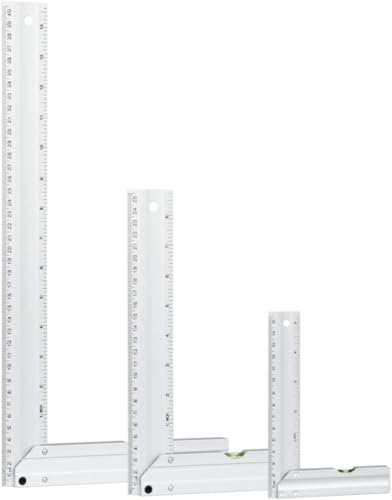
POWERTEC L Square 3pc Set (80005)

Saker Foldable Level 28-Inch
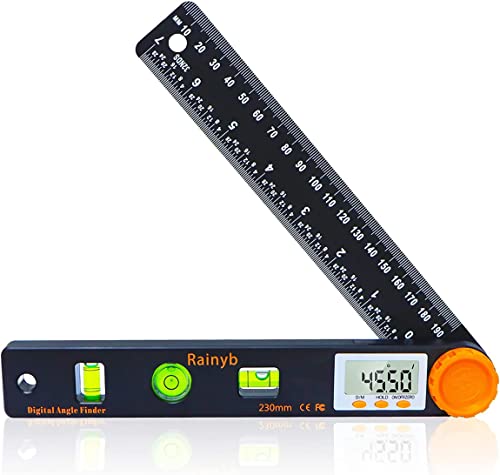
Rainyb Digital Angle Finder 7-Inch
What Each Pick Brings To The Table
A combination square is the multitool of layout work, and this 12-inch IRWIN covers the jobs most woodworkers reach for daily. The stainless steel blade resists rust even in a humid garage, while the cast zinc body gives the sliding head enough heft to sit still against an edge.
In practice it earns its keep three ways: scribing 90-degree lines across a board, laying out 45-degree miters, and doubling as a depth gauge when you’re setting router bit height or checking dado depth. That last trick alone justifies drawer space for plenty of hobbyists.
Good Reasons To Consider
- Rust-proof stainless blade holds up in damp shops and unheated sheds
- Precision-etched black scales stay readable under shop lighting
- Sliding head handles both square and 45-degree layout without swapping tools
- Works as a depth gauge for router and saw setups, saving a second purchase
Things To Consider
- The sliding mechanism can loosen over years of hard use, so owners commonly re-tension the lock occasionally
- Zinc body is lighter than machined-steel heads some pros prefer for feel
Key Specs
Who It Suits Best
Beginners building their first real toolkit and intermediate woodworkers who want one dependable layout tool instead of three single-purpose ones.
A Better Fit Elsewhere
Shop owners squaring up machines will get more mileage from the POWERTEC L Square 3pc Set, whose rigid L-shapes suit router fence and table saw blade alignment better than a sliding-head design.
Torpedo levels like this 12-inch IRWIN live in toolboxes rather than on shelves, and that’s exactly where this one belongs. The reinforced aluminum frame shrugs off drops from a ladder, and built-in magnets let it stick to steel studs, saw blades, or a metal gate frame so you can read it hands-free.
The standout detail is the dual-sided plumb viewing window, which lets you confirm vertical from either side without repositioning yourself around the level. A dedicated pitch vial also reads slope, handy for drainage runs on decks or gutters. At 0.029-degree accuracy, it’s precise enough for finish work despite its compact size.
Where It Helps
- Magnetic edge frees both hands when leveling steel frames or machine tables
- Dual-sided plumb site means accurate vertical reads from awkward angles
- Pitch vial doubles as a slope gauge for gutter and deck work
- Reinforced aluminum survives toolbox abuse and job-site knocks
Points To Note
- A 12-inch span limits accuracy over long runs, so check long walls with a longer level afterward
- Vials can fog or crack in extreme cold, worth storing indoors between seasons
Right Fit For
DIYers and installers who move between tasks all day and want a pocket-sized level that clings to metal surfaces while they drill.
Swap It Out When
Anyone needing a long straightedge for shelving runs should look at the Saker Foldable Level 28-Inch, which extends far beyond what a torpedo can span.
Where the IRWIN combination square slides and adjusts, these POWERTEC squares are fixed right angles, and rigidity is the point. You get three sizes in the set, including an 8 by 12 inch square, so there’s a blade suited to everything from checking a small drawer box to aligning a router fence along a long rail.
Bubble vials built into the tools add a leveling function most plain try squares lack, which makes them useful for machine setup as well as joinery. Machinists and furniture makers lean on squares like these because a fixed reference never drifts out of adjustment mid-project.
Notable Upsides
- Three sizes cover fine joinery through full-frame carpentry in one purchase
- Built-in bubble levels turn each square into a short leveling straightedge
- Solid 90-degree reference suits router fence and table saw blade alignment
- No moving parts mean nothing to recalibrate over years of use
Honest Caveats
- Fixed angles only, so miter layout still requires a separate tool like a combination square
- Owners report the etched markings benefit from a light wax coat to resist rust in humid shops
- Larger squares take dedicated drawer space compared to a folding option
Core Details
Who Should Grab It
Serious hobbyists and small-shop woodworkers who set up machines regularly and want rigid references they can trust project after project.
Another Choice May Suit
Folks who need adjustable angle transfer alongside square work are better served by the IRWIN Combination Square 12-Inch Stainless Steel, whose sliding head handles 45-degree layout too.
A 28-inch straight level is great until you try to store one, and that tension is what the Saker solves. Hinged segments fold down into a compact rectangular block that fits a drawer or tote, then unfold into a full-length level for shelving, picture hanging, or checking a long wall.
Apartment dwellers and anyone working from a shared space will appreciate the footprint most. The multi-angle design also lets you wrap it around a corner post or pipe, something no rigid level manages. In our view the trade-off is obvious but acceptable: hinges add a flex point, so treat it as a household and light-duty tool rather than a precision framing instrument.
Real Benefits
- Folds into a small block that stores in a kitchen drawer or tool bag
- 28-inch extended length spans typical shelf brackets and picture groups
- Multi-angle joints conform around posts, pipes, and corners
- Lightweight enough to carry room to room during a whole-day install
Small Caveats
- Hinged segments introduce slight flex, so demanding joinery calls for a rigid square
- Joints collect dust over time and benefit from an occasional wipe-down
- Folded creases can mark soft painted walls if pressed hard
Who Will Love This
Renters, homeowners tackling weekend installs, and anyone short on storage who still wants a genuinely long level on hand.
Not Your Match When
Woodworkers squaring cabinet parts need the uncompromising rigidity of the POWERTEC L Square 3pc Set instead of hinged segments.
Every other pick here measures square or level; this one measures any angle and shows it as a number. The Rainyb’s two arms pivot through a full 360 degrees, with an LED display reading internal and external angles directly, so transferring a stair stringer pitch or a crown molding spring angle stops being guesswork.
A locking knob holds the arms at your measured position while you carry the reading to the saw, and bubble vials plus a ruler scale round out the layout functions. Fabricators and carpenters doing compound work tend to reach for tools like this first, since eyeballing a bevel costs more in wasted stock than the tool does.
Strong Points
- 360-degree digital readout handles internal and external angles alike
- Data-hold keeps the measurement visible after you lift it off the workpiece
- Locking knob preserves the captured angle during transfer to a saw
- Integrated bubble vials add horizontal and vertical checks to angle work
Worth Bearing In Mind
- Runs on batteries, so dead cells at the wrong moment can stall a job, worth keeping spares nearby
- Digital components dislike sawdust-heavy benches more than bare-metal squares do
- Seven-inch arms limit reach on very wide stock
Quick Facts
Whose Shelf It Belongs On
Carpenters cutting crown molding, welders checking joint angles, and advanced DIYers who want numeric certainty over trial-and-error bevel settings.
Reach For A Different Pick When
Your work is mostly 90-degree joinery, in which case the IRWIN Combination Square 12-Inch Stainless Steel does the job with no batteries involved.
What Matters Most Before Choosing Levels For Woodworking
Accuracy First, Everything Else Second
A level that reads a half degree off ruins every project it touches. Check the stated accuracy figure before anything else; the IRWIN torpedo’s 0.029-degree rating is a good benchmark for finish-level work. Fixed squares hold their calibration best over time since there’s no mechanism to wear.
Length Should Match Your Projects
Short levels travel well but exaggerate error across long spans, while long levels catch every warp in a bowed board. Shelving and wall work favor 24 inches or more, and the foldable Saker bridges that gap for people without the storage. Benchtop joinery rarely needs more than 12 inches of reach.
Materials Decide Lifespan
Aluminum frames survive drops, stainless blades resist rust, and zinc bodies split the difference on weight and cost. Digital models trade durability for capability, so they deserve cleaner storage away from sawdust and moisture. Match the build to your shop environment honestly.
One Tool Or Several
Combination squares cover angles, depth, and marking in one unit, which suits beginners building a kit gradually. Dedicated squares, digital finders, and long levels each do one job better. Most woodworkers end up owning two or three complementary pieces rather than hunting for a single universal answer.
Key Considerations Across These Picks
Wrong Turns To Avoid
The classic mistake is buying a long, cheap level and trusting it over a wide span, since budget extrusions often arrive slightly bowed. Another trap is skipping the accuracy spec entirely and shopping on size alone. Read the stated tolerance, then match tool length to the actual run you’ll be checking.
Where The Extra Money Goes
Higher-tier tools spend their cost on machining tolerances, better vials, and materials that stay true after a drop. That matters once you’re fitting doors or setting machine fences, where a fraction of a degree shows up as visible gaps. For rough framing and casual hanging, a modest tool serves fine.
Frequently Asked Questions
What length level works best for general home use?
A 24-inch level covers shelving, appliances, and wall work for most households. Add a 12-inch torpedo for tight spaces and toolbox carry.
Are combination squares accurate enough for fine woodworking?
Quality combination squares hold tolerances suitable for joinery and machine setup. Verify the blade sits square against a known reference after heavy use.
Do digital angle finders replace traditional squares?
No, they complement them. Squares excel at repeatable 90-degree work, while digital finders shine on arbitrary and compound angles.
How do I keep a level reading accurately over time?
Store it flat or hanging, away from heat that can stress vials. Wipe blades dry after use and check calibration against a known-flat surface periodically.
Is a magnetic base worth paying extra for?
For anyone working with steel studs, saw tables, or metal frames, yes. Magnets free both hands and prevent slips mid-read.
Closing Thoughts
Good layout tools don’t make you a better woodworker overnight, but they quietly remove the errors that erode confidence. Start with the IRWIN combination square if you’re building a kit from scratch, add the POWERTEC set once machine work enters the picture, and let the Saker or the Rainyb fill whichever gap your projects expose next. Measure twice, cut once, and let the right tool carry the second measurement.




