


Anyone who has spent a summer framing walls knows the drill: a heavy nailer turns hour six into a slog, and your shoulder pays the bill long before the crew does. That’s exactly who this roundup serves, framers, roofers, carpenters, and serious DIYers who want driving power without dragging around dead weight. The five tools below span pneumatic workhorses, a cordless coil option, and even a compact brad/staple combo for trim days, so there’s a fit whether you’re decking a roof or building a garden shed. Weight matters most when you’re bump-firing overhead or working off ladders, and every choice here earns its spot by keeping fatigue down while still sinking fasteners where they belong.
A Closer Look At The Lineup

Makita AN924 21º Full Round Head Framing Nailer

Metabo HPT NV90AGS Coil Framing Nailer
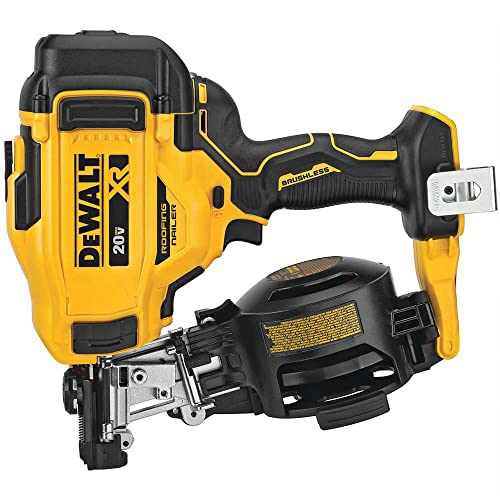
DeWalt 20V MAX Coil Roofing Nailer
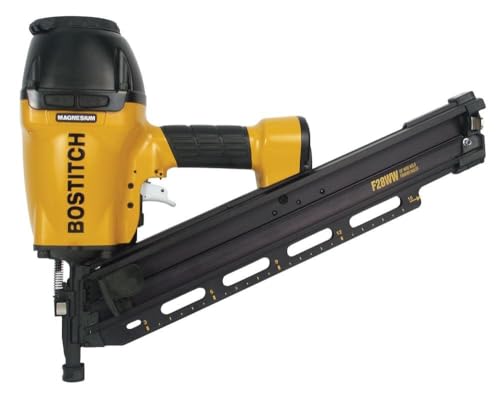
BOSTITCH F28WW Clipped Head Framing Nailer
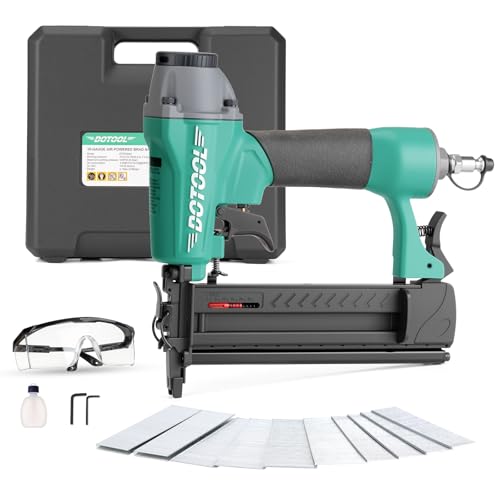
Dotool 18 Gauge 2 in 1 Brad Nailer Staple Gun
The Picks, Examined More Closely
This is the tool you reach for when the job site doesn’t forgive weak links. The AN924 runs on 21-degree angled nails with full round heads, the format many building codes call for in structural framing, and it’s engineered for walls, floors, roof decking, and sheathing alike.
Where the lighter Metabo HPT below trades some heft for speed, this Makita leans toward durability for commercial crews. Carpenters who frame day after day tend to value that toughness over shaving ounces.
Everyday Wins
- Full round head nails satisfy structural framing requirements that clipped head guns can’t always meet
- Handles wall, floor, and roof applications from one magazine, cutting tool swaps mid-project
- Built with commercial framing abuse in mind, so it holds up to jobsite knocks
- Suits framers, roofers, and carpenters without forcing a compromise between trades
Things To Consider
- The rugged construction adds bulk compared to the coil-fed options later in this list
- Pneumatic operation means an air hose follows you up every ladder rung
Who Will Love This
Professional framers and roofers who need code-compliant round head nails and a body built to survive daily commercial use.
Another Choice May Suit
Shed builders and weekend remodelers will find the lighter BOSTITCH F28WW easier to maneuver on smaller projects.
Coil nailers carry a drum of wire-collated nails instead of a straight stick magazine, which means fewer reloads and more time firing. At 7.7 pounds, this one is genuinely light for its class, and that difference shows up around hour four of a decking run when your arm still feels like yours.
The redesigned head guard comes apart faster than older generations, so jam clearing and routine maintenance eat less of your break time. Owners commonly report it drives with the punch of a much heavier tool, which is the whole appeal here.
Where It Helps
- Drives wire collated nails from 1-3/4″ to 3-1/2″, covering subfloor, sheathing, and framing in one gun
- 7.7 lb weight keeps fatigue manageable through full shifts on ladders or roofs
- Quick-disassembly head guard speeds up jam clearing during the workday
- Coil loading means longer stretches between reloads than stick magazines allow
Small Caveats
- Wire collated nails leave clipped heads, which some jurisdictions restrict for structural connections
- You’ll want spare O-ring lubrication on hand since air tools need periodic upkeep
Feature Rundown
Right Fit For
Crew members and solo contractors who spend whole days decking or sheathing and care more about endurance than raw bulk.
Swap It Out When
Code inspections requiring full round heads point you toward the Makita AN924 instead.
A steep pitch and a tangled air hose are a bad pairing, which is where this battery-powered coil nailer changes the math. Running on DeWalt’s 20V MAX platform, it frees you from compressor lines entirely, and the brushless motor stretches runtime while cutting wear on the internals.
Bump mode lets you fire rapidly by pressing the nose and trigger in sequence, a real productivity gain when shingling large planes. One thing worth checking first: this listing is sold internationally, so confirm compatibility and labeling details before ordering for US use.
Key Advantages
- No compressor or hose, so rooftops and remote sites stay reachable
- Brushless motor delivers longer runtime per charge and fewer service intervals
- Tool-free nail tray adjusts across the full range of roofing nails in seconds
- Bump mode keeps shingle placement moving at production pace
Points To Note
- Batteries and charger are typically purchased separately, adding to the setup cost
- As an international-market listing, product terms may differ from domestic versions
Who Should Grab It
Roofers already invested in DeWalt batteries who want cordless convenience on pitched and multi-story jobs.
Look Elsewhere When
General framing rather than roofing calls for the Metabo HPT NV90AGS and its wider nail range.
Some features sound minor until you use them once. This Bostitch carries a notched 16-inch layout indicator on the magazine, so marking stud spacing becomes a glance instead of a tape measure ritual, and once you’ve framed with it, going back feels slow.
The magnesium body keeps weight down without giving up durability, and the push-button depth guide sets countersink depth faster than dial-style adjustments. Unlike the Makita AN924’s heavier commercial build, this one favors agility for solo work.
Why It Works Well
- Push-button depth adjustment sets nail depth quickly between materials
- Notched layout indicator spaces studs at 16 inches without extra measuring
- Magnesium housing trims weight while resisting jobsite wear
- Adjustable rafter hook hangs the tool safely on joists between cuts
- Accepts nails from 2 inches to 3-1/2 inches for versatile framing tasks
Honest Caveats
- Clipped head nails aren’t accepted everywhere for structural connections, so check local code first
- Depth guide mechanism can collect sawdust and needs occasional cleaning to stay smooth
At A Glance
Whose Shelf It Belongs On
Independent builders and remodeling DIYers who frame occasionally but want pro-level layout features at a friendlier weight.
Consider Something Else When
Full-time commercial crews needing round head compliance will be happier with the Makita AN924.
To be clear upfront, this isn’t a framer. It’s the trim-side companion to one, driving 18 gauge brad nails (thin finish nails that leave tiny holes) from 5/8 inch up to 2 inches, plus 1/4-inch crown staples from 5/8 inch to 1-5/8 inches.
It runs on shop air at 60 to 120 psi through a standard 1/4-inch NPT inlet, so it pairs with any typical compressor. For trim, cabinetry, and craft builds after the framing is done, having both functions in one lightweight body saves drawer space and money.
Positive Points
- Two fastener types in one gun covers baseboards, trim, upholstery, and light assembly
- Wide pressure range of 60 to 120 psi lets you tune power per material
- Standard 1/4-inch NPT inlet works with common compressors without adapters
Practical Considerations
- An air compressor is required and not included, so budget for one if starting fresh
- 18 gauge fasteners won’t handle structural loads, keeping this strictly a finishing tool
Quick Facts
Made For
Hobbyists, furniture makers, and homeowners tackling finish carpentry who want one affordable gun for two jobs.
Reach For A Different Pick When
Structural framing is the goal, in which case the BOSTITCH F28WW is the appropriate step up.
What To Weigh Before Choosing Lightweight Framing Nail Guns
Weight Versus Power
Every ounce matters when a tool sits above your shoulders for hours. A 7.7-pound coil gun like the Metabo HPT spares your arms compared to steel-bodied stick nailers, but ultra-light designs sometimes give up driving force in dense engineered lumber. Match the tool’s nail range to your actual material stack before prioritizing ounces.
Pneumatic Or Cordless
Air-powered nailers deliver consistent power at a lower entry cost, though they tether you to a compressor and hose. Cordless models such as the DeWalt shine on roofs and remote sites where hauling equipment isn’t practical. Your typical job site should decide this, not spec sheets alone.
Collation And Code Requirements
Clipped head nails pack tighter into magazines, but some building departments require full round heads for shear walls and structural connections. Checking local code takes ten minutes and prevents a costly tear-out later. When in doubt, the round head route is safer territory.
Matching The Tool To The Task
Framing, roofing, and finish work each favor different fasteners and feed systems. Buying one gun to do everything usually disappoints everyone, which is why pairing a framer with a brad nailer often beats hunting for a single do-it-all unit.
Key Considerations Across These Picks
Traps First Timers Fall Into
The most common slip is buying a nailer before confirming which nail collation your local code allows, then discovering the fasteners don’t qualify for structural work. Another frequent miss is ignoring what’s actually included; some listings ship bare tool only, leaving you to source batteries, chargers, or compressors separately. Read the package contents line closely.
Where The Extra Money Goes
Higher-tier nailers buy magnesium or composite bodies, brushless motors, and faster maintenance access rather than raw power alone. That translates to lighter lifts, longer runtime, and quicker jam clearing across years of use. Occasional users rarely recoup the difference, while daily professionals almost always do.
Frequently Asked Questions
Are lighter framing nailers less powerful?
Not necessarily. Modern lightweight designs like the Metabo HPT NV90AGS drive full-size framing nails despite modest weight. Power depends more on design efficiency and air delivery than mass.
Do I need a special compressor for these nailers?
Most pneumatic framing nailers run happily on a standard 2 to 6 gallon compressor delivering adequate PSI. The Dotool specifies 60 to 120 psi, well within typical consumer compressor ranges.
Can one nailer handle both framing and roofing?
Some overlap exists, but dedicated tools perform better. Roofing nailers like the DeWalt use coil feeds suited to cap nails, while framing guns drive larger structural fasteners.
What does 21-degree versus 15-degree mean?
That number describes how sharply nails are angled within the magazine. Steeper angles reach tighter corners between studs, and each angle requires matching nail collation.
Is a brad nailer useful alongside a framing nailer?
Absolutely. Framers handle structure, brad nailers handle trim, and owning both covers a complete build from studs to baseboards.
Closing Remarks
The right lightweight nailer comes down to honest self-assessment: how often you work, what codes govern your projects, and how far from the compressor you roam. Crews logging daily hours will lean toward the Metabo HPT or Makita, weekend builders toward the BOSTITCH, and roofers toward cordless freedom. Whichever direction fits, choosing for your real workload beats chasing any single spec.




