Overgrown limbs don’t wait for a convenient weekend. One branch hangs over the driveway, another scrapes the roofline, and suddenly you’re shopping for a saw that matches the job instead of fighting it. The right limb saw turns a half-day of awkward ladder work into twenty minutes of steady cutting from solid ground.
This roundup covers five options that handle different realities: a cordless pruning chainsaw for thick growth, a folding hand saw that lives in a truck bed, a long-reach pole system for high branches, and a bushcraft-grade folder for campers. Each one earns its spot for a specific kind of yard work.
The Leading Options At A Glance

Dewalt DCCS623B 20V Cordless Pruning Chainsaw
Fiskars 10″ Folding Pruning Saw
LETYANGER 7.3-27FT Extendable Pole Saw Set

Craft911 11 Inch Folding Camping Saw

Craft911 11 Inch Folding Camping Saw
What Each Pick Brings To The Table
Most yards hit a point where a hand saw feels slow and a full-size chainsaw feels like overkill. That gap is where this Dewalt lives. The 20V platform runs an 8-inch bar, which suits branches in the one-to-four-inch range that make up most routine pruning.
Because it’s battery powered, there’s no fuel to mix, no pull cord, and no exhaust drifting into your face while you cut overhead. Homeowners who already own Dewalt 20V tools can share batteries across the lineup, which cuts down what you actually need to store and charge.
A Few Highlights
- The 8-inch bar handles storm cleanup and seasonal pruning without the bulk of a full chainsaw.
- No gas engine means no carburetor maintenance, stale fuel, or cold-start frustration.
- Compatible batteries let existing Dewalt owners expand their kit at minimal extra cost.
- Lightweight enough for extended overhead cutting sessions in most reported owner feedback.
Things To Consider
- This unit ships as a bare tool, so budget for a battery and charger if you’re new to the platform.
- Chain tension needs periodic checking, a standard habit for any chainsaw-style tool.
Key Specs
Who Will Love This
Homeowners already invested in the Dewalt 20V ecosystem who want fast, clean cuts on medium branches every season.
A Better Fit Elsewhere
Gardeners who only trim pencil-thin twigs will find the Fiskars 10″ Folding Pruning Saw simpler, quieter, and easier to stash in a shed drawer.
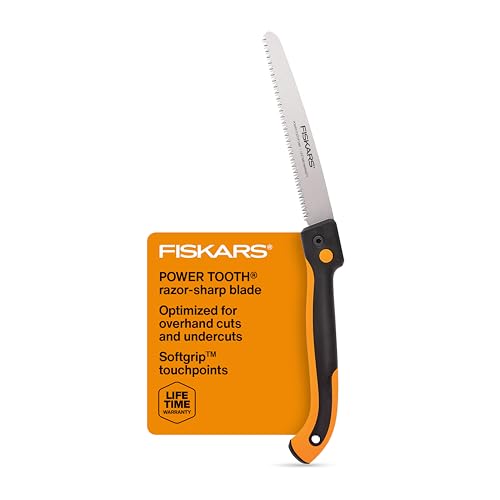
Fiskars has spent decades refining garden cutting tools, and this folding saw shows it. The triple-ground blade teeth are sharpened on three surfaces, so each stroke bites harder than a conventional saw tooth. On green wood up to about four inches, that translates into noticeably faster work with less arm fatigue.
The dual-position lock is the detail worth paying attention to. The blade locks open at two angles, letting you switch between overhand cuts above shoulder height and undercuts beneath a limb, which helps prevent bark tearing on the underside of branches. Compared with the motorized Dewalt pick above, this one trades speed for silence, simplicity, and zero charging.
Everyday Advantages
- Triple-ground teeth pull through green wood quickly, reducing the strokes needed per branch.
- Two locked blade positions give you control whether cutting from above or below a limb.
- The non-slip grip stays secure even with sweaty hands or light rain.
- Folds closed for safe storage in a garage bin, truck door pocket, or garden tote.
Small Caveats
- Manual effort means larger limbs take longer than they would with the Dewalt DCCS623B.
- The blade benefits from an occasional wipe of oil after wet-season use to resist corrosion.
Made For
Suburban homeowners doing regular shrub and small-tree maintenance who want a dependable tool that never needs fuel or a charger.
Swap It Out When
Anyone facing branches well above head height should reach for the LETYANGER extendable pole saw set instead of working from a ladder.
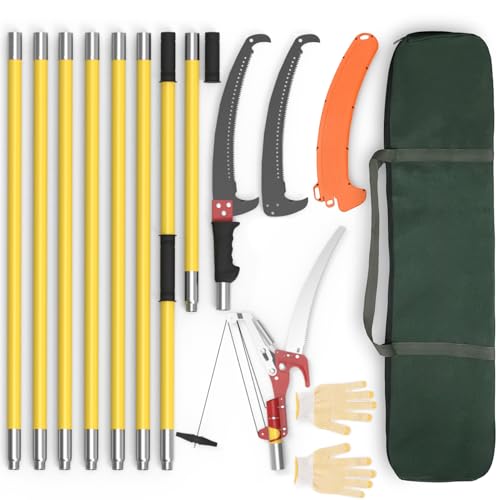
Ladders and tree work are a poor pairing, and arborists say it constantly. This manual pole system removes the ladder entirely. Seven rods stack together to stretch from roughly 7.3 feet out to 27 feet, putting second-story roofline branches within reach while your feet stay planted.
The kit goes beyond a single blade. You get a saw head, a bypass pruner head for thinner shoots, a spare saw blade with its own sheath, and a carry bag for the whole assembly. Rods are thickened epoxy resin joined by aluminum alloy couplings, a combination chosen to keep the extended pole from feeling whippy. The 65Mn alloy steel blades hold an edge well on seasoned wood.
The Value In It
- Reach up to about 27 feet eliminates most ladder climbs for high-limb trimming.
- Two interchangeable heads cover both sawing and snipping in one purchase.
- A spare blade included means a dull edge doesn’t end your trimming day.
- Epoxy resin rods with aluminum joints keep the fully extended pole manageable in weight.
Points To Keep In Mind
- At full extension, leverage drops and cutting thicker limbs demands patience.
- Assembly and breakdown between uses takes a few minutes, unlike grabbing a folding saw.
Feature Snapshot
Right Fit For
Owners of tall shade trees or overhanging roofline branches who prefer manual tools and dislike ladders.
Where Another Pick Shines
For low branches under four inches, the Fiskars 10″ Folding Pruning Saw sets up faster and costs far less effort to deploy for quick touch-ups.
Where the Fiskars leans toward the garden shed, this Craft911 folder is built for the trunk of a car headed to a campsite. The 11-inch blade runs SK5 high-carbon steel, a Japanese-standard steel common in quality cutting tools because it holds a sharp edge under hard use. Seven teeth per inch strike a middle ground between fast softwood cutting and controlled strokes.
The triple-cut tooth grind gives it real bite on deadfall and firewood prep, not just green garden limbs. Campers processing downed wood for a fire pit, or bushcraft folks clearing small saplings, get a tool that folds flat into a pack side pocket. The honest read: it’s heavier than a garden folder, and that weight is the price of durability in the field.
Reasons It Performs
- SK5 high-carbon steel resists dulling through repeated hardwood and deadfall cuts.
- An 11-inch blade opens up larger diameter cuts than typical 8 to 10 inch folders.
- Folding design keeps the teeth protected inside packs, glove boxes, and gear bins.
- Seven TPI tooth spacing balances cutting speed against stroke control.
Less Ideal Details
- High-carbon steel needs drying and a light oil film after wet trips to prevent surface rust.
- At 11 inches open, it’s bulkier in a daypack than smaller garden folders.
Whose Shelf It Belongs On
Campers, hikers, and off-grid property owners who need one rugged folder that splits duty between trail and backyard.
Skip It When
Purely ornamental garden pruning calls for something lighter, and the Fiskars 10″ folder covers those cuts more comfortably.
This listing shares its design with the Craft911 saw above: the same 11-inch SK5 high-carbon blade, the same seven-teeth-per-inch spacing, and the same folding format aimed at tree trimming, woodcutting, camping, bushcraft, and general garden work. The difference comes down to availability and timing rather than hardware, since the two listings serve overlapping inventories.
For shoppers comparing them side by side, treat them as interchangeable on performance. Whichever one is in stock at checkout delivers the same field behavior: aggressive triple-cut teeth on dry wood, confident strokes on green limbs, and a compact folded profile for storage. Owners commonly report keeping one in the vehicle year-round precisely because it handles whatever cutting task appears.
A Strong Showing
- SK5 carbon steel construction stands up to repeated campfire and trailside cutting.
- Multi-role design covers pruning, bushcraft, and firewood without swapping tools.
- Folded form factor stores safely among other gear without exposed teeth.
Worth Bearing In Mind
- Carbon steel demands basic care, mainly drying after rain exposure before storing.
- You may find the full-size blade oversized for delicate ornamental shrub work.
Who Should Grab It
Practical-minded owners wanting a single do-everything folder for the garage shelf, truck bed, or camping bin.
Consider Something Else When
Shoppers needing powered speed on dense storm debris will be better served by the Dewalt DCCS623B cordless pruning chainsaw.
Choosing A Limb Saw That Fits Your Yard
Match The Tool To Branch Size
Branch diameter drives everything else. Twigs under an inch fall to a pruner head, growth from one to four inches belongs to a folding saw or compact chainsaw, and anything higher than your reach points toward a pole system. Buying one tool for all three jobs usually ends with three tools anyway.
Power Or Muscle
A cordless pruning chainsaw like the Dewalt saves serious time on storm cleanup, but adds battery cost and charging habits. Manual saws cost nothing to run, weigh little, and never sit dead when you need them. Most suburban yards honestly get along fine with a sharp manual blade plus one powered option for heavy days.
Steel And Tooth Design
Blade material determines how often you sharpen. SK5 and 65Mn high-carbon steels hold edges longer but need oiling to resist rust. Triple-ground teeth cut on multiple faces per stroke, which matters most when you’re making dozens of cuts in one session.
Storage And Care Reality
Folding saws live anywhere; pole systems want wall space and rod assembly time. Whatever you choose, plan on wiping blades dry, checking chain or bolt tension seasonally, and sheathing edges so gloves and hands stay intact.
Key Considerations Across These Picks
Pitfalls Shoppers Hit
The most common mistake is buying reach you’ll never use. A 27-foot pole saw is clumsy for knee-high shrubs, and an 8-inch chainsaw is overkill for rose canes. Measure your tallest problem branch first, then buy to that number, not beyond it. Second slip: ignoring battery inclusion on bare-tool listings and discovering the missing cost later.
What The Higher Tier Buys
Pricier options earn their keep in steel quality and build consistency. Better alloys stay sharp through seasons of use, tighter tolerances mean locks and joints don’t loosen, and established brands back their tools with replacement parts. For occasional light trimming, budget models perform adequately. Frequent users recover the upgrade cost in saved time and fewer replacements.
Frequently Asked Questions
How thick a branch can a folding limb saw handle?
Most quality folders manage green wood up to three or four inches in diameter. Beyond that size, stroke count climbs sharply and a powered option becomes the sensible choice.
Do I need a special battery for the Dewalt DCCS623B?
Yes, this model ships as a bare tool without a battery or charger. Any Dewalt 20V MAX battery you already own works with it directly.
Is a pole saw safer than using a ladder?
Working from the ground removes fall risk entirely, which is why professionals avoid ladders for tree work. Extended poles still demand awareness of falling branches and nearby power lines.
How often should I sharpen a manual pruning saw?
Light seasonal use typically holds an edge for several years with proper cleaning and storage. Heavy campfire or storm work may warrant sharpening or blade replacement annually.
What does TPI mean on a saw blade?
TPI stands for teeth per inch. Higher counts give smoother, slower cuts suited to hardwood, while lower counts remove material faster in softer or greener wood.
Closing Thoughts
Matching the saw to the job beats chasing any single perfect tool. Thick seasonal cleanup points to the Dewalt, tall canopy work to the LETYANGER pole set, and everyday garden cuts to the Fiskars folder. Either Craft911 covers campers and mixed-duty yards well. Start with your tallest, thickest problem branch, choose accordingly, and your next trimming session gets noticeably shorter.