Good lineman pliers earn their place in a tool bag fast. Whether you’re splicing wire in a panel, twisting conductors behind a switch box, or cutting hardened fasteners on a jobsite, the wrong pair slips, dulls early, or wears your hands out halfway through the day. The five options below cover different needs: a compact needle-nose for tight spots, two mid-range side cutters, and two American-made Kleins built for serious daily abuse. Each review breaks down what the specs actually mean once the tool is in your hand.
The Choices Worth Comparing

IRWIN Vise-Grip Long Nose Pliers 6 Inch (2078216)
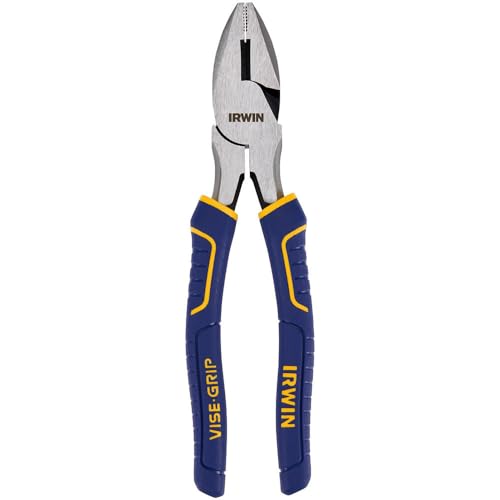
IRWIN VISE-GRIP Lineman’s Pliers 8-Inch (2078208)

Vanquish 8 Inch High-Leverage Linemans Pliers (3163)

Klein Tools J213-9NE Side Cutter Linemans Pliers 9-Inch

Klein Tools HD2000-9NE Side Cutter Linemans Pliers 9-Inch
The Picks, Examined More Closely
Six inches of reach changes how you work inside a box. This is the pick you grab when conductors sit deep in a crowded junction or when you’re bending a hook on small-gauge wire where an eight-inch linesman feels clumsy.
The body uses nickel chromium steel, an alloy chosen for wear resistance, so the jaws hold their shape through years of gripping. For hobbyists and electricians alike, it slots neatly into a pouch without adding bulk.
Features That Help
- Narrow nose reaches into confined areas where standard pliers can’t fit
- Nickel chromium construction resists wear, keeping jaw alignment true over time
- Machined jaws grip small fasteners and wire firmly instead of letting them roll
- An induction-hardened cutting edge stays sharp noticeably longer than untreated edges
- ProTouch grips cushion your palm during repetitive bending work
Honest Caveats
- The six-inch frame limits leverage, so heavy cable cutting belongs to a bigger pair like the Klein J213-9NE below
- Owners commonly report the dipped grips can get tacky after years of shop exposure, so wipe them down occasionally
Quick Facts
Who Should Grab It
DIYers and low-voltage techs who spend more time bending and positioning fine wire than slicing thick cable.
A Better Fit Elsewhere
If your days involve heavy conductor cuts, the Klein Tools J213-9NE delivers far more cutting force in the same pouch slot.
Where the compact IRWIN above trades muscle for reach, this eight-inch version restores the leverage most household wiring demands. It’s the classic shape: broad knurled jaws up front, side cutter at the pivot, comfortable grip behind.
For weekend projects like swapping outlets or twisting pigtails together, you may find this covers ninety percent of the job. The nickel-chromium steel body shares its DNA with the smaller model, so durability expectations stay similar.
The Practical Payoff
- Eight-inch span gives enough leverage for common 12 and 14 gauge household wire
- Machined jaws clamp connectors and staples without slipping off center
- Induction-hardened edge means fewer trips to sharpen or replace the tool
- ProTouch handles reduce fatigue when you’re crimping dozens of connections in one session
Points To Note
- It isn’t rated for ACSR or hardened fasteners, tasks better suited to the Klein HD2000-9NE later in this list
- The dipped grip surface, per widely reported owner feedback, can soften slightly with solvent contact
Right Fit For
Homeowners and apprentice electricians who want one dependable pair for general residential wiring without paying trade-tool money.
Swap It Out When
Anyone doing utility-grade line work should step up to the Klein Tools HD2000-9NE, whose knives are built specifically for aluminum-over-steel conductor.
Vanquish builds this pair around chrome vanadium steel, a forged alloy that balances hardness with toughness so the tool bends before it snaps. Heat treatment plus a blackened surface finish raises surface hardness while resisting corrosion in damp garages.
The wide three-color TPR handle is the standout detail here. Compared to the slimmer dipped grips on the two IRWIN picks, it fills your palm more fully, which matters when you’re squeezing through a full day of cuts.
Benefits That Matter
- Laser-hardened cutting edge slices copper cleanly with less squeeze effort
- Forged CR-V body tolerates prying-level stress that cheaper stamped pliers resist poorly
- Extra-wide non-slip TPR grip stays secure with sweaty or lightly gloved hands
- High-leverage geometry multiplies hand force at the cutter, easing repetitive work
Things To Consider
- The blackened finish can show scuffs quickly in rough tool bags, purely cosmetic but worth knowing
- No US manufacturing pedigree here, so shoppers who prioritize domestic tooling will lean toward the Klein options
Feature Snapshot
Made For
First-tool owners and students assembling a starter kit who want genuine forging quality without trade-brand pricing.
Where Another Pick Suits Better
Working electricians who bill by the hour will appreciate the refined joint action of the Klein Tools J213-9NE over this budget option.
Klein’s name carries weight on job sites for a reason, and the J213-9NE shows why. Its high-leverage design positions the rivet closer to the cutting knife, translating into substantially greater cutting and gripping power than conventional layouts.
The hot-riveted joint deserves attention too. Unlike adjustable or pinned joints, a hot rivet eliminates handle wobble, so every squeeze transfers straight to the wire. Precision-machined knives slice fine stranded wire, mule tape, and pull line crisply, which is exactly what a service electrician needs between panels.
The Case For It
- High-leverage geometry delivers dramatically more cutting power per squeeze than standard designs
- Hot-riveted joint keeps action smooth with zero handle play over the tool’s life
- Machined knives handle delicate stranded wire without fraying strands
- Cross-hatched knurled jaws grip conduit fittings and connectors confidently
- Made in USA from custom tool steel, with color coding for quick bag identification
Small Caveats
- At nine inches it outweighs the IRWIN picks, noticeable in a loaded pouch all day
- Trade-grade construction commands a higher price than the Vanquish, a real factor for occasional users
Who Will Love This
Licensed electricians and serious apprentices who cut and twist wire daily and need a tool that survives years of jobsite punishment.
Not Your Match When
Occasional home users will find the IRWIN VISE-GRIP Lineman’s 8-Inch covers basic tasks at a friendlier entry point.
This is the sibling of the J213-9NE above, tuned for harsher material. Where the J213 focuses on clean electrical cuts, the HD2000-9NE attacks ACSR (aluminum conductor with a steel core), screws, nails, and most hardened wire without flinching.
The thicker dipped handles are the practical difference. With gloved hands on a cold morning, that extra padding gives you a surer hold than the streamlined J213 grip. Induction-hardened knives and a hot-riveted wobble-free joint carry over, so longevity expectations match its stablemate.
A Few Strong Suits
- Cuts ACSR, screws, nails, and hardened wire that defeats ordinary side cutters
- Thicker dipped handles improve control when wearing work gloves
- Induction-hardened knives extend cutting life through abrasive material
- Hot-riveted joint keeps the action smooth and play-free
- US-made tool steel backs the whole design
Where It May Fall Short
- Overkill for light household wiring; the IRWIN 2078208 handles that job with less weight in hand
- Aggressive use on hardened stock, as owners commonly note, will eventually round any cutter’s edge faster than copper alone would
Core Details
Best Suited To
Utility workers, linemen, and maintenance techs who regularly face steel-core cable, fasteners, and mystery hardware in the field.
Consider Something Else When
Indoor residential electricians cutting only copper will find the lighter Klein Tools J213-9NE a more nimble daily companion.
What Matters Most Before Choosing Lineman Pliers
Steel And Edge Treatment
The metal decides everything downstream. Nickel chromium and chrome vanadium steels resist wear and keep jaws aligned, while induction or laser hardening concentrates hardness right at the cutting edge where it counts. A hardened edge stays sharp through months of daily copper cuts; an untreated one rounds off within weeks of heavy use.
Leverage And Joint Design
High-leverage geometry moves the pivot closer to the blade, multiplying your hand force at the exact point of contact. Pair that with a hot-riveted joint, which eliminates the handle wobble found in loosely pinned tools, and each squeeze converts efficiently into cutting power. Anyone cutting all day benefits most from both traits combined.
Handle Comfort And Fit
Grips come in dipped coatings or molded TPR, and the difference shows up around hour three. Wider TPR handles suit gloved hands and larger palms; slimmer dipped versions favor precision work in tight panels. Match the handle to your typical gloves, not just your bare hand.
Size Versus Reach
Eight to nine inches is the sweet spot for general electrical work, offering real leverage. Six-inch long-nose models trade that power for access to cramped junction boxes. Many working pros carry one of each rather than compromising.
Key Considerations Across These Picks
Traps First Timers Fall Into
The most common error is buying one pair for every task. A six-inch needle-nose will struggle on thick cable, and a nine-inch linesman fumbles fine wire bends. Another frequent misstep: ignoring edge treatment entirely and judging tools by handle color. Check the steel type first, always.
When Paying More Pays Off
Premium pricing buys forged alloys, hardened edges, and riveted joints that survive daily professional abuse. Spending up makes sense when pliers are income-producing tools. For occasional weekend use, the value tier performs nearly identically.
Frequently Asked Questions
What size lineman pliers do most electricians use?
Nine-inch side-cutting models dominate professional tool belts because they balance leverage with maneuverability. Eight-inch versions suit lighter residential work well.
Can lineman pliers cut screws and nails?
Only models specifically rated for it, such as the Klein HD2000-9NE, should touch hardened fasteners. Standard cutters risk chipping their edges.
What does “high leverage” actually mean?
It describes a pivot placement closer to the cutting blades, which multiplies the force your hand applies. You get the same cut with noticeably less squeeze effort.
How do I maintain my pliers?
Wipe them dry after damp conditions, add a drop of oil at the joint occasionally, and store them away from solvents that soften grip coatings.
Are needle-nose and lineman pliers interchangeable?
No. Needle-nose excels at reaching and bending in tight spots, while lineman pliers provide the jaw width and cutting power for heavier conductor work.
Closing Remarks
Match the tool to the work in front of you and the rest falls into place. Tight-panel finesse points toward the IRWIN long nose, everyday household wiring suits the eight-inch IRWIN, and budget builds start with the Vanquish. Working tradespeople get their money’s worth from either Klein. Whichever direction fits your bench, any of these five will serve you honestly for years.