


Wet lumber ruins projects slowly and quietly. Cupped tabletops, gaps in trim, firewood that smolders instead of burns, all of it traces back to moisture nobody measured before the work started. A good meter takes seconds to flag a problem board, a damp wall cavity, or a stack of logs that needs another season of drying.
This list covers five meters built around two very different approaches. Pinless models read through the surface using electromagnetic waves, leaving finished wood untouched. Pin-type meters drive two steel pins into the material for a direct internal reading. Match the tool to your workbench and you’ll stop guessing.
Your Options, Compared

Povlen Pinless Wood Moisture Meter

Calculated Industries 7440 AccuMASTER XT Moisture Meter
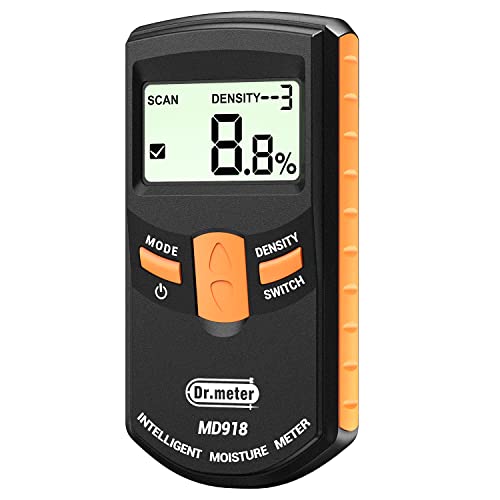
Dr.meter Pinless Wood Moisture Meter for Drywall

Mecurate Pinless Wood Moisture Meter 4 Mode 9 Density (Black)
PREXISO 7-in-1 Digital Wood Moisture Meter
More On The Choices That Made The List
Pinless scanning is the whole appeal here. High-frequency waves pass through the surface without piercing it, so a walnut tabletop or a freshly painted wall comes out exactly as it went in. The HOLD button records a reading with one press, which matters when you’re crouched under a sink or stretched along a long board.
Woodworkers finishing high-end stock tend to favor this style of meter because a single pinhole can cost them a clear-coat repair. For most furniture and drywall checks, the Povlen covers the routine without any cleanup afterward.
A Strong Showing
- No pinholes or scratches, so finished surfaces stay sale-ready
- HOLD function captures readings in awkward positions with one press
- Smart-chip processing keeps repeat scans consistent across a panel
- Handles both lumber and drywall, covering two common household jobs
Things To Consider
- Surface scans can miss deeper pockets of water inside thick framing
- The listing provides limited published specs, so verify range details on the product page
Who It Suits Best
Furniture makers and homeowners checking finished wood or painted drywall where marks aren’t acceptable.
Where A Sibling Pick Shines
The Calculated Industries 7440 AccuMASTER XT suits inspectors who need to probe inside studs and subfloors rather than scan surfaces.
Where the Povlen glides over surfaces, this one goes in. Two pins contact the material directly, giving you an internal reading that surface scanners approximate. Calculated Industries designed it for firewood, lumber, brick, concrete, drywall, and plaster, which makes it a rare single-tool answer to mixed-job days.
Remodelers tracing a roof leak or a burst pipe rely on this kind of meter under carpets and behind baseboards, where hidden dampness spreads long before staining shows. The backlit LCD keeps numbers legible in dim crawlspaces and closets.
Standout Benefits
- Pin-type sensing reaches inside wood, not just the outer layer
- Covers masonry materials like brick and concrete alongside wood
- Backlit display stays readable in dark basements and attics
- Suits leak detection after plumbing failures or flooding
Minor Gripes
- Pins leave small holes, so skip it on visible finished surfaces
- Pin tips can dull or bend with heavy use and may eventually need replacement
At A Glance
Made For
Remodelers, property inspectors, and serious DIYers diagnosing leaks and checking structural lumber.
Another Choice May Suit
Anyone working exclusively with finished furniture should reach for the Povlen pinless meter instead.
This is the meter that teaches you the craft. Dr.meter builds in ten selectable timber grades, so you tell the tool what species you’re measuring instead of interpreting raw numbers against a chart. First-time users find that structure far easier than guesswork.
Like the Povlen, it reads via high-frequency electromagnetic waves, meaning no holes in heirloom furniture or rental walls. Compared with the feature-heavy Mecurate later on this list, the interface is simpler and the learning curve shorter, which is precisely why it earns its spot here.
Key Advantages
- Ten wood-grade selections tailor readings to the species at hand
- Non-marring scanning protects valuable and rented surfaces
- Straightforward operation suits anyone new to moisture testing
Small Caveats
- Fewer measurement modes than pricier multi-function rivals
- Store it dry between jobs, since handheld electronics left in damp workshops commonly develop faults
Right Fit For
New woodworkers and renters who want dependable readings without a steep manual.
Swap It Out When
Firewood handlers juggling logs, walls, and building materials will get more mileage from the Mecurate’s density modes.
Density is the detail most budget meters ignore. Different species hold different amounts of water at the same reading, so Mecurate gives you nine density settings and four operating modes to calibrate expectations per material. At 0.1% resolution, small changes between boards actually register.
The three-color LED bar deserves mention too. Green, amber, and red give you an instant verdict from across the room, useful when mapping damp zones across a large wall. An audible alert reinforces the visual cue during big-area sweeps.
Well-Handled Touches
- Nine density settings improve accuracy across species and building materials
- 0.1% resolution catches gradual drying progress in stacked lumber
- Color LED bar plus audible alert speeds up large-surface mapping
- Backlit screen supports early-morning and evening checks
- Serves woodworking, renovation, and firewood management in one body
Points To Note
- More modes mean a slightly longer setup than one-button meters
- As a pinless unit, deep internal moisture in dense framing may go unflagged
Quick Facts
Whose Shelf It Belongs On
Homeowners splitting and stacking firewood while also tracking damp walls get the widest coverage here.
Reach For A Different Pick When
You want dead-simple operation on a single wood type, the Dr.meter trims away the mode-switching overhead.
Two stainless pins anchor this one, driven into the surface for a direct internal reading across softwoods, hardwoods, and building materials on seven calibration scales spanning 0% to 57%. That range comfortably covers everything from kiln-dried stock to soggy framing lumber.
Beyond moisture, it doubles as a room-condition tool, reading ambient temperature and humidity alongside four measurement modes including multi-point averaging and min/max capture. Rubber side grips and auto power-off round out a design clearly shaped by repeated daily handling.
The Value In It
- Seven calibration scales cover softwood, hardwood, and building materials
- Wide 0% to 57% range handles both dry stock and soaked materials
- Four modes include multi-point averaging for surveying whole stacks
- Reads room temperature and humidity, adding context to every reading
- Rubber grips and auto shut-off suit long inspection sessions
Where It May Fall Short
- Pins puncture surfaces, ruling out finished or decorative woodwork
- Keep the probe cover on between uses, since exposed tips are easy to bend in a crowded toolbox
Core Details
The Right Fit
Inspectors and hobbyists who want one handheld device answering moisture, temperature, and humidity questions together.
Skip It When
Antique restorers and finish carpenters should stay pinless, making the Povlen the safer companion.
What Matters Most in a Lumber Moisture Meter
Pinless or Pin Type
Pinless meters send electromagnetic waves through the surface, reading a zone beneath it without leaving marks. Choose this route for finished furniture, flooring, and drywall. Pin types pierce the material, trading cosmetics for a direct internal measurement that’s harder to fool with surface conditions.
Many working shops keep both styles. A pinless unit screens quickly, then a pin meter confirms anything suspicious.
Species and Material Compensation
Wood species differ in density, and density shifts how moisture readings translate. Meters offering multiple wood grades or density settings, like the Dr.meter and Mecurate, adjust for that variance automatically. Without compensation, the same physical dampness can read differently in pine versus oak.
Feedback Style
Raw percentages reward experienced users. Color-coded bars and audible alerts, found on the Mecurate, let anyone interpret results instantly. Backlit displays matter more than they sound once you start checking crawlspace joists or a dim garage woodpile.
Range Fit
Kiln-dried furniture stock sits low on the scale; wet framing and saturated firewood sit high. Confirm a meter’s stated span matches your typical material before committing.
Key Considerations Across These Picks
Traps First Timers Fall Into
The most common slip is buying a pin-type meter for finished work, then discovering every reading leaves a hole. The reverse mistake happens too: relying on a pinless scanner to certify firewood, where internal cores matter most. Check the sensing method first, features second.
What Separates Premium From Basic
Higher-tier models add species compensation, finer resolution, and environmental sensors like the PREXISO’s temperature and humidity readings. Casual users rarely need all of it. Frequent users saving one misdiagnosed wall usually recover the difference quickly.
Frequently Asked Questions
What moisture level should seasoned lumber show?
Most indoor woodworking calls for readings in the 6% to 9% range, depending on your regional climate. Construction lumber tolerates somewhat higher figures.
Do pinless meters work on drywall?
Yes, several models on this list, including the Povlen and Dr.meter, are marketed for drywall scanning. They detect damp zones without punching holes in finished walls.
How accurate are pinless readings compared to pin type?
Pinless tools estimate moisture within a subsurface zone, while pins measure at the exact contact point. For most project decisions, the pinless estimate is sufficient.
Can one meter check firewood?
Both pin-type options here handle firewood well, and the Mecurate covers it pinlessly. Seasoned firewood generally wants readings below roughly 20% for clean burning.
Do these meters need regular calibration?
Consumer models ship pre-set and typically need no user calibration. Store them dry and replace batteries promptly for stable readings.
Closing Thoughts
Match the sensing style to your material and half the decision makes itself. Finished woodwork points toward the Povlen or Dr.meter, leak diagnosis toward the AccuMASTER XT, mixed household duty toward the Mecurate, and all-in-one inspections toward the PREXISO. Any of these five beats eyeballing a board and hoping. Measure first, cut second, and your projects will thank you for years.




