


A hand grinder solves a problem electric machines create: noise, clutter, and beans that sit pre-ground losing flavor before they ever touch water. The five manual burr grinders below cover everything from a first pour-over setup to dialing in espresso on a campsite table. Each one uses conical steel burrs, which crush beans between two ridged metal surfaces instead of chopping them, giving you a more even particle size than blade grinders ever will. Match one to your brewing style and daily routine, and your morning cup gets noticeably better without adding a single watt to your counter.
A Fast Comparison Of The Options

TIMEMORE Chestnut C2S Manual Coffee Grinder (Black)

KINGrinder K6 Manual Coffee Grinder Stainless Burr

HEIHOX Manual Coffee Grinder 30g CNC Conical Burr

Alpaca Ventures Manual Coffee Grinder Compact Travel
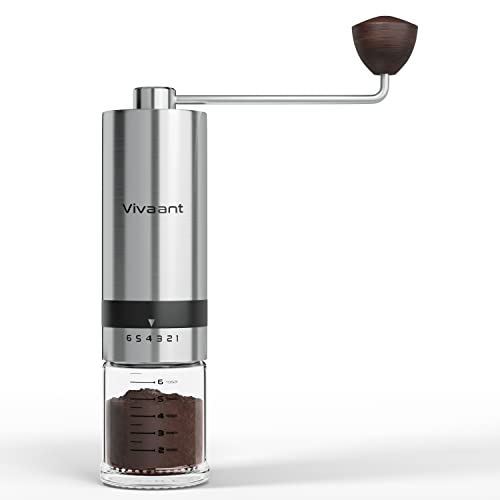
Vivaant Manual Coffee Grinder Hand Crank
A Deeper Look At The Lineup
The C2S takes the popular C2 formula and fixes its most common complaint by moving to a full metal unibody construction, so the lid cracking issue reported on older versions largely disappears. Inside sits a CNC-machined stainless steel conical burr measuring 38mm, which cuts through a 25g dose quickly enough for a morning brew before the kettle boils.
Double bearing positioning keeps the central shaft steady while you crank, and that steadiness translates directly into uniform particles. For anyone who commutes or works from home and wants café-level consistency in a quiet kitchen corner, this is the pick most people should start with.
What Helps Most
- Full metal unibody resists the lid breakage that plagued earlier models, so it survives years of drawer storage and travel
- The 38mm conical burr processes a typical 25g batch fast, meaning less wrist time per cup
- Dual-bearing shaft alignment produces an even grind, which shows up as cleaner, sweeter extraction in the cup
- Sleek black finish wipes clean easily after oily dark roasts
Things To Consider
- Adjustment lives internally under the top cap, so switching between espresso and French press means counting turns rather than reading a dial
- At 25g per load, large French press batches need two rounds of cranking
Made For
Pour-over and drip drinkers who want a dependable daily driver with a premium build feel.
A Better Fit Elsewhere
Espresso chasers who change settings constantly will appreciate the KINGrinder K6’s external click adjustment instead.
Where the TIMEMORE hides its adjustment inside, the K6 puts it right on top where you can see it. The external nut delivers 60 clicks per rotation across four full rotations, with each click stepping roughly 16 microns. That granularity matters most for espresso, where a single step too coarse can turn a shot sour.
The straight handle and stainless burrs handle both ends of the range, from powder-fine to French press coarse. Full metal construction gives it a dense, planted feel on the counter. In our view, this is the tool for people who enjoy the ritual of dialing in a recipe as much as drinking the result.
Real-World Strengths
- 16-micron click steps let you repeat an exact grind setting day after day, no guesswork
- External dial means switching from espresso to pour-over takes seconds, not disassembly
- 240 total adjustment positions span every common brewing method from Turkish to cold brew
- All-metal housing shrugs off drops and packs safely into a gear bag
Small Caveats
- The silver finish picks up fingerprints and coffee dust, so expect to wipe it down regularly
- Owners commonly note the straight handle needs firm pressure on very light-roast beans
- More adjustment range can overwhelm someone who just wants three simple settings
Feature Snapshot
Who Will Love This
Home baristas running espresso machines who log recipes and chase repeatable shots.
Where A Sibling Pick Shines
Casual drip-coffee drinkers will find the simpler internal setting of the HEIHOX easier to live with.
The honest appeal here is capacity. At 30g per load, the HEIHOX holds about 20 percent more beans than the TIMEMORE C2S, which saves a second cranking session when brewing for two. Its 420-grade stainless conical burr, machined by CNC for consistency, covers the full span from espresso-fine to coarse press pot grounds.
Internal adjustment keeps the silhouette clean and pocketable, making it a sensible desk companion for office coffee. Double bearing shaft support mirrors what the pricier picks offer, so particle uniformity stays respectable. You trade away the visible dial of the K6, yet for the money the core grinding hardware competes well above its bracket.
Real Benefits
- 30g hopper handles a shared two-cup morning in one fill instead of two
- CNC-machined 420 stainless burrs hold their edge through years of daily use
- Wide coarseness range serves espresso machines and immersion brewers alike
- Compact footprint tucks into a desk drawer or camping kit without fuss
Worth Noting
- Internal settings mean recalibrating by trial when you switch roast types, since there’s no printed scale
- A few owners report the ground bin seating loosely, worth checking before packing it for travel
Key Specs
The Right Fit
Budget-minded households that rotate between several brew methods and grind for more than one person.
Swap It Out When
Recipe-driven espresso users should lean toward the KINGrinder K6 for its readable external dial.
Packing coffee gear is an exercise in weight budgets, and this grinder was clearly designed around that constraint. The compact body slips into a carry-on side pocket, and the lengthened stainless handle paired with an internal bearing reduces the effort per turn, which you’ll notice grinding at altitude before sunrise at a campsite.
No batteries, no cords, no outlet hunting in a hotel room. The adjustable burr spans espresso through French press, so one device covers whatever brewing setup travels with you. Compared with the HEIHOX, it sacrifices some capacity for portability, a trade that makes sense depending on how far from your kitchen you drink your coffee.
Points In Its Favor
- Bearing-assisted crank and extended handle cut wrist fatigue on long grinding sessions
- Genuinely pocketable size suits backpacks, glove boxes, and carry-on bags
- Precision adjustment reaches espresso fineness despite the small frame
- Fully cordless operation works anywhere, from campsites to office desks
Honest Caveats
- Smaller chamber means refilling for anything beyond a solo cup
- Stainless burrs benefit from occasional brushing out; fine grounds collect near the axle over weeks of use
- Lightweight build feels less planted than the all-metal TIMEMORE during hard cranking
Whose Shelf It Belongs On
Weekend hikers, frequent flyers, and van-lifers who refuse to drink stale pre-ground coffee on the road.
Another Choice May Suit
Home-first users who value heft and capacity will get more satisfaction from the Vivaant’s jar-based setup.
This one arrives as a complete kit: grinder, detachable handle, glass catch jar, and lid for storing grounds. That last piece quietly changes your routine, because you can grind the night before and seal freshness into the jar until morning. Nothing else in this lineup includes dedicated glass storage out of the box.
The stainless conical burr, which Vivaant brands with a serrated tooth profile aimed at faster throughput, spins noticeably quicker than entry-level mills according to the maker’s claims. For a first hand grinder, the bundled accessories remove the usual extra purchases. Just know the glass jar adds bulk compared with the slim Alpaca Ventures body.
Standout Benefits
- Included glass jar doubles as a catch cup and an airtight storage vessel for fresh grounds
- Serrated tooth burr design is built to move through doses faster than basic conical mills
- Detachable crank stores flat, keeping the whole kit drawer-friendly
- No power or batteries required, ever, anywhere
- Ergonomic grip-sized body feels comfortable during longer sessions
Potential Sticking Points
- The glass jar demands careful handling around sinks and camp tables, unlike shatter-resistant plastic bins
- Adjustment precision is less documented than the K6’s micron-rated clicks, so dialing in espresso takes patience
Product Snapshot
Right Fit For
Beginners building their first manual setup who want everything included in a single purchase.
Reach For A Different Pick When
Minimalist travelers should choose the Alpaca Ventures grinder, whose compact frame packs far lighter.
What Matters Before Choosing Manual Burr Grinders
Burr Quality Comes First
The burrs are the engine of any hand grinder. CNC-machined stainless steel conical burrs, like those in the TIMEMORE and HEIHOX, produce tighter particle distribution than stamped alternatives, and that uniformity directly affects whether your coffee tastes balanced or muddy. Look for hardened steel and a burr diameter of 38mm or larger for faster grinding. Cheap burrs dull within months, and once they do, no adjustment setting rescues the cup.
Adjustment Style Shapes Your Routine
There are two schools here. External dials, such as the KINGrinder K6’s click system, give visible, repeatable settings that espresso drinkers practically require. Internal adjustment, found on the TIMEMORE and HEIHOX, keeps the design slimmer but forces you to count rotations and relearn positions after cleaning. Casual filter-coffee drinkers rarely feel the difference; recipe chasers absolutely will.
Capacity And Cranking Effort
Match the hopper size to your household. A 25g load suits solo drinkers, while 30g covers couples without a refill mid-brew. Effort depends on burr sharpness, bearing support, and handle length, so longer levers and dual bearings genuinely reduce fatigue on dark, oily roasts. Anyone grinding daily benefits from spending attention here.
Portability Versus Presence
Decide where the grinder lives. Desk drawers and backpacks favor compact bodies like the Alpaca Ventures. Kitchen counters reward heavier builds that stay planted. Glass components add charm and storage but demand gentler handling, a real consideration in busy households with kids or clumsy mornings.
Key Considerations Across These Picks
Traps First Timers Fall Into
The most common misstep is buying on looks alone and ending up with ceramic or thin burrs that struggle with light roasts. Another frequent stumble: ignoring adjustment type. Espresso fans who purchase an internal-setting grinder often grow frustrated within weeks. Finally, skip oversized hoppers you won’t fill; stale beans sitting in a chamber defeat the purpose of grinding fresh.
Where The Extra Money Goes
Pricier grinders fund machining tolerances, bearing assemblies, and metal bodies rather than marketing. Those details compound: steadier shafts mean fewer fines, and fewer fines mean clearer flavor. Paying up pays off for daily brewers and espresso hobbyists. Weekend-only French press drinkers get excellent results from budget options like the HEIHOX without feeling shortchanged.
Frequently Asked Questions
Are manual burr grinders good enough for espresso?
Yes, provided the adjustment offers fine, repeatable steps. Models like the KINGrinder K6 with micron-level clicks are well suited to dialing in shots.
How long does hand grinding take?
Most doses take between one and three minutes depending on burr size, bean density, and roast level. Larger 38mm burrs finish noticeably quicker than small ones.
Do manual grinders last longer than electric ones?
Often yes, since there are no motors to burn out. Burrs are typically replaceable, and all-metal bodies resist the drops that kill plastic units.
Can a hand grinder handle oily dark roasts?
It can, though oils accumulate around the burrs faster. A quick brush-out every week or two keeps performance consistent.
Is a manual grinder worth it over pre-ground coffee?
For flavor, decisively so. Whole beans begin losing aromatic compounds within minutes of grinding, so grinding just before brewing is the single biggest quality upgrade available.
Closing Thoughts
Every grinder here earns its place, but they serve different mornings. Start with the TIMEMORE C2S for balanced everyday excellence, step up to the KINGrinder K6 for espresso precision, save with the HEIHOX, travel light with Alpaca Ventures, or grab the complete Vivaant kit as a first setup. Whichever route fits your routine, fresh-ground coffee rewards you tomorrow morning and every one after.




