


Anyone who bakes regularly knows the frustration of squinting at faded markings or digging through a drawer for the right size. A good set of measuring tools removes that friction entirely. This roundup covers five options spanning plastic liquid pitchers and stainless steel dry-cup sets, so you can match your kitchen’s actual habits instead of settling for a one-size-fits-all answer.
A Side-By-Side Look

DTDNZKN 3 Pack Liquid Measuring Cups (250ml/500ml/1000ml)
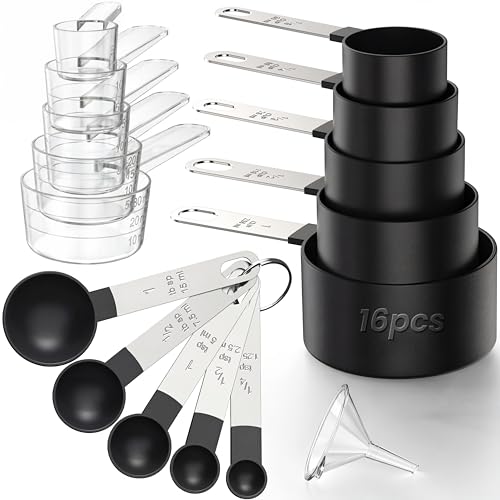
THLHKD 16-Piece Measuring Cups and Spoons Set (Black)

DTDNZKN 2 Pack Measuring Cup Set (250ml & 500ml)

Le Creuset Stainless Steel Measuring Cups, Gold Finish

Martha Stewart Richburn 4-Piece Stainless Steel Measuring Cups
Taking A Closer Look At The Options
Liquid measuring is a different job from scooping flour, and this three-piece set treats it that way. You get 250ml, 500ml, and 1000ml pitchers, which covers everything from a splash of vanilla to a full four cups of stock for soup night.
The transparent plastic body lets you check volume at eye level without lifting anything off the counter. For households that cook large batches or bake weekly, having all three sizes on hand means less rinsing between steps.
Benefits That Matter
- Three graduated sizes handle small pours and big-batch prep without switching containers
- Clear markings stay readable against light or dark liquids, so you’re not guessing mid-pour
- Plastic construction resists cracking when bumped in a crowded cabinet
- Nesting shapes keep the set compact in a drawer rather than hogging shelf space
- Suited to measuring oil, water, milk, and other pourable ingredients alike
Things To Consider
- Plastic can pick up stains and odors from tomato sauce or turmeric over time; prompt washing helps
- Not intended for hot stovetop use, unlike metal alternatives
Made For
Frequent home bakers and batch cookers who want one affordable set covering every common liquid volume.
A Better Fit Elsewhere
Cooks who mostly measure flour and sugar by scoop should look at the Martha Stewart Richburn set instead, since its steel cups are built for dry ingredients.
Most starter sets stop at four cups and four spoons, which falls apart the moment a recipe calls for an eighth of a cup or half a tablespoon. THLHKD fills those gaps with sixteen pieces, including a funnel for refilling bottles without spills.
Each piece carries both US customary and metric engravings, a real advantage when following recipes written overseas. In our view, that dual labeling alone justifies this over bare-bones sets for anyone still building a kitchen toolkit.
Where It Helps
- Sixteen sizes cover odd fractions like 1/8 cup and 1/2 tablespoon that most sets skip
- Engraved US and metric markings won’t rub off the way printed labels tend to
- Included funnel doubles as a bottling and spice-jar tool beyond recipe work
- Handles both dry scooping and liquid portioning in one kit
Small Caveats
- Sixteen loose pieces need a ring or drawer bin to stay organized; some owners report pieces migrating
- Engravings can be harder to read quickly than high-contrast printed scales in dim kitchens
Quick Facts
Who Should Grab It
First-apartment cooks and students assembling a complete toolkit from scratch benefit most here.
Swap It Out When
If your drawer is already full of spoons and you only lack liquid pitchers, the DTDNZKN 3-pack is the leaner buy.
This is the trimmed-down sibling of the three-piece DTDNZKN set reviewed above, dropping the 1000ml pitcher for a slimmer footprint. Two sizes cover the majority of everyday pours: a cup of milk for pancakes, two cups of broth for rice.
Same BPA-free plastic construction, same clear graduation lines. Apartment dwellers with shallow drawers will find the smaller stack genuinely easier to store than bulkier glass options.
Why It Works Well
- Two-piece design tucks into tight cabinets where larger sets won’t fit
- Transparent body with legible markings speeds up level-checking at counter height
- Impact-resistant plastic survives drops onto tile floors, a common casualty zone
- Lightweight enough for kids helping with simple recipes
Points To Note
- No 1000ml option means large-batch cooking requires refilling twice
- Plastic surfaces may show fine scratches after months of daily washing
Right Fit For
Students, RV owners, and small-space cooks who need dependable liquid measuring without dedicating much storage.
Reach For A Different Pick When
Households regularly simmering soups or brewing large quantities should step up to the DTDNZKN 3 Pack for its 4-cup pitcher.
Le Creuset applies the same finish treatment here that made its cookware famous: heavy-gauge stainless steel coated in PVD gold, a physical vapor deposition process that bonds color to metal far more durably than paint or plating. The result reads as countertop jewelry rather than a gadget.
Four standard sizes (1/4 through 1 cup) cover classic American baking recipes. Dishwasher-safe construction means cleanup never becomes the reason you reach for something else.
The Good Stuff
- PVD gold finish resists chipping and tarnishing far better than painted coatings
- Heavy-gauge steel feels substantial in hand and won’t flex during firm leveling
- Dishwasher-safe, so sticky honey or molasses cleanup takes no special effort
- Coordinates visually with gold-accented kitchens and open shelving displays
Worth Noting
- Gold-tone finishes may show water spots depending on your local water hardness; a quick towel-dry keeps them bright
- Four-piece scope suits standard recipes but skips fractional sizes like 1/8 cup
Details At A Glance
Whose Shelf It Belongs On
Cooks who treat the kitchen as a designed space and want tools worth leaving out on display.
Another Choice May Suit
Pragmatists who’d rather spend less on looks should compare the Martha Stewart Richburn set, which offers similar steel durability in a simpler finish.
Martha Stewart’s Richburn line sticks to fundamentals: four stainless steel cups in the 1/4-to-1-cup range, built to nest tightly and shrug off years of daily use. There’s nothing experimental here, and that restraint is the appeal.
Steel edges let you sweep a knife across the rim for a truly level scoop of flour, something flexible plastic cups make awkward. Compared to the Le Creuset gold set, this one trades decorative flair for a lower-maintenance brushed look.
Features That Help
- Nestable design stacks flat, keeping drawers organized instead of jumbled
- Stainless steel holds a polished shine and tolerates dishwasher cycles without complaint
- Rigid walls support accurate leveling for baking-critical dry ingredients
- Brand-backed build quality aimed at everyday food prep, not occasional use
A Few Limitations
- Liquid measurement stays imprecise in open cups, so pair them with a pitcher-style option for oils and broths
- Only four sizes; bakers working from metric-heavy recipes may want supplemental spoons
The Numbers That Matter
Who Will Love This
Weekend bakers who want a durable, no-nonsense steel set they can run through the dishwasher indefinitely.
Not Your Match When
Cooks needing both spoons and cups in a single purchase get more mileage from the THLHKD 16-piece kit.
What Matters Most Before Choosing
Match The Tool To The Ingredient
Dry and liquid ingredients behave differently. Dry measures are designed to be filled to the brim and leveled flush, while liquid pitchers leave headroom so nothing spills as you carry it across the kitchen. Owning both types prevents the small inaccuracies that quietly ruin delicate bakes.
Readability Beats Features
Graduation lines you can’t see at arm’s length might as well not exist. Embossed or engraved markings outlast printed ink, and contrasting colors help in dim evening kitchens. Hold any candidate set mentally against your lighting before committing.
Storage Reality
Sixteen loose pieces sound generous until they colonize an entire drawer. Nesting designs and stackable pitchers keep a set contained. Count your available space honestly before choosing breadth over footprint.
Material And Longevity
Stainless steel handles heat, dishwashers, and decades of abuse; plastic wins on weight, price, and visibility of contents. Neither is wrong, but mixing them strategically, steel for dry goods and clear plastic for liquids, covers every scenario.
Key Considerations Across These Picks
Traps First Timers Fall Into
The biggest slip is buying one “universal” cup and expecting precision from it. A second mistake is ignoring marking durability; printed scales fade within months of dishwasher duty. Choose engraved graduations whenever possible.
What Separates Premium From Basic
Higher-tier sets invest in heavier-gauge steel, bonded finishes like PVD coating, and tighter manufacturing tolerances. That translates to leveler-friendly rims, tarnish resistance, and tools that still read clearly years later. Casual cooks gain little; daily bakers feel the difference immediately.
Frequently Asked Questions
Can I use a dry measuring cup for liquids?
You can, but accuracy suffers because there’s no headroom and no way to check level at eye height. A spouted pitcher gives far better results for water, milk, or oil.
Why do recipes list both cups and milliliters?
US recipes traditionally use volume cups while international ones favor metric weights and volumes. Sets carrying both systems, like the THLHKD kit, remove conversion guesswork.
Are plastic measuring cups safe for hot liquids?
Food-grade plastic handles warm ingredients like melted butter without issue. Boiling liquids poured directly into thin plastic can warp the vessel and distort future readings, so let things cool slightly first.
How do I keep stainless steel sets looking new?
A standard dishwasher cycle handles most residue. Towel-drying right away prevents water spots, especially on decorative finishes like the Le Creuset gold coating.
Do nesting measuring cups wear out faster?
Nesting itself causes no harm. Light scuffing inside the stack is cosmetic only and doesn’t affect measurement accuracy on rigid materials.
Bottom Line
Your kitchen habits should drive this choice more than any ranking. Liquid-focused cooks get the most value from the DTDNZKN sets, while the THLHKD 16-piece kit equips a brand-new kitchen in one shot. Steel loyalists can’t go wrong with either the Le Creuset gold set or the Martha Stewart Richburn lineup. Pick the one matching how you actually cook, and it’ll earn its drawer space for years.




