


Over-tightened bolts strip threads, and under-tightened ones work loose at highway speed. A mechanical torque wrench takes the guesswork out of that moment, clicking or measuring so you hit the spec every time. Whether you’re torquing lug nuts in a driveway, carbon handlebars on a road bike, or cylinder heads in a shop bay, the right tool pays for itself the first time it saves a gasket. Below are five options that cover everything from full three-drive sets to a niche angle gauge for modern engine specs.
The Shortlist At A Glance

YIYEIE 8Pcs Click Torque Wrench Set

ARUCMIN 1/2-Inch Drive Click Torque Wrench

YLP Tools 3-Piece Torque Wrench Set

Park Tool Ratcheting Click Type Torque Wrench
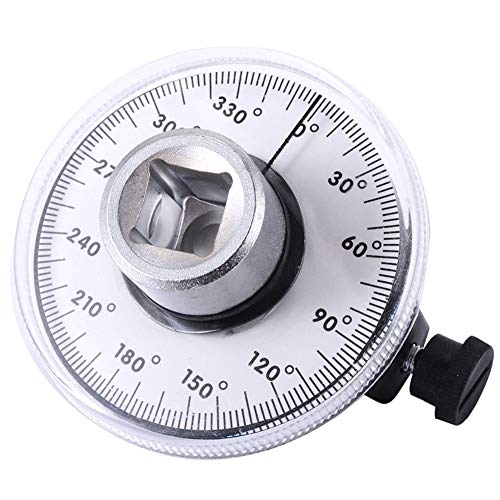
BSBMIEQM 1/2 Inch Torque Angle Gauge
More Details On Our Top Picks
Most households end up needing more than one drive size eventually, which is where this eight-piece kit earns its spot. You get 1/4-inch, 3/8-inch, and 1/2-inch drive click wrenches plus five adapters and extension bars, all packed in one molded case. That means small fasteners on a bicycle, mid-range automotive bolts, and heavy suspension hardware all stay covered without buying three separate tools.
The ranges scale sensibly across the set: inch-pound precision down low, up to roughly 180 ft-lb on the big wrench. For a garage that handles bikes, motorcycles, and a daily driver, that breadth is hard to argue with.
What Earns Its Place
- Three drive sizes mean one purchase covers bike, moto, and car tasks instead of three.
- The 1/4-inch wrench adjusts in fine 1 in-lb steps, useful for delicate components like derailleur clamps.
- Included extension bars and a universal joint help you reach recessed or angled fasteners.
- A single case keeps all eight pieces together, so nothing migrates to the bottom of a toolbox drawer.
Trade-Offs To Consider
- Three wrenches take more storage room than a single-drive tool, and the case is bulkier on a shelf.
- Click-type mechanisms benefit from being dialed back to their lowest setting after use, a habit worth building with any multi-wrench kit.
Who It Suits Best
Home mechanics who split time between bicycles, motorcycles, and cars and want one kit instead of three purchases.
Where A Sibling Pick Shines
Anyone who only works on cars should look at the ARUCMIN 1/2-inch wrench below, since its certificate-backed accuracy matters more there than extra drive sizes.
Where the YIYEIE set spreads its budget across three tools, this ARUCMIN concentrates on doing one job well. It’s a dual-direction 1/2-inch drive click wrench spanning 10 to 150 ft-lb, the range most lug nuts, axle nuts, and suspension bolts call for. The included calibration certificate is the detail that separates it from cheaper no-name bars, because it gives you documented evidence of the ±3% accuracy claim rather than just marketing copy.
Build materials back that up: a hardened chromium-molybdenum ratchet head with a 72-tooth mechanism, paired with an aluminum-titanium handle that stays comfortable during longer sessions. In our view, this is the sensible anchor tool for anyone serious about wheel work.
Useful Highlights
- A formal calibration certificate ships in the box, useful when accuracy actually matters for safety-critical bolts.
- The 72-tooth head needs only a shallow swing arc, handy in tight engine bays and behind wheels.
- Dual-direction operation lets you verify left-hand-thread fasteners, which some drivetrain and axle parts use.
- Hardened alloy construction suggests better long-term repeatability than stamped budget heads.
Small Caveats
- One drive size only, so small bike-scale fasteners fall outside what this wrench can reach accurately.
- Certified wrenches still drift over years of use, so periodic recalibration by a service lab remains good practice.
- Owners commonly report the click needs a deliberate feel at low settings, so slow pulls help near the bottom of the range.
Key Product Details
Made For
Car owners and weekend technicians who torque wheels, brakes, and chassis hardware regularly and want paperwork behind the numbers.
Skip It When
Cyclists working on stems and seatposts will get far more use from the Park Tool wrench further down this list.
This YLP kit sits between the two picks above in philosophy: one main 1/2-inch click wrench with the same 10 to 150 ft-lb range as the ARUCMIN, plus a 3/8-inch adapter and a 5-inch extension bar instead of a second wrench. Chrome vanadium steel throughout gives it the toughness expected of hand tools that live in a trunk or garage cabinet. For someone whose entire torque workload is automotive, the adapter approach covers smaller sockets without the cost of a dedicated 3/8-inch body.
The honest read is that this is the straightforward choice of the list. Fewer pieces, fewer things to lose, and a storage case that fits a shelf easily.
Everyday Advantages
- Chrome vanadium construction resists rounding and wear through years of socket swaps.
- The 5-inch extension reaches recessed bolts, such as deep lug seats on some wheels.
- ±3% calibration keeps results trustworthy for brake and wheel assemblies.
- A compact three-piece footprint stores neatly compared to the larger YIYEIE case.
Worth Bearing In Mind
- An adapter adds stack-up length and slight play, so critical low-torque work is better done with a native 3/8-inch wrench.
- No dedicated inch-pound range, which limits usefulness for precision bicycle or small-engine fasteners.
Right Fit For
First-time car owners building a basic garage toolkit who want dependable torque control without extra pieces.
Swap It Out When
Shop users wanting a certified document in the box should step up to the ARUCMIN 1/2-inch wrench instead.
Park Tool builds this wrench specifically around bicycle torque specs, and that focus shows everywhere. Carbon fiber components crack under overtightening long before metal does, and stem bolts, seatpost clamps, and crank arms typically call for somewhere between 2 and 14 Nm, exactly this tool’s range. At nine inches long with a 3/8-inch ratcheting drive, it’s compact enough to maneuver around handlebars and inside frames where a full-size wrench won’t fit.
Unlike the general-purpose kits above, it reads both directions, so left-hand threading on some bottom brackets and pedals stays covered. The dial-adjust system also lets you preset a value once and repeat it across multiple bolts, which is exactly how headset and stem work goes.
Practical Advantages
- 0.4 Nm adjustment increments match how bike manufacturers publish their torque tables.
- Dual-scale body includes a conversion chart, so Nm and inch-pound values sit side by side.
- Short 9-inch length gives fine control in cramped cockpit areas.
- Left- and right-hand registration handles reverse-threaded pedals without adapters or guesswork.
Things To Weigh Up
- The ±4% tolerance is slightly looser than the ±3% figures on the ARUCMIN and YLP wrenches, though negligible at bicycle-scale loads.
- Its ceiling of 124 in-lb makes it useless for car wheels, so cyclists with a second vehicle need another tool anyway.
Quick Facts
Whose Shelf It Belongs On
Serious cyclists and home bike mechanics who assemble carbon parts and want brand-specific design rather than a repurposed auto tool.
Another Choice May Suit
Garage-focused users should pass on this one and grab the YIYEIE set, whose 1/2-inch wrench handles the automotive side properly.
One clarification before anything else: this isn’t a click wrench. Modern engines increasingly specify torque-to-yield fasteners using a two-stage sequence, meaning you tighten to a torque value first, then rotate the bolt a measured number of degrees. This gauge measures that rotation, reading a full 360 degrees with fine graduations, and mounts on a standard 1/2-inch drive between your wrench and socket.
You may find it redundant if your vehicle manuals never mention angle specs, but for head bolt jobs, connecting rods, and many late-model aluminum engines, it’s the difference between following the procedure and approximating it. Think of it as a companion to whichever click wrench you already own rather than a replacement.
What Stands Out
- Full-circle 360-degree measurement handles even generous angle-tightening stages without repositioning.
- Standard 1/2-inch drive interface drops into an existing socket setup with no adapters needed.
- Clear graduated markings make mid-job readings quick while lying under a hood.
Points To Note
- It measures angle only, so you’ll still need a torque wrench from earlier in this list for the initial tightening stage.
- Zeroing the dial before each bolt becomes routine, and skipping that step is the most commonly reported way people get bad readings.
- For occasional home use, the skill matters less than for repeated engine builds, so casual owners may rarely touch it.
Core Details
The Right Fit
Experienced DIYers and professional mechanics performing engine assembly where factory specs demand torque-plus-angle sequences.
Reach For A Different Pick When
General household maintenance calls for a click wrench instead, and the YLP Tools 3-piece set handles that role at a friendlier entry point.
Choosing Between These Torque Wrenches
Match the Range to Your Work
The single biggest mistake in this category is buying a range that doesn’t fit the job. Bicycle fasteners live between 2 and 14 Nm, lug nuts between 80 and 120 ft-lb, and no single mechanical wrench covers both ends accurately. Check the torque tables in your vehicle or component manuals first, then buy the tool whose span brackets those numbers comfortably rather than barely.
Accuracy, Certification, and Build
Most quality click wrenches claim ±3% to ±4% tolerance, and that difference is real at the low end of a range. A calibration certificate, like the one included with the ARUCMIN, turns a marketing claim into documentation. Materials matter too: chromium-molybdenum and chrome vanadium heads resist wear far better than soft stamped steel over thousands of clicks.
Click vs. Beam vs. Angle Measurement
Click wrenches signal the target with an audible and tactile break, which suits repetitive work like wheel swaps. Beam wrenches cost less but require you to watch a needle, awkward in poor light. Angle gauges serve a narrower purpose entirely, covering the torque-then-rotate sequences specified on modern engines. Pick the mechanism that matches how often you’ll use it.
Storage and Long-Term Care
Every click wrench here lasts longer with one habit: dial it back toward its minimum setting after each session so the internal spring relaxes. A fitted case, which all five options provide, protects the head from drops that knock calibration out of true.
A Quick Read Before You Decide
Wrong Turns To Avoid
The classic error is using a torque wrench as a breaker bar to loosen stuck bolts, which destroys calibration quickly. Another frequent misstep is trusting a range’s extremes; accuracy degrades near the top and bottom limits, so aim for the middle third of any scale. Skipping the manual entirely leads shoppers to buy a 1/2-inch tool for bicycle work, then discover their specs read in inch-pounds.
What The Higher Tier Buys
Spending more typically gets you a calibration certificate, harder alloy heads, finer tooth counts, and tighter tolerance. For occasional oil changes and seasonal tire rotations, a basic kit serves fine. For anyone assembling engines or maintaining carbon bicycles, the upgrade pays off in repeatability, because a drifted wrench tightens confidently and incorrectly.
Frequently Asked Questions
How often should a click torque wrench be recalibrated?
Manufacturers generally suggest a professional calibration check every 12 months or roughly 5,000 cycles, whichever comes first. Heavy shop use shortens that interval considerably.
Can I use a torque wrench to remove bolts?
No, loosening fasteners applies shock loads that throw off internal calibration. Keep a separate breaker bar for removal work.
What does ±3% accuracy mean in practice?
At a 100 ft-lb setting, actual applied torque can land anywhere from 97 to 103 ft-lb. Tighter tolerances matter most for safety-critical and low-torque fasteners.
Do I need both a torque wrench and an angle gauge?
Only when your service manual specifies torque-to-yield procedures, which is common on modern cylinder heads. Otherwise a click wrench alone covers standard fasteners.
Should I store my wrench at zero?
Store it dialed back near its lowest setting, not necessarily zero. This relaxes the internal spring and helps the mechanism hold its calibration longer.
Closing Remarks
Five tools, five different problems solved. The YIYEIE set covers a whole garage in one case, the ARUCMIN brings certification to serious automotive work, and the YLP kit keeps things simple for newer owners. Cyclists get genuine purpose-built engineering from Park Tool, while the BSBMIEQM gauge fills the angle-spec gap the others can’t. Match the tool to your actual torque table, care for the spring, and any of these will hold its accuracy for years of honest work.




